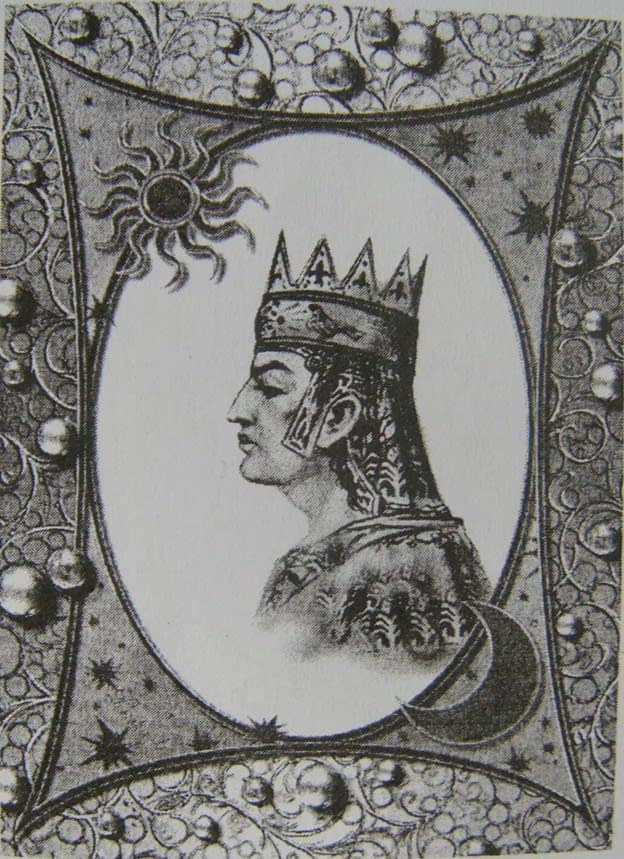

Officially, Pap was considered the son of the Armenian king Arsaces II and his wife, the powerful and beautiful noblewoman Parandzem. The exact date of his birth remains lost in the mists of time (approximately AD 350 or 353), but the circumstances surrounding his conception were highly complicated. The historian Hakob Manandian suggested that Pap's biological father might have been Parandzem's first husband, Gnel, the king's nephew. The modern scholar Albert Stepanyan offers a different, more complex interpretation: Pap was the biological son of Arsaces but was legally considered Gnel's heir. This was connected to the fact that Arsaces had married Parandzem according to the ancient Iranian custom of levirate marriage (stūr ī būtak or čakarīh), which required a brother or male relative to marry a childless widow in order to continue the deceased man's family line.

The situation was further complicated by the fact that Arsaces II had taken this step while his first wife, the Greek noblewoman Olympia, was still alive, openly violating the prohibition against polygamy established at the Council of Ashtishat. Only after Olympia's sudden death (which persistent rumors attributed to poisoning, allegedly with Parandzem's involvement) did Pap's mother become the legitimate queen, and Pap himself was recognized as the rightful heir. However, the historian Nina Garsoïan categorically rejects doubts about Pap's legitimacy. According to her reconstruction, the boy was born around AD 350, after which Parandzem was temporarily given in marriage to Gnel for political reasons before being returned to the king. In any case, Pap was destined to inherit not only the throne but also an extremely severe political crisis. Incidentally, he had a brother (according to the anonymous Life of Saint Nerses, a younger brother named Tiridates), whose son Varazdat would later play an important role in the country's history.
The young heir to the throne faced the harsh realities of fate at an early age. Around AD 367–368, his father, Arsaces II, traveled to the court of the Persian shah Shapur II the Long for peace negotiations, but was treacherously captured and imprisoned. Greater Armenia was left without a ruler.

Taking advantage of the situation, Shapur II, despite his advanced age, decided to permanently remove Armenia and Iberia from the Roman sphere of influence. During the winter, Persian forces led by the Armenian defectors Glak (Kilak) and Artavan (Vahan), along with Meruzhan Artsruni, invaded the country. Queen Parandzem, accompanied by the young Pap, the royal treasury, and a loyal garrison of eleven thousand azats (members of the Armenian military nobility), took refuge behind the formidable walls of the fortress of Artagers, which had previously been seized from the Kamsarakan family.
The siege was exhausting. At this critical moment, Parandzem demonstrated extraordinary diplomatic skill and courage. She secretly contacted the traitors Glak and Artavan and managed to awaken their patriotic feelings. They returned to the Arsacid cause and organized the young Pap's daring escape through the Persian encirclement. The prince was to reach Emperor Valens and plead for assistance. Once he had reached safety, Pap sent messengers urging his mother to hold out, promising to return soon with Roman legions. However, the Romans delayed. Eventually, the fortress of Artagers fell. Overcome by uncontrollable rage, Shapur II razed Armenia's major cities — Artaxata, Vagharshapat, Yervandashat, Zarishat, and Zarehavan — to the ground. The proud Queen Parandzem was taken captive to Persia, where she suffered a martyr's death.

Meanwhile, Pap, having escaped, arrived at the court of Emperor Valens in Marcianopolis. The Romans, unwilling to openly provoke Persia, sent the young prince far from the frontier to the Pontic city of Neocaesarea, where they provided him with an excellent education and comfortable living conditions.
Only in AD 369, after listening to the appeals of the Armenian sparapet Mushegh Mamikonian (or, according to Ammianus, thanks to the same Glak and Artavan), did Valens allow Pap to return to Armenia, accompanied by the Roman dux Terentius. The Romans still did not officially recognize him as king, but to the Armenian people, he became a symbol of national revival.

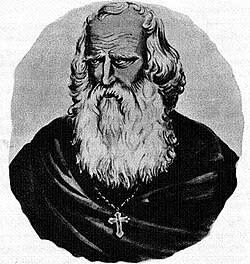
The young monarch inherited a country in a catastrophic condition. The Armenian army barely numbered 10,000–11,000 soldiers. Pap began his rule by relying on two historical pillars: the institution of the sparapet (supreme military command), headed by the brilliant general Mushegh Mamikonian, and the Church. To secure the latter's support, the king overcame the old hostility and restored Catholicos Nerses the Great to the royal court.
Shapur II, realizing that Armenia was slipping from his grasp, attempted to win Pap over through diplomacy. However, the young king, fully aware of the danger posed by Persia, responded ruthlessly: he ordered the beheading of Glak and Artavan, who had once led Persian forces into Armenia, and sent their heads to the shah as a declaration of war.
Enraged, Shapur II demanded that Rome honor the treaty of AD 363, under which the Romans had agreed not to assist the Armenians. Emperor Valens responded with a firm refusal and, in AD 371, dispatched an army under the command of Traianus to support Pap.
The decisive confrontation, which entered history as the Battle of Bagrevand, took place on the Dzirav field at the foot of Mount Npat, in the valley of the Aratsani River. The Persian side was supported by the Caucasian Albanians under Urnayr, the Lezgins led by Shergir, and the forces of the traitor Meruzhan Artsruni. The battle was enormous in scale. The Armenian commander Spandarat Kamsarakan launched a powerful assault that broke through the enemy's center. In the bloody fighting, the king of the Lezgins was killed, while the leader of the Albanians was severely wounded.
The final fate of Meruzhan Artsruni was particularly dramatic. Attempting to flee, he was overtaken in the district of Kogovit by Smbat Bagratuni. Smbat, whose family had held the hereditary privilege of crowning Armenian monarchs since ancient times (tagadir aspet), mockingly reminded the traitor, who had claimed the throne, of this privilege. Heating an iron band in a fire, he placed it upon Meruzhan's head as a deadly "crown." The Persian army was completely defeated and driven back as far as Atropatene. Shapur II was forced to recognize Armenia's independence and Pap's legitimacy.
Having secured the country's external security, Pap launched domestic reforms of unprecedented scale. Armenia desperately needed people, soldiers, and financial resources. After assessing the situation, the king concluded that Christianity had been embraced only superficially during the preceding seventy years, while the Church's enormous landholdings and social institutions were draining the treasury. Pap introduced radical and unpopular measures: he closed numerous shelters, leper hospitals, and, most importantly, monasteries and convents, forcing their inhabitants to marry in order to increase the birth rate and requiring men to join the army. He also abolished the tithe and the peasant tax known as ptkhi, both of which had been collected for the benefit of the Church.
These measures brought Pap into an extremely serious conflict with Nerses the Great. When the catholicos died in AD 372, the clergy immediately accused the king of poisoning him, creating an image of Pap as a tyrant and apostate. But the king did not stop. He prohibited the new catholicos, Sahak I of Manazkert, from traveling to Caesarea for consecration. From that point onward, the head of the Armenian Church was to be appointed exclusively within the country, marking a major step toward ecclesiastical independence and breaking the monopoly of the family of Gregory the Illuminator. Some Church lands were confiscated and transferred to military leaders (for example, Spandarat Kamsarakan received back his family's ancestral districts of Shirak and Arsharunik). The results were immediate: the Armenian army reportedly grew to an astonishing 100,000 soldiers.

Relying on this military strength, Pap instructed Mushegh Mamikonian to reunify the provinces lost during the years of turmoil. Mushegh acted swiftly and mercilessly. Utik, Gugark, Korchayk, and Aghdznik were restored to the Crown of Greater Armenia, reestablishing the borders of the time of Tigranes the Great and Artaxias the Pious. Mushegh dealt harshly with rebels, sometimes crucifying them, yet displayed chivalrous generosity toward worthy enemies. When Shapur II's royal harem fell into Armenian hands during one confrontation, Mushegh returned the women unharmed. Impressed by this act, the shah ordered an image of the Armenian commander riding a white horse to be engraved on his drinking cup and, whenever he raised it, declared: "Let the rider of the white horse drink wine."
Having reached the height of his power, Pap began to seek complete independence. He resented the presence of Terentius's Roman garrison and openly demanded that Rome return Caesarea and Edessa, which he regarded as historical territories of the Arsacid dynasty. Ignoring Mushegh's advice to preserve the alliance with the empire, the king entered into secret correspondence with the Persians.
Terentius, outraged by the monarch's defiance, reported everything to Emperor Valens. Rome decided to eliminate its disobedient ally. In AD 373 or 374, Valens lured Pap to Tarsus under the pretext of negotiations. Suspecting a trap, Pap carried out a daring escape with 300 guardsmen, fighting his way through the Roman legion's blockades. The experienced trackers Danielus and Barzimeres, who were sent in pursuit, returned empty-handed, claiming that the king had supposedly used sorcery and disappeared into a "dark cloud." The people of Armenia welcomed their ruler home with great rejoicing.
The empire then resorted to treachery. The Roman commander Traianus managed to gain Pap's trust. In AD 374, or possibly even 375, during a lavish banquet held in honor of the young Armenian king, Traianus gave a signal, and a Roman bodyguard struck Pap with a fatal blow. The Roman historian Ammianus Marcellinus wrote with indignation about this despicable murder, which violated the sacred laws of hospitality.
The presence of a massive Roman army in the country forced the nakharars to accept this humiliation without resistance. The throne passed to Rome's chosen candidate, Varazdat. Pap's dynasty continued through his sons by the noblewoman Zarmandukht — Arsaces III and Vagharsh III — who later became co-rulers of the country.
King Pap left an exceptionally profound yet controversial mark on history. Classical Armenian chroniclers, such as Faustus of Byzantium, whose sympathies lay with the aggrieved Church, portrayed him as a creature of hell, possessed by demons, and attributed the most unimaginable vices to him. In contrast, the Roman eyewitness Ammianus Marcellinus described Pap as a brave, intelligent, and outstanding ruler who was deeply loved by his people.
Today, historical scholarship is reassessing the figure of Pap. Viewed through the perspective of centuries, he emerges not as a villain but as the tragic figure of a brilliant statesman who, amid widespread devastation, attempted to restore Armenia's population, economy, and independence through forceful leadership. His reforms were harsh but necessary, while his pursuit of absolute sovereignty, which collided with Rome's geopolitical interests, ultimately cost him his life, forever securing his place among the greatest and most tragic monarchs of antiquity.


