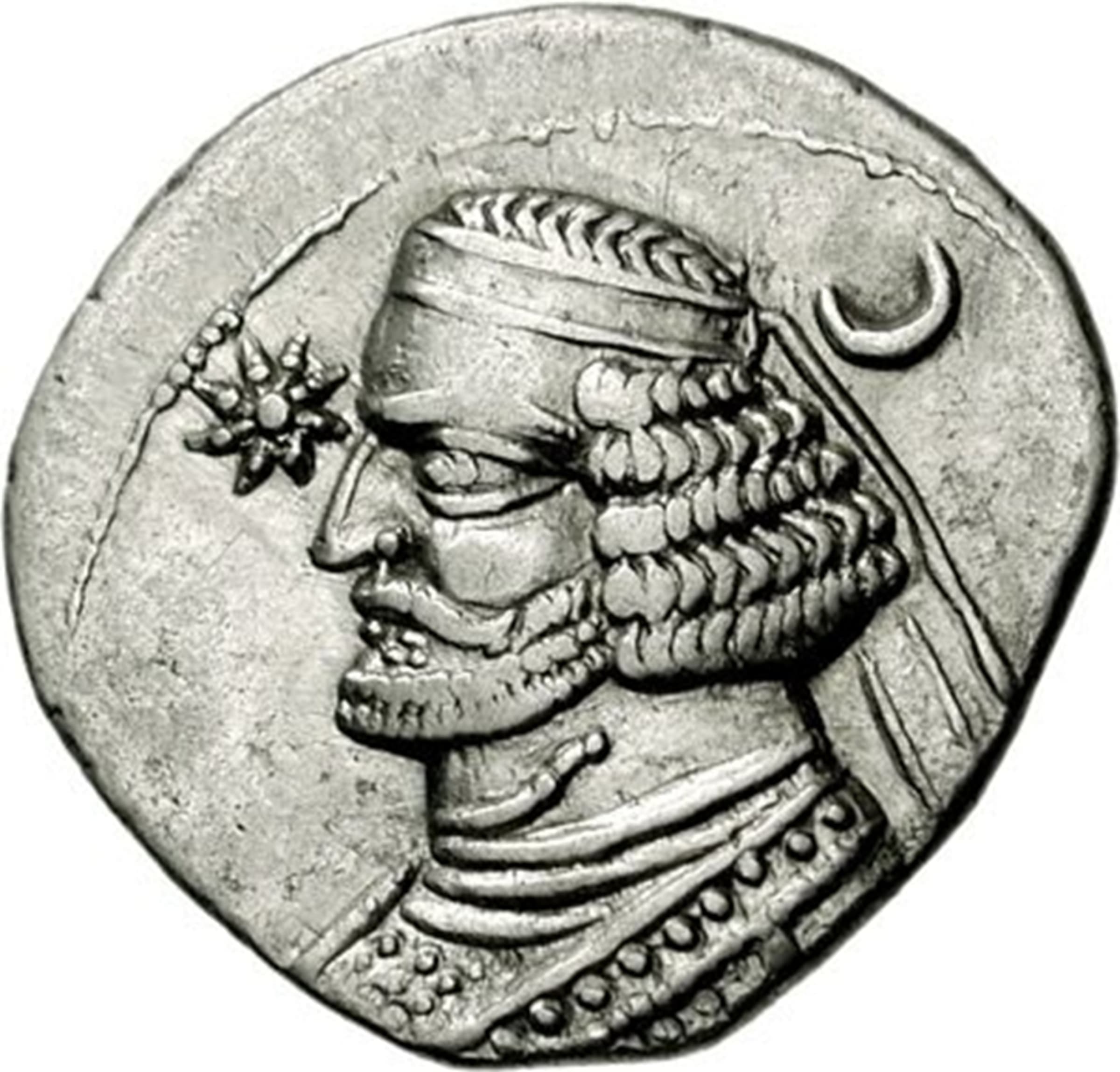
The reign of Orodes II began just as it ended — with the blood of kin. After the murder of his father, Phraates III, Parthia plunged into the abyss of civil strife. Orodes entered a deadly struggle for the crown with his brother Mithridates III.
The balance tipped in Orodes’s favor thanks to the support of the powerful Suren clan. At its head stood a commander whose personal name history has not preserved, but who entered the chronicles under the family name — Surena. He was a man of exceptional talents: the wealthiest after the king, he possessed the hereditary right to place the diadem upon the heads of Parthian rulers.
Mithridates III, driven from the country, sought refuge with Rome. The proconsul Gabinius was ready to support him in order to gain a puppet on the Parthian throne, but Rome’s larger politics (Pompey’s intervention and the Egyptian affairs of 55 BCE) left Mithridates alone. He managed to seize Babylon, but this became his trap. Surena, a genius of war, besieged the city and forced its surrender by starvation. In 54 BCE Orodes II, showing no mercy, ordered his brother’s execution, becoming sole ruler. There was no time for celebration, however, for storm clouds were gathering in the west.
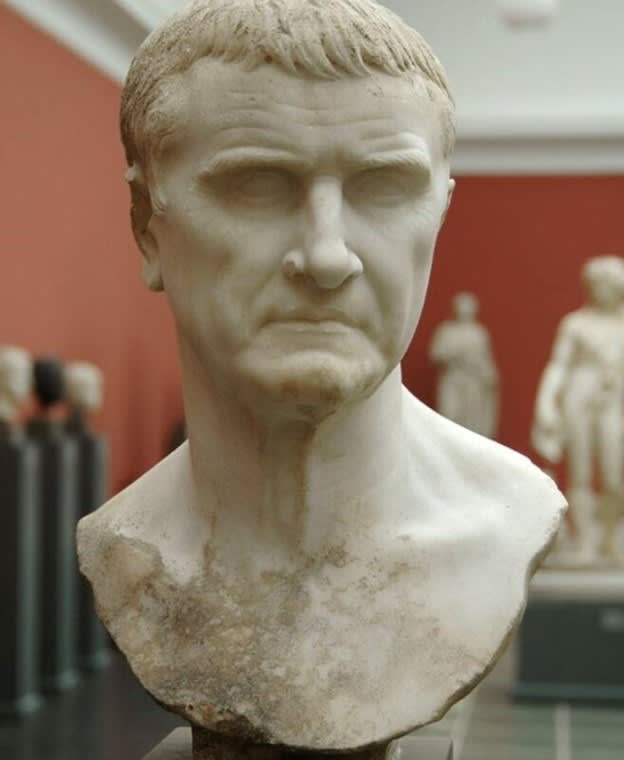
In Rome the triumvirs were dividing the world. Marcus Licinius Crassus, seeking to rival Caesar and Pompey in glory, chose Parthia as his target. It was an adventure: Crassus knew neither the strength of the enemy nor the terrain, but he thirsted for gold and triumph.

In the spring of 54 BCE, while Orodes was still crushing his brother’s supporters, Crassus invaded Mesopotamia. The Parthian satrap Silaces retreated, and the Romans easily occupied several cities. Leaving garrisons there, Crassus withdrew to winter in Syria — a fatal mistake that gave the Parthians time.
The winter of 54–53 BCE was spent in preparation. Orodes II proved himself a farsighted strategist. Understanding that the Romans might strike through Armenia (a Roman ally), he divided his army. The king himself invaded Armenia with the main forces to pin down King Artavasdes II and prevent him from joining Crassus. The defense of Mesopotamia he entrusted to his sharpest sword — Surena.
In the spring of 53 BCE Crassus, rejecting the sensible plan of invasion through the Armenian mountains, advanced across the arid plains of Mesopotamia. His army (seven legions, about 40,000 men) was a formidable force, but Surena had prepared a surprise.
Instead of a traditional levy, he deployed an elite corps: 10,000 horse-archers and 1,000 steel-clad cataphracts. Surena’s genius lay in logistics: he brought a baggage train of a thousand camels loaded with arrows, providing the archers with an effectively endless supply.
On May 6 (June 9), 53 BCE, near the city of Carrhae (Harran), the armies met. The Romans formed a square, but it did not save them. Parthian archers shot the legions from a distance, while attempts at counterattack were crushed by charges of heavy cavalry. Crassus’s son Publius, launching a desperate assault, was cut off and annihilated. His head, mounted on a spear, became a dreadful omen for the Romans.
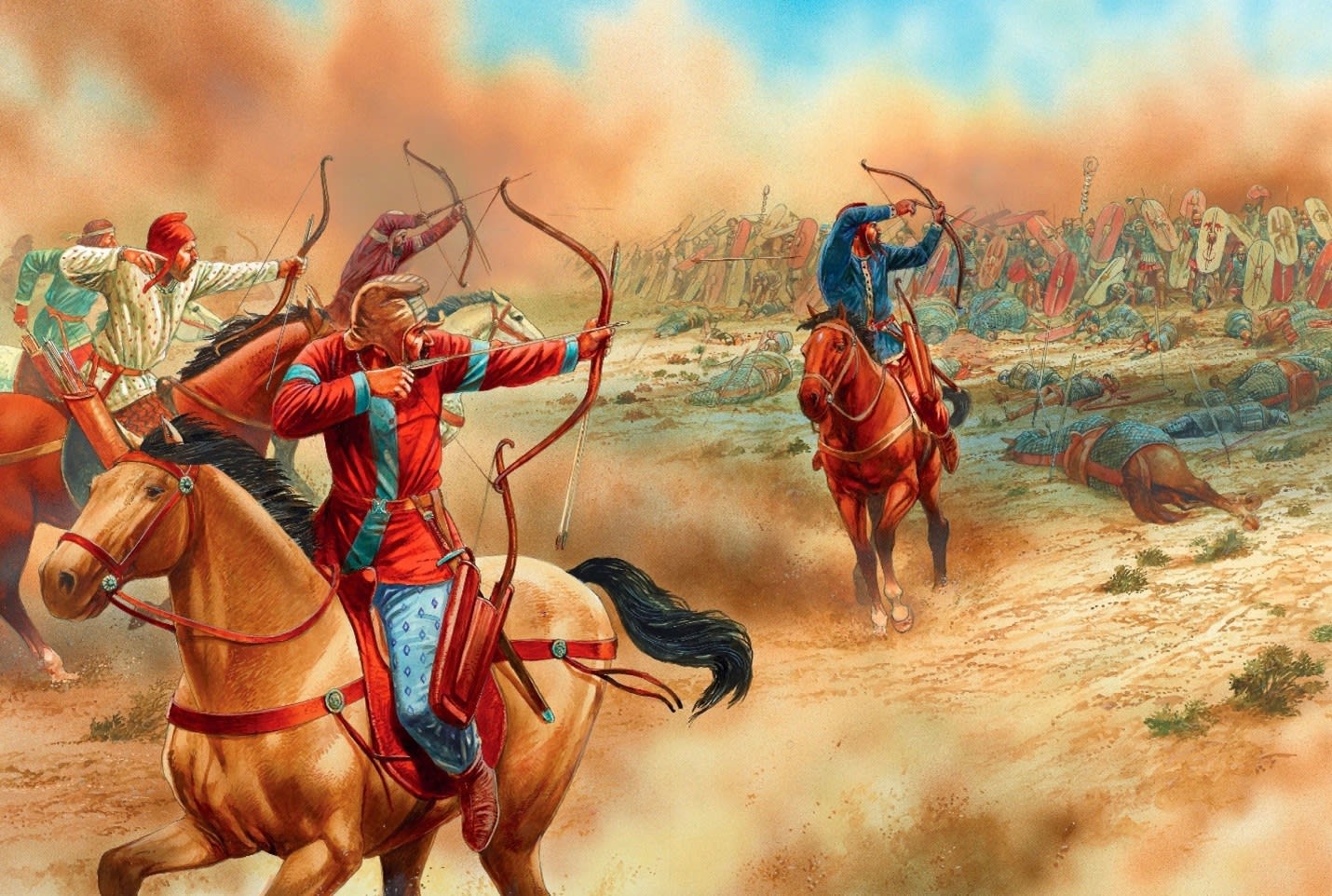
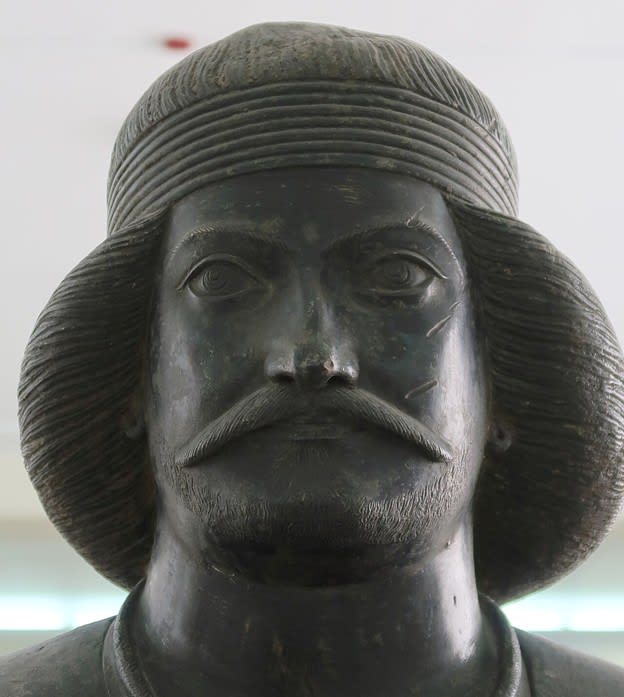
The defeat was complete. Crassus died during negotiations (according to one version killed in the confusion, according to another executed by molten gold poured down his throat). Of 44,000 Romans only a quarter escaped. The Battle of Carrhae shocked the ancient world, halting Rome’s eastern expansion.
While Surena was destroying the Romans, Orodes II in Armenia concluded peace with Artavasdes, sealing it by marrying his son Pacorus to the Armenian king’s sister. Plutarch describes a chilling scene: during the wedding feast at Artaxata, Euripides’ tragedy The Bacchae was being performed. At the moment when Queen Agave was to present the head of Pentheus, a messenger delivered the head of Crassus. An actor seized it and displayed it to the jubilant audience.
Yet Surena’s triumph signed his death warrant. Fearing the general’s immense popularity, Orodes II soon executed the savior of his throne. This murder deprived Parthia of its finest tactician, with consequences for future wars.

After the victory Orodes transferred the capital from old Hecatompylos to Ctesiphon on the Tigris, closer to the western frontiers. His new commander became his son, Crown Prince Pacorus. Initial attempts to invade Syria (52–50 BCE) failed, but the civil war in Rome (Caesar versus Pompey, then the triumvirs versus Caesar’s assassins) opened new opportunities.

In 40 BCE, after Caesar’s assassination, the Roman republican Quintus Labienus defected to the Parthians. The alliance of Pacorus and Labienus brought Parthian power to its zenith.
Labienus swept through Asia Minor with part of the forces, minting coins with the title “Parthian Imperator.”
Pacorus captured Syria, Phoenicia (except Tyre), and Palestine, installing his protégé Antigonus II in Jerusalem.
In effect, nearly the entire Roman East fell into the hands of Orodes II. Parthia became a global superpower equal to Rome.
The success was dazzling but short-lived. In 39 BCE Mark Antony sent east a talented commander, Ventidius Bassus. The Romans acted swiftly: Labienus was defeated and executed.
In 38 BCE, at the Battle of Gindarus (the anniversary of Carrhae), Ventidius lured the Parthian cavalry into a trap on elevated ground. In this battle Prince Pacorus — Orodes’s beloved son and the hope of the dynasty — was killed.
News of Pacorus’s death broke the aging king. Orodes II, at the height of power, fell into deep depression and perhaps madness. Of his remaining thirty sons he had to choose an heir, but grief clouded his judgment. He chose Phraates (the future Phraates IV) — the most ruthless of his children.
This choice became Orodes’s final mistake. Soon after his designation, Phraates IV, thirsting for power, personally strangled his father (or poisoned him and, when the poison failed, strangled him). Thus ended the tragic life of the king who destroyed Crassus and raised Parthia to unprecedented heights, only to fall victim to the curse of his own house.


