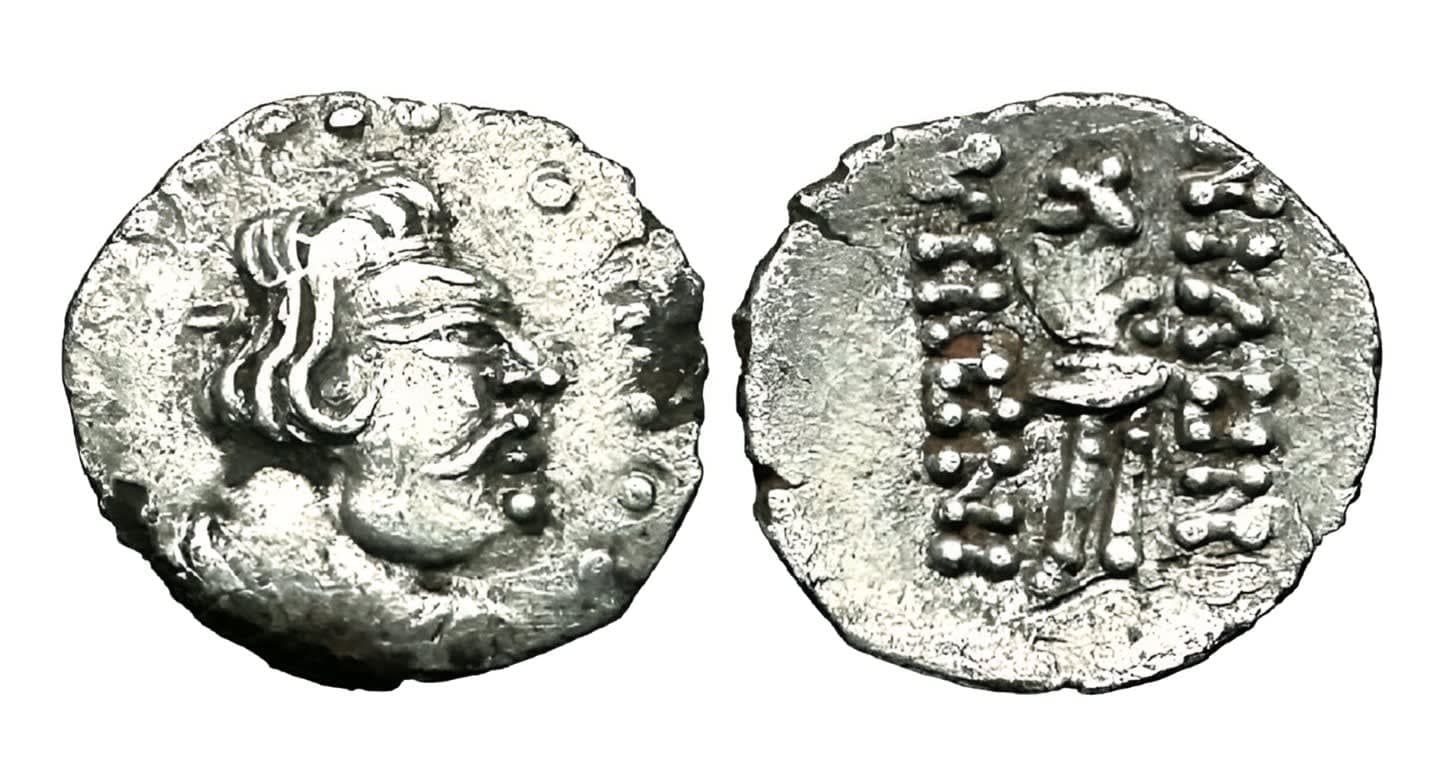
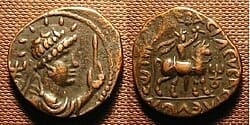
The reign of Kujula Kadphises, who laid the foundations of the great Kushan Empire, represents one of the most fascinating chapters of ancient history. Although the precise chronology of the early Kushan rulers remains a matter of scholarly debate, it is generally believed that this remarkable monarch ruled approximately from AD 25 to 85.
As Kujula’s state grew stronger, it turned its attention eastward and began a large-scale expansion. In this historic advance, Kujula Kadphises acted together with his son, known to history as Vima Takto, or Vema Takhtu.
Their principal target was the Indo-Parthian Kingdom in northwestern India, founded around AD 20 by the Parthian ruler Gondophares. Historians believe that the decisive Kushan invasion of these territories took place sometime after AD 45, when the Indo-Parthian throne was held by Gondophares’s successors, Abdagases and Sases. Under the pressure of Kujula and his heirs, this kingdom eventually fell.
Chinese written sources provide a detailed account of this triumph. According to Chinese chronicles, authority over the conquered territories passed to Kujula’s son, Yangaozhen, who is generally identified with Vima Takto, although some scholars have suggested that the name may instead refer to another relative, Sadashkana.
It was he who completed the conquest of Tianzhu, the Chinese name for northwestern India, and appointed his own military commanders to govern the vast country.
Chinese chroniclers noted that after these conquests the Yuezhi became extraordinarily wealthy and powerful. Neighboring kingdoms began respectfully referring to their ruler as the King of Guishuang, a Chinese transcription of the name “Kushan.” Conservative Han historians, however, continued to use the people’s older historical ethnonym — Da Yuezhi, or “Great Yuezhi.”
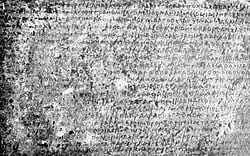
The memory of Kujula Kadphises was carefully preserved by his powerful descendants. This was spectacularly confirmed in 1993 by one of the most important archaeological discoveries relating to Kushan history — the finding of the Rabatak inscription in the territory of ancient Bactria.
This monumental epigraphic document was created by direct order of the famous Kushan king Kanishka. In the inscription, Kanishka proudly sets out his royal genealogy: he names the great Kujula Kadphises as his great-grandfather, Vima Takto as his grandfather, and Vima Kadphises as his father.
The text states that Kanishka ordered not only the erection of images of revered deities, but also statues of these three illustrious ancestors and of himself, thereby immortalizing the continuity of the dynasty.
Historians also date several striking statues discovered among the ruins of the luxurious palace complex at Khalchayan in Bactria to the period of Kujula Kadphises himself, approximately around AD 50.
For a long time, scholars generally believed that Kujula Kadphises was a Buddhist. This interpretation was based on the epithet satyadharmasthita, meaning “established in the true Dharma,” which appeared on his coins.
Modern scholarship, however, has reconsidered this interpretation. The key to the problem was an inscription from Mathura demonstrating that the very same epithet was also used by the later Kushan ruler Huvishka.
The text of this inscription explicitly states that royal power had been granted to him by Sarva, one of the names of the formidable god Shiva, and by the deity Skandavira, or Chandavira.
From this, scholars concluded that Kujula Kadphises, the founder of Kushan power, may not have been a Buddhist at all, but rather a devoted worshipper of the Hindu god Shiva and a committed follower of Shaivite traditions.
The use of the Kharosthi script on his coins, together with such an early adoption of the cult of Shiva, vividly characterizes Kujula Kadphises as a wise and adaptable ruler who succeeded in combining Greek, Roman, Iranian, and Indian traditions within his empire.


