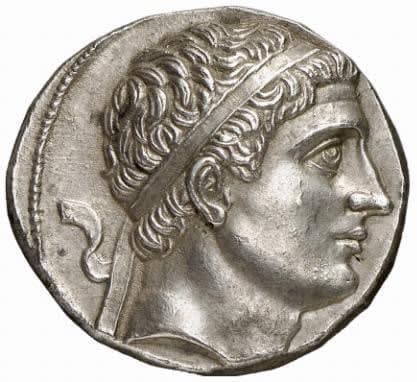
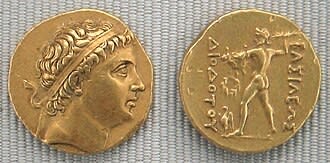
The origins of the young king are surrounded by intrigue. Although it is known that in 246 BC his father married a Seleucid princess for the sake of a political alliance, another version holds that the heir’s mother was a different woman — the first wife of Diodotus I. The reason is that by the time Diodotus II inherited the crown, he was already a fully mature man, which makes it highly unlikely that he had been born from his father’s later marriage.
Numismatic discoveries also lift the veil over the dynasty’s secrets. They point to the hypothetical existence of Diodotus II’s brother, Antiochus Nikator, who may have been another ruler of Bactria, although he is known exclusively from coinage.
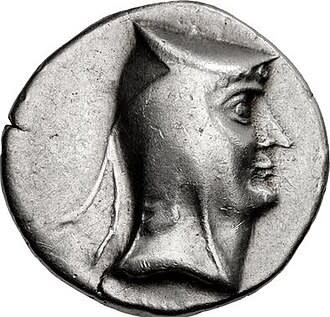
Upon ascending the throne, Diodotus II proved himself a pragmatic and decisive politician who was unafraid to completely reshape the geopolitical map of the region. Under his father, Bactria had been locked in fierce confrontation with the nomadic Parni led by Arsaces I. Diodotus II, however, took an unprecedented step: he broke the alliance his father had concluded with the Seleucids and signed a defensive pact with the Parthians.
The principal factor behind this decision was a common threat from the west. The Seleucid king Seleucus II Callinicus, having concluded an exhausting civil war against his rebellious brother Antiochus Hierax, was openly preparing a major military expedition to the East in order to bring the breakaway satrapies back under Seleucid control.
The alliance was no less advantageous to Arsaces I. The respite gave him valuable time to integrate his nomadic tribes with the local Parthian population and to build a powerful state apparatus.
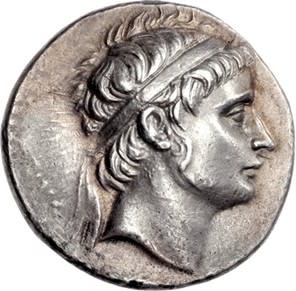
The allies’ fears proved justified — Seleucus II launched his eastern campaign.
The opening phase of the expedition went remarkably well for Seleucus II. The Parni, however, retreated using one of their favored methods of warfare: the tactic of the “feigned retreat,” drawing the Greco-Macedonian forces farther and farther east toward the Parthian-Bactrian frontier.
It was here, according to a number of scholars, that Diodotus II provided decisive military support to his ally Arsaces. Trapped between two allied armies, Seleucus II suffered a devastating defeat and, according to some accounts, was even taken prisoner.
The historian Justin noted that the day of this great triumph subsequently became an officially celebrated date of Parthian independence. The battle effectively secured the sovereignty of both Parthia and Bactria.
Nevertheless, the proud Seleucids continued for many years to refuse formal recognition of this reality. The royal title of the Bactrian rulers was officially acknowledged by Antiochus III only during the siege of Bactra in 208–206 BC, by which time Euthydemus I was already king.
Despite Diodotus II’s successes in foreign policy, a deadly conspiracy was taking shape within the kingdom.
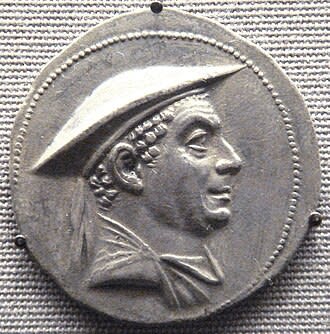
In the mid-220s BC — according to Polybius, around 225 BC — the ambitious satrap of Sogdiana, Euthydemus, launched a rebellion. The coup proved successful and exceptionally brutal: Diodotus II was overthrown and executed, while his entire family and relatives were mercilessly exterminated. Thus came the end of the Diodotid dynasty.
The death of Diodotus II had disastrous consequences for regional diplomacy. The Parthians, who had trusted the fallen monarch, categorically refused to deal with the usurper Euthydemus, regarding him as an unpredictable and dangerous neighbor.
The anti-Seleucid defensive pact collapsed overnight. As the Roman historian Ammianus Marcellinus emphasized, relations between Parthia and Bactria descended into fierce hostility for the next twenty years, reaching a level of tension comparable to that which had existed during the reign of Diodotus I.
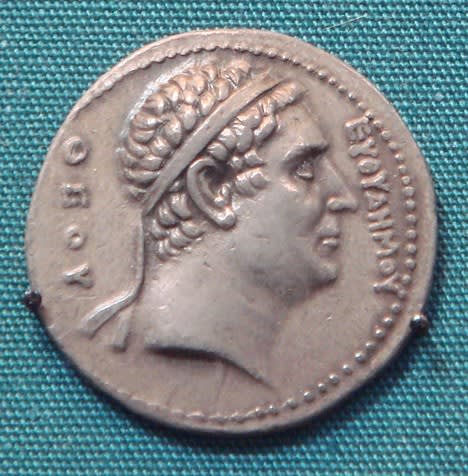
The name of Diodotus II was not erased from the memory of later generations by the usurpers. Decades later, the Greco-Bactrian kings Agathocles and Antimachus I, seeking to emphasize the continuity and legitimacy of their own rule, issued commemorative or “pedigree” coins bearing the portraits of distinguished predecessors.
It is thanks to one of these coins that the world learned of the posthumous epithet bestowed upon Bactria’s second king — Diodotus II Theos, from the Ancient Greek meaning “the Divine.”


