
The exact date of Diodotus’s birth has been lost behind the veil of centuries. Equally obscure is the time of his appointment as satrap of Bactria. The early twentieth-century British archaeologist J. Macdonald proposed an intriguing hypothesis: relying on a cuneiform tablet dated to 276–274 BC, in which a Bactrian satrap sent war elephants to Babylon to aid the Seleucids, the scholar interpreted a monogram as the name of Diodotus. If correct, this would mean that Diodotus may have received his position from Antiochus I Soter as early as around 280 BC and remained a loyal vassal of the dynasty for nearly three decades.

Modern scholarship, however, treats this theory with considerable skepticism. As the historian F. Holt has noted, the hypothesis rests largely on historians’ eagerness to find the earliest possible reference to Diodotus. It is now considered more likely that he was appointed to this high office by the next Seleucid ruler, Antiochus II.
Little is known about the early stage of Diodotus’s career, but archaeological discoveries, particularly those from the legendary site of Ai-Khanoum, allow us to lift the veil of mystery to some extent. As a powerful governor, he undoubtedly oversaw major construction projects in this Hellenistic metropolis. Enormous authority was concentrated in his hands: Diodotus held the rank of strategos and exercised complete control over the army, finances, and the entire administrative system of the region. Even before assuming a royal crown, he effectively possessed the powers of a king and, according to the sources, already “lived in royal fashion,” in no way inferior to sovereign rulers.


Ideas of independence had circulated in Bactria since the time of Alexander the Great’s Indian campaign. Yet under Alexander, as under the early Seleucids, the firm grip of the central government prevented such ambitions from breaking through. Over time, however, the descendants of the Diadochi grew weaker as they became entangled in internal conflicts. The economic strength of Bactria increased, and with it grew the desire of the local elites to throw off foreign domination.
Historians still disagree over the exact year in which Diodotus I took his historic step and broke away from the Seleucid Empire. On the basis of the Roman historian Justin, who stated that the event occurred in the year of the consulship of Lucius Manlius Vulso and Marcus Atilius Regulus, an early date of 256 BC was long accepted. Other proposed dates have included 255 BC, the period between 255 and 250 BC, or more generally the 250s BC.

Justin described Bactria’s separation in dramatic terms: “At the same time Diodotus, governor of the thousand cities of Bactria, revolted from the Macedonians and ordered himself to be called king.”
N. Overtoom saw the reason for the break in the threat posed by the nomadic Parni, who seized Parthia from the satrap Andragoras and thereby destroyed the fragile balance of power. The Polish scholar Marek Olbrycht pointed to the declining prestige of the Seleucids and the revolts in Persis. F. Holt, by contrast, argued that separatism matured peacefully, since archaeology reveals no traces of destruction or bloodshed. Soviet historiography explained the bloodless separation more simply: the Seleucids were deeply engaged in wars in the West and lacked the strength to launch a punitive expedition.
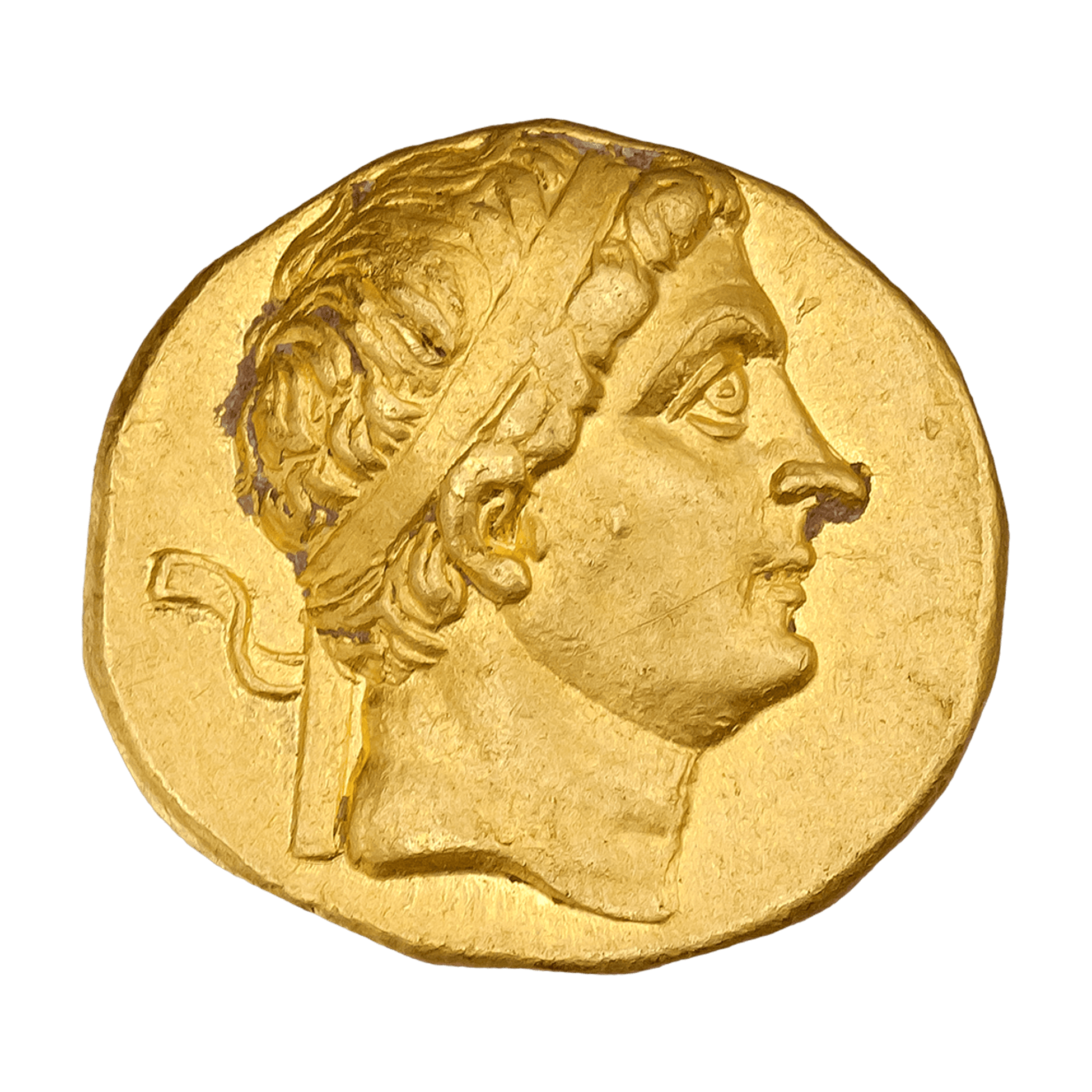
Diodotus consolidated his independence through the brilliantly organized minting of his own coinage — gold staters, silver tetradrachms, drachms, and hemidrachms. At first, the portrait of the Seleucid king on the coins was quietly replaced with the strong profile of Diodotus. Then, on the reverse, Apollo, the patron deity of the Seleucids, gave way to Diodotus’s own divine protector — Zeus Bremetes, Zeus the Thunderer, holding the aegis on his left arm. Finally came the boldest step of all: the inscription on the coins was changed to ΒΑΣΙΛΕΩΣ ΔΙΟΔΟΤΟΥ — “Of King Diodotus.”

Interestingly, the Seleucids refused to recognize this royal title for a long time. It was only in 208–206 BC, during the famous siege of Bactra, that the Seleucid monarch Antiochus III formally recognized the reigning Euthydemus I as king.
The geopolitical situation reached a critical point when, on April 14–15, 247 BC, Arsaces, leader of the nomadic Parni tribe from the Dahae confederation, proclaimed himself king and laid the foundations of the great Parthian state. During the first three years of his rule, the ambitious Arsaces directed his efforts toward the conquest of Bactria. Diodotus I, whose possessions by that time may have extended beyond Bactria and Sogdiana into Aria and Margiana, met the enemy fully prepared.

In 246–245 BC, Diodotus inflicted a crushing defeat on the Parni, defended Margiana, and for this triumph received the honorary epithet Soter, meaning “Savior.”
Remarkably, Diodotus did not pursue the defeated enemy. Historians have proposed several possible explanations: fear of exposing his borders to new waves of nomadic invasion, a shortage of troops, or the necessity of keeping an eye on the Seleucids, whose king Seleucus II had failed to send assistance.
Arsaces, after recovering from his defeat, turned his fury against Parthia, overthrowing the satrap Andragoras and subsequently conquering Hyrcania. The balance of power collapsed.
Diodotus I now stood at the head of the largest and wealthiest state in the region, possessing a powerful army that had already demonstrated its strength, but his frontiers remained dangerously exposed. Arsaces, squeezed into the center of this geopolitical struggle, feared the Bactrian threat, fully aware that a war on two fronts could destroy the young Parthian state. A major conflict appeared inevitable.
Attempting to maneuver through this web of intrigue, Diodotus I pursued a subtle diplomatic policy. Around 246 BC, he established a marriage alliance with his former overlords: Seleucus II, seeking allies against common enemies, gave his sister, a daughter of Antiochus II, in marriage to the Bactrian ruler. At approximately the same time, Seleucus arranged similar dynastic marriages with the rulers of Pontus and Cappadocia.

The identity of the mother of Diodotus II, heir to the throne, remains an open question. The historian William Tarn believed that the heir must have been born to another woman, since Diodotus II was already a fully grown man by the time he ascended the throne. Numismatic evidence has also given rise to the hypothesis of a second son, Antiochus Nikator, who may have been the third king of Greco-Bactria.

The great war between Parthia and Bactria, which might have redrawn the entire political map of the East, never took place. Around 236–235 BC, the brilliant Diodotus I suddenly died.
Power passed to his son, Diodotus II, who made a sharp change in foreign policy. He abandoned his father’s confrontational approach, concluded peace with Arsaces, and soon entered into a military alliance with him against the Seleucids.

The memory of the powerful founder of independent Bactria endured for generations. Much later, another great Greco-Bactrian ruler, Agathocles, issued commemorative coins honoring the greatest monarchs of the past — Alexander the Great, Seleucus II, Euthydemus I, Demetrius I, and Pantaleon. Among this distinguished pantheon he respectfully included the portrait of Diodotus I, the man who had given the eastern Hellenistic world its independence.


