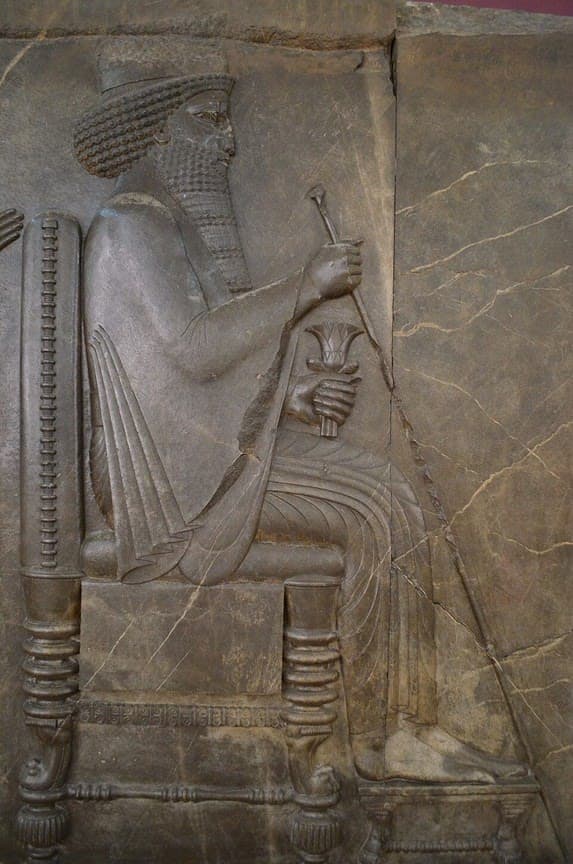
Xerxes ascended the throne during a difficult period, when the outer regions of the empire had already begun to show disobedience. The first serious challenge was the revolt in Egypt, which had broken out while Darius was still alive. In January 484 BC, Xerxes, at the head of a punitive expedition, suppressed the rebellion led by Psamtik IV. The reprisals were merciless: temple property was confiscated, and the country was subjected to unprecedented oppression. The king’s brother, Achaemenes, was appointed satrap, establishing a regime that excluded the local nobility from government. Xerxes demonstratively refused the title of pharaoh, leaving only his Persian name in hieroglyphic cartouches, which marked the end of the era of religious tolerance in Egypt.
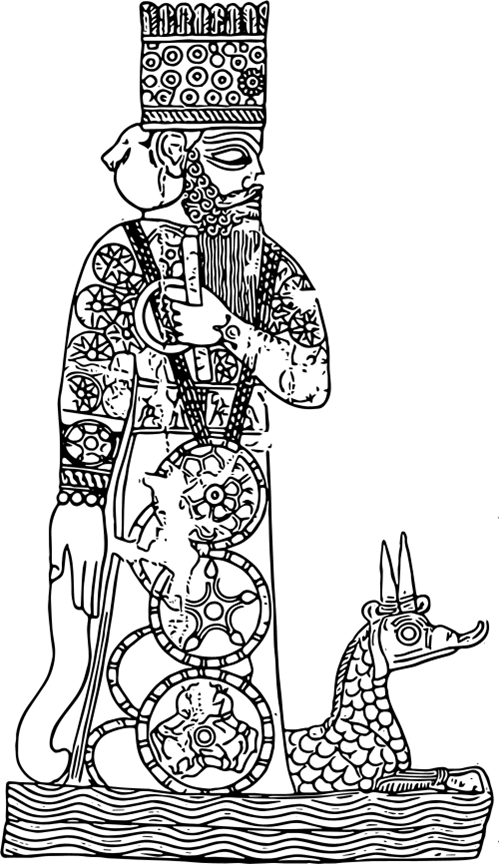
No sooner had the unrest on the Nile subsided than Babylon rebelled. The revolt began in July 484 BC under the leadership of Bel-shimanni, but it was suppressed within two weeks. However, in August 482 BC, a new and larger uprising broke out under Shamash-eriba. While Persian garrisons were being transferred toward the Greek frontiers, the rebels captured Borsippa and Dilbat. The siege of the city, entrusted to the king’s son-in-law Megabyzus, lasted several months and ended in March 481 BC with the complete liquidation of the Babylonian kingdom. Xerxes committed an act of supreme sacrilege: he removed the 600-kilogram golden statue of the god Marduk from the temple of Esagila and probably had it melted down. In doing so, he deprived future pretenders of the possibility of legitimately taking the throne, since the authority of the king of Babylon was granted only from the hands of this god.
By the end of the 480s BC, Xerxes had concentrated all the resources of the empire on preparing revenge for his father’s defeat at Marathon. This was not merely a war, but an engineering challenge to the age.
A canal more than two kilometers long was dug through the isthmus of Chalcidice in order to avoid the dangerous route around Mount Athos.


Pontoon bridges: two gigantic bridges, each 1,300 meters long, were thrown across the Hellespont, the modern Dardanelles.
Along the coast of Thrace, enormous food depots were created.
Xerxes’s diplomatic network enveloped the entire Mediterranean: Carthage was supposed to tie down the Greeks of Sicily, while Argos and Thessaly had already declared submission. In response, in 481 BC, a pan-Hellenic alliance led by Sparta was formed at Corinth.
In the summer of 480 BC, Xerxes’s army, numbering by modern estimates between 80,000 and 200,000 warriors, although Herodotus gave the fantastic figure of 1.7 million, began its crossing into Europe. When a storm destroyed the first bridges, the enraged king ordered the sea to be “whipped” with lashes and chains to be thrown into it — a gesture demonstrating his claim to power over nature itself.
In August 480 BC, the Persians approached the narrow pass of Thermopylae. There they were met by a small force led by the Spartan king Leonidas I. For three days, the Persian army could not break through the hoplite formation, until a traitor showed the enemy a mountain path leading to the Greeks’ rear. The heroic death of the 300 Spartans and their allies allowed the rest of Greece to gain time for mobilization.


After the breakthrough, the Persians poured into Attica. Athens was abandoned by its inhabitants and set on fire; the Acropolis was destroyed. However, the Athenian strategist Themistocles lured the enormous but unwieldy Persian fleet into the narrow Strait of Salamis. On September 28, 480 BC, Xerxes, watching the battle from a golden throne on the shore, witnessed the destruction of his fleet. Persian ships, crowding against one another, became easy prey for the Greek triremes. This defeat forced Xerxes to leave Greece hastily, leaving command of the land army to the general Mardonius.
The following year, 479 BC, proved fatal for the Persian presence in Europe. At the Battle of Plataea, the united Greek army under the command of the Spartan Pausanias utterly defeated Mardonius. The decisive moment was the death of Mardonius himself, after which the Persian army turned to flight.
At the same time, near Cape Mycale in Ionia, a Greek landing force destroyed the remnants of the Persian fleet and the 15,000-strong corps of Tigranes. This liberated the Aegean Sea and led the islands of Samos, Chios, and Lesbos to join the alliance. In 478 BC, the city of Sestos, the last Persian stronghold on the Hellespont, fell, finally severing the empire’s connection with its European territories.

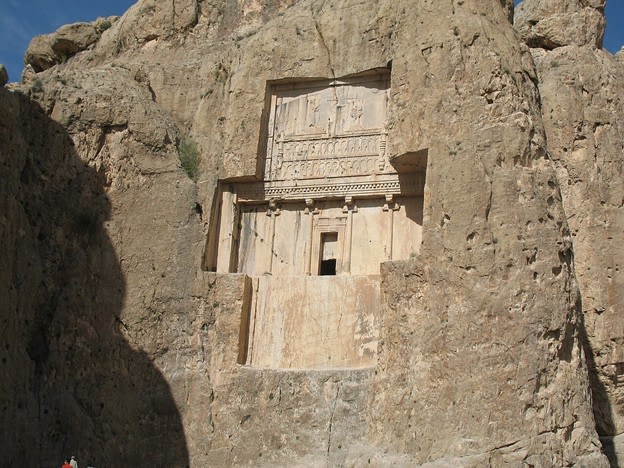
After returning from the campaign, Xerxes immersed himself in palace intrigues and large-scale construction in Persepolis and Susa. But the empire had already begun to crack at the seams. The revolt of his brother Masistes in Bactria, which occurred around 478 BC, ended in the brutal massacre of his entire family, a consequence of tangled love intrigues and the personal revenge of the king’s wife Amestris.
By 467 BC, the situation had worsened: a mass famine began in Persia, and grain prices rose sevenfold. To hold on to power, Xerxes carried out purges in the state apparatus, removing a hundred officials, but this only intensified the hatred of the nobility. In August 465 BC, the commander of the guard, Artabanus, and the eunuch Aspamitres, or Mithridates, entered the king’s bedroom and killed him in the 54th year of his life. His eldest son Darius was killed along with him.
Xerxes I ruled for 20 years and 8 months. He left behind the grand ruins of palaces and the memory of a ruler whose bid for world domination was stopped on the shores of Hellas, forever changing the course of world history.


