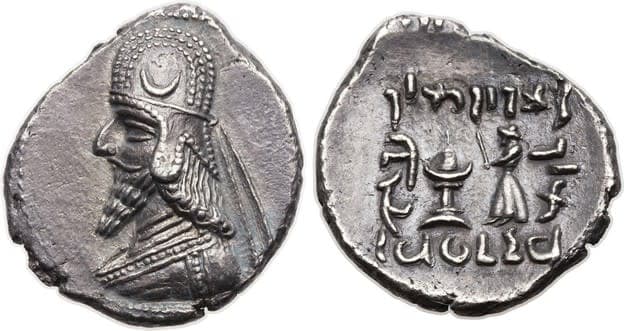

Darius II entered history under the Greek nickname Nothus, meaning “the Illegitimate,” because he was the son of Artaxerxes I not by his lawful wife, but by the Babylonian concubine Cosmartidene. Before putting on the royal tiara, he ruled harsh Hyrcania under the name Ochus.

His path to power in 424–423 BC was typical of that time: bloody and brief. According to Ctesias, Ochus took the throne after the chaotic and fleeting reigns of his brothers — Xerxes II and Sogdianus. Having executed the latter with the support of an influential clique, Ochus adopted the throne name Darius. Babylonian documents regard February 13, 423 BC, as the official beginning of his reign.
If Artaxerxes I sometimes listened to the women of the harem, then Darius II effectively ruled under their dictation. The chief architect of imperial policy became his wife and at the same time his half-sister — Queen Parysatis. She possessed an iron will and refined cruelty, directing the king’s actions through three loyal eunuchs: Artoxares, Artibarzanes, and Athous.

The first serious test was the revolt of the king’s own brother, Arsites. Despite the rebels’ initial successes, the Persian general Artasyras bribed the enemy’s Greek mercenaries and suppressed the uprising. Parysatis displayed her characteristic treachery: she persuaded Darius to promise his brother mercy, but when he surrendered, she ordered him and his associate Artyphius to be thrown into a pit of hot ashes, where they died in terrible agony.
The reign of Darius II was literally permeated with dramas:
The eunuch Artoxares, who had placed the crown on Darius’s head, himself wanted to become king. Since eunuchs could not claim the throne, he ordered his wife to make him a false beard and mustache so that he could pass as a “complete” man. After being denounced by his wife, he was seized and executed.
The satrap of Hyrcania, Terituchmes, who was married to the king’s daughter Amestris, rebelled because of his passion for his own sister Roxana. The revolt was brutally suppressed: Terituchmes died in battle — it was said that he personally killed 37 enemies — and Parysatis unleashed a nightmarish revenge upon his family. Roxana was cut to pieces alive, while the other relatives were buried alive. Only Stateira, the wife of the king’s eldest son Arsaces, the future Artaxerxes II, managed to survive thanks to her husband’s tearful pleas.

In foreign policy, Darius II took advantage of the exhaustion of the Greek poleis during the Peloponnesian War. The king’s main instrument became the satrap of Lydia, Tissaphernes — a brilliant but unprincipled diplomat.

In 413 BC, after the defeat of the Athenians in Sicily, Tissaphernes began a subtle game:
He concluded an alliance with Sparta, which recognized Persian authority over the Greek cities of Asia Minor.
He sponsored the Spartan fleet, but did so in a “measured” way, so that the Greeks would destroy one another without giving either side a decisive advantage.
Even when the talented Athenian Alcibiades went over to the Persian side, Tissaphernes continued to balance between the two, seeking the mutual weakening of Athens and Sparta.

However, this policy of “balance” cracked when the Athenians won a series of victories at Abydos and Cyzicus, and when a revolt broke out in Media within the empire itself.
In 408 BC, under pressure from Parysatis, Darius appointed his younger son, Cyrus the Younger, as governor of Asia Minor and supreme commander. Cyrus, unlike the cautious Tissaphernes, placed his bet on the complete victory of Sparta.
He gave the Spartan navarch Lysander 10,000 darics, allowing the Spartans to rebuild their fleet. As a result:
The Athenians, deprived of resources, made a fatal mistake by executing their best generals after the Battle of Arginusae.
In the winter of 405 BC, at Aegospotami, Lysander caught the Athenian fleet by surprise and destroyed it.
In the spring of 404 BC, Athens capitulated. Persia triumphantly regained control over all its possessions in Asia Minor, effectively deciding the outcome of the greatest war of antiquity with its gold.

By the end of Darius II’s reign, central authority continued to weaken. The satraps waged their own wars, Egypt rebelled under the leadership of Amyrtaeus, and the palace remained a nest of conspiracies. Darius II died of illness in March 404 BC in Babylon, after reigning for 19 years.
His tomb in the cliffs of Naqsh-e Rustam became the last royal burial place in this sacred necropolis. Darius II left behind an empire that outwardly seemed more powerful than ever, but internally was exhausted by corruption and the personal ambitions of the satraps. This would soon lead to the famous march of the Ten Thousand Greek mercenaries and a new chapter of civil wars.


