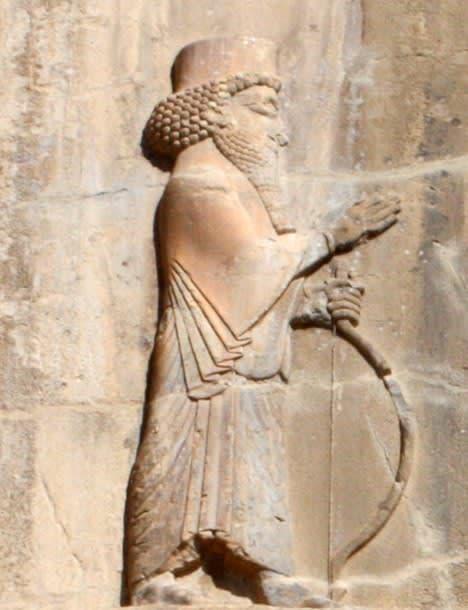

If the reign of Artaxerxes II Mnemon was an era of flexible diplomacy and “golden darics,” then the accession of his youngest son, who entered history under the name Artaxerxes III, marked a return to the politics of iron, blood, and absolute fear. Born Ochus — in Old Persian, Vahuka — he was not the obvious heir to the throne, but his will and ruthlessness cleared his path to power, which he held for more than twenty years, temporarily restoring the fading Achaemenid Empire to its former greatness.
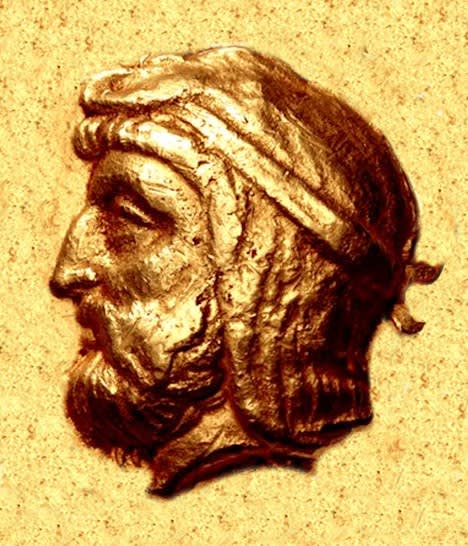
Ochus’s path to power began long before his official coronation. As early as 361 BC, while still a prince, he distinguished himself in the campaign against rebellious Egypt, where he captured Pharaoh Tachos. However, the real seizure of power took place in an atmosphere of deep secrecy and intrigue. The historian Polyaenus claims that after the death of his elderly father at the end of 359 BC, Ochus concealed this fact from the empire for ten months. He sent out decrees in the name of the deceased Artaxerxes II, gradually preparing the ground for his own recognition.
When the mask was finally dropped, the world shuddered. To eliminate even the thought of conspiracies, the new king ordered the extermination of his entire numerous family. In one terrible day, 80 of his brothers were executed. The Magi predicted that his reign would be marked by abundant harvests and equally abundant executions — and while history judges the fertility of the fields sparingly, in terms of cruelty Artaxerxes III exceeded the darkest expectations. He was a man of “iron will,” who saw fear as the only reliable glue for a collapsing empire.
The first task of the new ruler was to restore control over Asia Minor, where the satraps had grown accustomed to feeling like independent petty kings. In 356 BC, Artaxerxes III issued an unprecedented decree: all governors were ordered to immediately disband their mercenary armies. Most obeyed, but Artabazus, satrap of Hellespontine Phrygia, raised the banner of revolt and called upon the Athenians for help.

The Athenian general Chares initially achieved success, but Artaxerxes III applied the method that would later become his hallmark: a combination of military threat and political pressure. He threatened Greece with a full-scale invasion. Frightened Athens, finding no support from the other poleis, withdrew its troops and recognized the independence of its former allies — Chios, Rhodes, and Byzantium. Left without support, the rebellious satraps fell: in 352 BC, Orontes surrendered, while Artabazus fled to the Macedonian court, where the young Alexander was growing up at the time.
However, Artaxerxes’s main goal had always remained Egypt. The first attempt at conquest in 350 BC failed: Pharaoh Nectanebo II, with the help of Greek mercenaries, repelled the attack. This defeat triggered a chain reaction of revolts in Phoenicia, Cilicia, and Cyprus. The center of resistance became wealthy Sidon under the leadership of King Tennes.
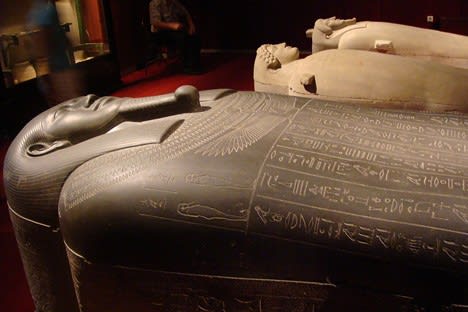
In 345 BC, Artaxerxes personally led a punitive expedition. The siege of Sidon ended in catastrophe caused by betrayal: King Tennes and the commander of the Greek mercenaries, Mentor of Rhodes, decided to buy their lives at the price of the city. The Sidonians, realizing that there would be no mercy, set fire to their homes. More than 40,000 people perished in the flames and by the swords of the Persians. Artaxerxes III revealed his true nature: he executed the traitor Tennes as soon as he was no longer useful, while he accepted the mercenary Mentor into his service, making him his key instrument in subsequent wars. The Jews who supported the revolt were also severely punished — some of them were deported to distant Hyrcania on the shores of the Caspian Sea.
In the winter of 343 BC, the decisive campaign began. Artaxerxes assembled a colossal army reinforced by Greek contingents from Argos and Thebes. Mentor of Rhodes played a key role in Egypt’s fall: knowing the pharaoh’s defense system from within, he helped the Persians bypass fortified Pelusium.
After fierce fighting and the fall of Memphis, Nectanebo II — the last native pharaoh in the history of Egypt — fled with his treasures to Nubia. In 342 BC, Egypt once again became a Persian satrapy. But Artaxerxes III did not merely conquer the country — he sought to humiliate its spirit. Temples were plundered, and city walls were torn down. Legends speak of his refined sacrilege: in response to the Egyptians mockingly calling him “the donkey,” associating him with the god Seth, the king allegedly ordered the sacred Apis bull to be slaughtered and roasted, sharing the meal with his friends. In place of the deity, he supposedly ordered a donkey to be installed, forcing the priests to serve it.


By 338 BC, the Achaemenid Empire appeared more powerful than it had been at any time in the previous hundred years. Unity had been restored, the borders strengthened, and enemies trembled. Yet the tyrant who had destroyed all external enemies fell victim to an internal shadow. His most trusted confidant, the eunuch Bagoas, who possessed boundless influence, organized a conspiracy in which Artaxerxes III was poisoned by his own physician.
The reign of Artaxerxes III was the last flash of Persian greatness before its fatal confrontation with Alexander the Great. He proved that the empire was still capable of mobilization and victory, but his methods left behind scorched earth and hatred, which only a few years later turned against his successors.


