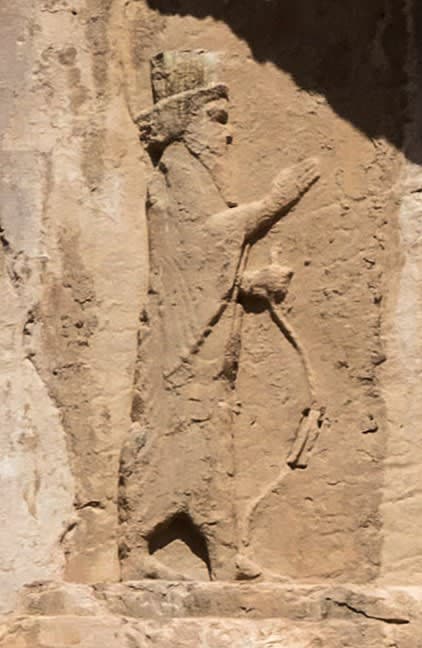
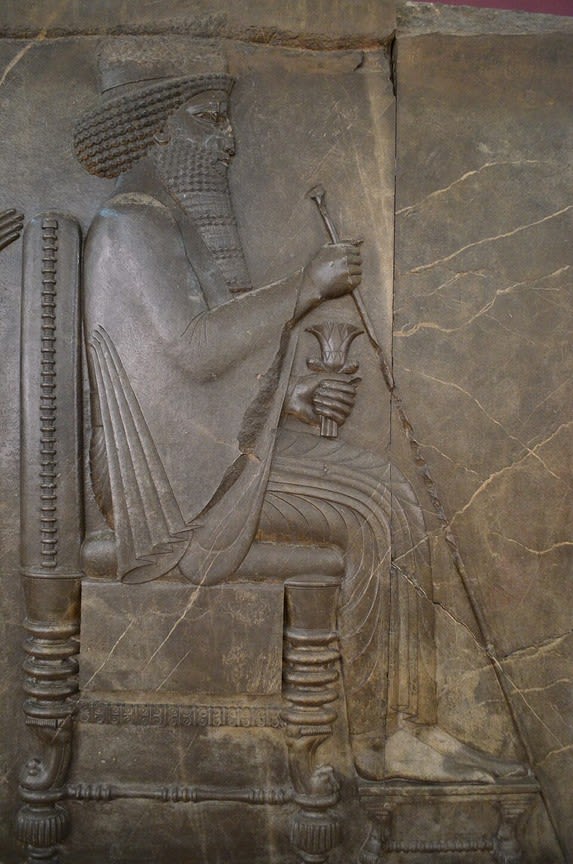
Artaxerxes I, the younger son of Xerxes I and the powerful Amestris, entered history under the nickname Macrocheir, “Long-Handed.” The ancient Greeks debated the origin of this name: some saw in it a symbol of his boundless influence, stretching across thousands of miles, while others more prosaically noted that his right hand was visibly longer than his left.
His ascent to the throne in August 465 BC was washed in blood. As a result of a palace coup organized by the commander of the guard, Artabanus, and the eunuch Aspamitres, his father Xerxes and his elder brother Darius were killed. The intrigue was masterfully arranged: Artabanus convinced the young Artaxerxes that Darius himself had murdered their father, and provoked him into fratricide in the name of “justice.”

However, Artabanus’s triumph was short-lived. Having plotted to seize the throne himself — some sources even describe him as the actual ruler for seven months — he was betrayed by his own son-in-law, Megabyzus. In the palace struggle that followed, Artaxerxes personally eliminated Artabanus. The punishment of the conspirators was total: all the sons of Artabanus were executed, while the eunuch Aspamitres suffered a painful death through the “trough torture.”
“Artaxerxes arranged the affairs of the kingdom according to his own interests. He replaced hostile satraps with his competent friends... and enjoyed the highest honor among the Persians.”
— Diodorus Siculus
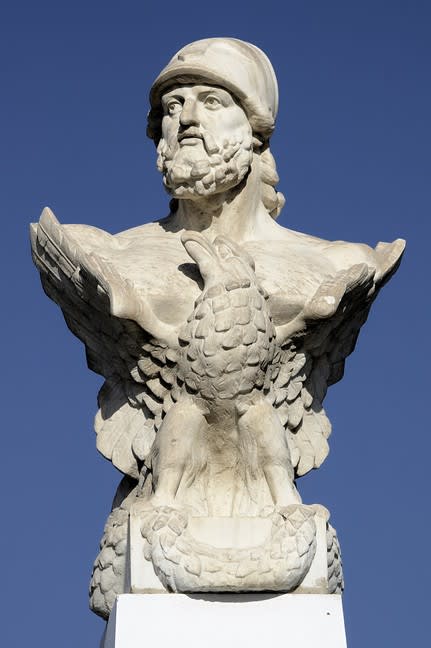
No sooner had Artaxerxes strengthened his authority than he faced a major challenge. In 460 BC, a powerful revolt broke out in Egypt under the leadership of the Libyan Inaros and the Saite leader Amyrtaeus I.
The conflict developed rapidly:
The Battle of Papremis took place in 460 BC; during it, the Persian army of the satrap Achaemenes, the king’s uncle, was completely destroyed, and Achaemenes himself was killed.
Athens also decided to intervene in this conflict, sending a fleet of 200 ships to assist the rebels. The Greeks entered the Nile, burned the Persian ships, and laid siege to Memphis.
The Persian garrison held the citadel of Memphis for a year while the Athenians and Egyptians exhausted their forces.
The outcome came in 456 BC, when the satrap Megabyzus arrived with a fresh army and a Phoenician fleet. The Athenians were blockaded on the island of Prosopitis. After a year and a half of siege, the Persians diverted the water from a branch of the river, turning the island into a peninsula, and caught the Greeks by surprise. By 454 BC, Egypt had once again become a satrapy under the administration of Arsames, although Amyrtaeus continued to hide for a long time in the marshes of the Nile Delta, remaining the “elusive avenger” of that era.
After the pacification of Egypt, the conflict shifted to Cyprus. In 450 BC, the Athenian general Cimon undertook the last grand attempt to crush the Persians at sea.
Events on Cyprus unfolded dramatically:
During the siege of Kition, the main stronghold of the Phoenicians, Cimon died of illness, ordering that his death be kept secret so as not to demoralize the army.
While retreating from Cyprus, the Greeks encountered the Persian fleet near Salamis in Cyprus and won a brilliant victory both at sea and on land.
Despite these tactical successes by the Greeks, both sides were exhausted by decades of war. In 449 BC, an embassy led by Callias arrived in Susa. A historic treaty was concluded, drawing a line under half a century of Greco-Persian wars.
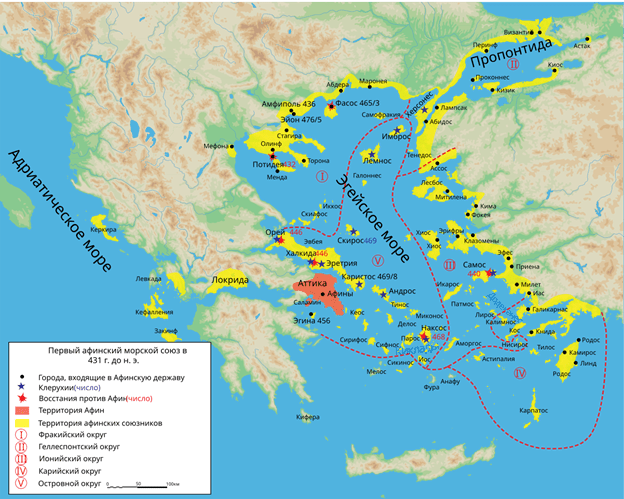

Realizing that the Greeks could not be defeated in open battle, Artaxerxes I made a strategic maneuver that would become the hallmark of the Achaemenids for the next hundred years. Persia shifted to a policy of “divide and rule.”
Instead of sending armies, the king began sending gold. Persian satraps began skillfully exploiting the contradictions between Athens and Sparta. When the Peloponnesian War broke out in 431 BC, Artaxerxes adopted a position of alternately supporting one side and then the other, so that neither polis would become too powerful.
The internal life of the court under Artaxerxes was a complex mixture of wise governance and the influence of the royal harem. Despite his decisiveness in affairs of state, the king often listened to the advice of his mother Amestris and his sister Amytis. Even his loyal general Megabyzus once rebelled against the king because of a broken promise to pardon captured Egyptians, but he was later forgiven, which emphasizes Artaxerxes’s moderation and flexibility as a monarch.
Artaxerxes I died at the end of 424 BC after ruling for 41 years. His death was overshadowed by tragedy: on the same day, his lawful wife Damaspia also died. History has preserved hints of poisoning, but one way or another, his departure marked the end of a period of relative stability. He was followed by the short and chaotic reigns of his sons Xerxes II and Sogdianus, before the throne was taken by Darius II.


