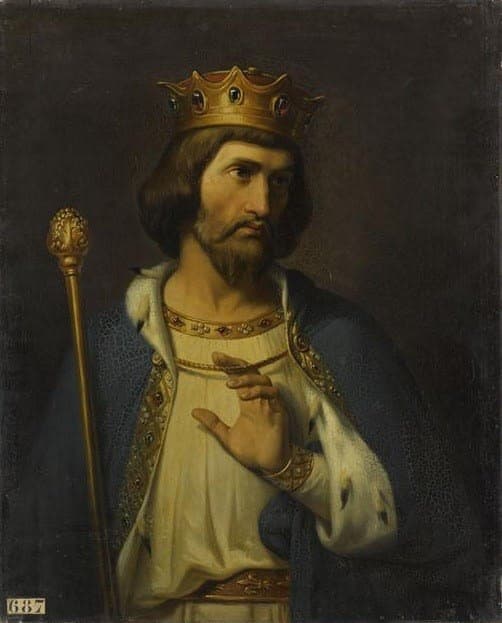
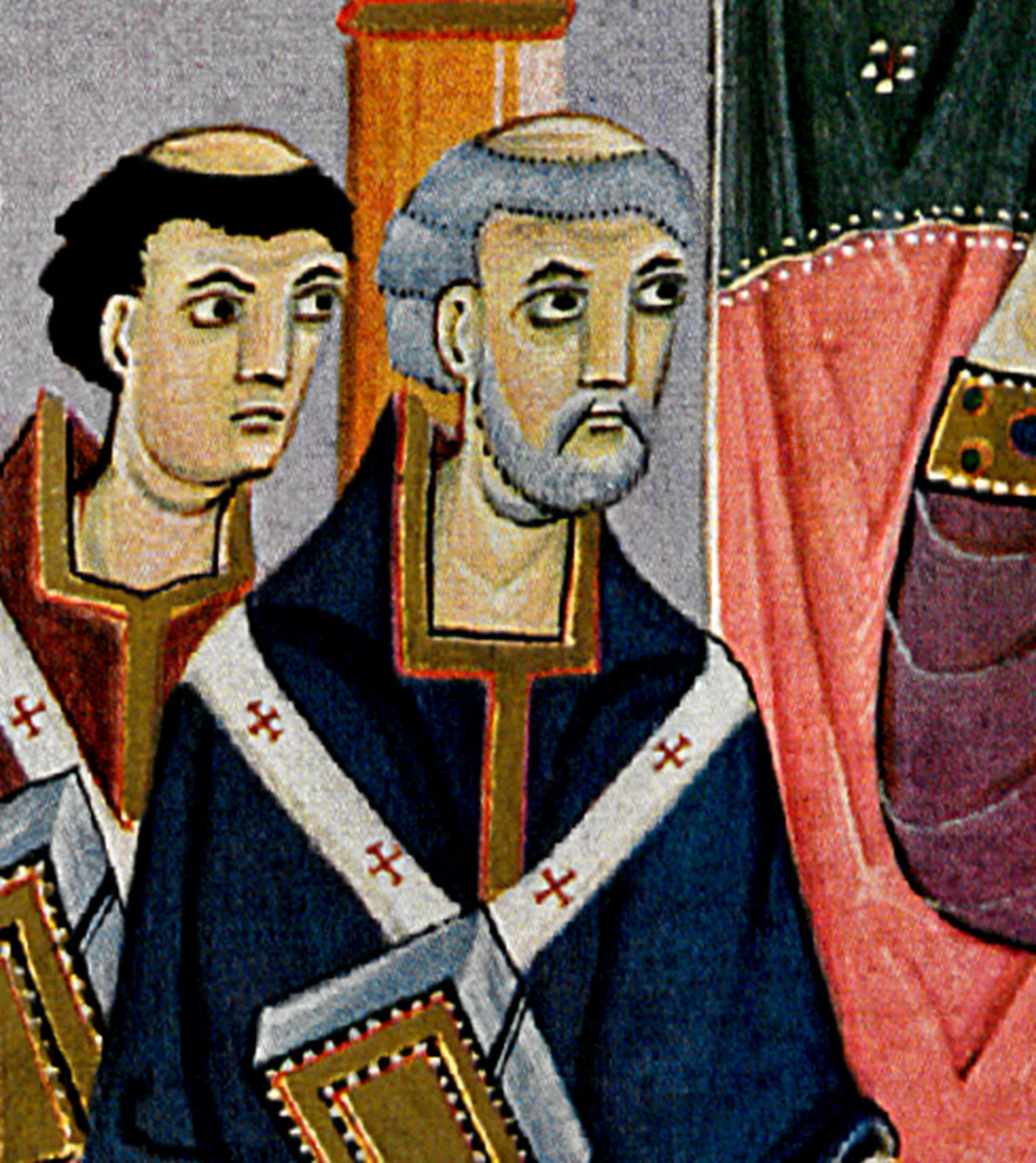
Robert II was the only son of Hugh Capet and was born around 972. He belonged to the powerful Robertian family, whose head, his father Hugh had inherited the counties of Paris and Orléans and became Duke of the Franks in 960. Robert received an excellent education for his time: under the guidance of the famous intellectual Gerbert of Aurillac (the future Pope Sylvester II) in Reims, he studied the liberal arts together with other young nobles.
After the death in May 987 of the last Carolingian monarch, Louis the Lazy (Louis V), Hugh Capet was elected king. Just five months later, in December 987, Hugh crowned his fifteen-year-old son Robert in Orléans, making him his formal co-ruler. Officially this was to ensure succession in case the king died during a campaign, but in fact Hugh wanted to secure the throne for his new dynasty and avoid another elective process as under the Carolingians.
In the first years, Robert took an active part in the war against the pretender Charles of Lorraine. In 988 his father married him to Rozala of Italy (Susanna), daughter of Berengar of Ivrea. Although Rozala was much older than Robert, her dowry included the strategically important lands of Montreuil and Ponthieu, and Robert became stepfather to the young Count of Flanders. The marriage, however, proved unsuccessful, probably due to the great age difference. After only a year Robert sent his wife away and, immediately after his father’s death in 996, obtained a formal divorce.
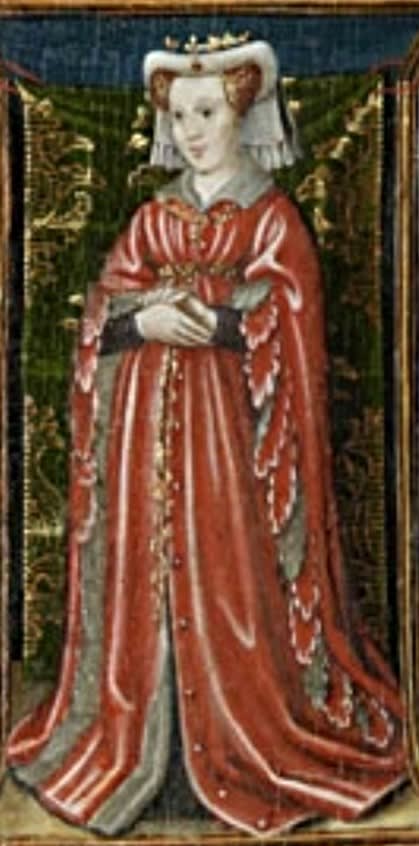
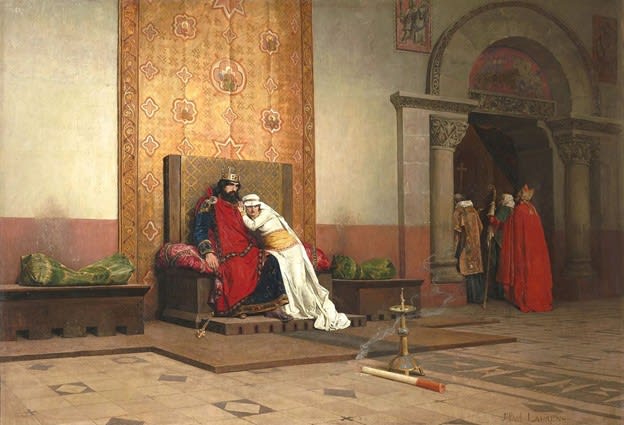
Immediately upon ascending the throne, Robert settled the conflict with the papacy regarding the archbishopric of Reims. Soon, however, he found himself in conflict with the Church again. After dissolving his first marriage, in 997 the king married Bertha of Burgundy, sister of King Rudolph III of Burgundy. This union was much happier, but Bertha was Robert’s third cousin and the godmother of one of his stepsons a degree of kinship forbidden by the Church. Pope Gregory V declared the marriage invalid, and when Robert refused to separate from his wife, he was excommunicated in 998 and sentenced to seven years of penance. The king long ignored the excommunication, but after the birth of a stillborn child, he was forced to seek a new wife.
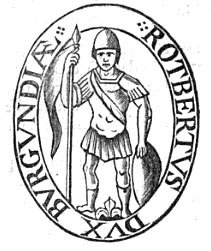
The king’s third wife, whom he married in 1003, was Constance of Arles an ambitious and ill-tempered woman. Robert tried for years to obtain papal permission to reunite with Bertha while openly living in a double marriage.
Robert II’s reign was overshadowed by disasters that struck France: in 997 the kingdom suffered the first known outbreak of St. Anthony’s Fire (ergotism), and during 1012–1016 and again in 1030 the land was ravaged by severe famine.
After his father’s death in 996, Robert II became sole king of France. His power was limited to the small royal domain around Paris and Orléans. He maintained alliances with the dukes of Normandy and Aquitaine, but his attempts to expand influence beyond the royal domain often ended in failure.
Robert’s main territorial achievement was the acquisition of Burgundy. At the end of 1002, after the death of his uncle King Eudes-Henry (Henry of Burgundy), Robert claimed rights to the duchy, which by will was to pass to his stepson Otto-William. The war lasted until 1016. Thanks to his alliance with the Duke of Normandy, Robert managed to annex Burgundy to the crown. However, he had to compromise by granting the duchy to his second son, Henry. Later Burgundy again left the royal domain and passed to Robert’s third son, also named Robert, who became the founder of the Elder House of Burgundy.
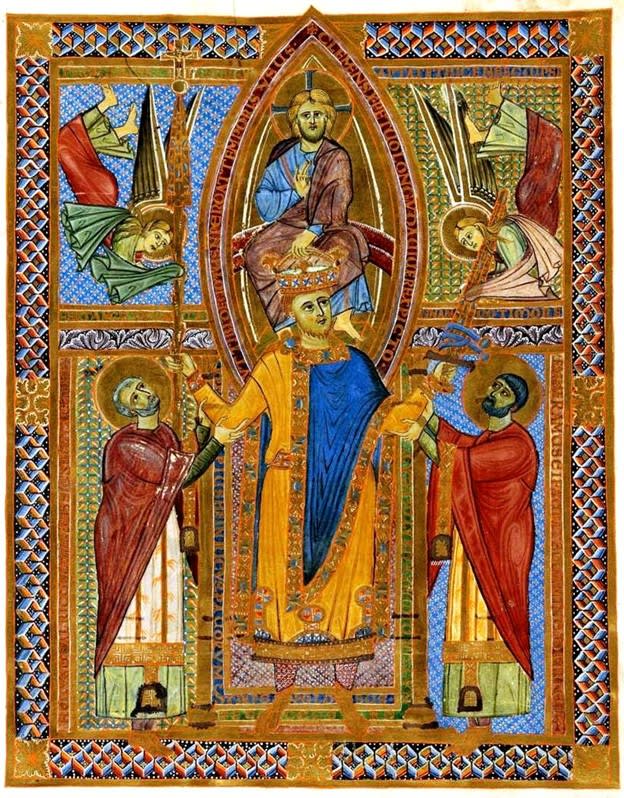
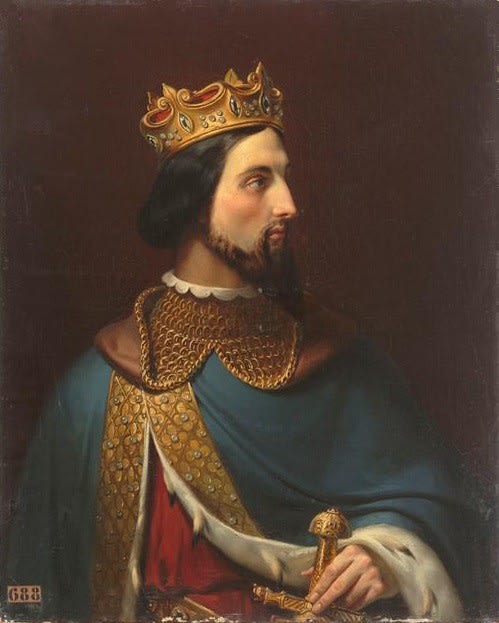
Robert pursued similar goals in Champagne after the death of Count Stephen around 1020, but these vast lands were seized by his most dangerous rival, Odo II of Blois. In response, Robert II allied with Emperor Henry II and tried to capture the county of Dreux. After Henry II’s death in 1024, Robert reconciled with Odo, recognizing him as Count of Champagne, but received nothing in return. As a result, the royal domain became further hemmed in by even more powerful vassals.
The king’s powerlessness before the might of his nobles became evident in 1008 when his palatine count Hugh of Beauvais was murdered. The king could not punish the obvious culprit, Count Fulk Nerra of Anjou, who simply refused to appear before his liege lord’s court.
Robert’s third wife, Constance of Arles, bore him four sons. In 1017, at her initiative, Robert arranged for the coronation of their eldest son, Hugh Magnus, as co-ruler. But as Hugh grew older, he demanded real power, while Constance schemed in favor of her third son, also named Robert. As a result, Hugh and his brother Henry left the royal court and even turned to banditry. Hugh died at eighteen in 1025. Despite the queen’s opposition, Henry reconciled with his father and was crowned co-ruler in 1027. In 1030, shortly before Robert’s death, Henry and his brother Robert rebelled against him, but the uprising soon ended in reconciliation.
Robert II led the Peace of God (Pax Dei) movement, whose goal was to limit private warfare. He organized several assemblies, including the first general one in 1024 at Éry, where agreements were made obliging warring parties to spare clergy, women, and peasants, and to observe the “Truce of God” — a ban on fighting from Friday to Sunday and on certain days of the year.
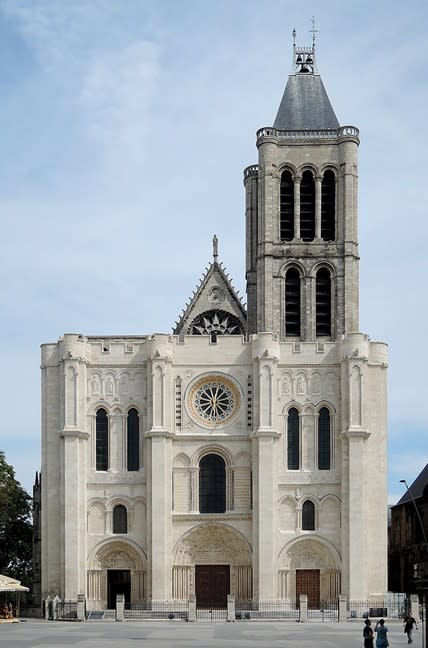
King Robert II the Pious died on July 20, 1031, in Melun at the age of 59 and was buried in the Basilica of Saint-Denis. Despite his efforts to maintain peace, his sons immediately began a war for the crown after his death.


