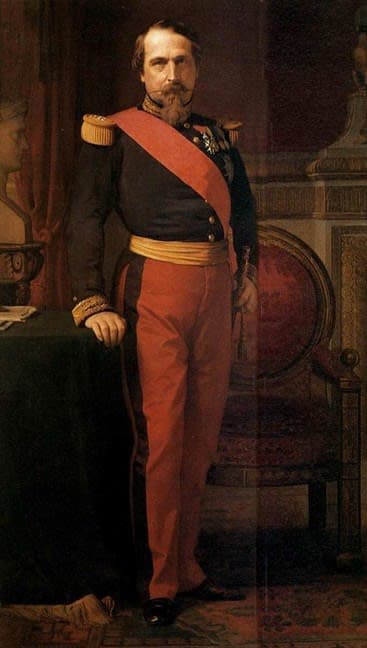

Louis-Napoleon was born in 1810. He was the son of Louis Bonaparte, King of Holland, and Hortense de Beauharnais. Because of his parents’ unhappy marriage, he was brought up by his mother and hardly knew his father. Although his legitimacy was disputed (his mother had, for example, an illegitimate son, Charles de Morny), Louis-Napoleon admired his uncle Napoleon Bonaparte all his life and strove to imitate him.

After the fall of Napoleon I, Hortense, who possessed a large fortune, bought the half-ruined castle of Arenenberg in Switzerland. Louis-Napoleon spent his youth wandering, receiving a haphazard education. His tutors were Abbé Bertrand and the son of a Jacobin, Philippe Lebas. In Switzerland he entered military service, becoming a captain of artillery, and published works on military affairs. From youth in him were combined passion and self-control; in Victor Hugo’s words, “the Dutchman restrained the Corsican in him.”
In 1830–1831 he, together with his elder brother Napoléon-Louis, took part in an uprising in Italy, the goal of which was to overthrow the temporal power of the popes. After the failure of the expedition, in which his brother died of measles, Louis-Napoleon managed to flee to France, from where he was immediately expelled.
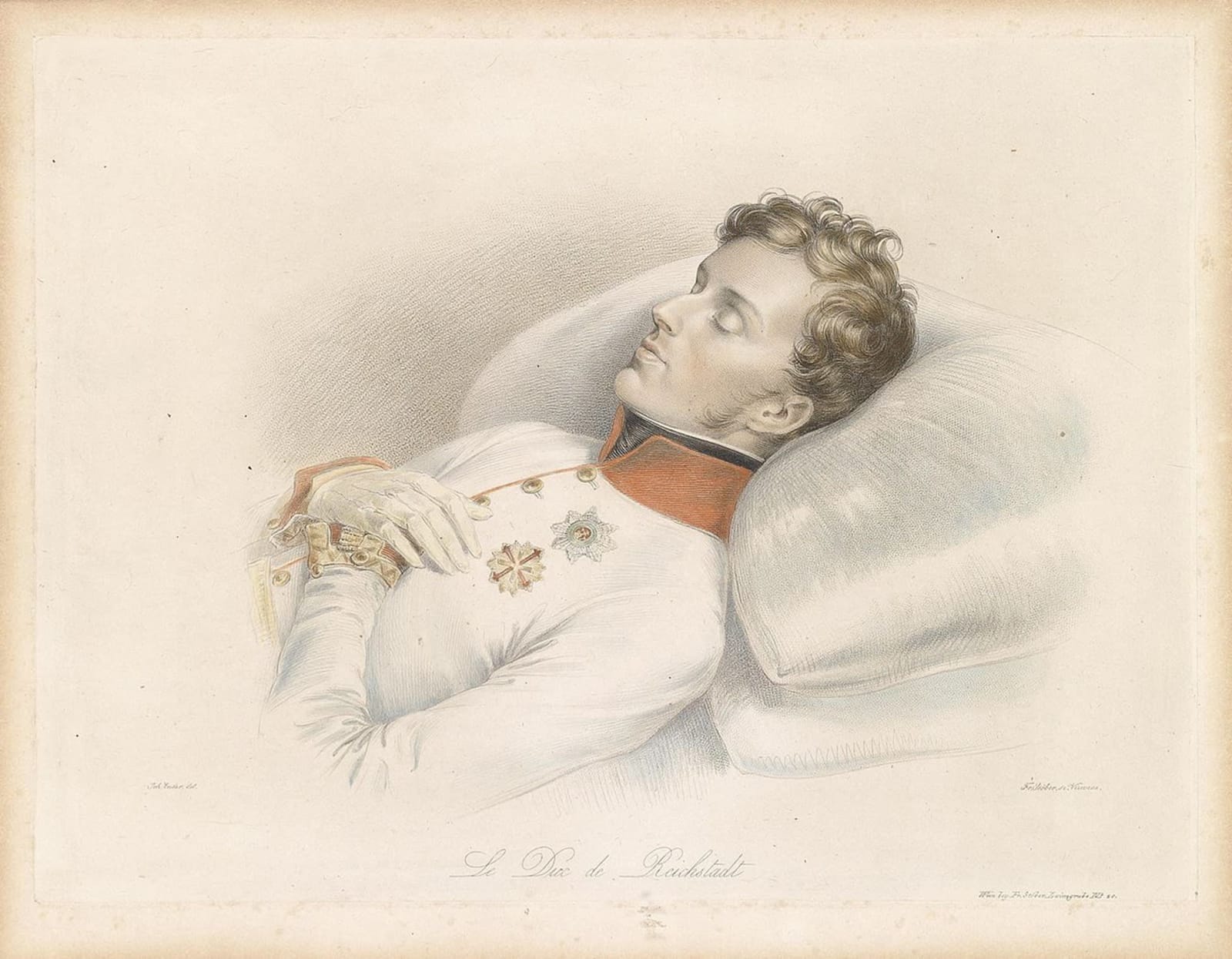
In 1832, after the death of the Duke of Reichstadt (the son of Napoleon I), Louis-Napoleon became the main claimant to the legacy of Napoleonic ideas. In his pamphlets he declared that he preferred a monarchical form of government based on republican principles, in which the people, the legislative body, and the emperor ought to be in harmony.
In 1836 Louis-Napoleon undertook his first, frivolous attempt to seize power. He arrived in Strasbourg dressed in a costume reminiscent of Napoleon I’s, and, brandishing the imperial eagle, attempted to incite an artillery regiment to revolt. The plot failed, the prince was arrested and expelled by King Louis-Philippe to the USA.
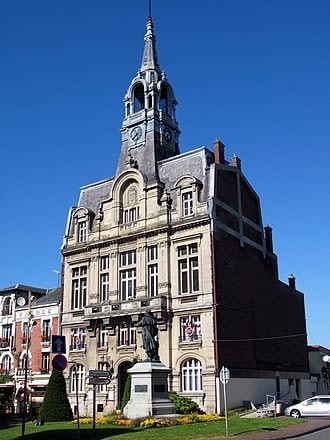
In 1840, taking advantage of the growth of the Napoleonic cult in France, Louis-Napoleon decided to repeat his attempt. He mortgaged Arenenberg, hired a steamer, and on 6 August 1840 landed at Boulogne. In his proclamations he promised the people stability and prosperity, but the attempt again ended in failure: the soldiers of the very first regiment arrested him.
The prince was sentenced to life imprisonment in the fortress of Ham. He spent six years there, enjoying considerable freedom. He read and wrote a great deal, furthering his education. His main work became the 1844 pamphlet On the Eradication of Poverty, in which he proposed a fantastic but attractive plan for socialists and workers the creation of state farms which brought him the support of left-wing forces.
In 1846 Louis-Napoleon escaped from the fortress, disguising himself as a worker, and made his way to England. There he established a relationship with the actress Harriet Howard, who, thanks to her financial support, was able to sustain his political ambitions.
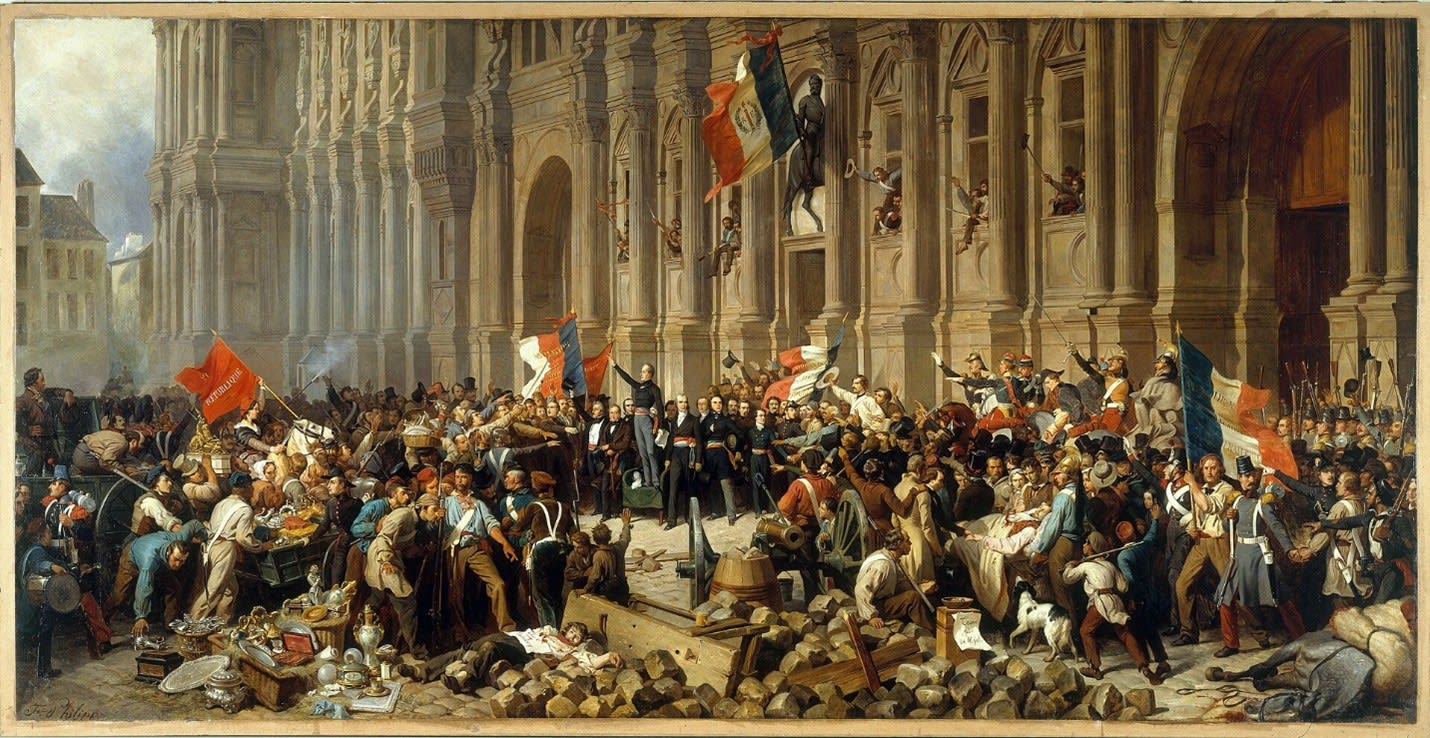
The February Revolution of 1848 led to the overthrow of Louis-Philippe and the proclamation of the Second French Republic. Louis-Napoleon returned to Paris, but at first adopted a wait-and-see attitude, declaring his loyalty to the Republic.
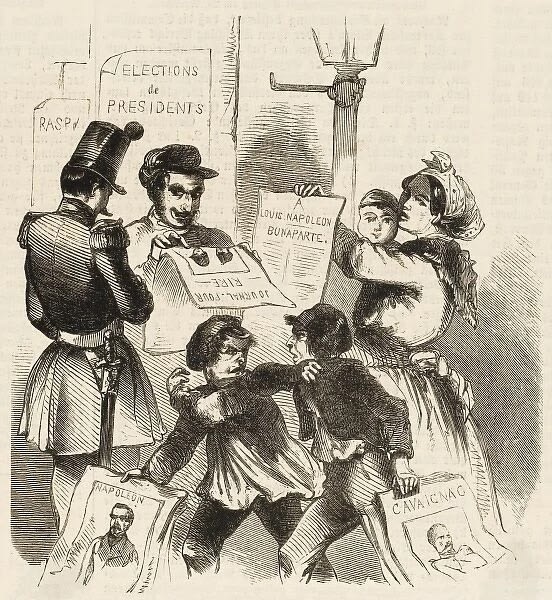
His name, associated with the pamphlet On the Eradication of Poverty, became popular among the peasantry and working class, especially after the bloody June workers’ uprising, from which he skillfully distanced himself.
In September 1848 he was elected deputy in five departments and entered the Constituent Assembly. He constantly declared his conviction that he was a true republican, but abstained from voting on key issues. His opponents underestimated him, mocking his German accent and calling him “a turkey who thought itself an eagle.”
In November 1848 Louis-Napoleon stood as a candidate for President of the Republic. His electoral manifesto was deliberately vague, promising patronage to all strata of society. He managed to secure the support of
the peasantry and workers (thanks to his populist promises),
the conservatives and Orléanists (who, like Thiers, believed they could “direct this moron”),
and the liberal intelligentsia (including Victor Hugo).
In France’s first direct presidential election, on 10 December 1848, Louis-Napoleon won a stunning victory, receiving 5.43 million votes against 1.45 million for General Cavaignac. At the age of 40 he became the youngest president of France.

On 20 December 1848 Louis-Napoleon took power, swearing to be faithful to the republic and the constitution. However, contrary to his oath, from the very beginning he nurtured plans to seize sole power.
The president encountered resistance from the conservative majority in the Legislative Assembly (the “Party of Order”), which introduced property restrictions on suffrage by the law of 31 May 1850, depriving 3.5 million voters of the vote. Louis-Napoleon used this to present himself as the defender of universal suffrage and popular sovereignty, breaking sharply with the Assembly.
Moreover, under the Constitution he was not allowed to run for a second term. After the Assembly in July 1851 rejected an amendment allowing re-election, he had no legal means to remain in power.
Preparation for a coup was carried out in secret, with the financial support of Miss Howard and the organizational help of his half-brother Auguste de Morny. The date was chosen symbolically 2 December 1851 (the anniversary of Napoleon I’s coronation and the Battle of Austerlitz).

On 2 December the troops occupied the Legislative Assembly, and the majority of deputies were arrested. The Assembly was dissolved. In his proclamations Louis-Napoleon asked the people, via plebiscite, to extend his powers in order to save the country. Uprisings raised by supporters of the republic were mercilessly suppressed. The Constitution of 14 January 1852, adopted by plebiscite, granted Louis-Napoleon almost monarchical power.
After the successful coup d’état of 2 December 1851, Louis-Napoleon Bonaparte completed in just a year the transition from president to monarch. His rule went down in history as the Second Empire.
During his tours of France, the president actively encouraged demonstrations in favor of restoring the monarchy, delivering his famous Bordeaux speech: “They say the Empire brings war. No! The Empire is peace!” The Senate, succumbing to these sentiments, spoke out in favor of restoring a hereditary empire. On 2 December 1852 the president was proclaimed Emperor of the French under the name Napoleon III. (He skipped the name Napoleon II, since the Bonapartists regarded the infant son of Napoleon I as having, de jure, reigned for 12 days.)
The European powers immediately recognized the new empire, with the exception of Nicholas I of Russia, who refused him the traditional address “Monsieur mon frère” (“My Lord Brother”), which became one of the factors of tension.
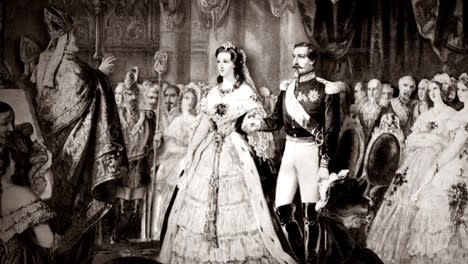
Napoleon III’s attempts to marry princesses from Europe’s ruling houses were unsuccessful, partly because of his ambiguous reputation and illegitimate children. In the end, on 30 January 1853, he married the Spanish aristocrat Eugénie de Montijo, Countess of Teba. Their marriage was complicated by the fact that the empress, a devout Catholic, limited intimate relations after the birth of the heir, Napoléon Eugène, on 16 March 1856. Over time, despite her husband’s numerous infidelities, Eugénie acquired considerable influence in state affairs, rallying conservative Bonapartists around herself.

The first decade of Napoleon III’s rule was marked by foreign policy successes that significantly increased France’s prestige. The Crimean War: victory in this war greatly strengthened Napoleon III’s influence in Europe.
In 1859 he began a war with Austria, as a result of which Nice and Savoy were annexed to France. However, his desire to support the unification of Italy only by conservative monarchical forces aroused the hatred of Italian revolutionaries and led to three attempts on his life.
Successful also were expeditions to China, Japan, Annam, and Syria (to protect Christians from the Druze).
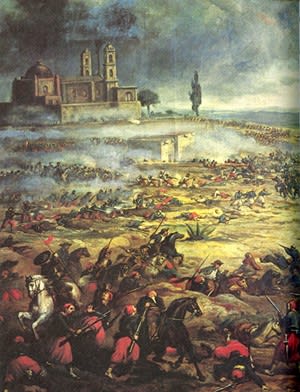
However, from the 1860s a period of failures began. The Mexican intervention of 1861: the attempt to create the Second Mexican Empire and place Emperor Maximilian on the throne ended in fiasco. The French troops, confronted with determined resistance, were forced to evacuate.

In 1866, due to a bout of illness, the emperor was unable to assess the strategic importance of the Austro-Prussian conflict and allowed Prussia a brilliant victory. This blunder greatly strengthened France’s dangerous neighbor.
The attempt to buy Luxembourg from the king of the Netherlands failed because of Prussian opposition.
Despite his authoritarianism, Napoleon III carried out a series of cautious social reforms to improve the lives of the working class: free hospitals were opened, and legal aid was provided to the poor. In 1864 the ban on strikes, in force since 1810, was lifted. Child labor was restricted, and rest days introduced. The emperor supported secular education and expanded its availability.
However, his large-scale public works program and costly foreign policy led to an increase in the national debt. In addition, the 1860 tariff agreement with Great Britain, introduced without consulting parliament, led to the ruin of many French enterprises and a rise in unemployment.
Setbacks forced Napoleon III to gradually liberalize the regime: in 1860 the Legislative Corps was given back the right to address replies to the throne speech. In 1867 the chambers received the right of interpellation. In 1868 a more liberal press law was adopted. In January 1870 a liberal ministry under Émile Ollivier was formed, designed to reform the constitution and restore ministerial responsibility.
By 1870 Napoleon III’s health, undermined by imprisonment and chronic illnesses (especially kidney stones, treated with opiates), had seriously deteriorated. He became sluggish, drowsy, and unable to make prompt decisions.
The emperor’s entourage, believing that only a victorious war could save the tottering regime, pushed him toward conflict. In the summer of 1870, confident in France’s military superiority and hoping to wipe out all political errors with a victory, Napoleon III brought matters to the Franco-Prussian War.
The war immediately exposed the fragility of the state system. The French army suffered defeat after defeat. During the Battle of Sedan on 2 September 1870, Napoleon III was forced to surrender to the Prussian king William I.


A day after his surrender, the September Revolution broke out in Paris, overthrowing the government and bringing the Second Empire to an end.
Released from captivity after the peace was concluded, Napoleon III went to England (Chislehurst), where he died on 9 January 1873 after an unsuccessful operation to crush kidney stones. His last words, spoken in delirium, reflected the tragedy of his life: “We didn’t show cowardice, did we? We didn’t show cowardice then at Sedan?”

His body was buried in the crypt of St Michael’s Abbey in Farnborough. His only son, Napoléon Eugène (Napoleon IV for the Bonapartists), died in 1879 in South Africa in a skirmish with the Zulus, which marked the virtual extinction of the Bonaparte dynasty.


