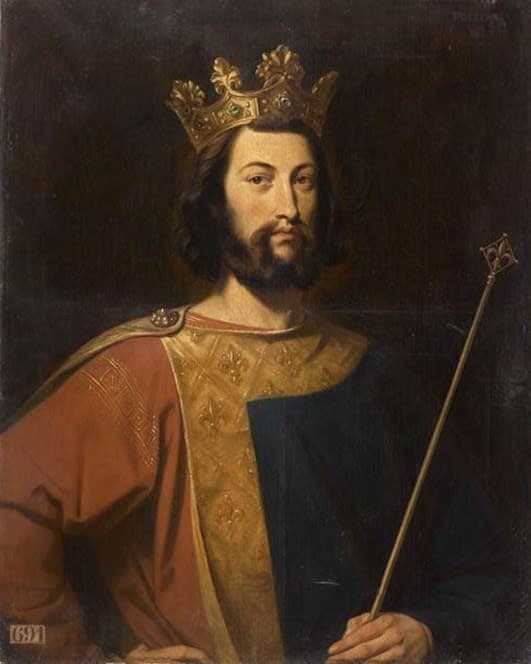
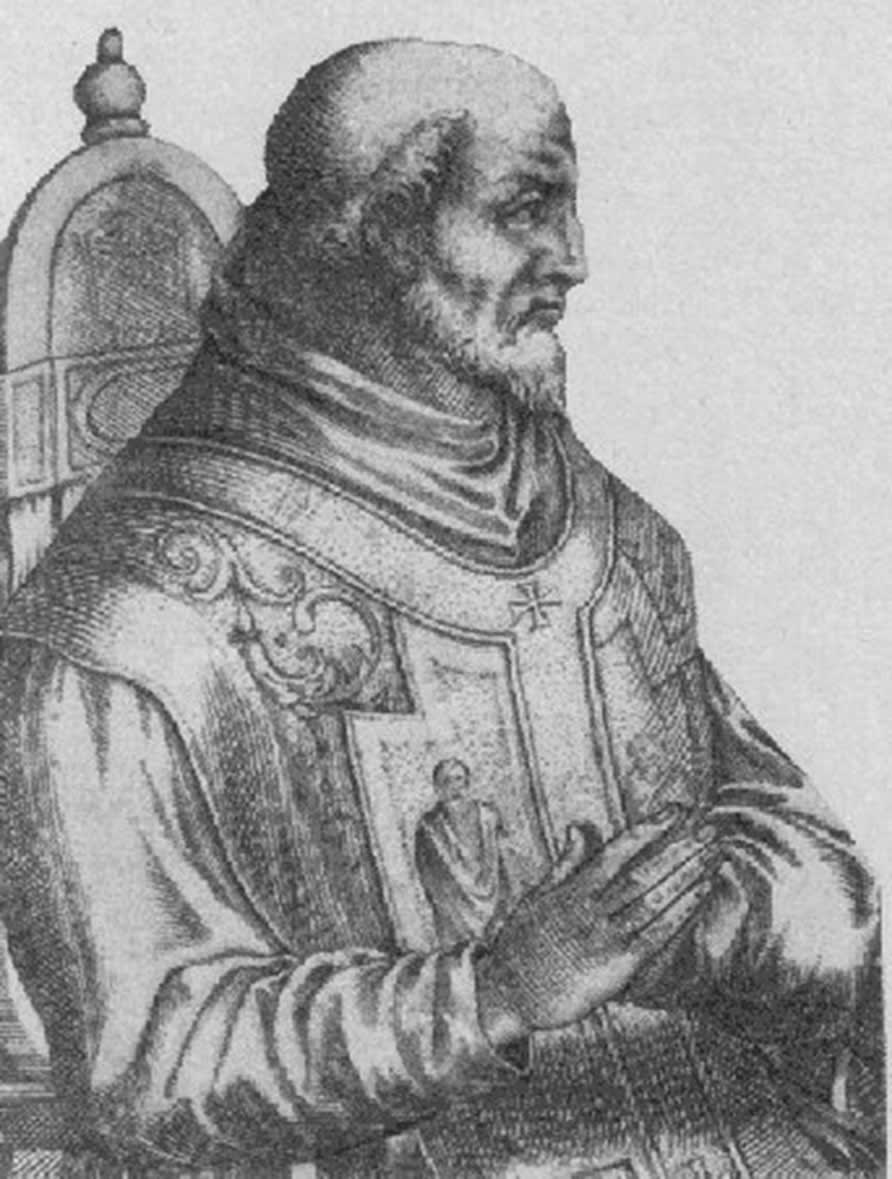
Louis VII was the second son of King Louis VI the Fat and Adelaide of Savoy. Originally destined by his father for a church career, Louis was raised in a monastery. His fate changed abruptly in 1131, when his elder brother Philip the Young died. Louis the Fat took his second son out of the monastery and had him crowned just twelve days later. The anointing ceremony in Reims Cathedral was performed by Pope Innocent II himself. Louis the Younger retained throughout his life a deep love for monastic life and church affairs.
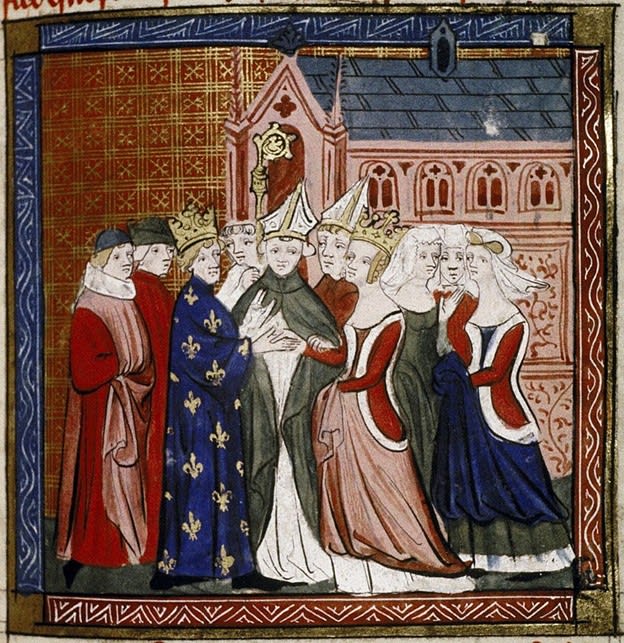
In 1137 Louis VI arranged his son’s marriage to Eleanor of Aquitaine, the elder daughter and heiress of William X of Aquitaine. The duke died during a pilgrimage, and according to his will Eleanor was to marry the younger Louis. This marriage brought the crown the largest, richest, and most powerful principality in France.
In July 1137 the prince arrived in Bordeaux, where on 25 July he married Eleanor, and on 8 August in Poitiers he was proclaimed Duke of Aquitaine. On that same day he learned of his father’s death and thus became sole King of France.

Thanks to the Capetian practice of crowning co-rulers during the reigning king’s lifetime, his right to the throne was not contested. The royal domain, consisting of the Île-de-France and Orléans, was small but a solid base of royal power. The counsellors of Louis VI, led by Abbot Suger, retained their positions at court. However, Louis never succeeded in exercising real control over the vast territories acquired through his marriage to Eleanor.
At the beginning of his reign Louis took a number of steps to assert his authority.
In 1138 he suppressed a revolt in the city of Poitiers, whose citizens were seeking communal status.
In 1141 he asserted claims to the County of Toulouse in the name of his wife, though he achieved no more than an oath of fealty from the local count.
The most dramatic conflict arose over the king’s cousin, the seneschal Raoul of Vermandois. In 1142 Louis persuaded him to divorce his wife so that he could marry Petronilla, Eleanor’s sister. This marriage was important for the dynasty because Petronilla was a potential heiress to Aquitaine. However, Raoul’s former wife was a niece of the powerful Count Theobald the Great of Champagne. Theobald secured Raoul’s excommunication, and in response the king invaded Champagne.
During the fighting, when the town of Vitry was taken, about fifteen hundred inhabitants who had taken refuge in a church died in the ensuing fire. This tragedy deeply shook the king. Louis made peace with Theobald, and his desire to atone for the sins associated with Vitry became one of the main motives for his participation in a crusade.
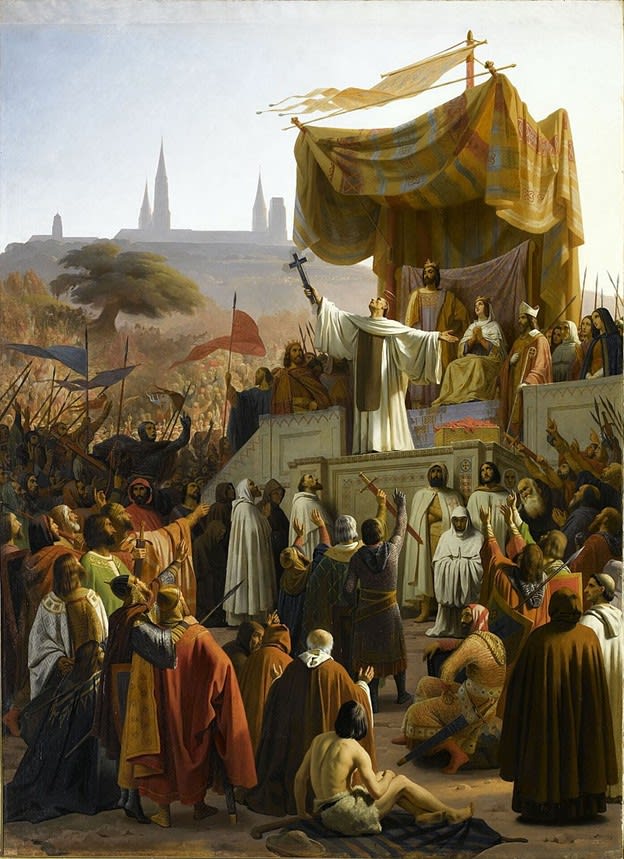
Influenced by the news of the fall of Edessa, Louis VII declared that he would “take the cross” and personally lead the Second Crusade. This was the first time a French king of reigning rank led a crusade. He officially took the cross on 31 March 1146 from the hands of Bernard of Clairvaux.
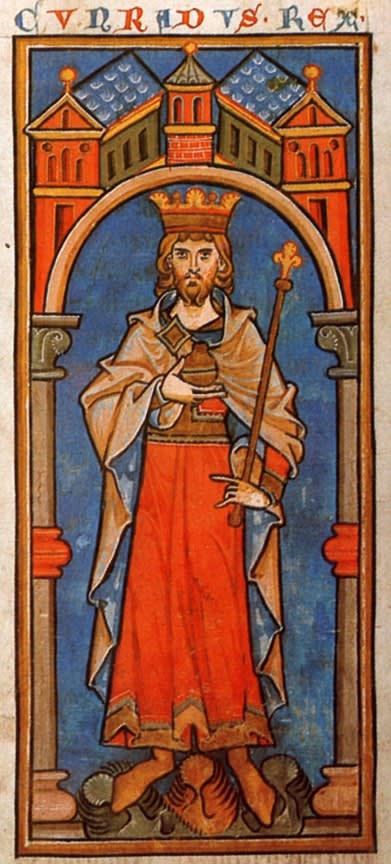
In the summer of 1147 Louis set out for the East at the head of a vast army. He was persuaded by Holy Roman Emperor Conrad III to march overland through the Balkans rather than by sea. Upon reaching Constantinople, Louis, fearing that the Germans might already have achieved victory, hurried into Asia Minor. However, the German army had been defeated, and the combined crusader forces suffered heavily from attacks by Muslim cavalry and from the French army’s lack of preparation for such warfare. Louis also brought with him an enormous baggage train, including his wife and her retinue.
In 1148 Louis arrived in Antioch, where serious disagreements arose with the court of Raymond of Poitiers, Prince of Antioch and Eleanor’s uncle. Louis rejected Raymond’s plan to attack Aleppo and instead went to Acre. The crusaders decided to besiege Damascus but failed to take the city. After this failure, Conrad returned home by sea, and Louis went back to his kingdom in April 1149. The crusade ended in complete failure, bringing the king disappointment and undermining his authority.
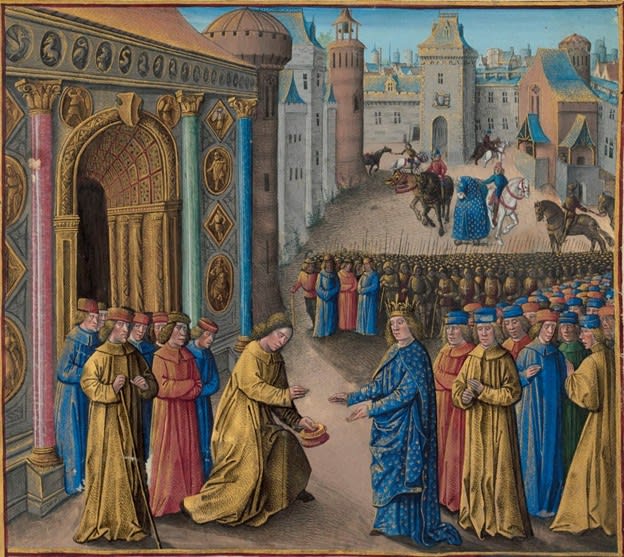

After their return, relations between Louis and Eleanor completely broke down. Their incompatibility of character and Eleanor’s inability to produce a male heir (in fifteen years of marriage they had only two daughters) threatened the future of the dynasty. On 21 March 1152 a council in Beaugency annulled the marriage on the official grounds of consanguinity.
The consequences of the divorce were disastrous. Louis gained the right to remarry but lost control over Aquitaine. Shortly afterward, Eleanor married Henry, Count of Anjou, who in 1154 became King Henry II of England. As a result, the Anglo-Norman monarchy was transformed into the Angevin Empire, incorporating Anjou, Touraine, Poitou, and Aquitaine.


Despite territorial concessions, Louis’s relations with Henry Plantagenet were initially peaceful. In 1156 Henry did homage to Louis for his French fiefs, and in 1158 they concluded an agreement on a marriage alliance between their children. Nonetheless, Louis constantly sought to hinder further Plantagenet expansion. In 1159, his personal appearance on the walls of Toulouse, then besieged by Henry, forced the English king to withdraw.

In 1173 the conflict escalated into open war when Louis received Henry II’s eldest son, Henry the Young King, in Paris and supported his rebellion against his father. Louis and Henry the Young King besieged Verneuil, but Henry II managed to mobilize his forces, defeat the rebels, and recapture the fortresses. The war ended in a truce, and in 1177 a peace treaty was signed.
Within the royal domain Louis VII continued the work of his father. He repeatedly campaigned against the “bad lords” of the Île-de-France, and by 1160 he had established complete control over the domain. In 1155, at an assembly in Soissons, Louis proclaimed a general peace, which was supported by archbishops and great barons. The king undertook two peacekeeping expeditions to Burgundy in 1166 and 1171, where he managed to restore order without bloodshed.
It was only in 1165, from his third wife, that Louis finally had the long-awaited son, named Philip. In 1179, when Louis fell ill, he arranged for his son’s coronation as co-ruler. Louis VII died on 18 September 1180, leaving the throne to his son Philip II Augustus.
Although Louis VII was criticized by chroniclers for the loss of Aquitaine and the rise of the Plantagenets, he can be regarded as the first king whose authority extended over the entire territory of the kingdom.
His reign was also the age of the flowering of Gothic architecture. On his initiative, construction of Notre-Dame Cathedral in Paris began in 1163.

Louis was known as a pious and educated man. He lived simply and was just and attentive to the needs of the poor. His weaknesses above all the loss of Aquitaine were, in the view of historians, exaggerated by chroniclers in order to highlight more vividly the virtues of his son Philip II Augustus, who would become the great victor over the Plantagenets.


