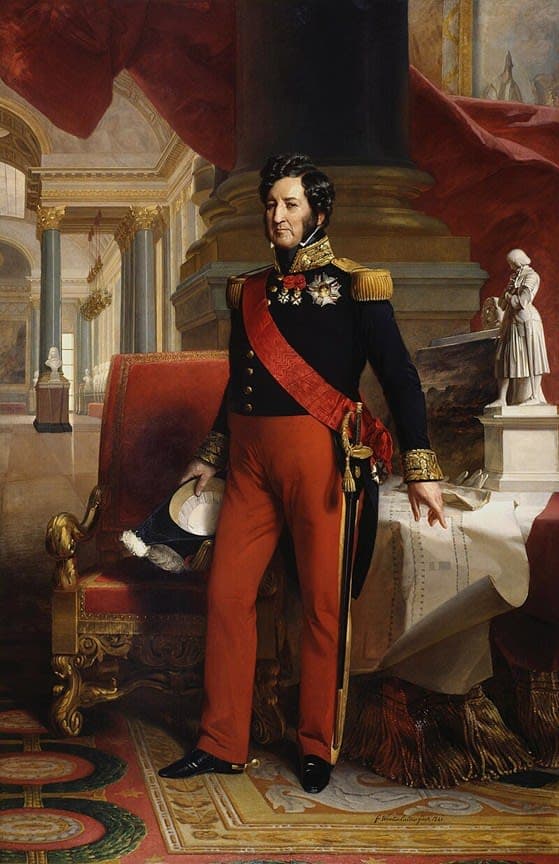

Louis-Philippe I was born in 1773, a member of the Orléans branch of the Bourbon dynasty, and the son of the controversial Philippe Égalité.
Louis-Philippe’s youth was highly unorthodox for a prince of royal blood. Under the guidance of Madame de Genlis, he received a liberal education, developed a wide range of knowledge, and cultivated habits of simplicity and endurance.
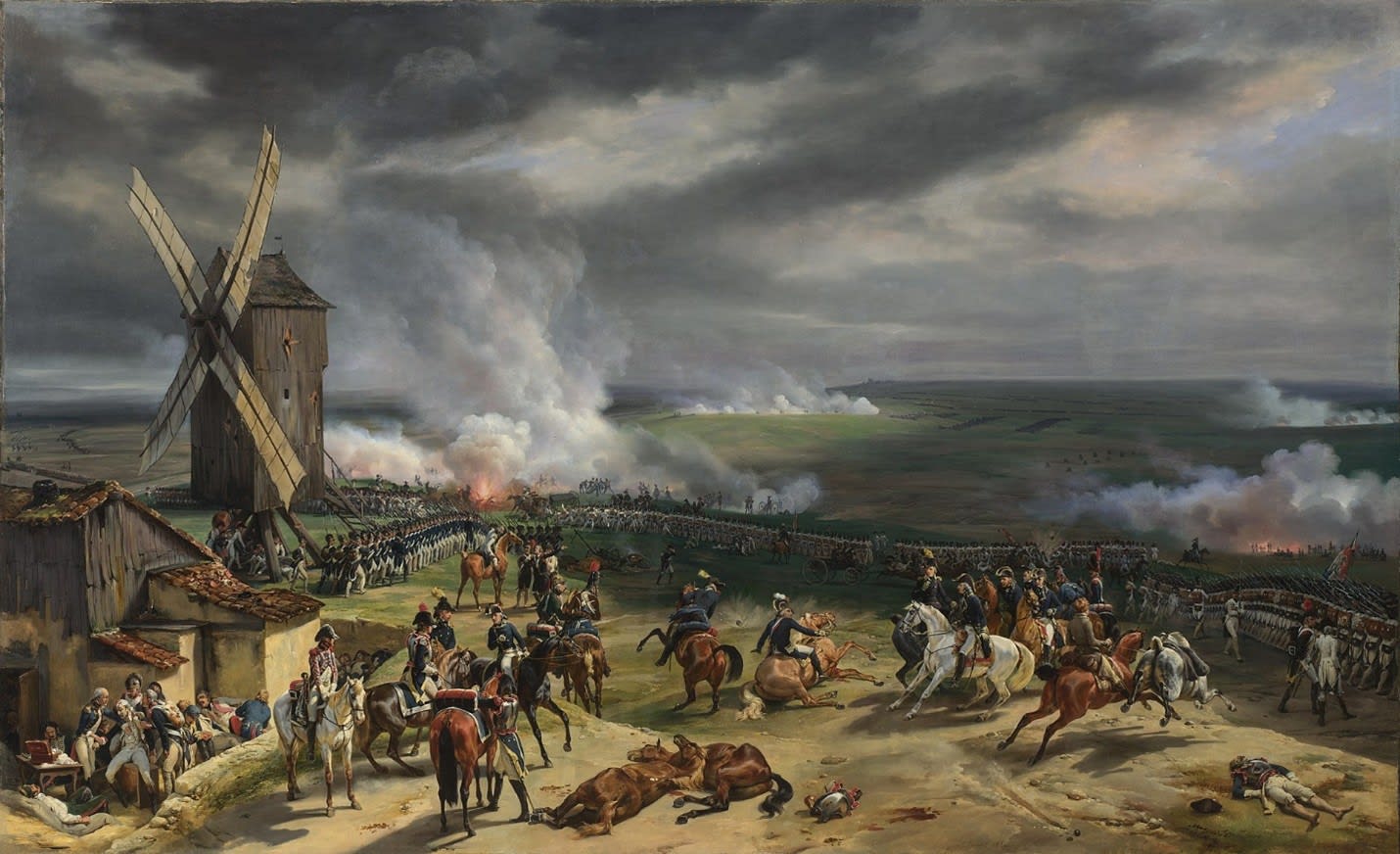
At the outbreak of the French Revolution, he like his father declared himself a supporter of revolutionary ideals and joined the Jacobins Club. As “Citizen Égalité,” he demonstrated both bravery and military skill, serving as lieutenant general and distinguishing himself in the battles of Valmy and Jemappes (1792). However, after General Dumouriez’s defection in 1793, Louis-Philippe was forced into exile to escape the ensuing purges.

He lived in Switzerland, earning his living as a tutor, and traveled extensively before settling in England in 1800, where he lived on a British government pension. Outraged by the execution of the Duke of Enghien, he began to reconcile with the senior Bourbon line, signing a declaration of loyalty. In 1809, he moved to Sicily, married Maria Amalia of Naples, and unsuccessfully sought the crowns of Spain and the Ionian Islands.
After the Bourbon Restoration in 1814, Louis XVIII restored to Louis-Philippe his father’s vast confiscated estates, making him one of the wealthiest men in France (his fortune by the 1820s exceeded 8 million francs). Yet his position at court remained uneasy — the royalists distrusted him for his liberal sympathies and his father’s revolutionary past. During Napoleon’s return from Elba, he fled again to Great Britain.
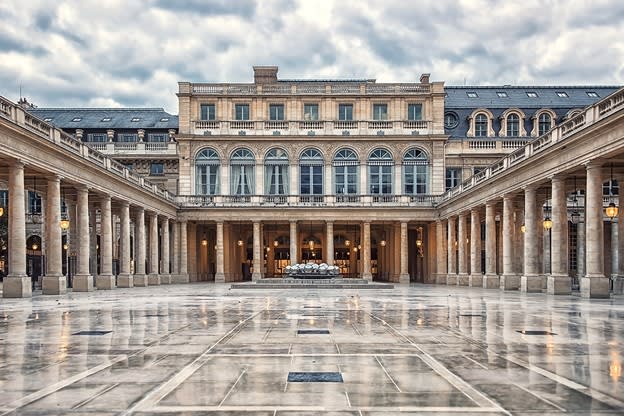
Returning to France in 1817, Louis-Philippe carefully cultivated popularity. He sent his children to study in a public college, winning the admiration of the bourgeoisie. His residence, the Palais-Royal, became a center of moderate opposition, hosting the leading figures of the liberal movement. Though outwardly loyal to the reigning Bourbons, liberal leaders increasingly saw him as the ideal “constitutional king.”

When Charles X’s reactionary July Ordinances triggered the July Revolution of 1830, Louis-Philippe prudently withdrew from Paris. His allies, led by Thiers and Laffitte, distributed proclamations portraying him as the only candidate faithful to revolutionary ideals and the tricolor flag.
On July 30, 1830, the Chamber of Deputies declared him Lieutenant-General of the Kingdom. Courageously walking through barricaded streets, he appeared on the balcony of Paris City Hall beside General Lafayette, where the jubilant crowd acclaimed him. A week later, on August 9, the Chamber offered him the crown. Louis-Philippe concealed the fact that Charles X had abdicated in favor of his grandson, thus ascending the throne in violation of hereditary succession.

His reign marked the rise of the “Citizen King” (Roi-Citoyen) and the dominance of the bourgeoisie. Political power rested in the hands of the wealthy; fewer than half a million Frenchmen had the right to vote. The spirit of his regime was summed up by the phrase: “Enrichissez-vous” — “Get rich.”
Louis-Philippe embodied the bourgeois ideal a devoted husband and father, personally honest, courageous in battle, but cautious in foreign affairs and adept at increasing his wealth. Upon taking the throne, he kept his private estates for his family instead of merging them with the crown lands.
Despite his personal integrity, his reign was marred by corruption and ministerial scandals. He survived numerous assassination attempts, the most infamous being Fieschi’s “infernal machine” in 1835, which led to harsh restrictions on the press.
The July Monarchy (1830–1848) coincided with the Industrial Revolution in France. Major railway lines were constructed, the Rhône–Rhine Canal completed, public education expanded, and corporal punishment in schools abolished.


However, his foreign policy was marked by timidity and compromise toward major powers (except for the controversial Spanish marriages, which damaged relations with Britain). Domestically, the long rule of Prime Minister François Guizot (1840–1848) became synonymous with stagnation, encapsulated in his motto: “Those who wish to govern must enrich themselves.”
Mounting political inertia, corruption, and the narrow suffrage fueled growing discontent. On February 24, 1848, the February Revolution erupted. After hesitation, Louis-Philippe abdicated in favor of his grandson, the Count of Paris, but events overtook him — the Second Republic was proclaimed in Paris.
Louis-Philippe fled to Great Britain, where he lived quietly under the name “Mr. Smith” and died on August 26, 1850, at his country residence, Claremont House.
In 1876, his remains were brought back to France and interred in the Royal Chapel of Dreux, the traditional burial site of the Orléans family the last resting place of France’s “Citizen King.”


