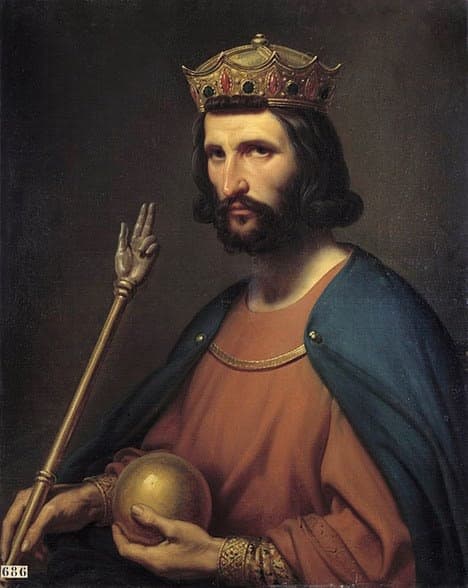

The future King Hugh Capet was born approximately between 939 and 941, most likely in Dourdan. He descended from the influential Frankish family of the Robertians, who, like many other great families, traced their origins to the region between the Rhine and the Meuse. The power of the Robertians was established by Robert the Strong, who moved from his ancestors’ Rhine estates to Neustria and gathered vast lands, conventionally called the “Robertian state.” It included the counties of Anjou, Vendôme, Maine, and later Paris. These lands, located between the Seine and the Loire, became known as the “Neustrian March,” and their eastern part later formed the foundation of the royal domain of the Capetians.

Robert the Strong’s sons, Odo and Robert, continued to strengthen the dynasty. Odo was even elected King of West Francia in 887 after the deposition of Charles the Fat, and his brother Robert I ascended the throne in 922. Hugh Capet’s father, Hugh the Great, was one of the most powerful magnates of the kingdom, but in 936 he refused the throne, instead initiating the election of the Carolingian Louis IV “d’Outremer” (Louis the Foreigner). This was likely done to restore peace in the realm and to weaken his main rival, Herbert II of Vermandois. Under the new king, Hugh the Great received the title “Duke of the Franks” and was referred to by Louis IV as “second after us in all our kingdoms.” However, Hugh the Great’s ambitions led him into a prolonged conflict with Louis IV, which continued until the king’s death in 954.

Hugh Capet’s mother, Hedwige of Saxony, was the daughter of Henry I the Fowler, King of East Francia, and the sister of Emperor Otto I. Otto I, not wishing for the Robertians to grow too powerful, sought to maintain a balance between the king and his vassal. It is known that the future king Hugh did not receive a classical education and, according to some sources, did not even know Latin.
When Hugh the Great died in 956, his son Hugh Capet was no older than seventeen. He inherited the margraviate of Neustria and the title of Duke of the Franks. The Robertian family estates were divided among his brothers: his younger brother Otto received Burgundy, and later, after Otto’s death, Burgundy passed to their third brother Eudes (under the name Henry). Historians believe this division of lands was a calculated policy aimed at preserving the dynasty’s power.
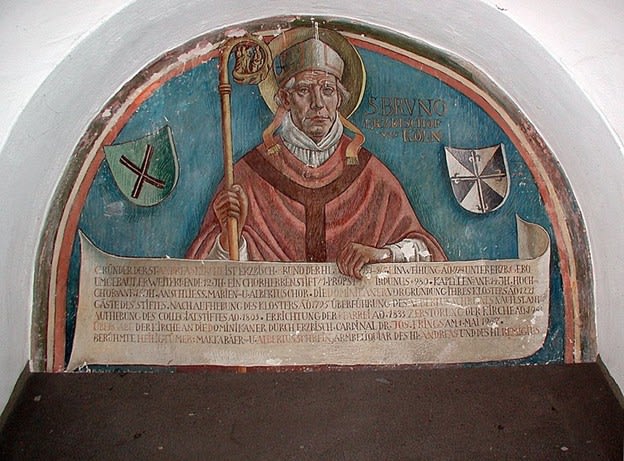
Since all the brothers were minors, their maternal uncle Bruno, Archbishop of Cologne and brother of Emperor Otto I, became their guardian. Bruno also served as guardian to the young King Lothair, son of Louis IV. Lothair attempted to take advantage of Hugh’s youth to expand his territories in Burgundy, which led to conflict between them. Only through the intervention of Archbishop Bruno was peace restored in 960: Hugh and his brother Otto swore fealty to Lothair, and in return, the king confirmed Hugh’s title as Duke of the Franks.
Hugh Capet’s domains stretched between Paris in the north and Orléans in the south and included several small towns. In addition, Hugh served as the lay abbot of several major monasteries, including Saint-Martin of Tours and Saint-Denis. However, unlike his father, Hugh was a less powerful ruler. His lands were scattered, and the surrounding feudal lords, such as the Counts of Blois and Anjou, took advantage of the Robertians’ weakened position to assert their independence. Thus, Count Theobald the Trickster of Blois, once a vassal of Hugh the Great, became Hugh Capet’s personal enemy, while the Counts of Anjou remained his allies.
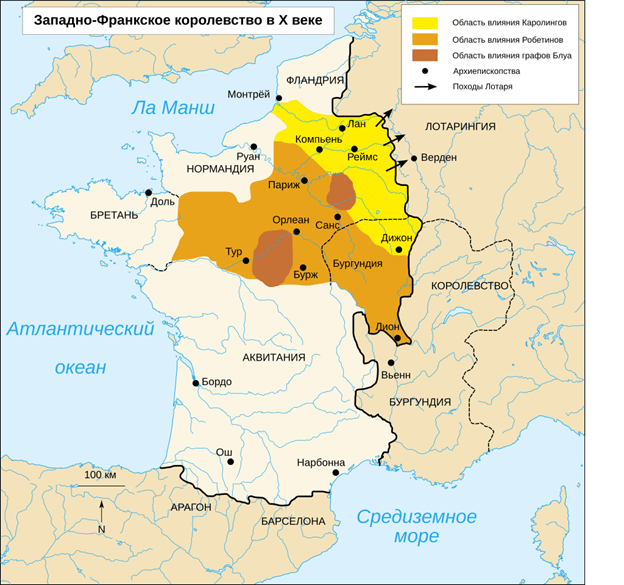

After his brother Otto’s death in 965, Hugh organized the election of his brother Eudes Henry as Duke of Burgundy, demonstrating that the Robertians still retained influence in the northern part of the kingdom. Later, Hugh supported King Lothair in his conflict with Emperor Otto II, taking part in the campaign against Aachen in 979 and withstanding a siege in Paris that forced the emperor to retreat. Nevertheless, a meeting between Hugh and Otto II in Rome in 981 indicates that the Duke of the Franks was secretly negotiating behind the king’s back.
When King Lothair died in 986, he left his son Louis V under Hugh’s guardianship. However, Louis V died suddenly during a hunting accident after only fourteen months of rule. The lawful heir was his uncle, Charles of Lorraine, but he had many enemies in the kingdom, and his vassal dependence on Emperor Otto II made him an undesirable candidate for the throne.
At the assembly of nobles in Senlis in May 987, most of the aristocracy already favored the Duke of the Franks. Archbishop Adalbero of Reims delivered a speech declaring that Charles was unworthy of the crown, whereas Duke Hugh possessed all the necessary royal virtues. Hugh Capet received unanimous support and was crowned and anointed king on July 3, 987, in Noyon, thus founding the Capetian dynasty.
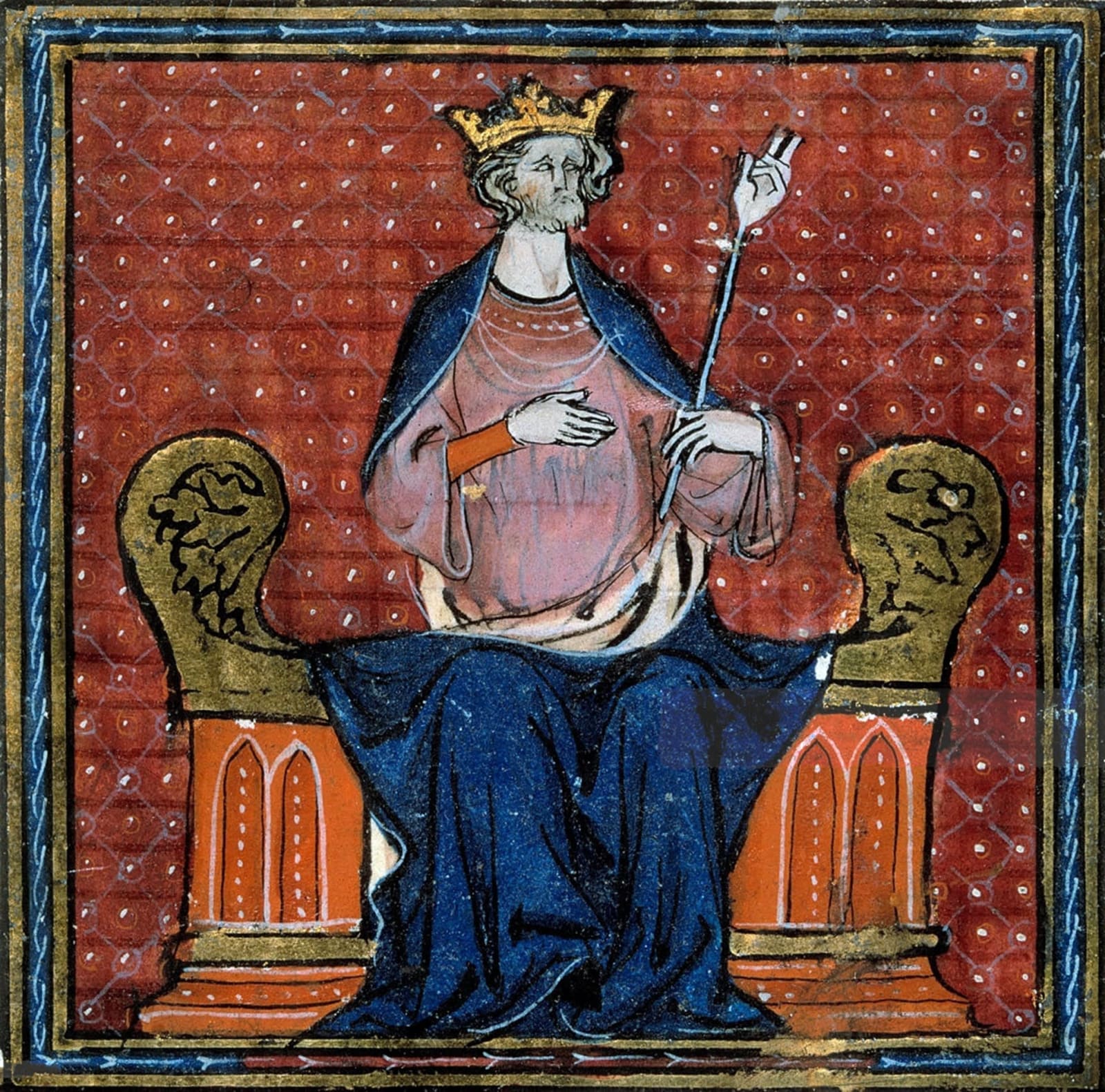

To secure his dynasty’s position, Hugh arranged for his son Robert II the Pious to be crowned as co-ruler only six months later, bypassing any election. This tradition of crowning a son during the father’s lifetime played a crucial role in the transformation from elective to hereditary monarchy.
At the beginning of his reign, Hugh’s actual authority extended only over his hereditary lands between Paris and Orléans, as well as over several abbeys and bishoprics. He was equal to or even weaker than many powerful territorial princes, who recognized him only nominally. In 988, Charles of Lorraine waged war against Hugh, seizing Laon. Hugh and Robert laid siege to the city but were repelled.
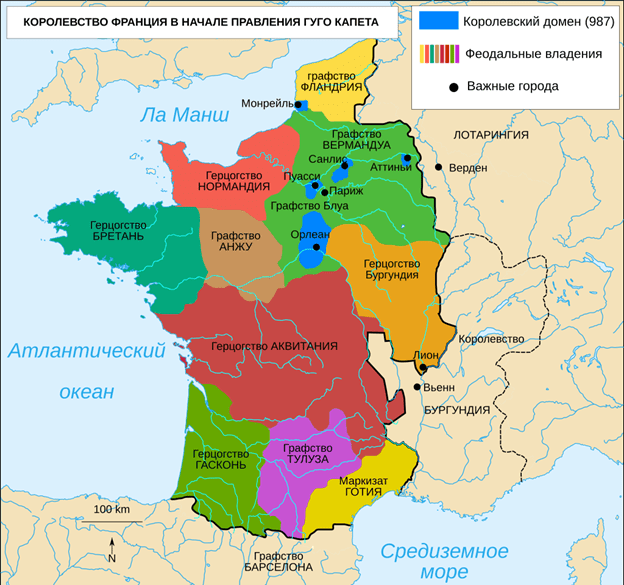

In 989, Charles of Lorraine achieved another success when Arnulf, the illegitimate son of King Lothair, whom Hugh had appointed Archbishop of Reims, surrendered the city to him. However, on March 29, 991, Charles and Arnulf were captured through the betrayal of the Bishop of Laon and handed over to Hugh Capet. Charles of Lorraine died in captivity in Orléans no later than 995.
Having triumphed in the war, Hugh secured the condemnation of Arnulf and appointed Gerbert of Aurillac (the future Pope Sylvester II) as Archbishop of Reims. This step provoked conflict with Pope John XV, who claimed the exclusive right to depose and appoint archbishops. Hugh ignored the pope’s demands, but eventually, a church synod declared Arnulf’s condemnation unlawful, although he remained imprisoned until Hugh’s death.

King Hugh Capet died on October 24, 996, near Chartres, probably of smallpox. He was buried, like his father, at Saint-Denis.

The nickname “Capet” was not used during his lifetime and first appeared in the 11th century. It probably derived from the Latin word cappa (“cloak” or “hood”), worn by abbots, since Hugh and his father were lay abbots of several major monasteries.
Historians’ assessments of Hugh Capet’s personality vary. In the Middle Ages, his authority was often disputed, and even an anti-Capetian legend arose claiming he was of “low birth” (the son of a Parisian butcher), a story later repeated by Dante Alighieri.
In the modern era, historians such as Augustin Thierry viewed Hugh as a “bearer of the national principle” opposing the “Germanic” Carolingians. However, later medievalists such as Ferdinand Lot and Charles Petit-Dutaillis emphasized that Hugh’s accession was more a logical continuation of the existing feudal order than a dramatic break with the past. Petit-Dutaillis described the dynastic change as “a device invented by historians.” To contemporary observers, Hugh’s accession went largely “unnoticed.”
Hugh Capet himself often receives moderately negative evaluations as an unremarkable figure. Ferdinand Lot criticized him as “a weak, self-doubting man whose caution bordered on cowardice.” Yet despite his personal limitations, his election marked the beginning of the Capetian dynasty, which would rule France for centuries.


