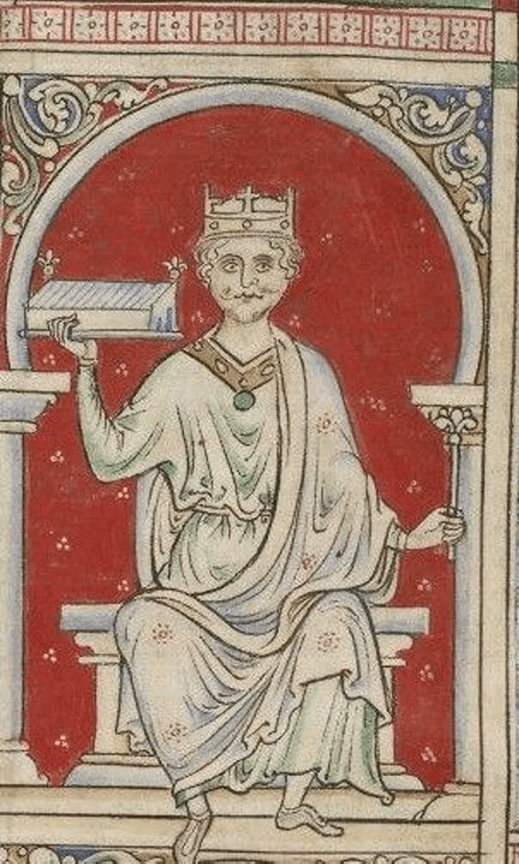

William II Rufus, the third son of William the Conqueror and Matilda of Flanders, was born in Normandy between 1056 and 1060. His early years passed in the shadow of his powerful father, who had a particular fondness for him. William grew up resolute, brave, and passionately devoted to warfare and the hunt. Educated under Archbishop Lanfranc one of the most influential figures of his time the future king nevertheless absorbed little of his mentor’s piety and wisdom.

Relations among William and his brothers were extremely tense. The eldest, Robert Curthose, though heir, wielded no real power during their father’s lifetime, which stoked his anger and resentment. The conflict came to a head in 1078, when Robert rebelled against his father, ostensibly in defense of his younger brothers William and Henry. Reconciliation followed only thanks to Matilda of Flanders, who secretly aided her son. It was then that William the Conqueror conceived the idea of dividing his dominions to weaken Robert—an idea realized after his death.
On 9 September 1087 William the Conqueror died, and by his will the Anglo-Norman monarchy was divided. Normandy, where primogeniture held sway, went to Robert, while England, where the king was elected fell to William Rufus. This shrewd strategy let the father circumvent Robert, even though he had already done homage as heir. William II at once departed for England with a letter from his father to Lanfranc, and on 26 September 1087 he was crowned in Westminster Abbey. The partition, however, did not end the fraternal feud: Robert Curthose never reconciled himself to the loss of the English crown, laying the groundwork for future conflict.


The new king’s position was initially unstable. The realm’s division left many barons, whose lands lay on both sides of the Channel, in an awkward position sparking several revolts. The largest was the rebellion of 1088, led by the king’s uncle, Odo, Bishop of Bayeux. The conspirators planned to depose William and place Robert on the throne to restore the monarchy’s unity. The rising was unprecedented in scope; as William of Malmesbury put it, “almost all the Normans” took part.

William II, however, won the support of the Anglo-Saxon populace and clergy. He promised to lower taxes, lift hunting restrictions, and rule justly. These pledges drew ordinary Englishmen to his side, and their combined efforts helped suppress the revolt. Its leaders were captured, but William showed relative leniency, confiscating only their English holdings.
After the death of his mentor Lanfranc in 1089, William II’s style of rule changed abruptly, becoming openly despotic. The king forgot his promises. He tightened the forest laws, burdened the population with new and excessive taxes, and raised vast sums for his lavish life. He did not scruple to sell church offices and pocketed the revenues of bishoprics and abbeys he left vacant for long periods. His chief adviser was the treasurer Ranulf Flambard, who replenished the coffers by any means necessary. All this provoked baronial discontent, culminating in a new rebellion in 1095. Rufus returned from Normandy, personally led a punitive campaign, and crushed the uprising with severity. Participants were executed or imprisoned; one leader, William d’Eu, was blinded and castrated.
William II’s relations with the Church were fraught. While Lanfranc lived, the king did not interfere in ecclesiastical affairs; after his death William behaved as an absolute sovereign. He treated the Church as a source of income, practicing simony (the sale of church offices) and keeping many sees vacant to draw their revenues into the treasury. According to Eadmer, the king even considered converting to Judaism a sign of his indifference to religion.
The archbishopric of Canterbury remained vacant until 1093, when the king, gravely ill and fearing divine punishment, agreed to appoint the renowned churchman Anselm. Upon recovering, William decided he had been coerced, and their relationship soured at once. The chief sticking point was the king’s ban on acknowledging a pope without his sanction. Anselm refused to yield, leading to open conflict. In 1097 Anselm left England for Rome, inaugurating a long struggle between the English state and the Church.

The main goal of William II’s foreign policy was to restore the Anglo-Norman realm. Robert Curthose’s weak rule in Normandy offered William an excellent opening. Using bribery and force, he began seizing Norman strongholds; by the end of 1090, most of the duchy east of the Seine lay under his control. In January 1091 William landed in Normandy, and Robert was forced to conclude the Treaty of Rouen, ceding vast territories.
The treaty did not end their rivalry. In 1094 William invaded Normandy again, halted only by a rebellion in England. A new opportunity arose in 1096 when Robert decided to join the First Crusade. In exchange for 10,000 marks he pledged Normandy to William for three years. To raise the sum, the king taxed landholders gaining de facto control of the duchy.
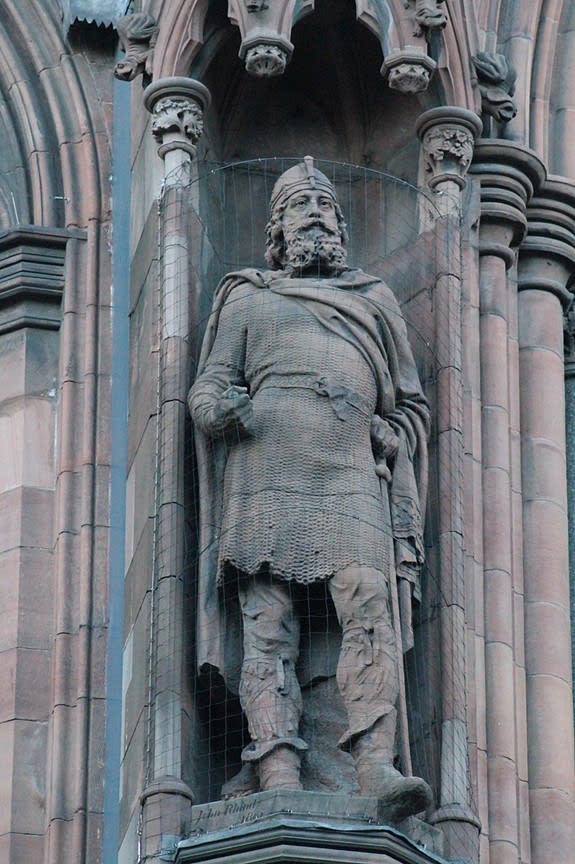
In Normandy, William II restored order, cowed the barons, and strengthened central authority. He then tried to expand his holdings in France, but without success. In 1097 he did manage to seize Maine, but an uprising fomented by the count of Anjou soon cost him the province.
William also pursued an active policy toward Scotland and Wales. In 1091 he invaded Scotland in response to raids, but the campaign failed. Peace was soon concluded, under which King Malcolm III did homage to William.

In 1092 William captured Carlisle and Cumberland. In 1093 Malcolm III was killed, and William backed a pro-English claimant, Edgar, who acknowledged his suzerainty. Unlike in Scotland, attempts to subdue Wales proved a complete failure. The rising of 1094 expelled the Anglo-Norman barons; William’s expeditions of 1095 and 1097 were thwarted by Welsh guerrilla tactics. His Welsh designs were finally buried after his forces were smashed by the army of King Magnus III of Norway in 1098.
Contemporary accounts portray William II as brave and decisive, but also cruel, vengeful, and extravagant. He was indifferent to religion and, in many historians’ view, was likely homosexual. The king had no wife, mistresses, or children.
The circumstances of his death remain a mystery. On 2 August 1100 William went hunting in the New Forest. According to the official version, one of his companions, Walter Tirel, shot at a stag; the arrow glanced off and struck the king, killing him instantly. There is, however, a conspiracy theory. Tirel said in one account to be the son-in-law of a rebel denied being present at the moment. Many are struck by what followed: William’s younger brother Henry, also on the hunt, abandoned the king’s body and rode straight to Winchester to seize the treasury; three days later, on 5 August, he was crowned.
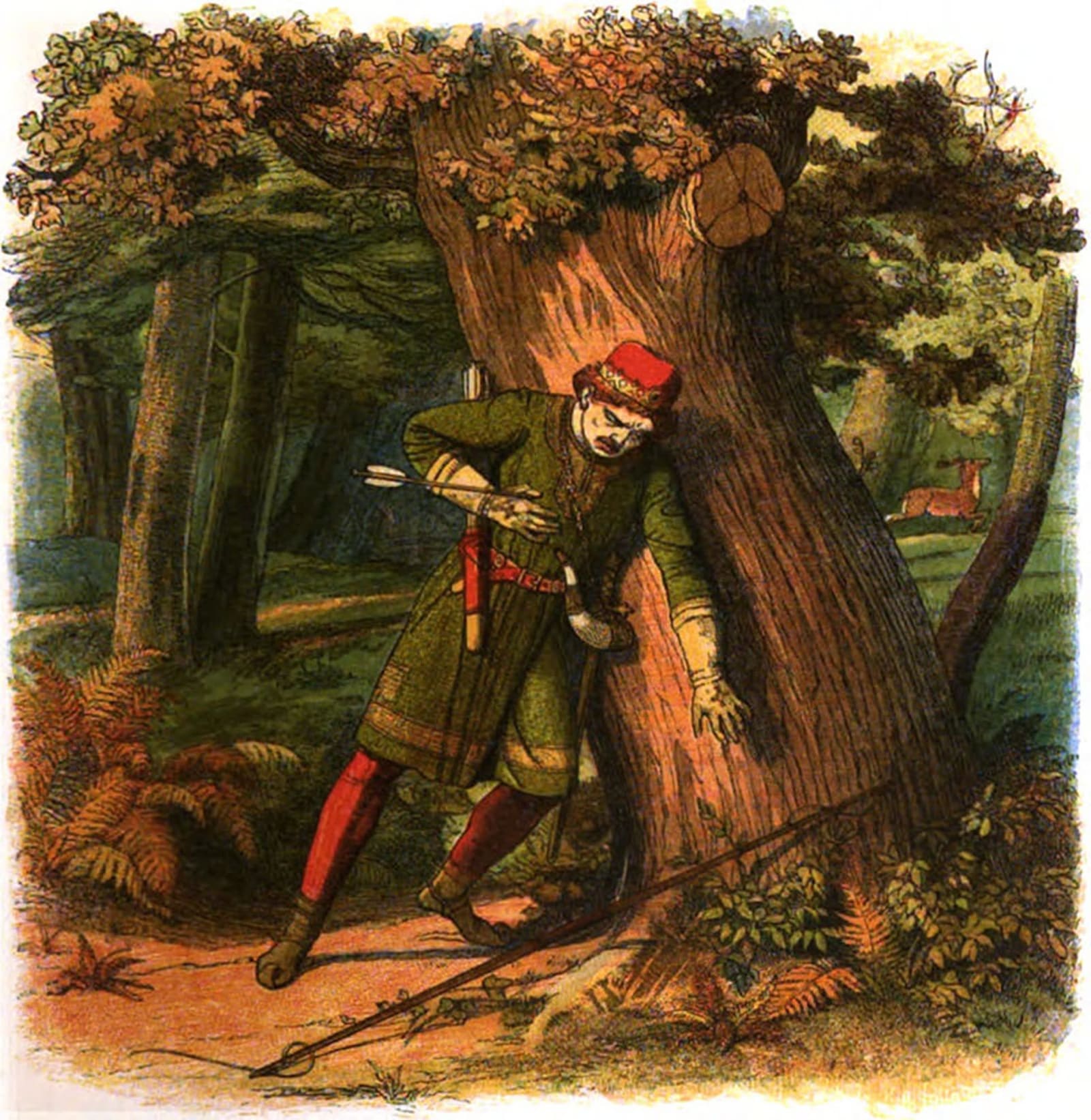

The king’s body, found by a peasant, was brought to Winchester Cathedral and hurriedly buried. Many viewed the circumstances of his end as divine punishment. In 1865 a memorial stone was erected on the supposed site of William Rufus’s death in the New Forest, commemorating the tragedy.


