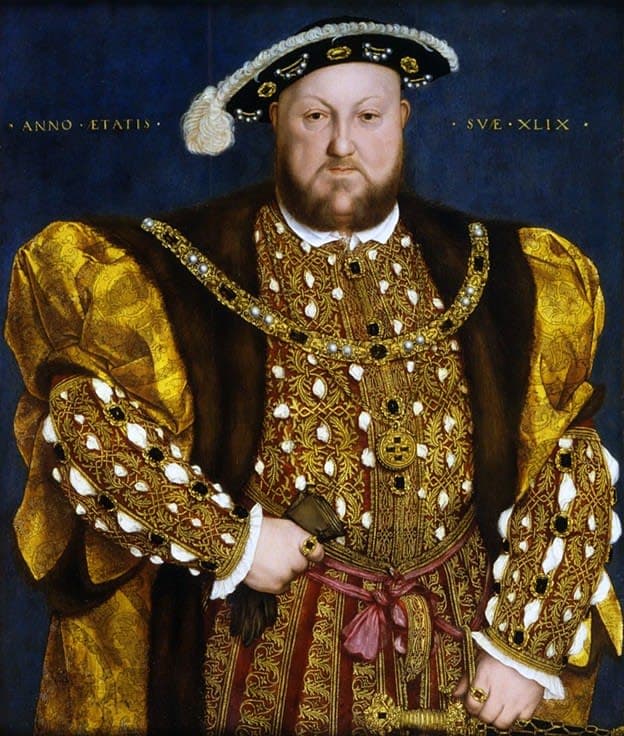

Henry VIII was born on 28 June 1491 at Greenwich. He was the third child of King Henry VII and Elizabeth of York. In childhood he was prepared for a clerical career, and his upbringing was overseen by his grandmother, Lady Margaret Beaufort. Under her influence Henry was deeply devout, attended as many as six masses a day, and wrote essays defending the sanctity of marriage.

His destiny changed after the early death of his elder brother, Arthur, in 1502. Henry became heir to the throne and received the title Prince of Wales. To preserve the alliance with Spain, his father, Henry VII, pressed for his marriage to his brother’s widow, Catherine of Aragon. In 1509, after his father’s death, the seventeen-year-old Henry inherited the throne and at once married Catherine.
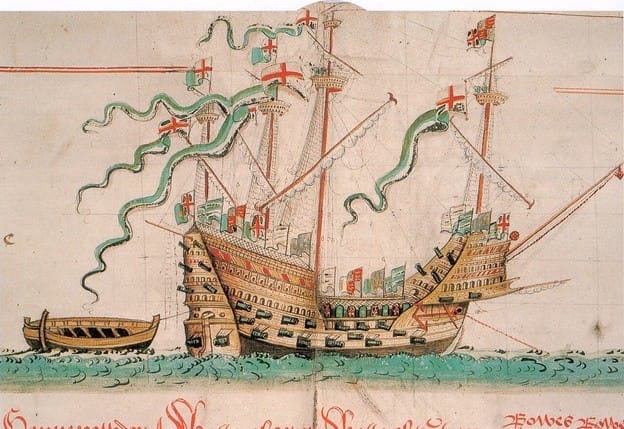
In the early years of his reign Henry VIII was an energetic and ambitious monarch. From 1511 real power lay in the hands of Cardinal Thomas Wolsey. Seeking to emulate the military triumphs of his forebears, Henry entered the War of the League of Cambrai. In 1512 he led his fleet and won a naval victory over the French off Brest.

In 1513 Henry made his first land campaign against France, but his successes were modest. Over the next twelve years he took part in continental wars with mixed results. Although he joined in the 1520 peace festivities with France known as the Field of the Cloth of Gold, he soon allied with Emperor Charles V and invaded Picardy. By 1525 the war chest was empty and the king was forced to make peace.

Amid his reign the policy of enclosure was transforming England, driving many peasants off the land. This led to a rise in vagrancy, which Henry VIII tried to suppress through harsh laws under which thousands were executed.
The defining event of Henry VIII’s rule was his break with the Roman Catholic Church. The formal trigger was Pope Clement VII’s refusal to annul his marriage to Catherine of Aragon. Henry wished to marry Anne Boleyn, but the Pope, under pressure from Catherine’s nephew, Emperor Charles V, refused.
In 1532 Henry charged the English bishops with treason for appealing to the Pope in ecclesiastical matters and pushed Parliament to pass a statute forbidding such appeals. That same year he appointed a new Archbishop of Canterbury, Thomas Cranmer, who annulled his marriage to Catherine. In January 1533 Henry secretly married Anne Boleyn, and in July 1533 the Pope excommunicated him.


In 1534 Parliament passed the Act of Supremacy, proclaiming the king Supreme Head of the Church of England. Henry launched a sweeping secularization of monastic lands, dissolving all the monasteries and confiscating their property. This provoked discontent, but the king dealt ruthlessly with opponents, including Thomas More and John Fisher, who refused to acknowledge his religious supremacy. Henry’s church policy was inconsistent: after the execution of the chief architect of reform, Thomas Cromwell, the king temporarily leaned toward Catholic doctrine by adopting the Act of Six Articles, which reaffirmed certain Catholic tenets. In his later years, however, he again showed favor to Protestantism. In the end, his reforms created a Church of England independent of Rome.
The second half of Henry VIII’s reign was marked by struggles with political opponents and wars with Scotland and France, which brought him little success. The king was notorious for his brutality: he executed many nobles, including Edmund de la Pole and the poet Henry Howard, Earl of Surrey.

Henry’s final years were clouded by health problems. In 1536 he injured his leg, leading to obesity and serious ailments possibly gout or diabetes. Historians believe this injury affected his temperament, making him more tyrannical and prone to bouts of depression.
Henry VIII died on 28 January 1547 at the age of 55. In his will he left the crown to his son Edward VI. Should Edward die childless, the throne was to pass to Henry’s daughters by different marriages, Mary and Elizabeth. The Scottish Stuart line descendants of his elder sister was excluded from the succession.


