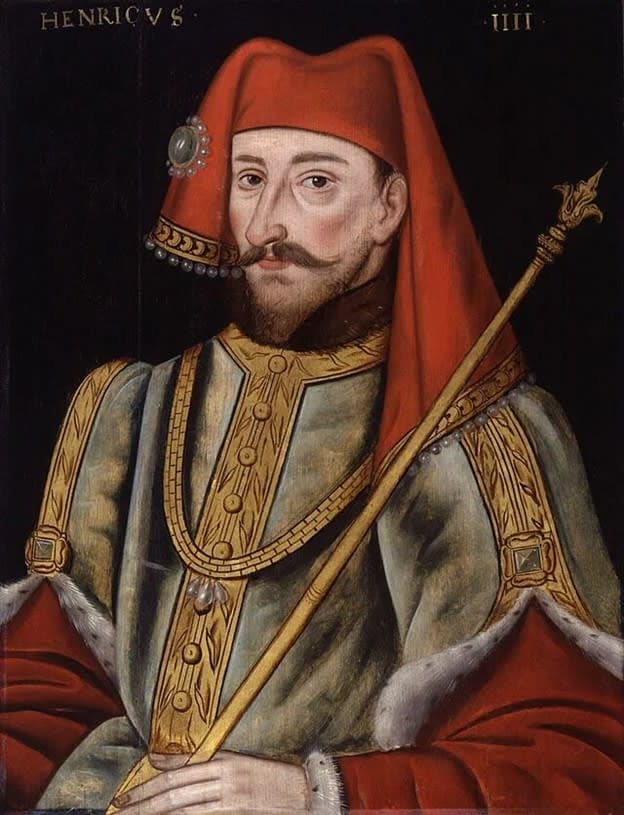

The future king Henry IV was born in 1367 at Bolingbroke Castle in Lincolnshire, whence he later received the byname, Henry Bolingbroke. He belonged to the junior branch of the Plantagenet dynasty. His father, John of Gaunt, was the fourth son of King Edward III and one of the richest and most influential magnates in England. Thanks to his fortunate first marriage to Blanche of Lancaster, John of Gaunt inherited vast estates and the ducal title of Lancaster, making him the greatest landowner in the realm after the king.
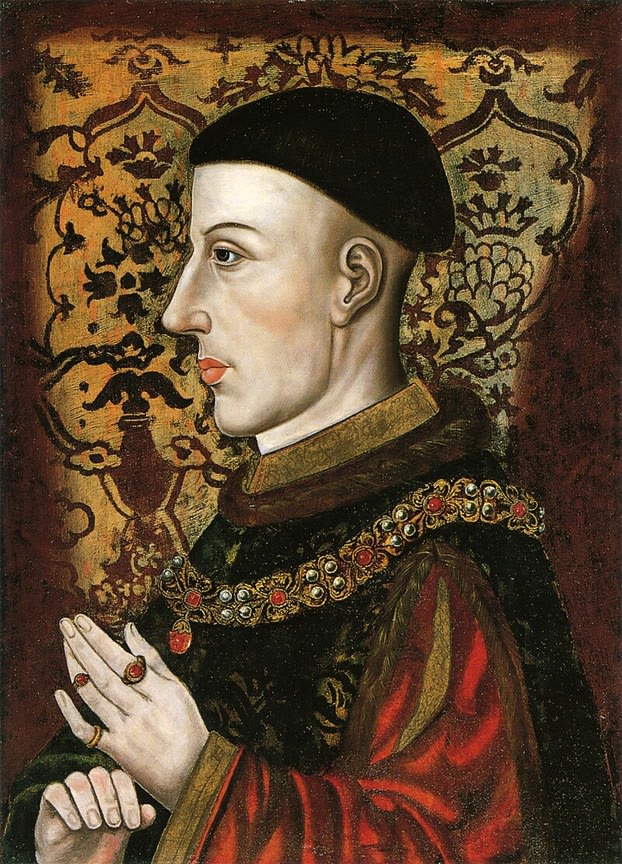
Henry was the sixth, but the only surviving, son of that marriage. His mother, Blanche, died of the plague when he was about a year old. He and his sisters were brought up in the household of Lady Wake, and later in the household of his father’s second wife, Constance of Castile, and of his mistress Catherine Swynford, whom Gaunt later married. Henry was close to his half-brothers the Beauforts, John of Gaunt’s illegitimate children whom he had subsequently legitimized.
In 1377, shortly before the death of his grandfather King Edward III, Henry and his cousin Richard II were made knights. At Richard’s coronation he was only ten Henry, now Earl of Derby, carried one of the ceremonial swords. He married the wealthy heiress Mary de Bohun, a happy match that brought him six children, including the future King Henry V.

From the start of Richard II’s reign marked by the Peasants’ Revolt of 1381 and the growing influence of royal favorites Henry Bolingbroke kept aloof from politics. Unlike his cousin, Henry was an experienced knight and soldier. His father, John of Gaunt, was then among the most powerful men in England, though his influence waned under the intrigues of Richard II’s favorites.
In 1386 the conflict between the king and the barons sharpened. Parliament, outraged by Richard’s extravagance and the power of his favorites, demanded their removal. The king refused but, under threat of deposition, was forced to yield. Three mighty aristocrats Thomas of Woodstock, Duke of Gloucester; Richard FitzAlan, Earl of Arundel; and Thomas de Beauchamp, Earl of Warwick formed a coalition known as the Lords Appellant.

The reasons Henry Bolingbroke and Thomas Mowbray joined the Appellants are unknown, but their actions were decisive. In December 1387 the Appellants’ army defeated the forces of the king’s favorite, Robert de Vere, at the Battle of Radcot Bridge. This compelled Richard II to submit to their demands.
In February 1388 the “Merciless Parliament” met and condemned and executed several of the king’s favorites. Henry Bolingbroke took part in the proceedings, though he argued for clemency toward Sir Simon Burley, Richard’s tutor.
After this time of turmoil Henry Bolingbroke withdrew from politics when, in 1389, his father John of Gaunt returned to England and became the king’s right hand. Henry went on knight-errantry: in 1390 he campaigned with the Teutonic Order in Prussia, and in 1392 he made a pilgrimage to Jerusalem, becoming one of the few Englishmen to visit the Holy Land. These expeditions won him renown and steeled his character.
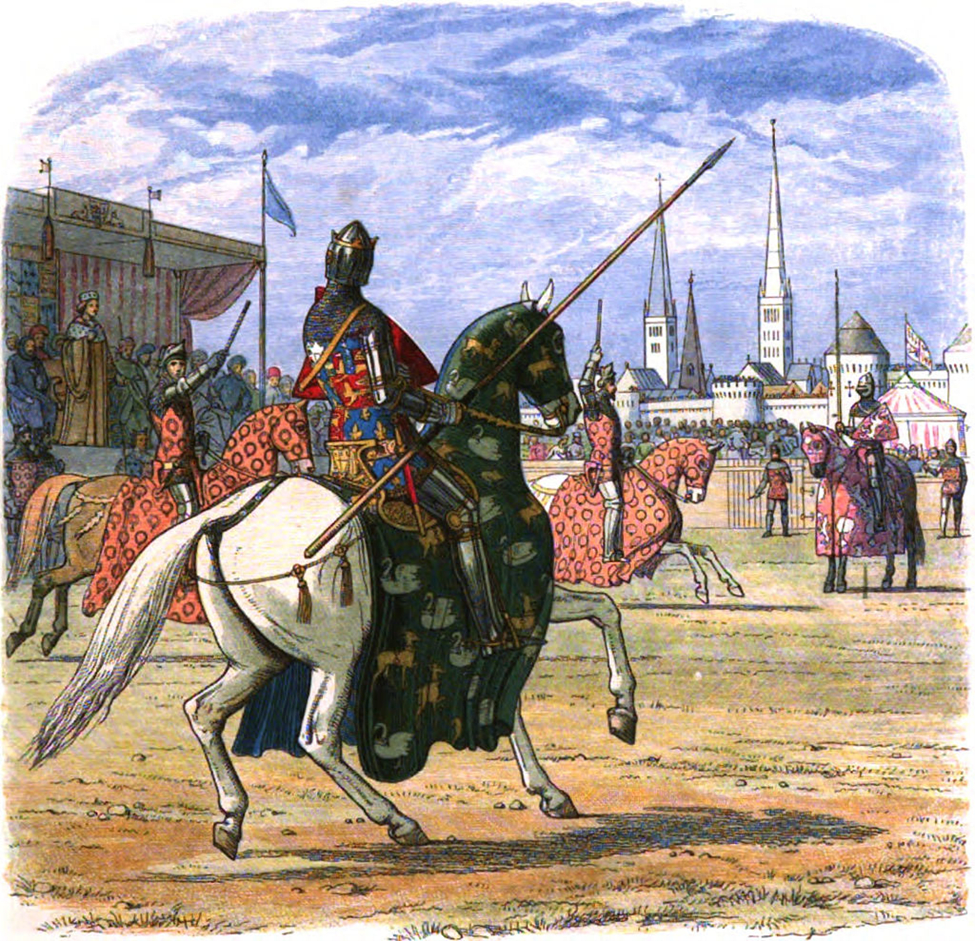
Upon his return to England Henry faced the king’s growing mistrust. In 1397 Richard took vengeance on the Lords Appellant, executing the Earl of Arundel and having the Duke of Gloucester killed. Henry Bolingbroke and Thomas Mowbray, former allies, fell under suspicion as well. In January 1398 Henry accused Mowbray of conspiracy, and the king ordered a trial by combat between them. At the last moment Richard II halted the duel and banished them both—Mowbray for life, Bolingbroke for ten years.
On 3 February 1399 Henry’s father, John of Gaunt, died. Instead of allowing the vast inheritance to pass to its lawful heir, Richard II confiscated the estates and converted Bolingbroke’s exile into a lifelong sentence. This rash step, which violated the law of inheritance, provoked outrage throughout the country and proved decisive for Richard II’s fate.
At the same time Richard set out on a military campaign in Ireland, leaving England without close oversight. Henry Bolingbroke, then in exile in Paris, seized the moment. In June 1399 he sailed for England with a small force, but upon landing he was joined by thousands of supporters, including powerful barons such as the Earl of Northumberland. Bolingbroke’s army swelled quickly, and he advanced south with virtually no resistance.
In the king’s absence his regent, the Duke of York, failed to organize opposition and surrendered. Richard’s supporters were seized and executed. Richard himself, hastily returning from Ireland, found himself without backing. He was forced to surrender and became Bolingbroke’s prisoner.
Realizing he could not trust Richard, Henry resolved to take the throne. He persuaded a parliament convened at Westminster to depose Richard II. On 29 September 1399 Richard signed an instrument of abdication; the next day parliament declared his reign at an end. Henry Bolingbroke laid claim to the crown, and on 13 October 1399 he was crowned as Henry IV.
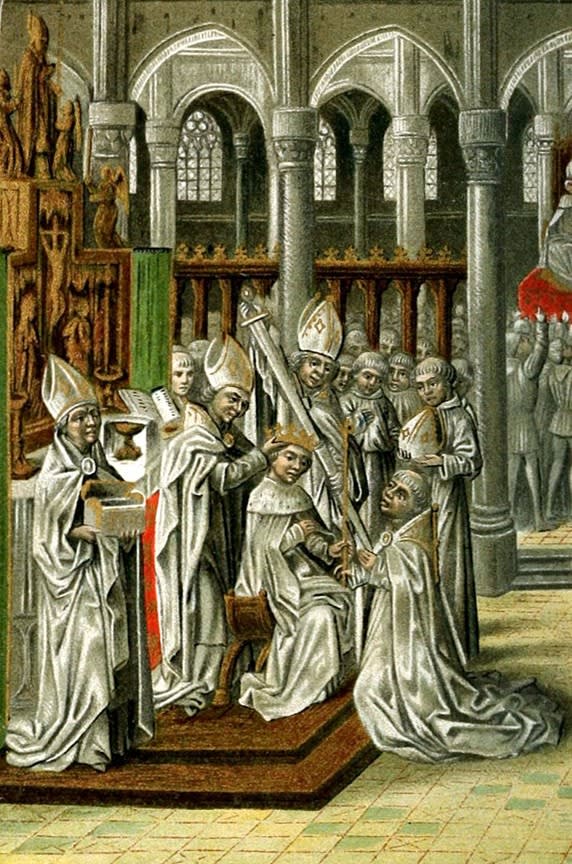
The coronation of Henry IV took place on 13 October 1399. It followed tradition but included innovations underscoring the new monarch’s legitimacy. Henry was anointed with holy oil which, according to legend, had belonged to his ancestor, and he became the first king to be crowned upon the Stone of Scone. At the traditional banquet his champion issued a challenge to any who would dispute his rights, but none stepped forward.

Henry IV’s first acts were to restore the decisions of the 1386 parliament and to initiate legal proceedings against Richard II’s supporters. He showed relative leniency toward his enemies, though some were executed. Most important, he secured the succession for his own line: on 15 October his eldest son, Henry of Monmouth (the future Henry V), received the titles Prince of Wales and Duke of Lancaster.
Yet Henry IV’s rule was paradoxical. He had come to power by right of conquest rather than inheritance and was forced to make concessions to hold the throne. He promised to lower taxes, but the costly upkeep of the court and the distribution of lands to his allies drove expenses up sharply. This fuelled popular discontent from subjects who had expected relief.
By January 1400 Henry IV faced his first major conspiracy the Epiphany Rising. A group of Richard II’s partisans plotted to kill the new king, but the conspiracy was uncovered. The revolt they attempted to spark was quickly suppressed and its leaders executed. The plot convinced Henry that as long as Richard lived, his throne was in danger. Soon afterward, in February 1400, Richard II was likely killed in captivity at Pontefract Castle.
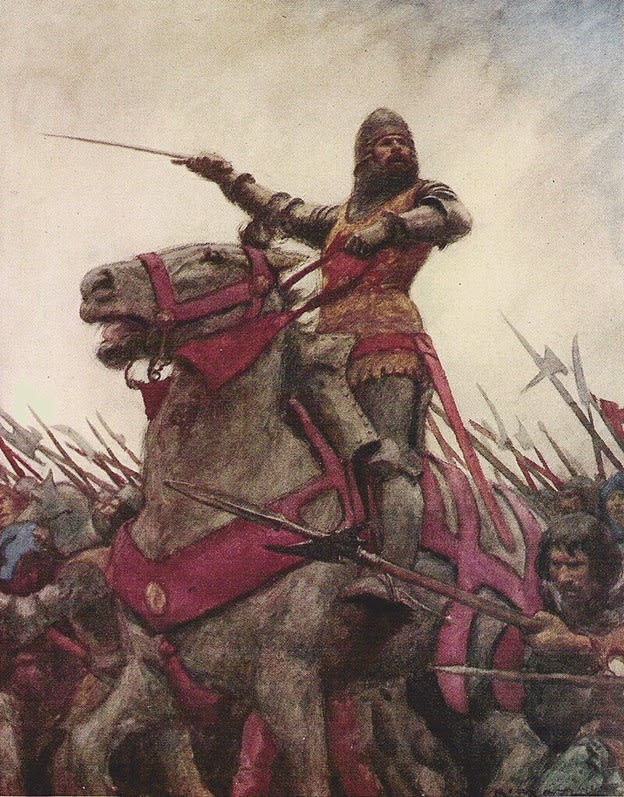
Henry IV’s foreign policy was also unsettled. He tried to come to terms with Scotland, but King Robert III refused to recognize his title. In 1400 Henry IV led an expedition into Scotland to enforce English suzerainty. The campaign failed: supply problems forced the English army to withdraw without a pitched battle.
An even greater problem was the Welsh uprising led by the Welsh nobleman Owain Glyndŵr. Henry IV, himself a major landholder in Wales, had to spend enormous sums to suppress the revolt. He mounted several campaigns, but the rising dragged on, draining the treasury and weakening royal authority.
Henry IV’s chief supporters in the early years were the Percies, a powerful family from northern England. The king rewarded them lavishly for their aid but soon came to fear their growing power. He began to curtail their holdings and promote their rivals, leading to a rupture.
In 1403 the Percies, disaffected with the king, rebelled. They allied with the Welsh insurgents, but the royal army, commanded by the king himself and his son, defeated them at the Battle of Shrewsbury. Henry “Hotspur,” the rebel leader, was killed. The Earl of Northumberland escaped but later rose again and died in 1408.
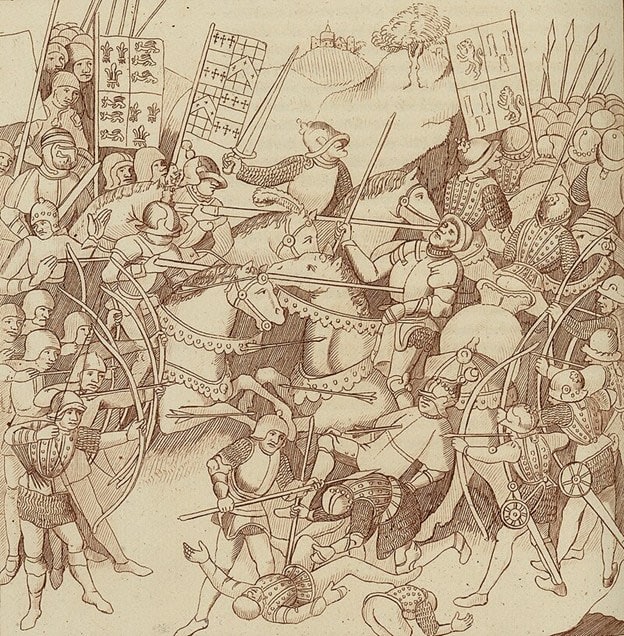

In his later years Henry IV’s health deteriorated markedly, likely due to a skin disease. He took an ever-smaller part in government, and from 1410 the realm was effectively ruled by his son, the future Henry V. The king died on 20 March 1413 in the Jerusalem Chamber of Westminster Palace. He was buried not in Westminster Abbey but in Canterbury Cathedral, beside the shrine of Thomas Becket perhaps a symbolic attempt to legitimize his seizure of power.
Though Henry IV broke promises and lost popular trust, he proved a strong and resolute ruler. He crushed numerous uprisings and held the throne, founding the new Lancastrian dynasty, which ruled England until the mid-fifteenth century.


