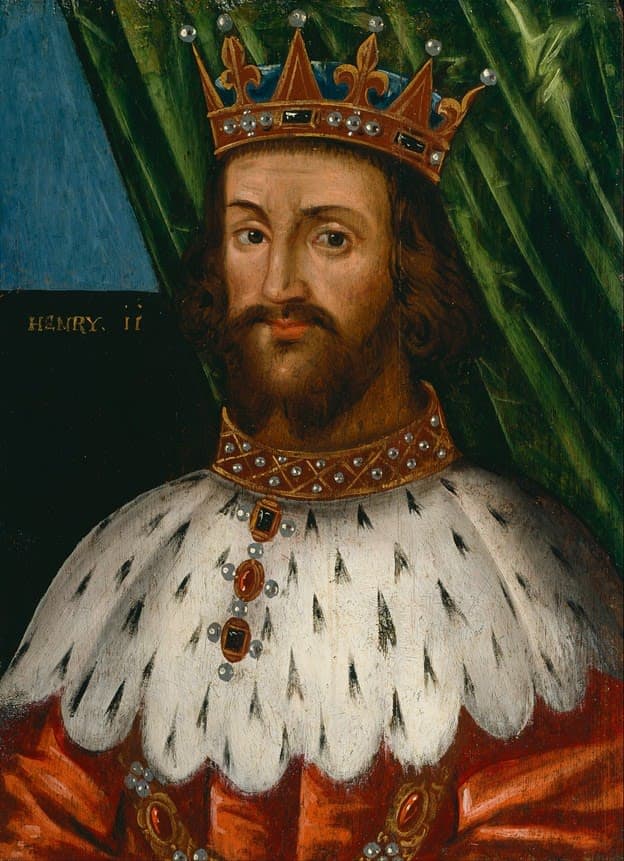

Henry II Plantagenet was born on 5 March 1133 in Le Mans. He was the eldest son of Count Geoffrey V of Anjou and Empress Matilda of England, daughter of King Henry I. Through his father he was heir to the counties of Anjou, Maine, and Touraine; through his mother the granddaughter of William the Conqueror he had claims to Normandy and England.
Henry’s childhood coincided with the period of the “Anarchy” in England, the civil war between his mother Matilda and her cousin Stephen of Blois, who had seized the English throne. During this time Henry was in Bristol, the center of his mother’s domains, where he was educated by eminent scholars such as Adelard of Bath and William of Conches.
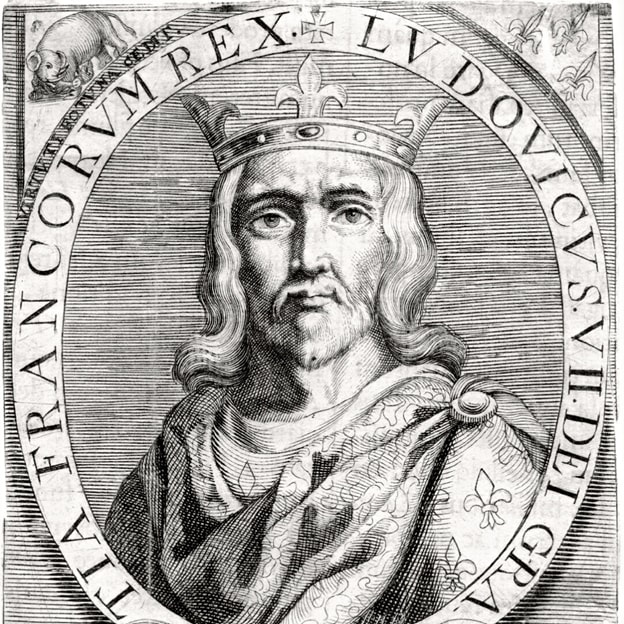
Henry’s first attempts to win the English crown, in 1147 and 1149, failed. In his first expedition his forces suffered defeats, and only the generosity of King Stephen who paid for his return to Normandy saved the young prince from disaster. The second attempt, undertaken together with King David I of Scotland, also failed when Stephen gathered a powerful army and forced them to withdraw.
Back on the continent, Henry faced aggression from King Louis VII of France and secured peace only by ceding part of his lands. In 1151, however, his father Geoffrey died, and Henry became sole ruler of the vast territories of Anjou, Touraine, Maine, and the Duchy of Normandy.
In 1152 Henry took a fateful step by marrying Eleanor of Aquitaine, the former wife of Louis VII. She was the ruler of the enormous Duchy of Aquitaine, enabling Henry to bring virtually all of western France under his scepter. Despite their differences, these territories formed the core of the so-called Angevin Empire, which dominated European politics in the second half of the 12th century.


Having acquired such vast lands, Henry renewed his struggle for the English crown. In 1153 his forces landed in England. Weakened by conflicts and internal problems, Stephen of Blois was forced to compromise. A meeting between Henry and Stephen at Wallingford led to a truce, and the death of Stephen’s son Eustace opened the way to a final peace. Under the Treaty of Westminster, Stephen recognized Henry as his heir.
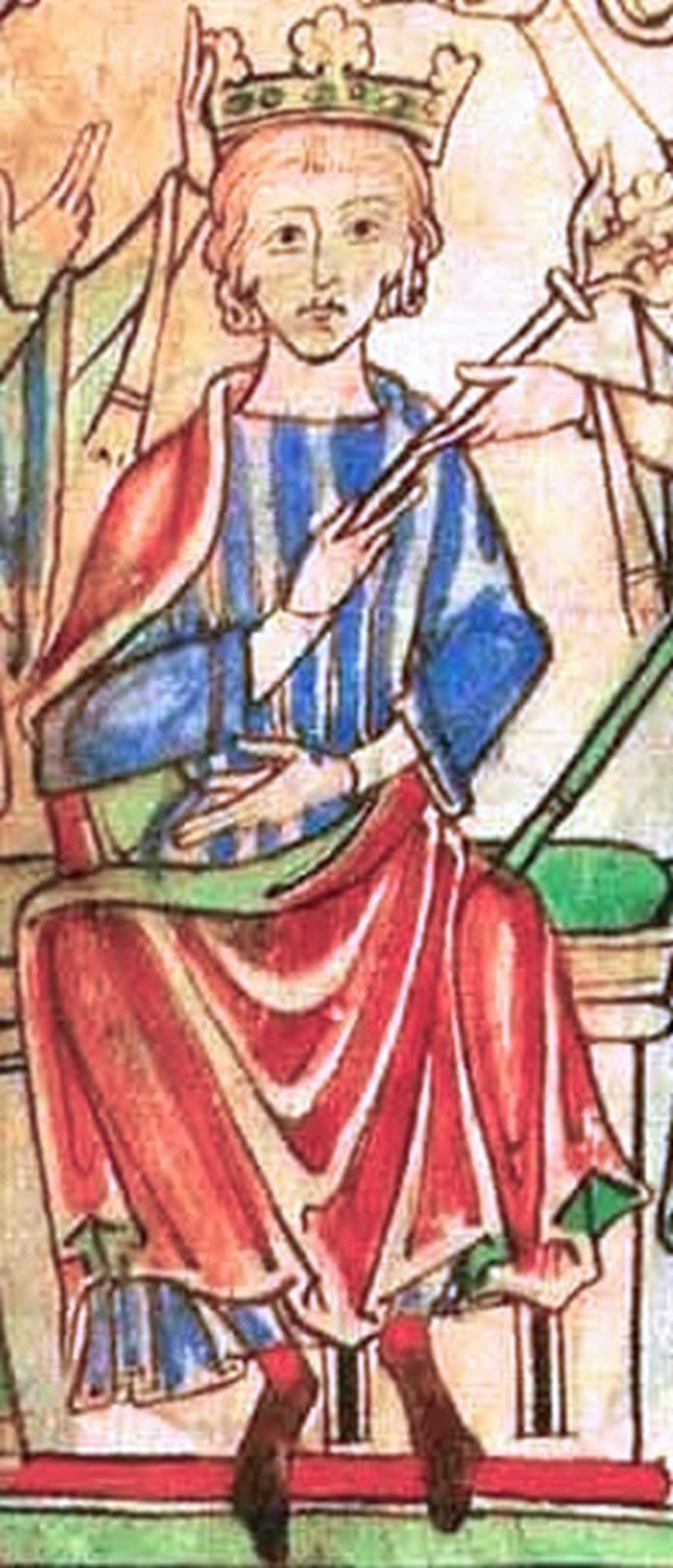
On 25 October 1154 King Stephen died, and Henry II Plantagenet ascended the English throne.
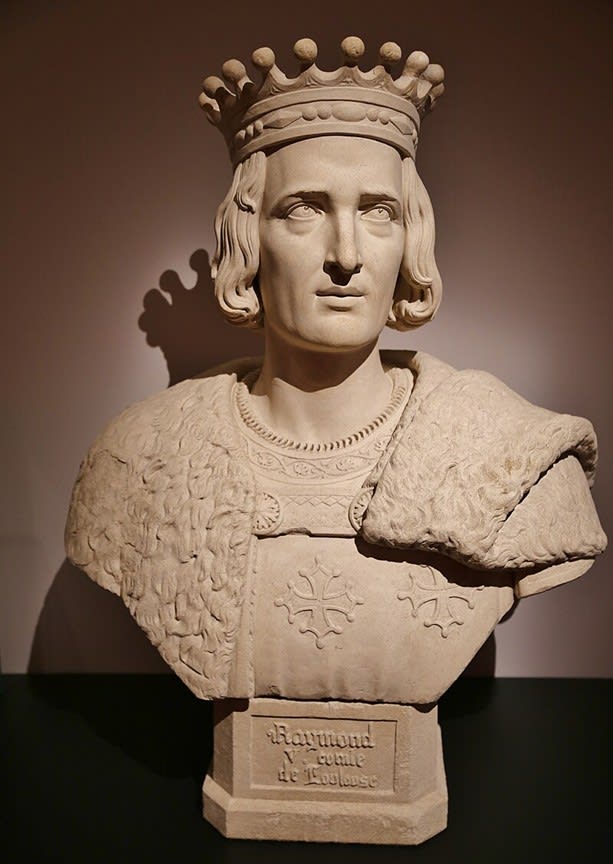
As king, Henry II pursued an expansionist policy. In 1157 he launched a campaign in Wales, subjugating local rulers. In 1159 Henry pressed claims to the County of Toulouse, but after an unsuccessful siege he withdrew, leaving it to its ruler, Raymond V.
In 1160 Henry strengthened his alliance with Count Ramon Berenguer IV of Barcelona, and in 1166 he invaded Brittany, subduing it and taking the young Duchess Constance into his wardship; he later married her to his son Geoffrey. In 1177 Henry II also acquired the County of La Marche.
In 1158 Henry received from Pope Adrian IV a bull authorizing the conquest of Ireland. In 1171 he personally led a major expedition, arriving with 240 ships. He proclaimed himself ruler of Ireland, taking oaths of fealty from local kings. He later assigned the Irish throne to his younger son John, though John’s rule there was marred by failures.


Henry II’s domestic policy aimed at strengthening royal power and centralizing the state. He sought to curb the influence of the barons and the Church, creating an administrative apparatus and a mercenary army independent of them.
Henry II carried out sweeping judicial reform. In 1166 the Assize of Clarendon established the jury of presentment: twelve men in each hundred swore to report to the sheriff those suspected of crimes. The accused were then subjected to trial by ordeal (ordeal by water), and if they failed, they were executed.
In 1176 the Assize of Northampton expanded Clarendon’s provisions and divided the kingdom into six judicial circuits, to which itinerant justices were appointed to tour regularly and administer justice. These reforms greatly improved the efficiency of the legal system and strengthened royal jurisdiction.
Henry II sought to bring ecclesiastical courts under secular control. In 1162 he appointed his chancellor Thomas Becket archbishop of Canterbury, hoping he would carry out royal policy. The calculation proved mistaken. Becket, becoming a champion of ecclesiastical rights, refused to support the king’s Constitutions of Clarendon in 1164 and fled to France.
Their conflict lasted six years. In 1170 they were formally reconciled, but after returning to England Becket continued to excommunicate his opponents, provoking the king’s wrath. Legend says Henry cried out in anger, “Will no one rid me of this turbulent priest?” Four knights took the words as a command. On 29 December 1170 they burst into Canterbury Cathedral and murdered Thomas Becket.
The killing caused universal outrage. The pope placed England under interdict. In 1173 Becket was canonized, and in 1174 Henry II performed public penance at his tomb.
Henry’s rule was marred by continual conflicts with his sons and with Eleanor, who sought their shares of power. In 1173 Henry the Young King, who held no real authority, rebelled against his father; his brothers Richard and Geoffrey joined him, as did their mother Eleanor. The revolt was supported by the king of France and by the Scots. Henry hired mercenaries and swiftly crushed the rebellion; Eleanor was captured and spent twelve years in confinement.
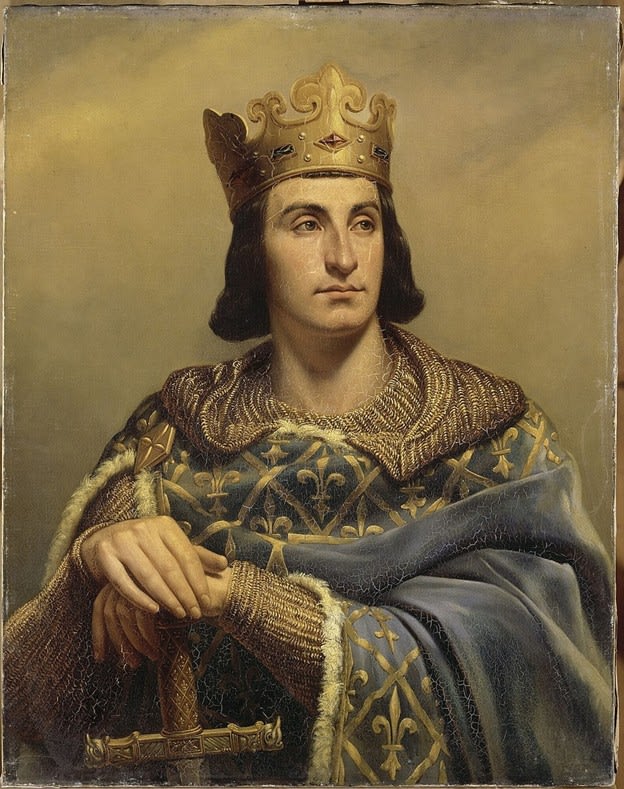
The following years brought new uprisings by his sons, often backed by King Philip II Augustus of France. Henry tried to reconcile them and parcel out his lands among them, but this only heightened tensions.
Henry II’s last three years were spent fighting Philip II Augustus and his son Richard the Lionheart. In 1188 Richard did homage to the French king for all his continental lands. In the ensuing war Henry lost Maine and Touraine.
On 4 July 1189 peace was concluded, under which Henry recognized Richard as his heir. Two days later, on 6 July 1189, Henry II died at Chinon Castle and was buried at Fontevraud Abbey, beside his wife Eleanor.



