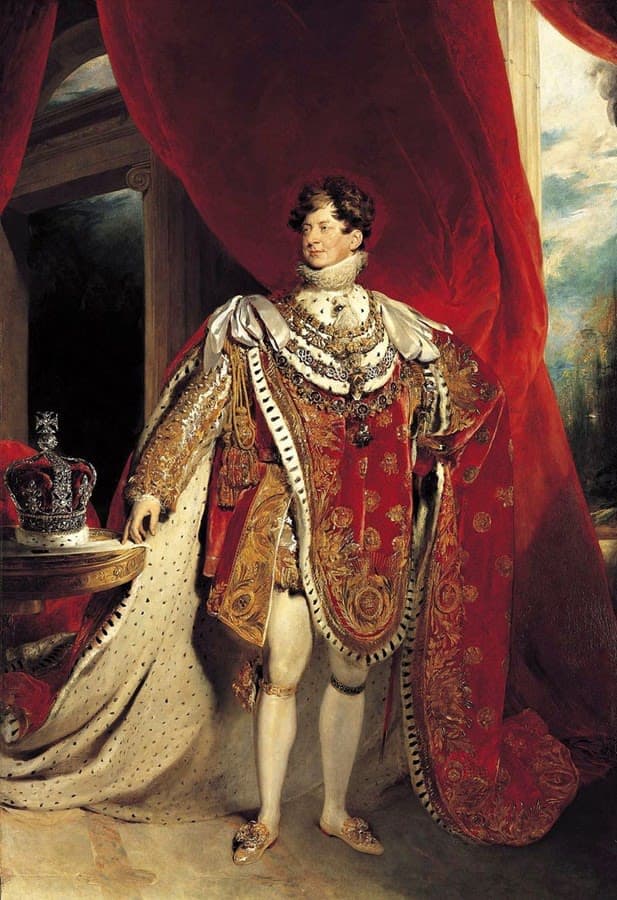
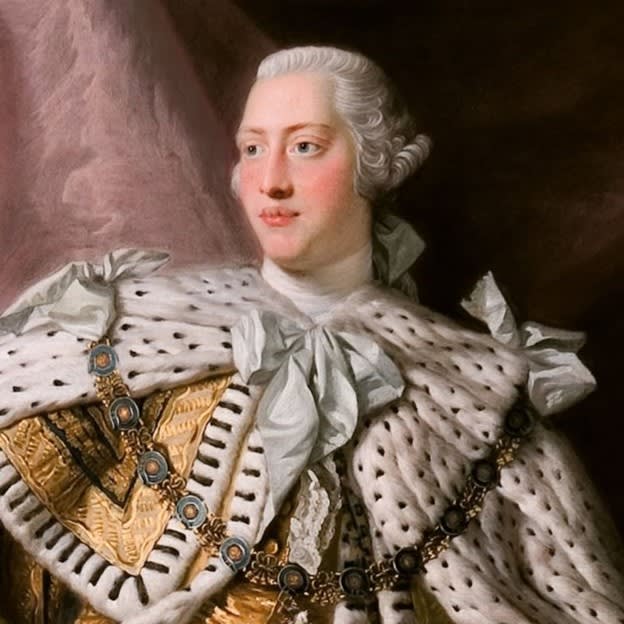
George IV was born on 12 August 1762 at St James’s Palace, the eldest of the fifteen children of King George III and Queen Charlotte. He was christened George Augustus Frederick and held the titles Prince of Wales and Earl of Chester.
Intelligent but spoiled, George early displayed a taste for extravagance and pleasure. His relationship with his father, George III, was extremely strained due to their opposing views on life and politics.
In 1794, burdened with enormous debts, George sought a suitable bride after Prime Minister William Pitt the Younger promised to increase his income once he married. He had already secretly wed his mistress, Maria Fitzherbert, but that marriage was illegal and had no force in law.
He chose as his bride his cousin, Princess Caroline of Brunswick, though he had never seen her. The diplomat James Harris was sent to Brunswick to escort the princess to England. Harris was shocked by her manners and untidiness. On arriving in England, Caroline and George took an instant dislike to one another. George found her fat and unattractive; Caroline called him “very fat” and not the handsome man of his portraits.
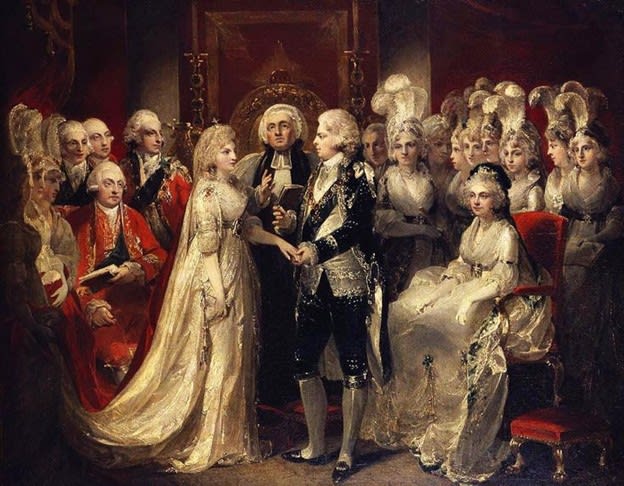

They married on 8 April 1795; George was very drunk at the ceremony. Soon after, in 1796, their daughter Princess Charlotte Augusta was born, but this did nothing to reconcile the couple. George restricted Caroline’s access to her child and effectively excluded her from the girl’s upbringing. Their marital problems became public knowledge, and the press, siding with Caroline, condemned George for his extravagance and dissolute lifestyle.
In 1811, when his father, George III, fell into madness, George became Prince Regent. This period coincided with the Napoleonic Wars, which ended in Britain’s victory. It also saw the completion of the Industrial and Agricultural Revolutions, with Britain emerging as the leading world power.
After George III’s death in 1820, George IV was crowned. His reign was overshadowed by his personal troubles. In 1821 his wife Caroline returned to England hoping to be crowned alongside him, but she was refused. Shattered, she died less than a month later, prompting rumors of poisoning.

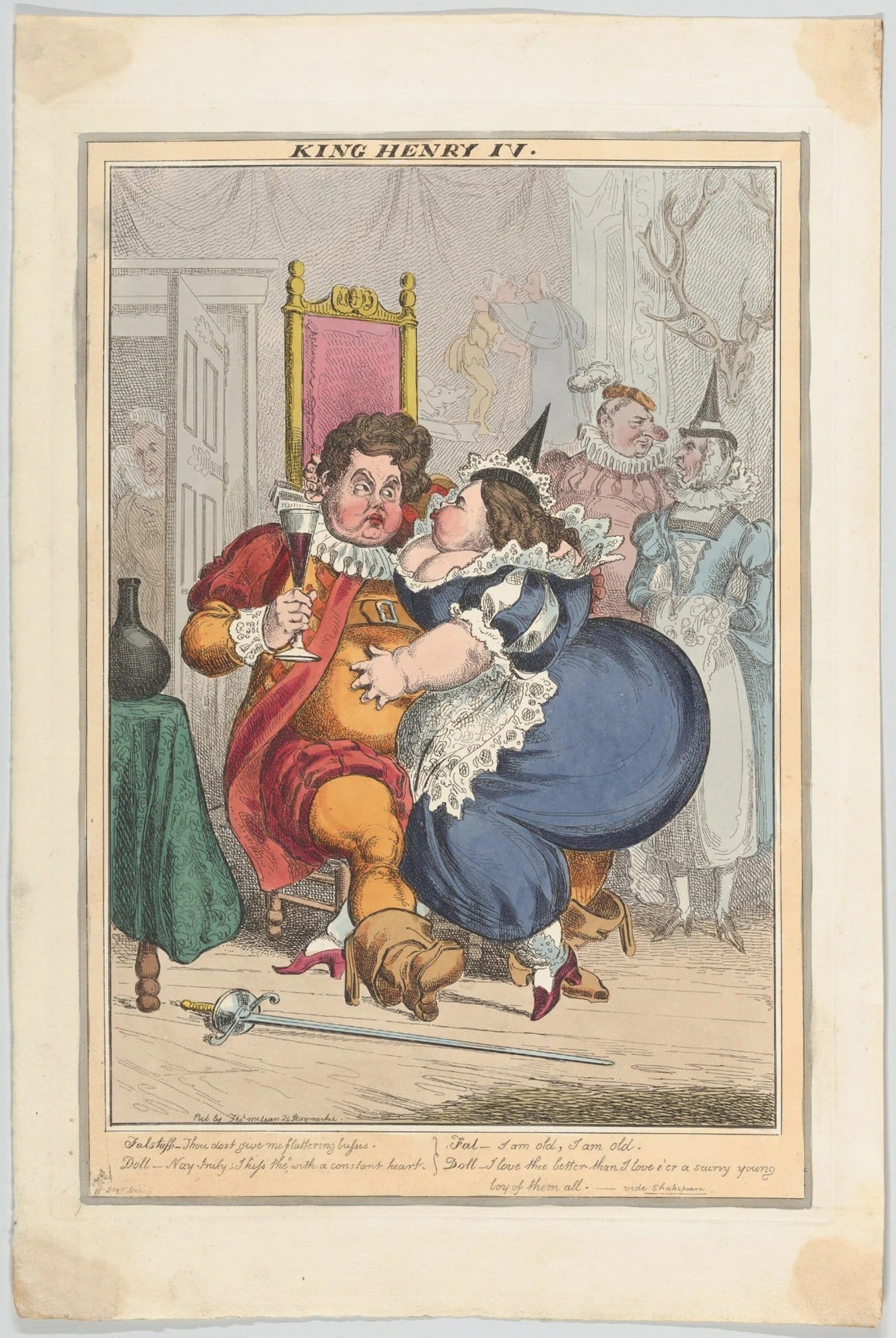
George IV became one of the most unpopular monarchs in British history. A dandy, patron of the arts, and gourmet, he was ridiculed for extravagance, selfishness, and indifference to his people.

His intemperate lifestyle led to serious health problems. He suffered from gout, atherosclerosis, dropsy, and shortness of breath. His weight reached about 130 kg, and he could move only with mechanical aids. Physical decline was accompanied by mental deterioration.
By the spring of 1830 his condition was critical. Isolated in his bedroom at Windsor Castle, he could sleep only in a chair. In his final years he became pious and repentant for his past sins. George IV died on 26 June 1830 at the age of sixty-seven. An autopsy showed he had died of internal bleeding caused by a stomach ulcer.
At his death his only legitimate child, Princess Charlotte Augusta, had already died. Since his second brother also died childless, the throne passed to his third brother, William IV.


