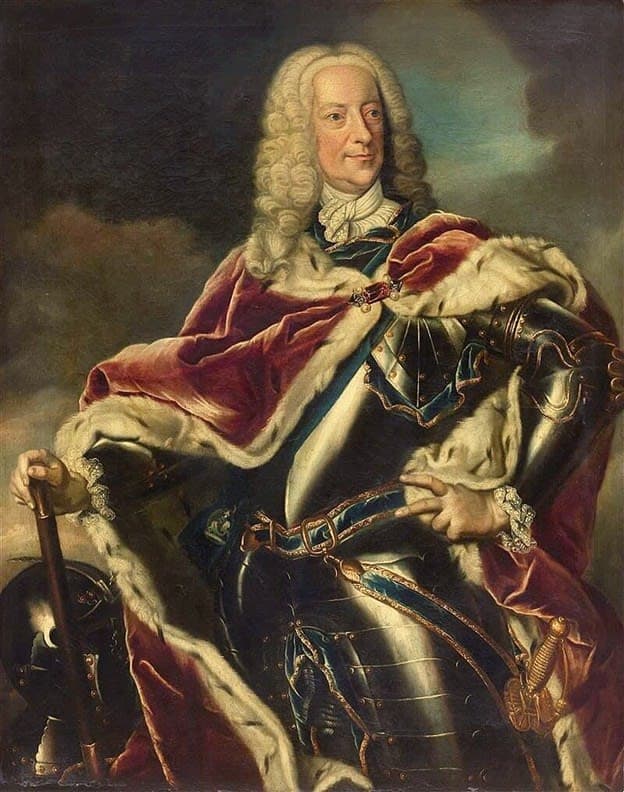

George II was born on 10 November 1683 in Hanover, into a family where his parents’ relationship was strained. His father, George Ludwig the future king of Great Britain divorced his mother, Sophia Dorothea, in 1694, after which she was forbidden to see her children.

George grew up in Hanover and received a broad education that included English, German, French, and Italian, as well as military history. In 1701, under the Act of Settlement, his grandmother Sophia of Hanover and her descendants became heirs to the British throne. Being third in line, George received British subjecthood and the title Duke of Cambridge in 1706.
In 1705 George married Caroline of Brandenburg-Ansbach. Their love match proved happy and brought them seven children, including their son Frederick. In 1708 George showed bravery at the Battle of Oudenarde, where his horse was killed under him, though he himself was unhurt.
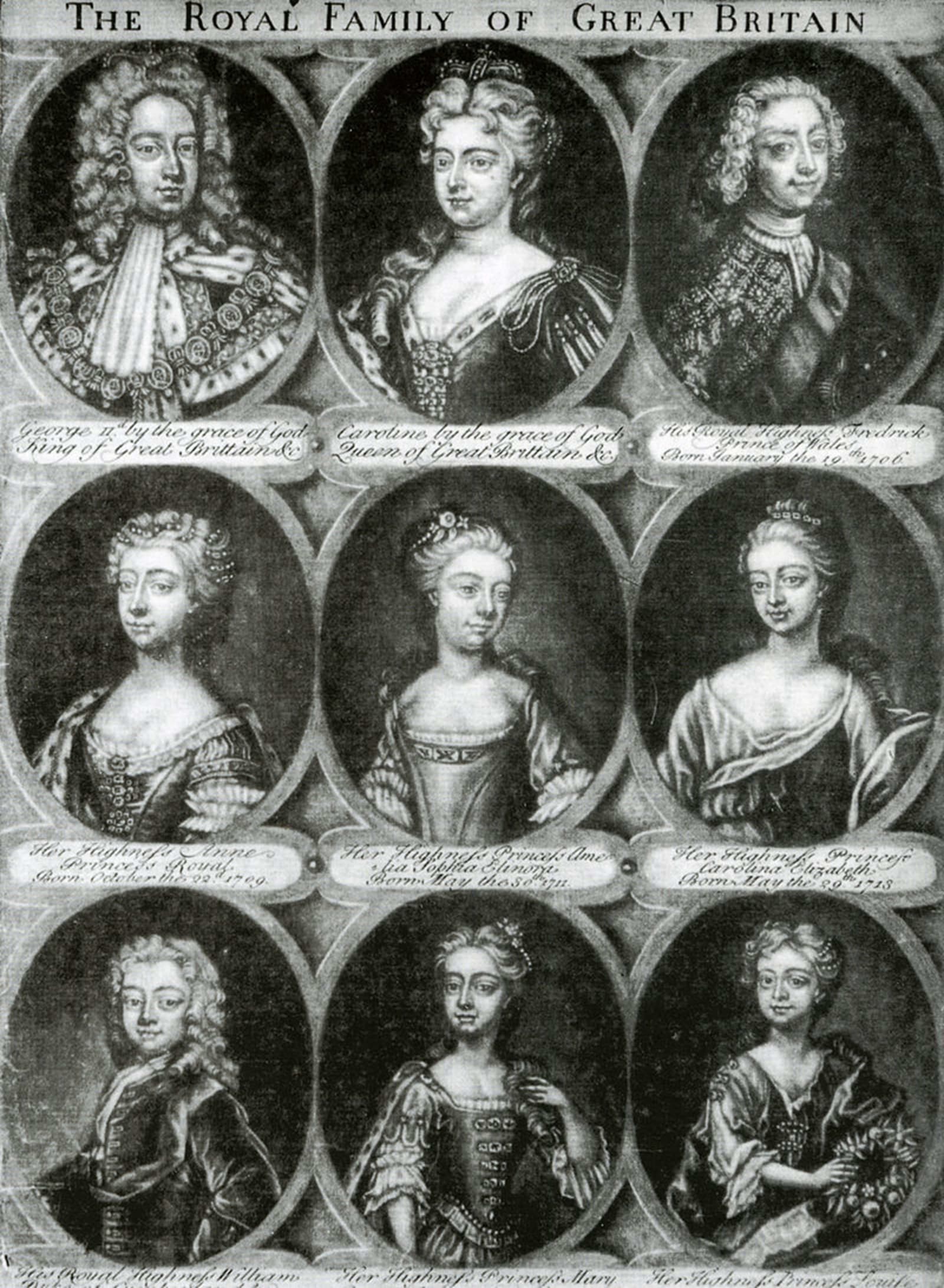
In 1714 George Ludwig became king of Great Britain as George I, and his son George was created Prince of Wales. Relations between father and son were extremely tense. George I envied his son’s popularity and refused to grant him real authority. In 1717 the conflict reached its height: offended by the prince at a christening, the king expelled him and his family from the palace. The Prince of Wales went into opposition to his father’s policies, and his residence became a rallying point for political opponents.
In 1720 father and son were reconciled, though without much enthusiasm. George remained disappointed, since Walpole who had brokered the reconciliation returned to power, and his children were not restored to his custody.
On 11 June 1727 George I died, and the 43-year-old George II became king and elector. He refused to travel to Germany for his father’s funeral, a gesture the English took as a sign of his love for England.
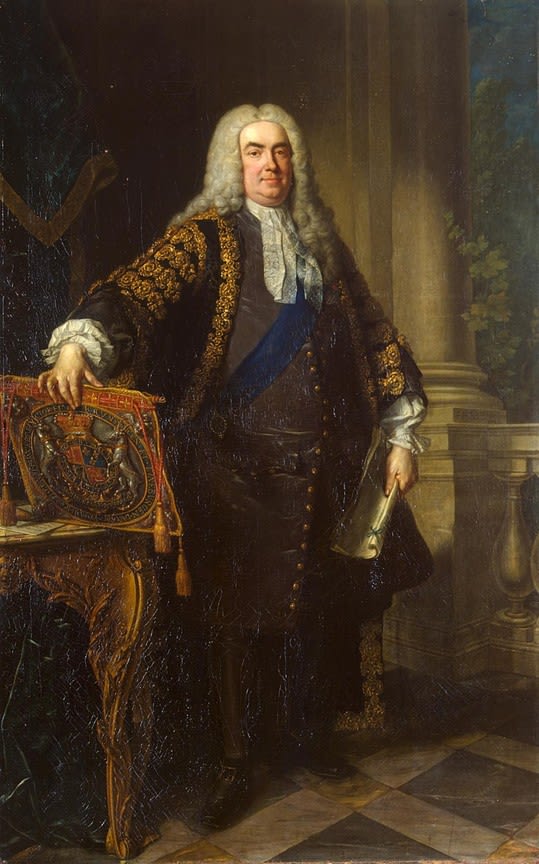
George II wished to dismiss Robert Walpole, who had been his father’s prime minister, but Caroline and Walpole himself persuaded the king to retain him, as Walpole controlled a parliamentary majority and secured the king a generous Civil List. Thus, although George II aspired to rule, he was forced to rely on Walpole, who effectively governed the country.

George II’s relationship with his eldest son, Frederick, was as poor as the one he had with his own father. Left in Germany for fourteen years, Frederick became a center of political opposition upon his return. The conflict escalated to the point that George II banished his son and family from court.
In 1739, against Walpole’s wishes, Britain entered the War of Jenkins’ Ear with Spain, which then developed into the War of the Austrian Succession. In 1743 George II personally led the army at the Battle of Dettingen, becoming the last British monarch to command troops in battle. The war, however, was unpopular, and he was forced to withdraw from it.

In 1745 a French-backed attempt to overthrow George II was organized. Charles Edward Stuart (“Bonnie Prince Charlie”) landed in Scotland, but his Jacobite rising was crushed at the Battle of Culloden on 27 April 1746 by forces commanded by George II’s son, William Augustus, Duke of Cumberland.
After his son Frederick’s death in 1751, George II became increasingly detached from political life. Thomas Pelham became his prime minister. Amid conflicts with France over colonies, the Seven Years’ War began in 1756.
George II died on 25 October 1760 at the age of seventy-seven, from a rupture of the right ventricle of the heart. He became the longest-lived English monarch up to that time. He was succeeded by his grandson, George III, since his son Frederick had predeceased him. George II was buried in Westminster Abbey.


