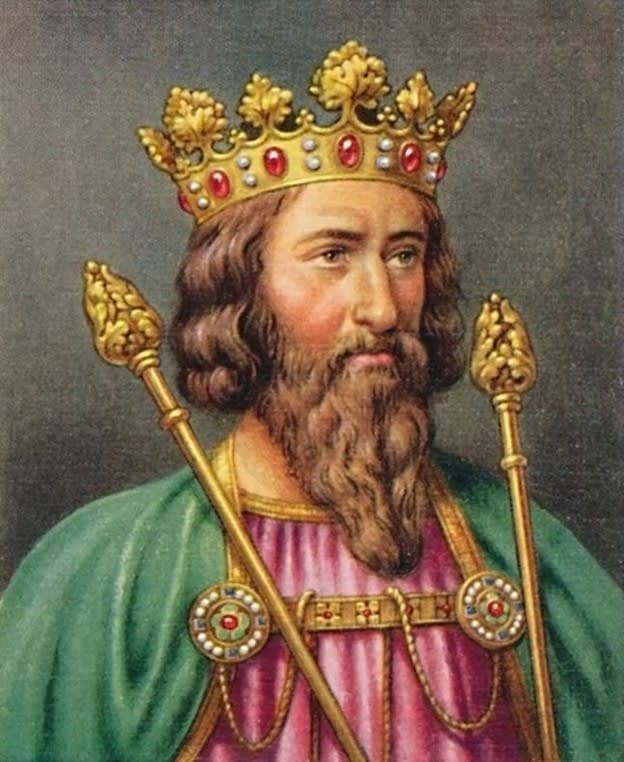
Edward III, the future king from the Plantagenet dynasty, was born on 13 November 1312 at Windsor Castle.

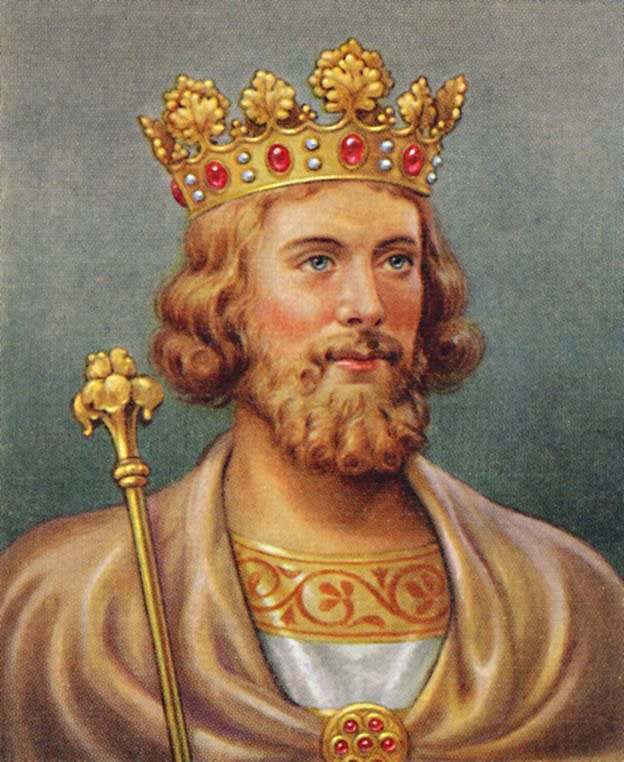
He was the firstborn of King Edward II and Isabella of France, daughter of the French monarch Philip IV the Fair. The birth of a healthy heir brought great joy to the royal family and the English people, dispelling fears of a possible succession crisis that might arise if Edward II were to die suddenly. In honor of the prince’s birth, thanksgiving services were held across the realm. At his baptism he was given the name Edward, after his grandfather, which symbolized a link to powerful ancestors and to the Anglo-Saxon saint-king Edward the Confessor.

From an early age the prince was raised in his own household staffed with loyal servants. Although he rarely saw his parents in childhood, he wanted for nothing: as early as November 1312 he was granted the County of Chester, and later other lands that brought him a vast income. By the mid-1320s his annual revenue was about £4,000, making him one of the richest magnates in the kingdom surpassed only by his parents and the royal favorite, Hugh Despenser the Younger.
The prince’s education and upbringing were overseen by a specially appointed tutor, Sir Richard de Damory. Edward excelled in knightly arts horsemanship, hunting, and the use of arms. He was fluent in Anglo-Norman and continental French, and could read and write Latin. From a young age his friends and future comrades included young aristocrats such as William Montagu, Robert de Ufford, and William de Bohun, who would later play key roles in his reign.
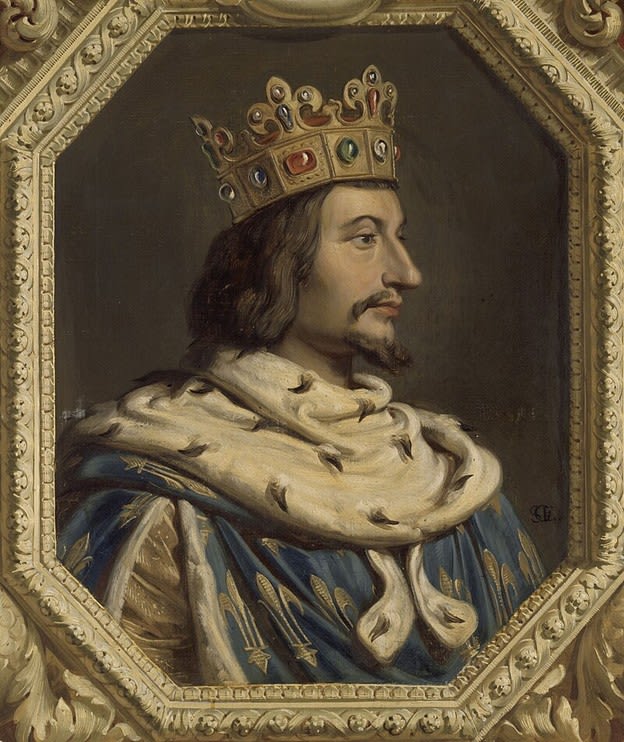
In 1322 a new king ascended the French throne Charles IV the Fair, Isabella’s brother. A conflict soon flared between France and England over the Duchy of Aquitaine, an English holding on French soil. To avoid war, Charles IV proposed that his sister, Queen Isabella, and her son, Prince Edward, come to Paris for negotiations. Edward II’s council reluctantly agreed to send the heir, fearing he might become a pawn in French hands. In September 1325 Prince Edward departed for France, receiving the titles Duke of Aquitaine and Count of Ponthieu and Montreuil.
While in France, the prince did homage to his uncle Charles IV for these lands, an important diplomatic step. However, after the ceremony, Queen Isabella refused to return to England. Relations with her husband had long been strained, and she now openly declared she would not come back until her chief enemy, Hugh Despenser the Younger, was removed. She also refused to release her son, saying he might be in danger in England.
Soon in Paris Isabella met Roger Mortimer, a fugitive enemy of Edward II, and became both his lover and political ally. Their liaison became known at court, and in 1326 Edward II stripped his wife and son of all possessions and declared them enemies of the Crown. In response, Isabella and Mortimer formed an alliance with William I the Good, Count of Hainaut, arranging a marriage between Prince Edward and his daughter, Philippa of Hainault, in exchange for military aid.
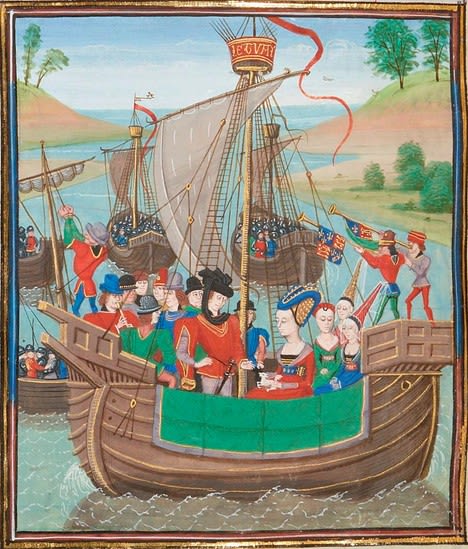
In September 1326 Isabella, Mortimer, Prince Edward, and their supporters landed in England. Despite Edward II’s attempts to organize resistance, his followers proved disloyal, and the barons and the people quickly went over to the queen’s side. London rose in revolt, and Edward II, having lost his support, fled to Wales, but was captured on 16 November 1326. Hugh Despenser the Younger was executed, and his father had been executed earlier.
After seizing power, the queen’s party, seeking legitimacy, proclaimed Prince Edward “Keeper of the Realm.” In January 1327 a parliament met at Westminster to decide the king’s fate. Edward II refused to abdicate voluntarily, but under threat that he might be disinherited, he tearfully agreed to transfer power to his son. On 25 January 1327 the new king’s reign began under the name Edward III.
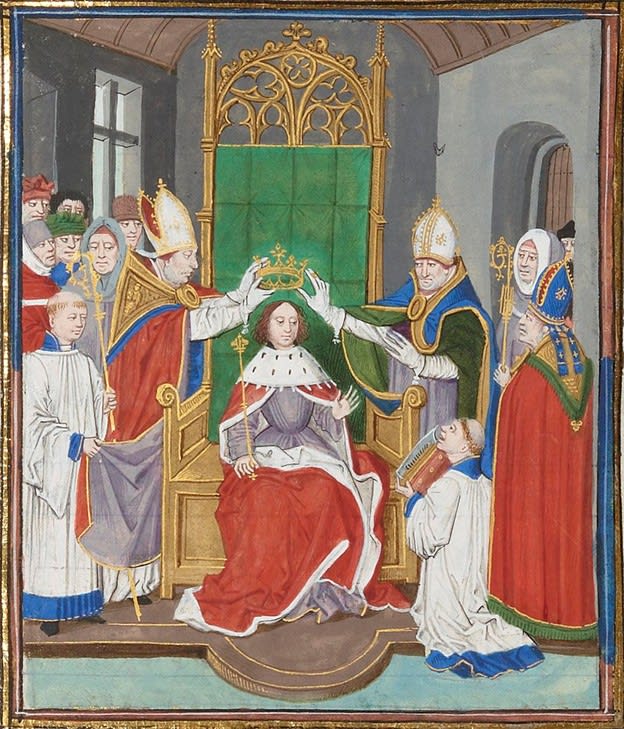
Edward III was crowned on 1 February 1327 in Westminster Abbey. He was only fourteen, and although he formally possessed full royal authority, real control of the country lay in the hands of his mother, Queen Isabella, and her lover, Roger Mortimer. Mortimer, created Earl of March, used his position for personal enrichment and to aggrandize his power, provoking resentment among the barons and even among former allies.

The foreign policy of Edward’s early years was unsuccessful. The unfavorable Treaty of Northampton with Scotland, concluded on 1 May 1328, officially recognized Scottish independence and deprived England of all its gains. Edward III was humiliated by this agreement, which had been concluded without his participation, and he showed his first open defiance by refusing to attend the wedding of his sister, Joan of the Tower, to the Scottish heir David Bruce (the future David II).
Isabella and Mortimer also arranged Edward’s marriage to Philippa of Hainault. Their lavish wedding took place on 24 January 1328 in York Minster.
Fearing plots, Mortimer kept Edward III under constant watch. In September 1327 the deposed king Edward II was killed in Berkeley Castle by his keepers. The murder was likely staged as death by natural causes to remove a threat to Mortimer. Mortimer’s authority waned. His arrogance, personal enrichment, and the execution of the Earl of Kent Edward’s uncle in March 1330 were the last straw. Having reached his majority, Edward III began secretly planning to seize power.
In the autumn of 1330 Edward III, having secured the support of trusted friends including William Montagu, devised a plan to overthrow Mortimer. In October Mortimer and Isabella were staying at Nottingham Castle. Using a secret underground passage, Montagu entered the castle with a small band of conspirators. On the night of 19 October 1330, the conspirators burst into Queen Isabella’s apartments and seized Mortimer. Despite Isabella’s pleas for mercy, Mortimer was clapped in irons and his associates arrested. The next morning the king issued a proclamation announcing that he had taken governance into his own hands, ending the three-year regency of his mother and her lover.
Edward III acted decisively at once. On 29 November 1330 Mortimer was executed at Tyburn as a traitor, without the right of defense. Isabella was not harmed, but she was removed from power and sent to Rising Castle, where she lived in luxury but under supervision. Despite his youth, the king showed himself a pragmatic and farsighted ruler. He rehabilitated victims of Mortimer’s regime, including the earls of Arundel and Kent, and generously rewarded his supporters.
In the first years of his personal rule Edward III faced the aftermath of earlier political upheavals and famine. Lawlessness prevailed in the country, and royal authority was weak in the localities. The king pursued judicial reform, replacing itinerant justices with permanent officials and introducing the office of keeper of the peace (the forerunner of the justice of the peace). At the same time, he strove to improve relations with France, even making a secret journey to Paris in April 1331 to do homage for his French fiefs and avert war.
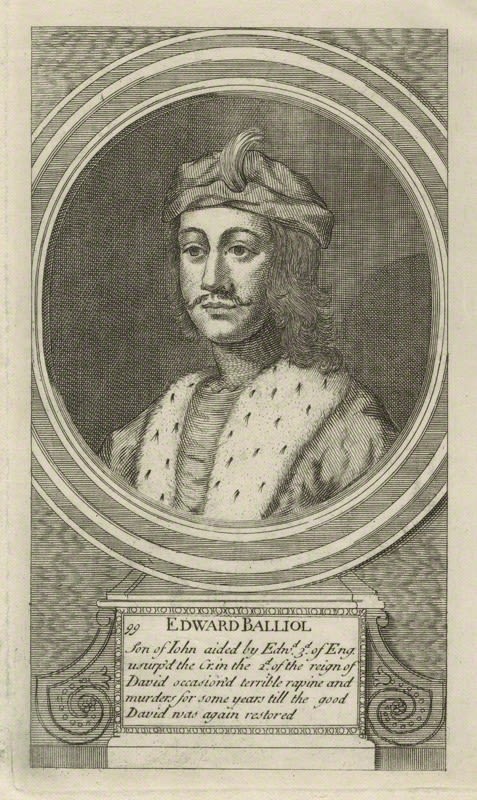
Dissatisfied with the humiliating peace of Northampton, Edward III looked for an opportunity to resume war. Such a chance came in 1332, when Edward Balliol, son of a former king of Scotland, invaded with the support of “the Disinherited” Scottish barons. He defeated the regent’s army and was crowned, but was soon overthrown.

This prompted Edward III to intervene. He moved his court to York to focus on the war and took personal command of the army. On 19 July 1333 at the Battle of Halidon Hill, the English, using new tactics, crushed the Scottish forces. The victory brought Edward III immense prestige, and he restored Balliol to the Scottish throne. Scotland, however, remained defiant, and Edward was forced into grueling, harsh campaigns that only undermined Balliol’s authority and his own reputation. Tired of the protracted war, he turned his attention to a more serious opponent France.
Tensions between England and France grew. In 1337 the French king Philip VI announced the confiscation of Aquitaine, accusing Edward III of sheltering his enemy Robert of Artois. In response, Edward III, having convened parliament, declared his claim to the French throne, as he was the only surviving grandson of Philip IV through the female line. This marked the formal beginning of the Hundred Years’ War.
To finance the war, Edward III concluded costly alliances with German princes and the rulers of the Low Countries, and took huge loans from Italian bankers. He manipulated the wool trade and imposed unpopular taxes and requisitions, causing financial strain and discontent at home. In 1340 he secretly returned to England and carried out a governmental “purge,” accusing his ministers especially Archbishop John Stratford of incompetence and corruption.
Large-scale operations began in 1346 with the landing of an English army in Normandy. During the campaign the English, under Edward III and his son Edward the Black Prince, ravaged French lands with brutal chevauchées. The campaign culminated in the Battle of Crécy on 26 August 1346. Despite the French numerical superiority, the English won a stunning victory, making effective use of longbowmen and tactics honed in the Scottish wars. The battle became one of the most significant in medieval military history.


After Crécy, the English marched north and laid siege to Calais. While Edward III was in France, a Scottish army invaded England but was crushed at the Battle of Neville’s Cross on 17 October 1346. King David II of Scotland himself was captured. After nearly a year-long siege, Calais fell on 3 August 1347. The victory secured for England a strategic continental port.
In 1348 the “Black Death” an epidemic of bubonic plague arrived in England, carrying off up to a third of the population. Edward III himself escaped the disease, but he was forced to suspend the war and address domestic problems. He issued the Ordinance to regulate labor in order to stabilize the labor market, and introduced a number of important reforms, including the “Statute of Treasons,” which limited arbitrary use of that charge, and a reform of the coinage, introducing his own gold coin, the noble.
At this time Edward III actively cultivated his image as a chivalric king. In 1348 he founded the Order of the Garter, one of the oldest and most prestigious orders of knighthood in the world, in honor of his victories. He identified himself with the legendary Knights of the Round Table and often took part in tournaments incognito as an ordinary knight.
War with France resumed in 1355. Edward III launched a campaign, dividing his forces into several columns, one of which was led by his son, the Black Prince. In September 1356 the Black Prince’s army won a resounding victory at the Battle of Poitiers, where the French king, John II the Good, was captured. Together with the earlier capture of the Scottish king, this placed Edward III in an extraordinarily strong position.

On 20 January 1356 Edward Balliol surrendered his rights to the Scottish throne to Edward III, and in 1357 a truce was concluded with Scotland under which King David II was released for a huge ransom.
Negotiations with France proved more difficult. Edward III demanded vast territorial concessions, but after an unsuccessful campaign against Reims in 1359–1360 he agreed to a compromise. On 8 May 1360 the Treaty of Brétigny was concluded: England received sovereignty over Aquitaine, Ponthieu, and Calais, and Edward III renounced his claim to the French crown. The French king was freed for ransom.
In these years Edward III focused on dynastic policy. He married his sons to the heiresses of the greatest English families, greatly increasing their lands and influence. His sons such as John of Gaunt and Lionel of Antwerp—received ducal titles and became among the most powerful men in the realm.
In 1369 the war with France flared up again, as King Charles V took advantage of the discontent of the lords of Aquitaine and declared the duchy confiscated. This time English strategy was less successful, old alliances fell apart, and the English fleet suffered defeat. Despite his advanced age and failing health, Edward III continued to take an active part in planning, but his campaigns went poorly.
In 1376 the so-called Good Parliament met in England. It accused and dismissed the king’s chief ministers and Edward’s mistress, Alice Perrers, for corruption. Soon after, however, John of Gaunt, who had become the dominant political figure, convened the “Bad Parliament,” which reversed all the previous decisions.
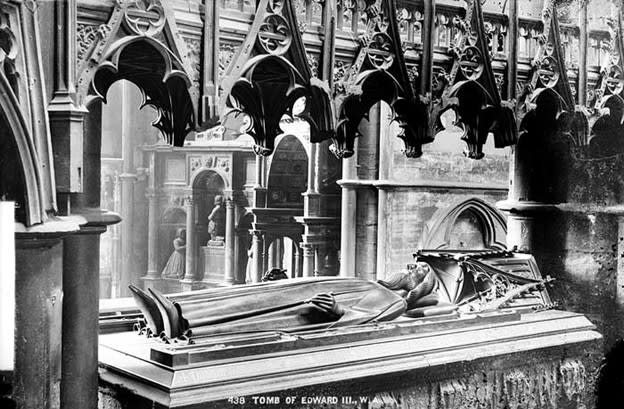
By the end of his life Edward III was weak and ill, though still clear-minded. He died on 21 June 1377, having lived a long and eventful life, outliving his wife and many of his children. Since his eldest son, the Black Prince, had predeceased him, the throne passed to his grandson, Richard II. Edward III ruled England for fifty years, and his death was felt by the people as the end of an era. He left behind a kingdom which despite financial problems was united and cohesive, with a powerful army tempered in numerous wars and a strong dynastic strategy.


