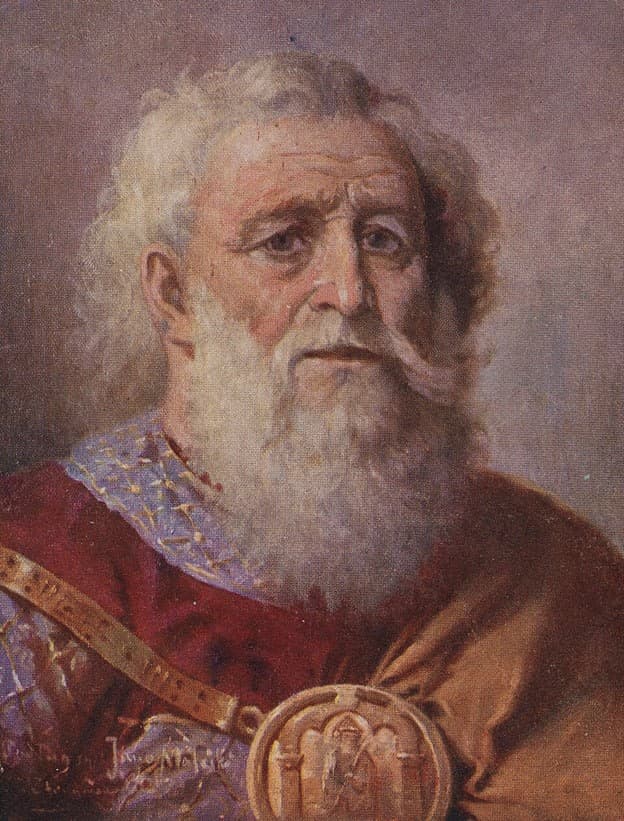

Mieszko’s political career began in 1138, when the famous Statute of Bolesław III Wrymouth came into force after the death of his father. According to the testament, twelve-year-old Mieszko received Greater Poland, with its capital at Poznań, as his hereditary domain. Despite his young age, he was formally regarded as an independent duke, although in practice the affairs of his principality were initially managed by his mother, Salomea of Berg.
Above all the brothers stood their elder half-brother Władysław II, who had been proclaimed princeps and ruler of the Seniorate Province centered on Kraków.

The fragile peace within the Piast family collapsed as early as 1141. Seeking to secure the future of her children, Salomea summoned a secret assembly at Łęczyca, where she announced her intention to transfer her lands to her sons and arrange the marriage of her daughter Agnes to a son of the Kievan prince Vsevolod Olgovich.
This amounted to a direct challenge to Władysław II. The princeps, however, acted with foresight. He seized the initiative, concluded an alliance with Kyiv himself, and launched a rapid political and military strike against his brothers. Without sufficient support, Mieszko and his brother Bolesław were forced to retreat.

The conflict intensified after Salomea’s death in 1144. The dispute over her widow’s estate led to the bloody Battle of the Pilica River, where Władysław II, supported by Rus’ forces, emerged victorious.
Nevertheless, the cruelty of the princeps, particularly his punishment of the influential voivode Piotr Włostowic, who was blinded and expelled, alienated much of the Polish nobility. In 1146, the balance of power shifted dramatically. Near the walls of Poznań, Władysław’s army was defeated by rebellious magnates, and he was forced to flee to the Holy Roman Empire.
Following the redistribution of territory, Mieszko retained Greater Poland, while his brother Bolesław IV the Curly became the new princeps.

Mieszko III soon established himself as an active participant in European politics. In 1147, he joined the Wendish Crusade against the Polabian Slavs organized by Albert the Bear. His policy there revealed considerable political cunning: while defending Polish interests in the lands of the Sprewani, he secretly supported certain Slavic tribes against Henry the Lion.
This provoked the anger of the German margraves, but the conflict was settled in 1148 at Kruszwica. Peace was reinforced through the marriage of Mieszko’s sister Judith to Otto, the son of Albert the Bear.
The power of the Empire, however, was too great to ignore. In 1157, Frederick Barbarossa marched against Poland. Recognizing the scale of the threat, the Polish princes chose not to defend the Oder frontier. Instead, they burned the castles of Głogów and Bytom and withdrew toward Poznań.
After their defeat at Krzyszkowo, Mieszko and Bolesław were forced to pay a massive indemnity and acknowledge the emperor’s supremacy. Their younger brother Casimir was sent to Germany as a hostage to guarantee compliance with the agreement.
Although they had promised to return Silesia to the exiled Władysław II, Mieszko and Bolesław deliberately delayed fulfilling this obligation until Władysław’s death in 1159. Only in 1163, under renewed pressure from Barbarossa, did they transfer Silesia to Władysław’s sons.

In 1166, Henry of Sandomierz was killed during a campaign against the Prussians. The dispute over his inheritance nearly triggered another civil war. Bolesław IV attempted to seize the deceased duke’s lands for himself, provoking a rebellion by Casimir the Just, who was supported by Mieszko and influential magnates.
In 1168, at Jędrzejów, the rebels even proclaimed Mieszko princeps. Bolesław, however, agreed to a compromise, divided Henry’s lands, and managed to retain the throne.

Mieszko reached the height of his power on April 3, 1173, when, following the death of Bolesław IV, he officially became princeps of Poland under the seniority principle.
Mieszko III, now commonly known as the Old because of his stern character and attachment to traditional political order, sought to establish strong personal rule. He continued to reside in his beloved Greater Poland and governed Kraków through appointed officials.
His reign was characterized by strict taxation and an energetic campaign against counterfeit coinage. These policies, however, provoked intense resentment among the nobility of Lesser Poland. Despite diplomatic successes, including the strengthening of Polish influence in Pomerania through the marriage of his daughter Anastasia, domestic opposition steadily increased.
In 1177, Mieszko’s own eldest son, Odon, rebelled against him. Odon feared that his father intended to deprive him of his inheritance in favor of the children from Mieszko’s second marriage. The revolt was supported by Bishop Gedko and Casimir the Just.
Mieszko was taken completely by surprise. Only shortly before, during Easter celebrations at Gniezno, his relatives had sworn loyalty to him. Now he was forced to flee to Racibórz.
Unable to secure support either in Bohemia or from Emperor Frederick Barbarossa, who demanded the enormous sum of 10,000 silver coins in exchange for assistance, Mieszko found himself in exile. The assembly at Łęczyca in 1180 formally recognized his deposition as legitimate.

Mieszko, however, had no intention of surrendering. With the support of his son-in-law Bogislaw I of Pomerania and Archbishop Zdzisław of Gniezno, he began a triumphant return in 1181.
He successfully recaptured Gniezno, Kalisz, and eventually all of Greater Poland, forcing his son Odon to make peace with him in 1182. Mieszko did not stop there. He attempted to purchase the support of the future emperor Henry VI by offering even more silver than Casimir had provided.
In 1186, after the death of his nephew Leszek, Mieszko seized Kuyavia by force and granted it to his son Bolesław.

In 1191, taking advantage of growing dissatisfaction in Kraków, Mieszko briefly regained the capital, but he was soon expelled once again by Casimir.
A succession of deaths among his sons dealt him severe personal blows. Mieszko the Younger died in 1193, followed by Odon in 1194. Yet these losses did not end Mieszko’s political ambitions.
After the sudden death of Casimir the Just in 1194, Mieszko again laid claim to Kraków. Standing in his way, however, was Roman Mstislavich of Volhynia.
On September 13, 1195, one of the bloodiest battles of the period took place on the Mozgawa River. In the battle, Mieszko’s eldest surviving son, Bolesław of Kuyavia, was killed, while Mieszko himself was wounded. Although the battle produced no clear victor, it prevented Mieszko from immediately seizing the capital.
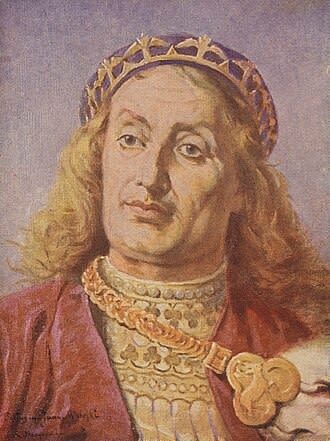
The final years of Mieszko’s life were dominated by endless negotiations, shifting alliances, and political intrigue. In 1198, he reached an agreement with Casimir’s widow, Helen of Znojmo, and returned to the Kraków throne in exchange for Kuyavia.
He was deposed again in 1199, only to be restored with the support of Voivode Mikołaj Gryfita.
Having outlived all his brothers and sisters and almost all of his sons, Mieszko III the Old died in Kalisz on March 13, 1202. He was buried in the Church of Saint Paul, which he had founded himself.
He left to his only surviving son, Władysław III Spindleshanks, a difficult inheritance and a country that had by then become deeply entangled in the cycle of dynastic wars and territorial fragmentation.


