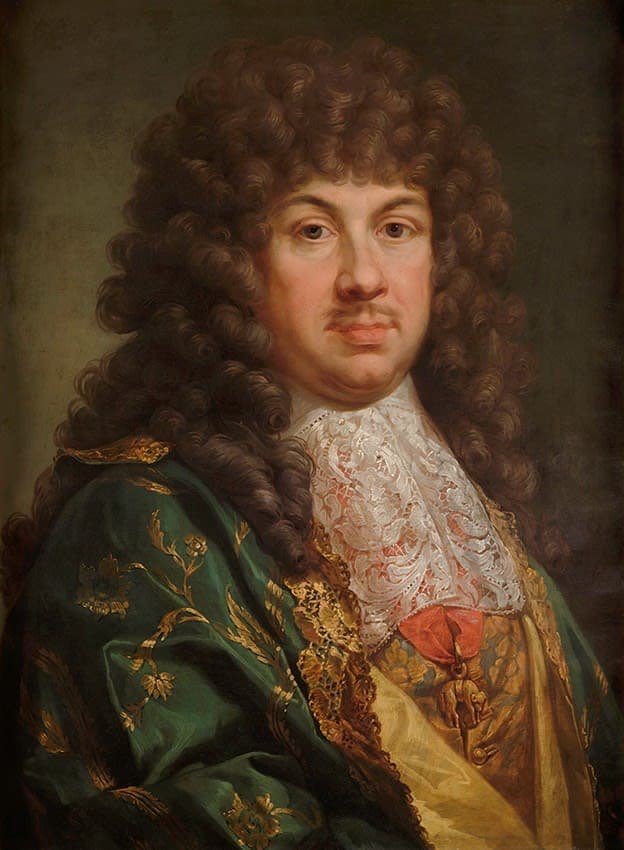

Michał was born into a family whose name inspired awe and respect throughout Eastern Europe. His father was the legendary and formidable Jeremi Wiśniowiecki, while his mother was Gryzelda Zamoyska. The Wiśniowiecki family possessed vast territories in Left-Bank Ukraine, forming a genuine latifundium — virtually a state within a state. Their estates included 56 cities, towns, and villages, with a population reaching 288,000 people. The center of this enormous domain was the city of Lubny (now in Poltava Oblast, Ukraine).
However, Michał's childhood was overshadowed by wars and upheavals. Until 1642, he grew up in Zamość, but following his father's death and the loss of the family's ancestral lands during the Cossack uprisings, he came under the guardianship of his uncle, Jan Zamoyski, the Voivode of Sandomierz. His father's legacy — the image of a defender of Christianity and an uncompromising opponent of the Khmelnytsky Uprising — became both Michał's greatest political asset and an overwhelming burden.

Despite the loss of his family's former power, Michał received an excellent European education. He began his studies at a Jesuit school and later, between 1656 and 1660, attended the University of Prague with the active support of Queen Marie Louise (the wife of John II Casimir). His educational journey also took him to Dresden and Vienna. Michał was known as a polyglot: he spoke Latin, French, and Italian fluently and also understood Turkish and Tatar, an uncommon accomplishment among Polish monarchs.
He gained his first significant military experience in November 1663, when he participated in King John Casimir's Ukrainian campaign against Muscovite forces. During this campaign, the young prince commanded his own infantry regiment of 600 soldiers, demonstrating his readiness to continue his father's legacy on the battlefield.

A turning point came in 1668, when King John Casimir Vasa abdicated the throne, leaving the country in a political vacuum. A fierce struggle unfolded during the royal election of 1669. The powerful Radziwiłł and Pac magnate factions had their own preferred candidates, but the ordinary nobility, tired of foreign contenders, demanded a king of their own — a so-called "Piast."
Michał Wiśniowiecki emerged as a compromise candidate. The nobility expected that the young, relatively modestly wealthy, and devout Catholic would become an obedient instrument in their hands and would not dare to restrict their "noble liberties." He received strong political support from Primate Andrzej Olszowski, who called for the election of a native of the Polish-Lithuanian Commonwealth. The memory of his father, Jeremi, played a decisive role: on June 19, 1669, Michał was elected king, and on September 29 of the same year, his solemn coronation took place in Kraków.

From the very beginning, Michał Korybut's reign was overshadowed by the hostility of the magnates. The pro-French faction, led by the outstanding military commander and hetman Jan Sobieski, entered into fierce opposition against the king. The state descended into a spiral of feudal infighting. The political system became paralyzed: of the six sessions of the Sejm convened during Wiśniowiecki's reign, four were disrupted by noble deputies exercising their right of liberum veto.
While political disputes raged within the country, the external threat reached its peak. In the spring of 1672, a massive army of the Ottoman Empire invaded the Polish-Lithuanian Commonwealth. The fall of the key fortress of Kamianets-Podilskyi sent shockwaves throughout the nation. In the summer of the same year, Ottoman-Cossack forces captured Khotyn and entered Galicia, laying siege to Lviv.
Finding himself in a desperate situation, Michał was forced to conclude the humiliating Treaty of Buchach in 1672. Under its terms, the Polish-Lithuanian Commonwealth lost the Podolian and Bratslav Voivodeships, while the southern part of the Kyiv Voivodeship came under the control of Hetman Doroshenko. Moreover, the proud Commonwealth was obliged to pay an annual tribute to the Ottoman sultan.

The humiliation of the Treaty of Buchach stirred widespread outrage throughout society. The Sejm refused to ratify the agreement, and the war erupted once again. Despite his poor health, Michał attempted to live up to the image of a warrior king and set out to join the army assembling near Khotyn. However, his strength was already failing.
The king stopped in Lviv, at the Palace of the Latin Archbishops on Market Square. It was there, before the decisive battle could begin, that he passed away. An autopsy revealed that the cause of death was an esophageal ulcer, aggravated by immense nervous strain and constant stress.
The monarch's personal life offered him little consolation. In 1670, he married Eleanor Maria of Austria. That same year, the queen became pregnant, but an accident caused her to suffer a miscarriage, depriving Michał of his hope of producing an heir.

The reign of Michał Korybut Wiśniowiecki is generally regarded as a tragic chapter in Polish history. During the few years he spent on the throne, royal authority weakened considerably, and the country suffered severe territorial losses. Nevertheless, his death became a catalyst for national unity in the face of the Ottoman threat, soon leading to the brilliant victory at the Battle of Khotyn under the command of his successor and former political opponent — Jan Sobieski.
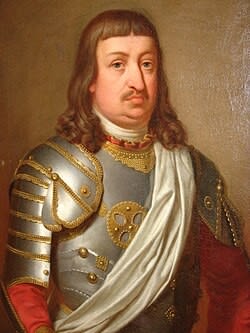
Portrait of King John III Sobieski of Poland. Between 1673 and 1677. National Museum, Warsaw. The artist is unknown; the work was previously attributed to Jerzy Siemiginowski-Eleuter and later to Daniel Schultz. According to research conducted by the staff of the Wilanów Palace Museum, this portrait is considered the most historically accurate among the surviving depictions of Jan Sobieski.


