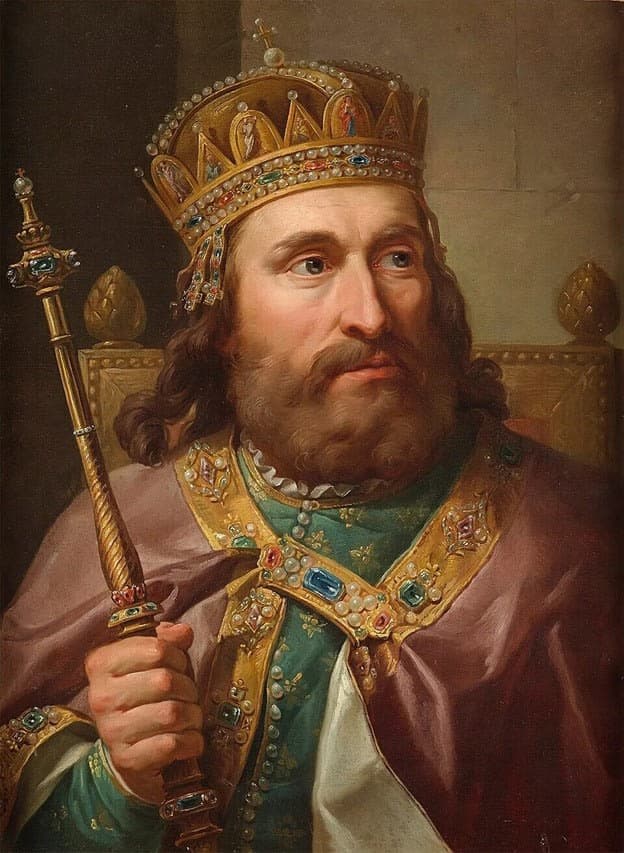
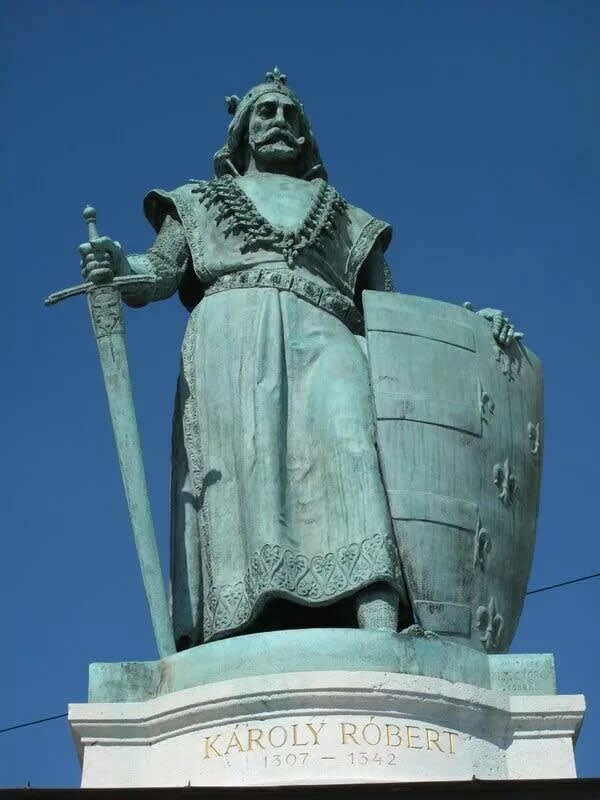
The reign of Louis I, known in Hungarian tradition as Louis the Great and in Polish history as Louis of Hungary, marked the height of Angevin power in Central Europe. His rule united the destinies of two major kingdoms and created one of the largest political systems of its time.
The son of King Charles Robert of Hungary, a member of the Neapolitan House of Anjou-Sicily, and Elisabeth of Poland, daughter of Władysław the Elbow-high, Louis stood at the intersection of major European dynastic interests from the moment of his birth. When he ascended the Hungarian throne in 1342, the young monarch initially relied heavily on the political experience of his mother, who continued to exert enormous influence over state affairs for many decades.
The first decades of his reign were marked by active expansion and the defense of dynastic interests. In 1347–1348, Louis launched a major military expedition into the Kingdom of Naples. The driving force behind the campaign was personal revenge for the tragic death of his brother Andrew, who had been murdered as a result of court intrigue.
Despite significant military successes, Louis was unable to establish lasting control over southern Italy. Ironically, the principal enemy of the Hungarian forces proved not to be the opposing armies but the outbreak of the Black Death, the plague that was devastating Europe at the time.
Louis did not abandon his ambitions. In 1350, he launched a second campaign, temporarily bringing Naples under his control and entrusting its administration to his mother. His strategic attention, however, soon shifted toward a region far more important to Hungary — Dalmatia.
Louis fought a prolonged and exhausting struggle against the Republic of Venice for control of the Adriatic coastline. The conflict ended in a major diplomatic and military victory in 1358 with the Treaty of Zadar, under which Venice recognized Hungarian sovereignty over Dalmatia.
Louis’s eastern policy also demanded constant military attention. In 1365, he campaigned against the Bulgarian ruler Ivan Shishman and succeeded in conquering Vidin.
Maintaining control over these territories, however, proved difficult. The Bulgarians sought support from the rapidly expanding Ottoman Turks. At this stage, the Ottomans did not yet represent a direct threat to Hungary’s own borders, as they were still heavily engaged in wars against the declining Byzantine Empire.
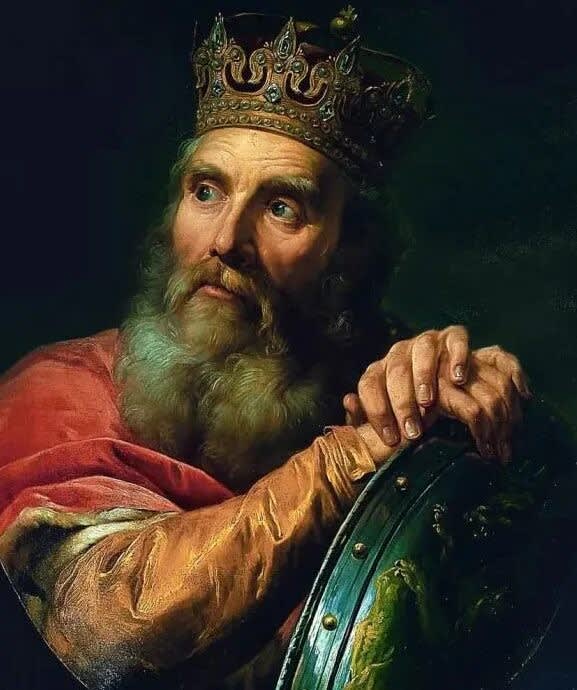
A decisive turning point came in 1370. After the death of Casimir III the Great, who left no legitimate male heir, Louis inherited the Polish crown in accordance with long-standing dynastic agreements.
At this moment, his realm reached an unprecedented scale. The lands ruled by the Piast and Angevin dynasties now extended from the Baltic Sea in the north to the Balkans in the south, and from the Black Sea region to the shores of the Adriatic.
Such vast territories, however, required constant military protection.
In 1376, the Lithuanian princes Kęstutis and Liubartas, together with their nephew Yuri Narimuntovich, launched a bold raid into Lesser Poland, advancing as far as Sandomierz and Tarnów.
Louis responded decisively in 1377. His counteroffensive forced the Lithuanian rulers back and brought a number of important strongholds under his authority, including Grabowiec, Chełm, Belz, Horodło, and Vsevolozh. Yuri Narimuntovich was left with only Lubaczów.
Louis I’s domestic policy was aimed at establishing a stable legal framework and strengthening the social estates of the kingdom. He issued a number of important legal acts that clearly defined the rights of the crown and the obligations of its subjects.
The nobility received strong guarantees protecting hereditary possession of their estates, while the burden placed on the peasantry was restructured through the replacement of certain forms of compulsory labor with a fixed payment in kind — the famous “ninth,” amounting to one-ninth of agricultural income.
The king paid particular attention to towns, which he regarded as essential pillars of the economy. He granted them privileges, distributed lands and forests, constructed powerful defensive walls, and sponsored impressive public buildings.
It was during Louis’s reign that the political center of the kingdom shifted from Visegrád to Buda, which developed into one of the major cultural and political centers of the region.
Louis also entered history as an important patron of education. In 1367, he founded an academy, or university, supported the development of church schools, and encouraged the spread of education among his Hungarian subjects.
In Hungary, his reign came to be remembered as a kind of “golden age,” and the king himself enjoyed considerable popularity.
The situation in Poland was very different.
For the Polish nobility, Louis remained largely an absentee king. He spent most of his time in Hungary or at his residences in the territory of present-day Slovakia, becoming only occasionally involved in the daily political disputes of the Polish elite and usually governing through appointed representatives.
Polish nobles complained about repeated financial demands to support wars that did not always correspond to Polish interests.
The most controversial issue was Louis’s decision to detach Red Ruthenia from the Polish Crown and place it directly under Hungarian authority.
This contrast became one of the defining features of his legacy: in Hungary, Louis was remembered as a great builder of royal power and one of the most successful rulers of his dynasty, while in Poland he was often regarded as a distant and demanding monarch whose priorities lay elsewhere.


