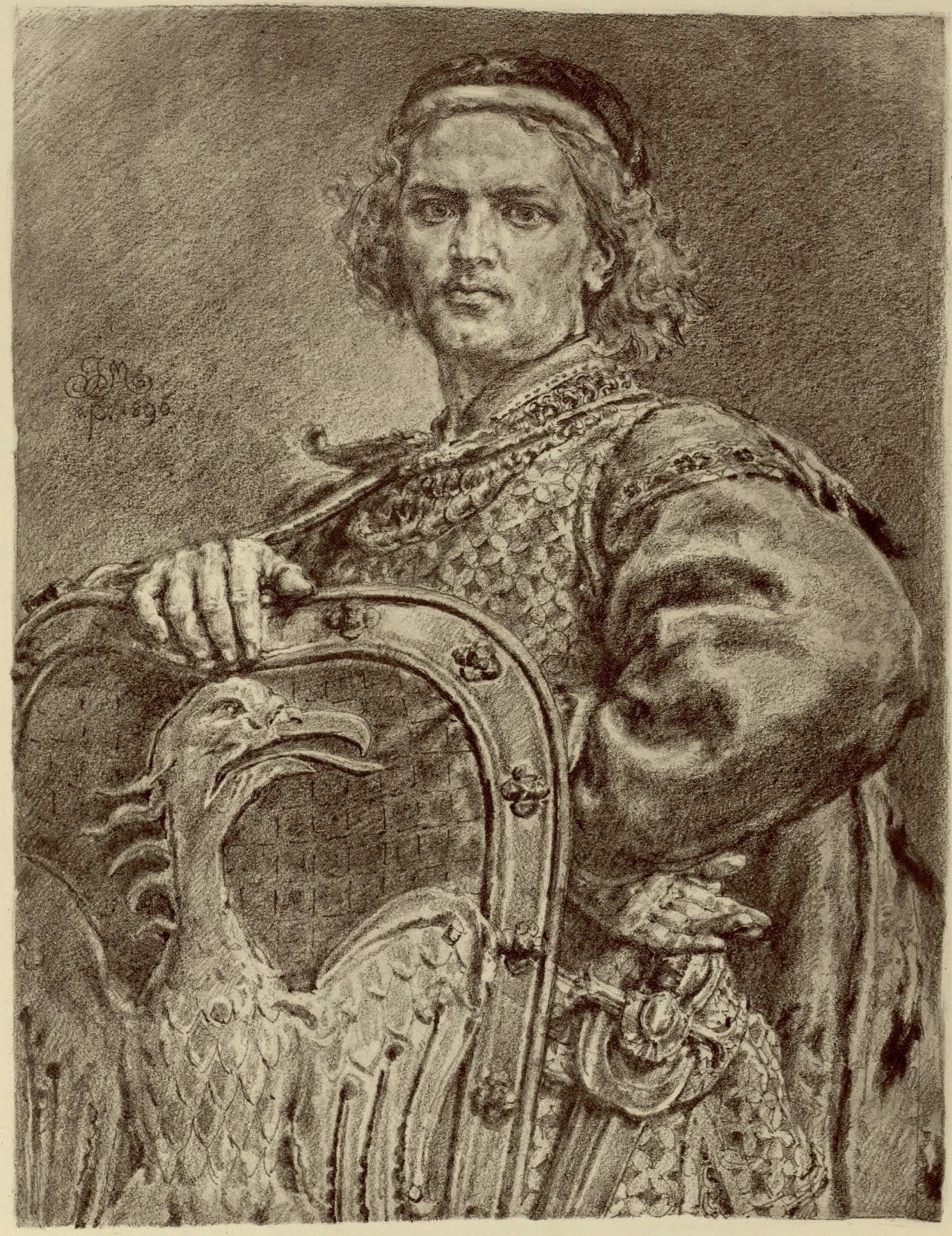
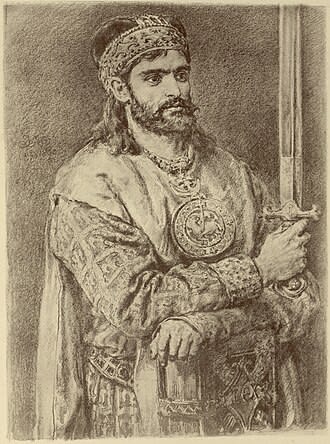
As the eldest surviving son of Casimir II the Just and Helen of Znojmo, Leszek found himself at the summit of power at the age of only ten, when most children were only beginning to understand the world around them. He would hold this unstable position for decades and eventually become the last broadly recognized High Duke of a still notionally united Poland.
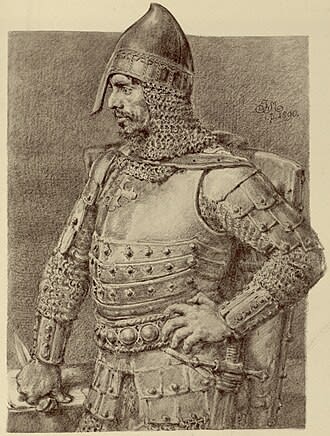
The sudden death of Casimir II on May 5, 1194, threw the ten-year-old Leszek into the furnace of dynastic politics. The young prince was proclaimed ruler of the Seniorate Province, while together with his brother Konrad he inherited the lands of Sandomierz and Masovia. Their mother Helen headed the regency, relying on the authority of Voivode Mikołaj Gryfita and Bishop Fulko.
The legitimacy of the young ruler, however, was immediately challenged by his uncle, Mieszko III the Old, who considered Kraków to be his rightful possession.
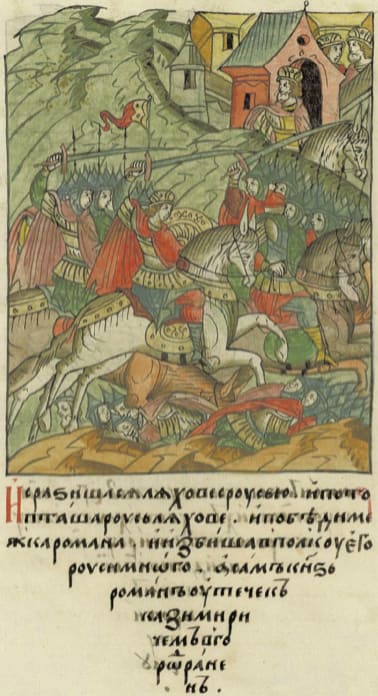
The confrontation culminated in the Battle of the Mozgawa River on September 13, 1195. It became one of the bloodiest battles of the era. Leszek was supported by his cousin, the Volhynian prince Roman Mstislavich.
Despite the severe wounds suffered by both Roman and Mieszko, as well as the death of Mieszko’s son Bolesław of Kuyavia, the sons of Casimir managed to avoid complete defeat.
Nevertheless, in 1198 Helen of Znojmo was forced to negotiate. She surrendered Kraków to Mieszko III in exchange for recognition of her sons’ rights to Lesser Poland and Masovia, as well as the transfer of Kuyavia to them. Mieszko retained the throne until his death on March 13, 1202.
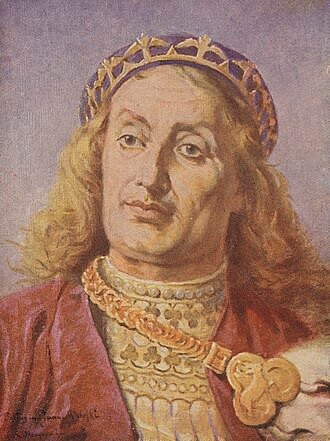
After Mieszko III’s death, Leszek, now an adult, was in a position to reclaim the throne. A serious political conflict, however, quickly emerged. The influential Mikołaj Gryfita demanded the dismissal of Leszek’s loyal associate, Voivode Goworek.
Displaying a degree of loyalty unusual for the period, Leszek refused to betray his friend simply to obtain the crown. As a result, Władysław III Spindleshanks briefly took control of Kraków.
Only after Gryfita’s death in 1202 — or, according to other accounts, by 1206 — did the Kraków nobility recognize Leszek as High Duke without imposing prior conditions.
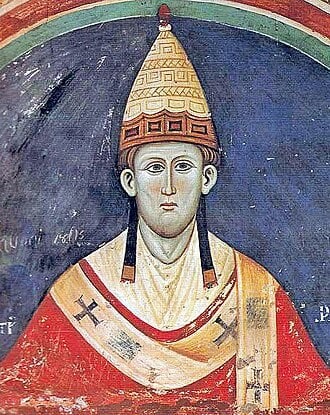
In 1207, Leszek made a bold diplomatic move by placing his territories under the feudal protection of Pope Innocent III. This decision helped free Poland from the political influence of the Holy Roman Empire and created favorable conditions for extensive Church reforms under Archbishop Henryk Kietlicz.
Relations with Kievan Rus’ became one of the central themes of Leszek’s reign. His former ally Roman of Volhynia, whom Leszek had helped secure Halych in 1199, unexpectedly became his enemy, perhaps under the influence of political intrigue connected with Władysław Spindleshanks.
On October 14, 1205, Roman was defeated and killed at the Battle of Zawichost, plunging the Halych-Volhynian lands into a prolonged period of instability.
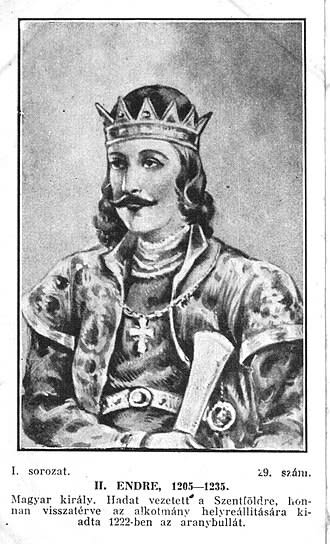
Leszek became deeply involved in the struggle over Roman’s inheritance, maneuvering between support for Roman’s widow Anna and her sons, Daniel and Vasilko, and an alliance with King Andrew II of Hungary.
In 1214, the Treaty of Spiš was concluded. Under its terms, Halych passed to Andrew’s son Coloman, who married Leszek’s daughter Salomea.
Leszek, however, pursued a double-sided policy, periodically supporting Daniel Romanovich as well. This contributed to the breakdown of relations with Hungary and the loss of Peremyshl. The tangled web of alliances, rivalries, and betrayals continued for more than a decade and was not fully resolved until 1227, when Leszek once again moved closer to an alliance with Hungary.

Leszek’s reign was equally turbulent within Poland. On June 9, 1210, Pope Innocent III, influenced by appeals from the Silesian princes — probably including Henry the Bearded — issued a bull restoring the rights of the senior branch of the Piast dynasty and excommunicated Leszek.
Taking advantage of the confusion, Mieszko Tanglefoot seized Wawel Castle. To save his position, Leszek convened an assembly at Borzykowa, granting extensive privileges to the Church in exchange for its support.
After Mieszko Tanglefoot’s death in 1211, Leszek returned triumphantly to Kraków.
The northern frontier demanded no less attention. Leszek sought to Christianize the pagan Prussians and cooperated with Henry the Bearded and Władysław Spindleshanks in this effort. In 1217, Leszek and Władysław concluded a mutual inheritance agreement, which in theory could eventually have brought all of Greater Poland under Leszek’s control.
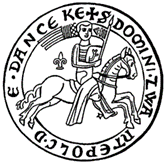
One well-known historical anecdote concerns a letter Leszek supposedly sent to Pope Innocent III. When the pope called on Polish knights to participate in a crusade to the Holy Land, Leszek reportedly replied with irony that the hardy warriors of Poland could not fight in a land where there was “neither wine, nor mead, nor even beer.”
Instead of campaigning in distant lands, he concentrated on defending Poland’s frontier against Prussian raids. To this end, he created a special “Knights’ Guard,” although the initiative ended in failure in 1224 after betrayal by commanders from the Gryfici family.
In 1227, Leszek attempted to bring an end to the conflicts in Greater Poland and resolve the problem of the separatist Pomeranian duke Świętopełk II. Nearly all of the leading princes of Poland arrived at the assembly at Gąsawa on November 11.
The night of November 24, 1227, however, proved fatal. Mercenaries serving Świętopełk, possibly acting in cooperation with Władysław Odonic, attacked the princes while they were bathing.
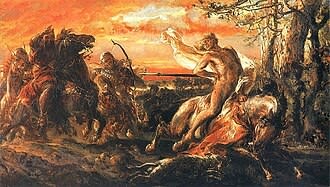
Henry the Bearded survived only because of the self-sacrifice of the knight Peregryn, who shielded him with his own body.
Leszek, still naked, managed to mount a horse and flee as far as the village of Marcinkowo. There, however, the assassins caught up with him and killed him with their spears. The death of the prince, who was around forty-three years old, shocked the country.
Leszek the White was buried in Wawel Cathedral on December 6, 1227.
His death marked the final collapse of the seniorate system. Świętopełk II declared the complete independence of Pomerania, while a new and even bloodier struggle for the Kraków throne began around Leszek’s infant son Bolesław, the future Bolesław the Chaste, involving both Konrad of Masovia and Władysław Spindleshanks.


