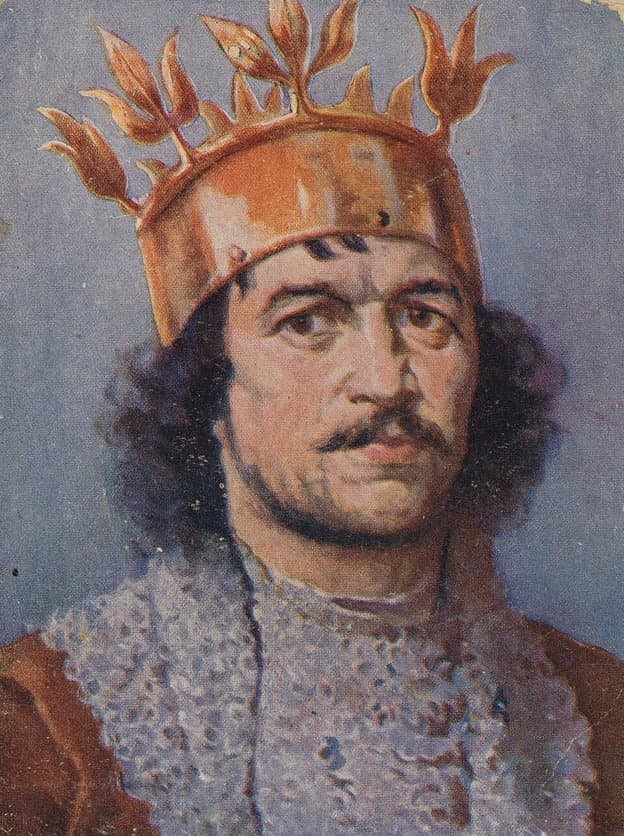

Leszek was born into the family of Duke Casimir I of Kuyavia and Constance of Wrocław, daughter of Henry II the Pious, making him a representative of the Masovian branch of the Piast dynasty. His peaceful childhood ended in 1257 with the death of his mother. His father’s remarriage to Euphrosyne of Opole turned the lives of Leszek and his brother Siemomysł into a struggle for survival. Their stepmother, seeking to clear the path to power for her own children, attempted to remove her stepsons from the line of succession, and rumors even circulated that she had tried to poison them.
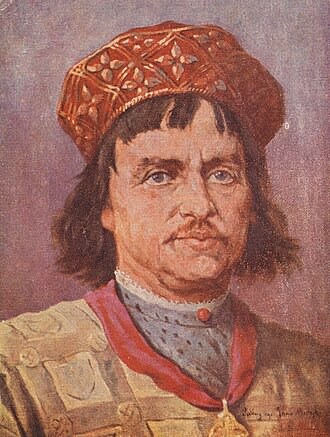
In 1261, Leszek joined a coalition of princes who rebelled against his father. Although the revolt failed to achieve outright victory, political pressure forced his uncle Siemowit to grant Leszek the Duchy of Sieradz. At the time, it was one of the most sparsely populated and underdeveloped regions of Poland.
It was there, however, that Leszek first demonstrated his abilities as an administrator. Through close cooperation with the Church and the active development of towns such as Nowa Brzeźnica, Lutomiersk, and Radomsko, he succeeded in attracting settlers and transforming the remote territory into an economically significant principality.
After his father’s death in 1267, Leszek expanded his possessions by acquiring the Duchy of Łęczyca. His political importance continued to grow. Between 1268 and 1273, he even governed Inowrocław after the local population expelled his pro-German brother Siemomysł and invited Leszek to rule. In 1278, however, Leszek voluntarily returned the territory to his brother.
A decisive turning point in his life was his rapprochement with his cousin once removed, High Duke Bolesław V the Chaste. In 1265, Bolesław and his wife Kinga, who had no children because of their vow of chastity, formally adopted Leszek and designated him as their successor.
The decision angered sections of the Kraków nobility, who feared Leszek’s uncompromising character and would have preferred Władysław of Opole on the throne. The dispute was settled on the battlefield. On June 4, 1273, Leszek and Bolesław defeated the forces of Opole at the Battle of Bogucin.
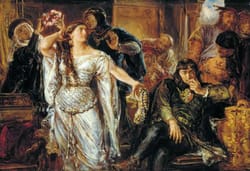
The prince’s personal life was no less turbulent. In 1265, he married Agrippina, also known as Gryfina of Halych. Their marriage was overshadowed by a major scandal. In 1271, Agrippina fled to Kraków and publicly accused her husband of impotence.
The couple reconciled only four years later through the intervention of Kinga and Bolesław. Desperate to produce an heir, Leszek turned to the famous physician Mikołaj of Kraków. The doctor prescribed the prince an unusual diet involving frogs and snakes, which reportedly caused widespread disgust among the population. The treatment, however, failed to produce children.
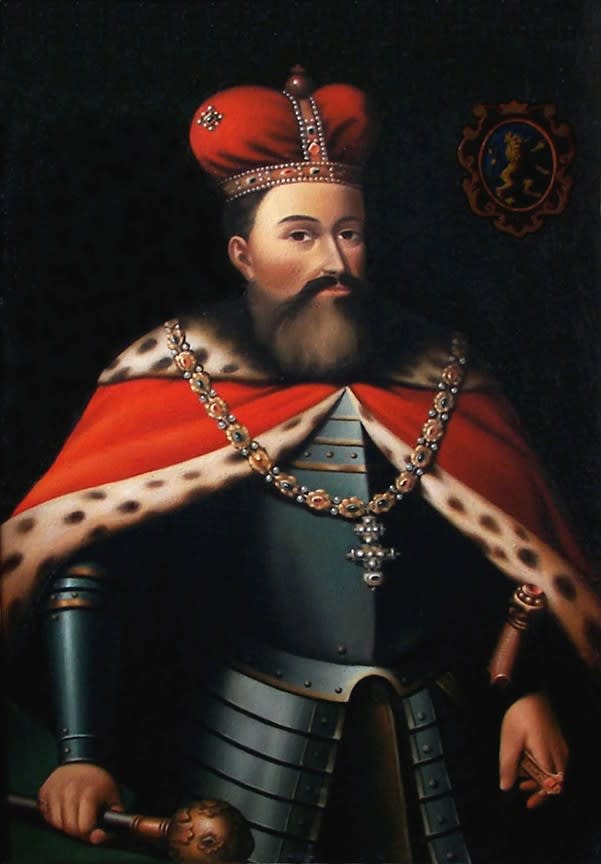
On December 7, 1279, Leszek the Black formally succeeded to the throne of Kraków. His reign began amid warfare. In February 1280, Leo of Halych, supported by Tatar and Lithuanian forces, invaded Poland and laid siege to Sandomierz.
Leszek responded rapidly. On February 23, 1280, Polish forces decisively defeated the Galician army at the Battle of Goźlice, after which Leszek launched a retaliatory raid that reached the area around Lviv.
The prince’s military reputation continued to grow. In 1282, he pursued and destroyed Yotvingian forces beyond the Narew River, and in 1283 he defeated the Lithuanians at the Battle of Rowiny.
Within the country, however, dissatisfaction was increasing. A conflict erupted with Bishop Paweł of Przemankowo of Kraków over Church privileges and the strategically important district of Stary Sącz, which Leszek wanted to take from the widowed Kinga and grant to his own wife.
In 1282–1283, the bishop was imprisoned on Leszek’s orders. This provoked an ecclesiastical interdict and intense opposition from the clergy, forcing Leszek to retreat from his position in 1286 and pay the enormous compensation of 3,000 grzywnas.
In 1285, dissatisfaction among the nobility developed into open rebellion. Castellan Janusz Starża forced Leszek to flee to Hungary.
Wawel Castle, however, remained in loyal hands. It was successfully defended by the townspeople under the leadership of Duchess Agrippina. Returning with Hungarian reinforcements, Leszek defeated the rebels once again at Bogucice on May 3, 1285.
These events led him to change the political foundation of his rule. He became one of the first Piast rulers to rely increasingly not on the traditional knightly elite but on wealthy urban communities.
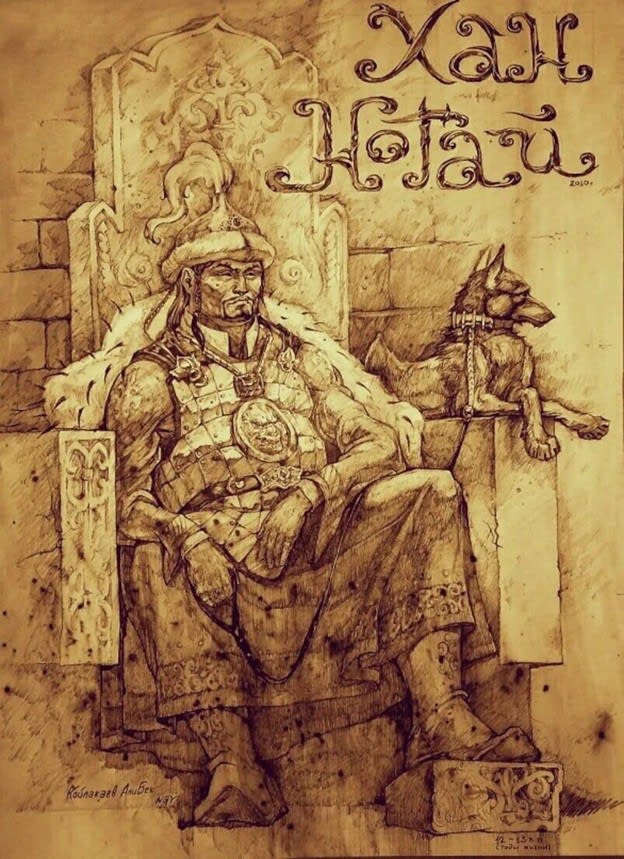
His final great trial came with the third Mongol invasion of Poland in the winter of 1287–1288, led by the khans Talabuga and Nogai.
Thanks to fortified castles and effective defensive preparations, both Kraków and Sandomierz held out. While the Mongols devastated the surrounding countryside, Leszek managed to obtain reinforcements from Hungary, helping force the invaders to withdraw.
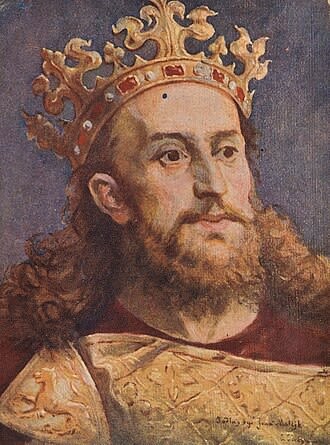
Leszek the Black died in Kraków on September 30, 1288, and was buried in the Dominican Church of the Holy Trinity.
Although historian Oswald Balzer’s theory that Leszek created the first political coalition aimed at reunifying Poland is disputed today, his role in strengthening central authority remains significant.
His death created a major power vacuum and triggered a prolonged struggle for Kraków among Henryk Probus, Przemysł II, and King Wenceslaus II of Bohemia.


