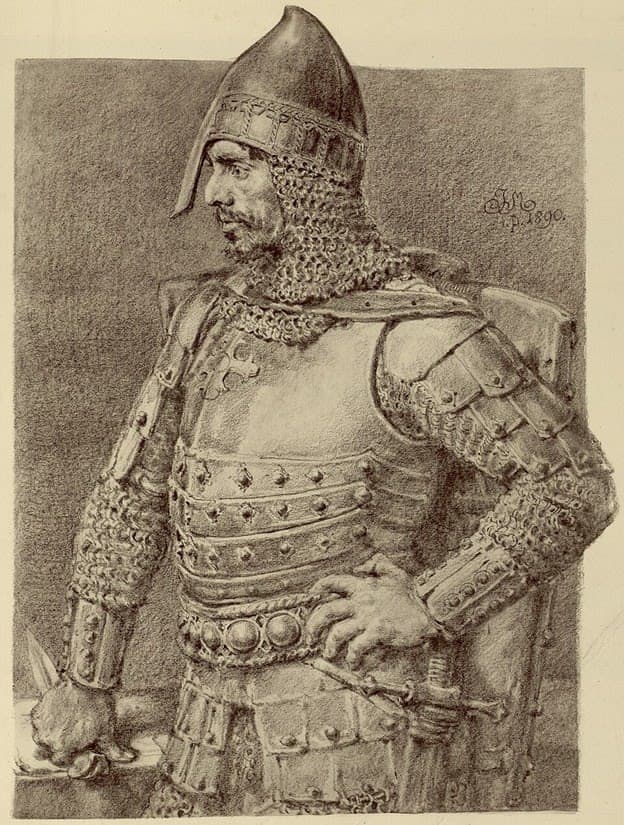
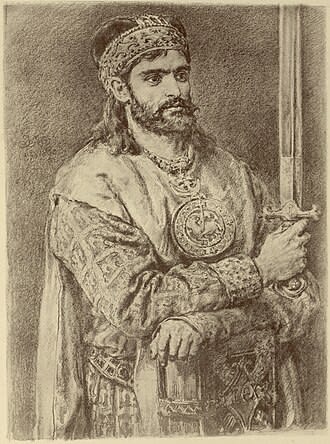
Konrad was born into the family of High Duke Casimir II the Just of Poland and Helen of Znojmo, becoming their younger son. His childhood ended abruptly in 1194, when the sudden death of his father left Konrad and his elder brother Leszek as underage heirs to vast territories. Under the regency of their mother and the guardianship of the higher clergy, the brothers formally ruled Sandomierz and Masovia, but real political power remained the subject of constant bargaining. In 1198, Helen was forced to surrender Kraków to Mieszko III the Old in exchange for Kuyavia. The final division of the brothers’ lands took place in 1200, when Konrad received Masovia and Kuyavia, beginning his career as an independent ruler.
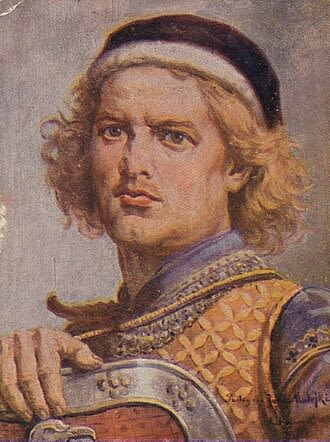
At first, the young duke acted largely in the shadow of his elder brother, Leszek the White. He participated in campaigns in the lands of Halych Rus’ and fought in the victorious Battle of Zawichost against Roman of Volhynia in 1205. On his brother’s advice, Konrad strengthened his eastern dynastic connections by marrying Agafia, daughter of Prince Sviatoslav Igorevich of Novhorod-Siverskyi.
The greatest challenge to his rule, however, came not from the east but from the north, where the warlike pagan tribes of the Prussians and Yotvingians had turned the borders of Masovia into a region of almost constant devastation.
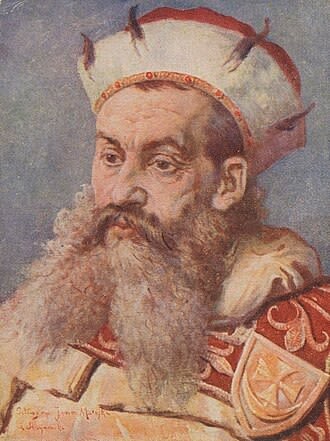
Recognizing the threat, Konrad began actively encouraging Cistercian monks to Christianize his northern neighbors as early as 1206. In 1207, he organized his first crusading expedition against the Prussians. Like the later campaigns of 1219 and 1222, however, it ended in failure.
Attempts to establish a Christian mission in the Chełmno Land under Bishop Christian of Oliva produced only temporary results. The pagan tribes repeatedly destroyed fortifications and raided Polish settlements, sometimes advancing as far as Konrad’s own capital of Płock.
The situation worsened dramatically in 1217, when Konrad committed one of the most brutal acts of his life. Suspecting his talented voivode Krystyn of becoming too popular, the duke ordered him to be blinded and killed. With Krystyn’s death, the defensive system he had created along the frontier collapsed, and Prussian raids became almost impossible to contain.
Attempting to reverse the situation, Konrad organized a large-scale expedition in 1223 involving nearly all the Polish princes and the dukes of Pomerelia. The coalition managed to recover the Chełmno Land and establish garrisons there, but the lack of unity among the participants meant that the Prussians recaptured the territory only a year later.
Unable to find another solution, Konrad turned to the idea of inviting a professional military religious order. On the advice of Henry the Bearded, he chose the Teutonic Order.
Negotiations began in 1226, and Emperor Frederick II issued the Golden Bull authorizing the transfer of the Chełmno Land to the Order. Still hoping for a rapid solution, Konrad established his own Order of Dobrzyń in 1228, but after another military failure he was forced to adopt more radical measures.
In 1230, Konrad signed the so-called Treaty of Kruszwica, which granted the Chełmno Land to the Teutonic Knights. Some historians have questioned the authenticity of the surviving version of this agreement or argued that it may have been altered later.
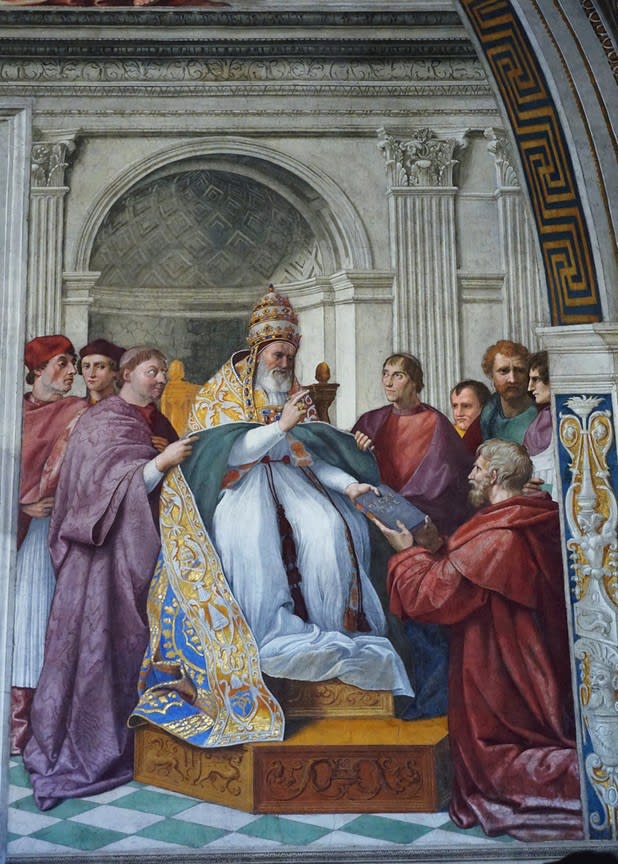
In 1231, knights under Hermann von Balk crossed the Vistula and established the fortress of Toruń. Konrad expected the Teutonic Knights to become loyal vassals, but in 1234 Pope Gregory IX issued a bull confirming the Order’s independence from secular rulers.
This decision laid the foundations for the emergence of a powerful and increasingly independent political entity on Poland’s northern frontier.
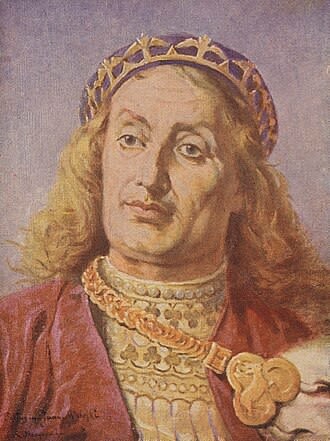
Konrad’s struggles in the north were interrupted by the tragedy of November 24, 1227. At the assembly of Gąsawa, his brother Leszek the White was assassinated.
As Leszek’s brother and natural dynastic heir, Konrad immediately claimed the Kraków throne and the regency over his young nephew Bolesław. His reputation for brutality, however, particularly after the killing of Voivode Krystyn, alienated the Kraków nobility. The magnates instead supported Władysław III Spindleshanks.
This marked the beginning of a prolonged civil war. In the summer of 1228, Konrad attacked Kraków but was defeated by Henry the Pious. In response, in 1229 he managed to capture Henry the Bearded and briefly seize the throne.
To strengthen his position, Konrad expelled his brother’s widow Grzymisława and her son from Sandomierz. He was soon forced to release Henry, however, under pressure from Henry’s wife Jadwiga and threats of ecclesiastical sanctions.
After the death of Władysław Spindleshanks in 1231, the claim to Kraków passed to Henry the Bearded, who, with the support of the local nobility, ultimately forced Konrad back into his Masovian territories.
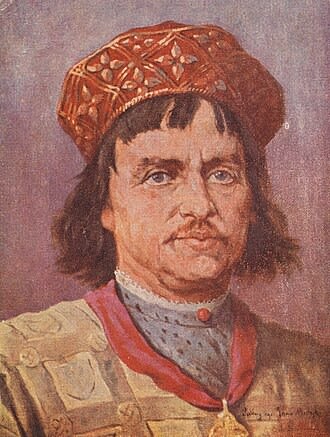
Konrad’s domestic policy became increasingly severe. In 1233, he abducted Grzymisława and Bolesław the Chaste, subjecting them to humiliating imprisonment in a monastery until they were rescued by supporters of Henry the Bearded.
Conflicts also erupted within Konrad’s own family. As his sons Bolesław and Casimir came of age, they demanded territories of their own. In 1233–1234, Konrad was therefore forced to grant them Sieradz, Kuyavia, and parts of Masovia.
One of the darkest episodes of his reign occurred in 1239 with the execution of Canon Jan Heron. After criticizing the duke, the clergyman was hanged without trial.
Duchess Agafia’s anger was reportedly so intense that she ordered the executed man’s body to be displayed once again on a gallows opposite the cathedral. The incident brought an ecclesiastical curse upon Masovia. In order to have the interdict lifted, Konrad was forced to perform penance and grant the Church additional privileges.
The death of Henry II the Pious in the Battle of Legnica against the Mongols in 1241 gave Konrad one final opportunity to seize Kraków. He entered the city on July 10, 1241, but once again failed to gain the support of the local nobility.
In 1243, the magnates invited Bolesław V the Chaste to assume power. The decisive Battle of Suchodoły on May 25, 1243, ended in a crushing defeat for Konrad.
He spent the remaining years of his life making unsuccessful attempts to recover the capital.
Konrad I of Masovia died on August 31, 1247. He was buried in Płock Cathedral, leaving behind a divided Masovia and the Teutonic Order, which would become one of the most important military and political powers on Poland’s northern frontier for centuries.


