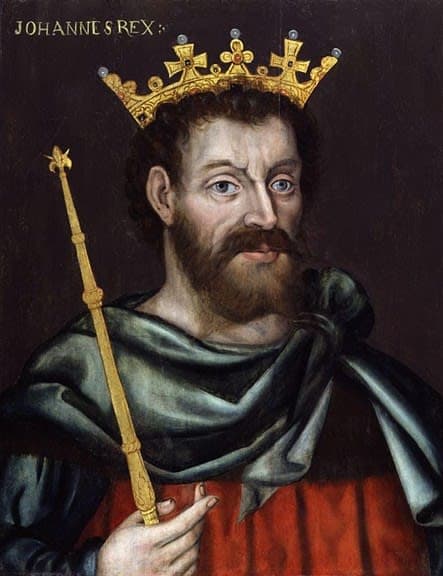

The exact date of King John’s birth is unknown, but most chronicles place it in 1166–1167. He was the youngest son of King Henry II, who jokingly dubbed him “John Lackland” in 1169 when he divided his dominions among his three elder sons.
Despite the nickname, John received substantial estates in England and even the title Lord of Ireland. In 1185 he set out for Ireland, but the expedition failed for lack of funds. The nickname proved prophetic later, when already king John lost most of his continental holdings.
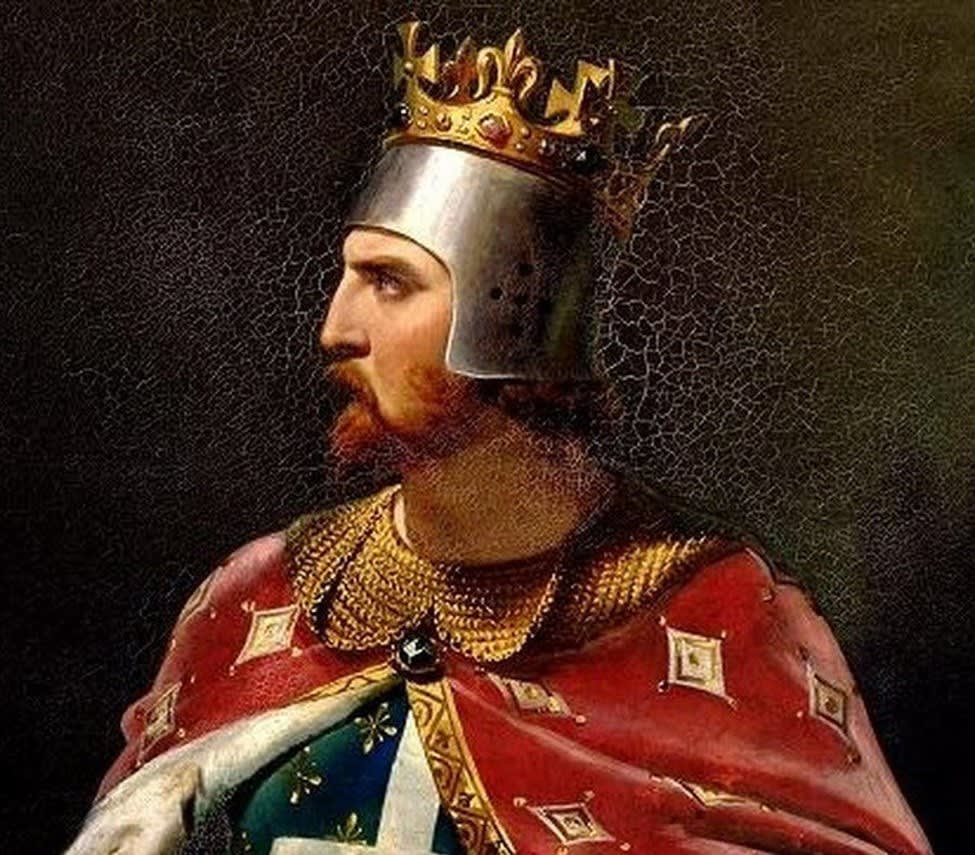
John was notorious for unreliability. During the reign of his elder brother, Richard I the Lionheart, he schemed constantly. When Richard left on the Third Crusade, John broke his promise not to return to England and tried to seize power. On learning that Richard had been captured in Germany, John allied with King Philip II Augustus of France to keep his brother in captivity. Yet after Richard’s return he was pardoned and even named heir.
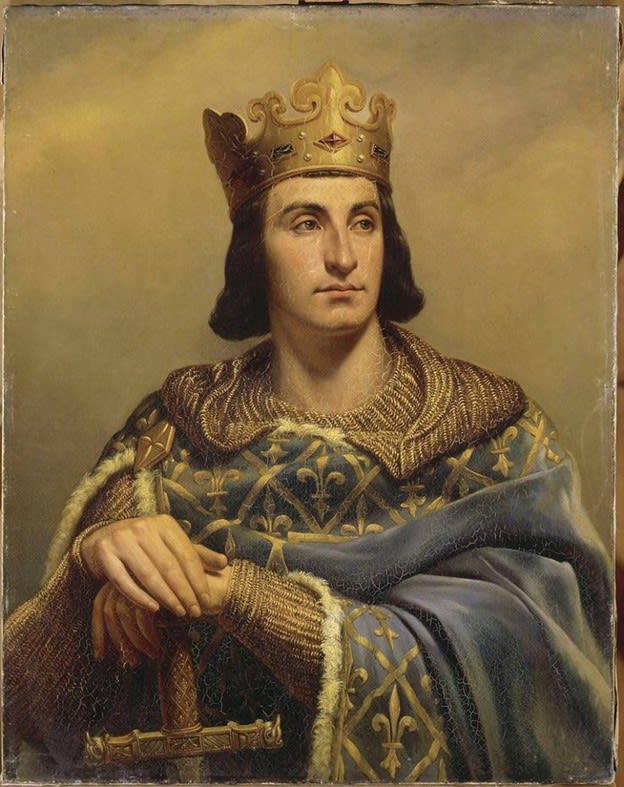
In 1199, after Richard’s death, John ascended the throne. But his nephew Arthur of Brittany, son of John’s elder brother Geoffrey, had a stronger legal claim. Many Norman barons in France backed Arthur and turned to Philip II Augustus, John’s overlord on the continent. Matters worsened when John divorced his first wife to marry Isabella of Angoulême, fiancée of his vassal Hugh de Lusignan.
In 1202 Philip II Augustus invaded Normandy, while Arthur besieged Mirebeau, where John’s mother Eleanor of Aquitaine was staying. The aging queen defended herself stoutly until John arrived with relief and captured Arthur. Arthur’s later fate is unknown, but John is widely thought to have been responsible for his death.

The war went badly for John. He was short of money, and his cruelty alienated supporters. In 1204 the “impregnable” Château Gaillard fell, and then Rouen. By 1206 John had lost most of his continental lands—Normandy, Maine, Anjou, and part of Poitou giving tragic new force to the epithet “Lackland.”
In 1207 John clashed with Pope Innocent III, refusing to accept Stephen Langton as Archbishop of Canterbury. In response the pope placed England under interdict in 1208 and then excommunicated John. In 1212 he even released the English from their oaths of fealty, deposing the king in principle.
Philip II Augustus prepared to invade England, but John, to avert war, submitted to the pope, acknowledged himself his vassal, and agreed to pay an annual tribute. In 1214 the interdict was lifted.
That same year John, allied with Emperor Otto IV, went to war with France; the allies suffered a crushing defeat at the Battle of Bouvines. The disaster was the last straw for the English baronage.

After returning from France, John demanded a massive scutage (shield tax) from barons who had not joined the campaign. Resistance spread. Northern and eastern barons refused to pay and, citing Henry I’s Charter of Liberties, demanded restoration of their rights.
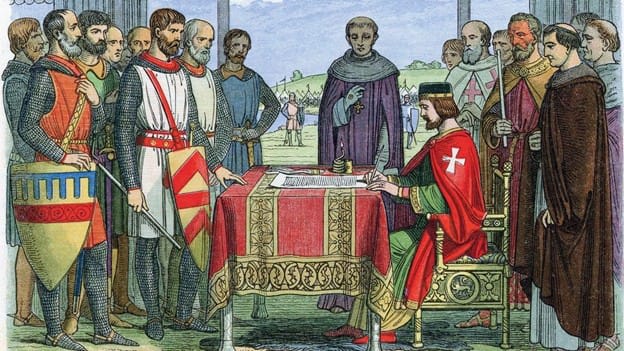
John temporized at first, but when the barons raised an army and entered London he was trapped. On 15 June 1215, at Runnymede, he was forced to affix his seal to the Great Charter of Liberties (Magna Carta). The document limited royal power and guaranteed rights to the Church, barons, and townsmen, laying the groundwork for England’s future constitutional order.
John had no intention of abiding by the imposed terms. He appealed to Pope Innocent III, who declared the Charter void. The king hired mercenaries and renewed war against the barons. In response the barons invited the French prince Louis to take the English throne, and he landed in England.
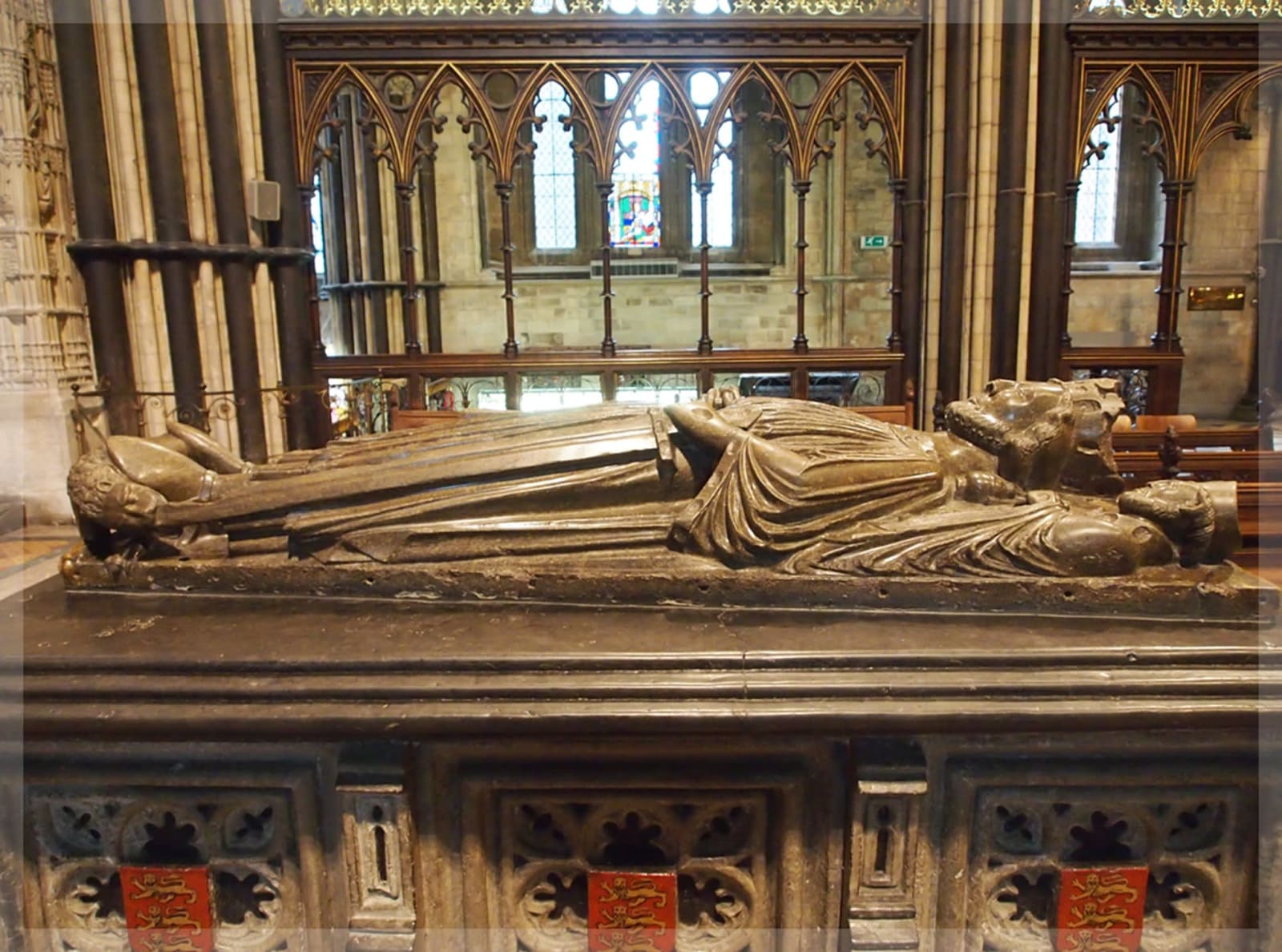
In September 1216 John launched a new offensive, but illness weakened him. In retreat he lost his entire baggage train with treasure in The Wash to the tide an event that may have worsened his condition. John died of dysentery on 18 or 19 October 1216 at Newark.
He was succeeded by his nine-year-old son Henry III, under the regency of William Marshal. The barons recognized the new king, and Louis’s claim to the English crown faded away.


