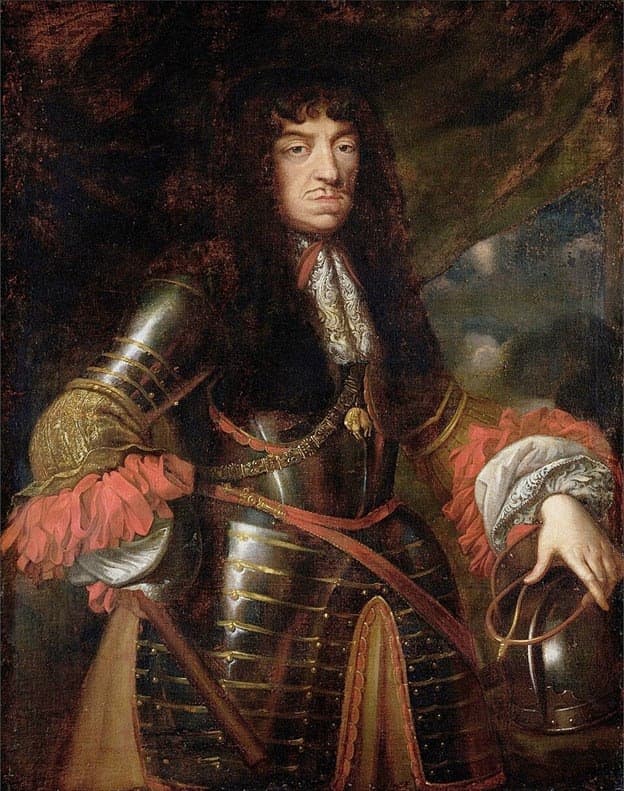
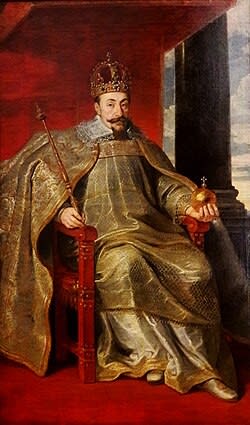
The roots of John Casimir's life lay in the complex interplay of Swedish and Polish interests. His father, Sigismund III, was a grandson of the Swedish king Gustav Vasa and had rightfully inherited the Swedish crown. However, in 1599, he was overthrown by his own uncle, Charles IX. This event marked the beginning of a long-standing rivalry between the two branches of the dynasty. The Polish Vasa kings' claims to the Swedish throne became a heavy burden on the state, provoking a series of exhausting Polish-Swedish wars between 1600 and 1629. These conflicts, which ended under the terms of the Truce of Altmark and the Truce of Stuhmsdorf, cost the Polish-Lithuanian Commonwealth significant territorial losses. Meanwhile, Europe was engulfed in the flames of the Thirty Years' War, and although Poland sought to avoid direct, large-scale involvement, it repeatedly found itself caught in the competing interests of the opposing powers.
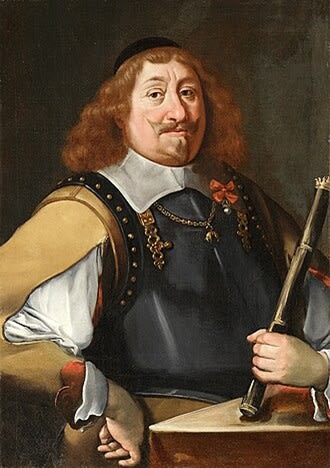
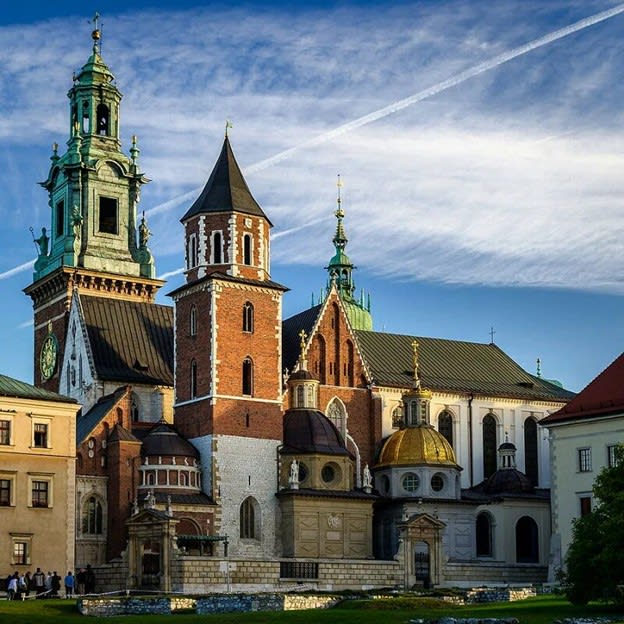
John II Casimir was born on Sunday, March 22, 1609. He was destined to become the last member of the Vasa dynasty to be born in the magnificent Wawel Castle in Kraków — the ancient royal residence whose importance had begun to decline following the transfer of the capital to Warsaw. As the eldest surviving son of Sigismund III from his second marriage, John Casimir nevertheless spent much of his early life in the shadow of his influential half-brother, Władysław IV. His childhood and youth at Warsaw Castle passed in relatively modest circumstances by royal standards. Before fate placed the crown upon his head, he lived the life of a wandering prince: he traveled extensively across Europe and even personally participated in battles of the Thirty Years' War, gaining military and diplomatic experience that would soon prove critically important.
In 1648, following the death of Władysław IV, John Casimir was elected king of the Polish-Lithuanian Commonwealth. However, his reign began during one of the darkest periods in the state's history. Three major wars descended upon the country, bringing it to the brink of destruction.
The first blow came with the uprising led by Bohdan Khmelnytsky, which transformed the eastern borderlands into the scene of a bloody civil war. The conflict between the Orthodox Cossacks and peasantry and the Catholic nobility escalated beyond the boundaries of an internal rebellion when, following the Pereiaslav Council, the Cossack Hetmanate came under the authority of the Tsardom of Russia. This inevitably led to the outbreak of the prolonged Russo-Polish War (1654–1667). During 1654–1655, Russian forces managed to break through Lithuanian defenses, capturing substantial territories of the Grand Duchy of Lithuania.
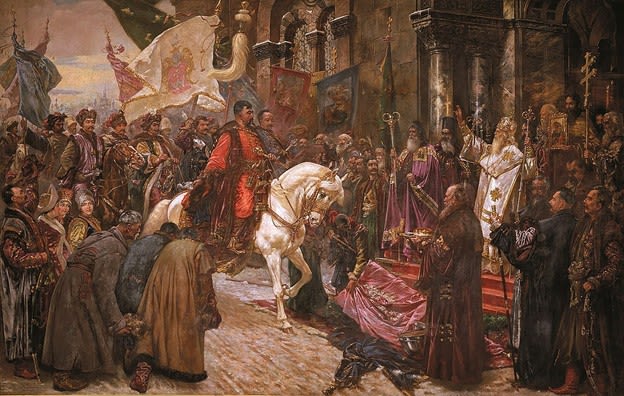
The situation became catastrophic when the Swedish invasion began in 1655, an event that entered history as the "Swedish Deluge." Almost the entire territory of the Polish-Lithuanian Commonwealth fell under occupation, and the king himself was forced to leave the country temporarily. Only through extraordinary efforts, the expulsion of Swedish forces, and a shift in the political orientation of the Cossack Hetmanate was the state able to launch a counteroffensive. By the early 1660s, the Commonwealth had managed to restore control over Lithuania and Right-Bank Ukraine. However, John II Casimir's ambitious military campaign toward Moscow ended in failure and heavy losses, forcing both sides to seek peace. The result was the Truce of Andrusovo in 1667, which formalized the territorial division.
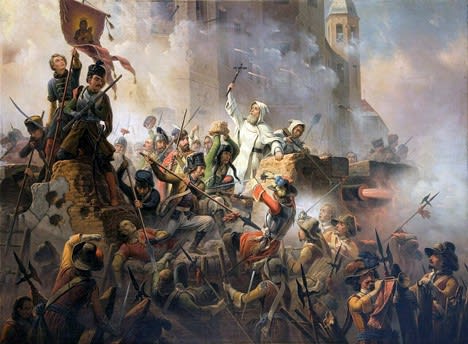
John Casimir's domestic policies were no less troubled. Under the influence of the theologian Mikołaj Cichowski, an edict was issued in 1658 ordering the expulsion of the Arians, also known as the Polish Brethren, who had been accused of collaborating with the Swedes. The king's attempts to strengthen central authority and limit the influence of the nobility met fierce resistance. The nobles, accustomed to their "Golden Liberties," were unwilling to surrender their privileges. Realizing that he was unable to overcome the internal chaos and political paralysis of the state, John Casimir made a historic decision.
On September 16, 1668, he officially abdicated the throne. Several months later, on April 30, 1669, the former monarch left Poland forever and departed for France.
France welcomed John Casimir warmly. He became the 76th abbot of the wealthy Abbey of Saint-Germain-des-Prés in Paris, a position that provided him with a comfortable and peaceful life in exile. However, his heart continued to ache for the homeland he had left behind. His life came to an end on December 16, 1672, four years after his abdication. It is believed that the cause of death was a stroke brought on by severe emotional distress after he received news of the fall of the fortress of Kamianets-Podilskyi to Ottoman forces.
Symbolically, even after his death, his legacy remained divided between the two countries he loved. On January 31, 1676, his body was solemnly laid to rest in Wawel Cathedral in Kraków, the city of his birth, while his heart remained forever within the walls of the Abbey of Saint-Germain-des-Prés in Paris.


