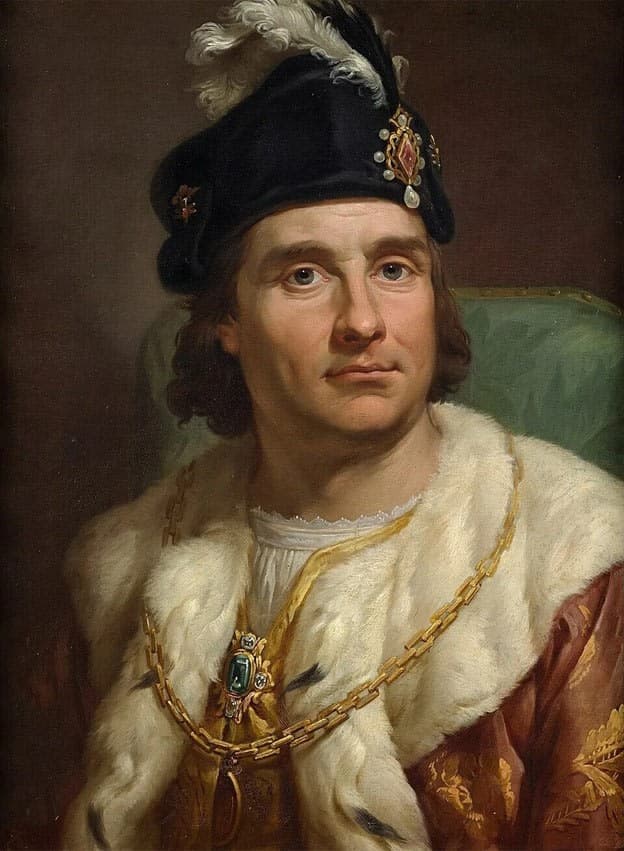
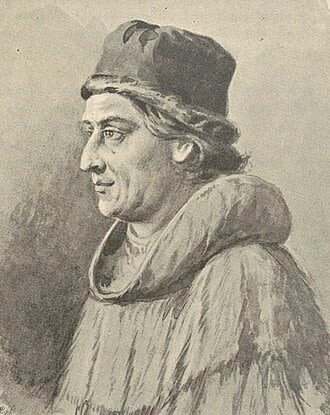
The reign of John I Albert, the third son of Casimir IV Jagiellon and Elizabeth of Austria, was marked by bold but often tragic attempts to strengthen royal authority and expand the influence of the Jagiellonian dynasty along Europe's southern frontiers. Educated in the spirit of humanism, John Albert combined military talent with the intellectual knowledge he acquired from some of the finest scholars of his time, including the renowned historian Jan Długosz and the distinguished humanist Filippo Buonaccorsi, known as Callimachus.
The latter, who had served as a trusted diplomat of the king's father, exercised enormous influence over the young John. In the eyes of his contemporaries, Callimachus was the shadowy ideologist of absolutism, allegedly whispering advice to the monarch on how to suppress the freedoms of the estates. These suspicions even gave rise to rumors about the existence of Callimachus's secret "counsels," although later historical criticism recognized them as merely a political pamphlet created by the humanist's enemies.

Ascending the throne at the age of thirty, John Albert set himself the ambitious goal of elevating the authority of the crown above the increasingly independent nobility. In this struggle, he relied not only on his own convictions but also on the powerful support of his brothers: Vladislaus, King of Bohemia and Hungary, and Frederick, who occupied the highest ecclesiastical positions.
By securing Frederick's appointment as Archbishop of Gniezno and cardinal, the king effectively gained control over the country's religious elite. He also concluded a strategic treaty in Buda with his brother Vladislaus, providing for mutual assistance against rebellious subjects. This agreement was intended to transform the Jagiellonian territories into a unified political bloc.
However, the monarch's ambitions required enormous financial resources, forcing him to seek compromises with the nobility. The economic circumstances of the time dictated their own rules. Following Poland's victory in the Thirteen Years' War and its acquisition of access to the Baltic Sea through Gdańsk, the economic value of Polish lands increased dramatically.
Safe navigation along the Vistula River opened unprecedented opportunities for exporting grain and livestock, triggering a genuine agricultural boom among the nobility. Seeking to secure tax revenues for his military campaigns, John Albert issued the famous Piotrków Statute at the Sejm of Piotrków in 1496.
This document, which incorporated earlier provisions of the Nieszawa Privileges, proved decisive for Poland's social structure. It effectively marked the beginning of the enserfment of the peasantry and significantly restricted the rights of townspeople in favor of the noble estate.
Satisfied with their newly acquired privileges, the nobility readily supported the king's grand project: a military expedition against the Moldavian ruler Stephen the Great. John Albert intended not merely to strengthen Poland's borders but also to place his younger brother Sigismund on the Moldavian throne. This would allow the Jagiellonians to establish a united anti-Ottoman front and permanently consolidate their position in the Black Sea region.

However, the expedition turned into a national catastrophe. In 1497, in the forests of Bukovina, the Polish army suffered a crushing defeat at the hands of Stephen's forces, which successfully lured the heavily armored Polish cavalry into an ambush.
This defeat became immortalized in a Polish saying: "Under King Albert, the nobility perished." Its consequences were disastrous. The weakened kingdom became vulnerable to devastating Ottoman and Tatar raids.
All the king's geopolitical plans collapsed. Instead of celebrating Sigismund's triumph, John Albert was forced to agree to an unfavorable peace with the Ottoman Empire in order to save his kingdom from complete devastation.
After returning from the unsuccessful campaign, John Albert faced a domestic political crisis. Seeking to restore military discipline, he took an extremely unpopular measure: confiscating the property of nobles who had displayed cowardice or deserted during the Moldavian campaign.
This decision seriously damaged his relations with the nobility, who regarded their privileges as inviolable.
The final chapter of the king's political life was marked by an attempt to restrain the Teutonic Order, which had once again begun to show signs of defiance.
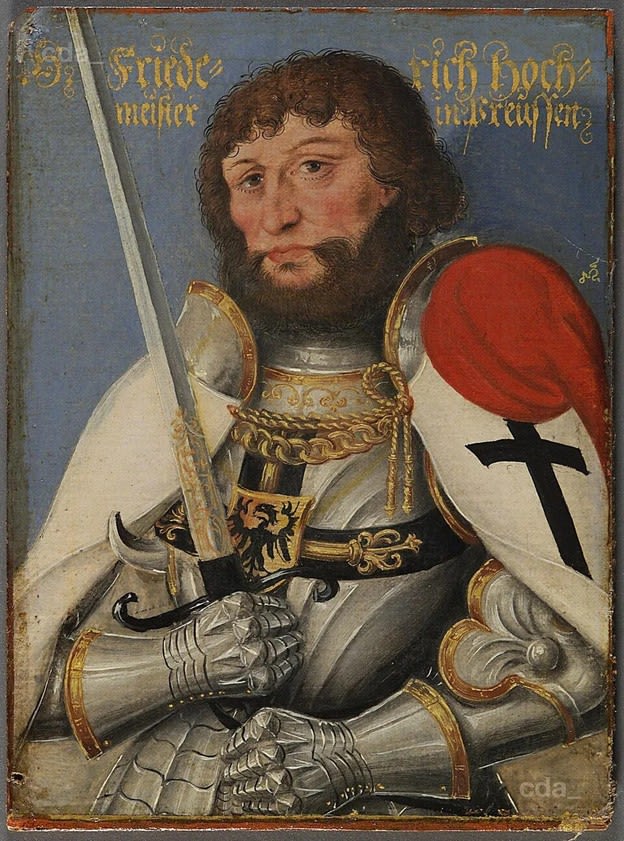
In 1501, John Albert arrived in Toruń, intending to personally compel the newly elected Grand Master, Frederick of Saxony, to swear feudal allegiance to the Polish crown.
However, he was never able to accomplish this goal. It was here, in Toruń, that the king suddenly died, leaving the kingdom in a state of troubling uncertainty.
His reign, which had begun with humanist hopes and aspirations for absolute greatness, ended in the shadow of military defeat and conflicts between the estates, laying the groundwork for reforms under his successors.


