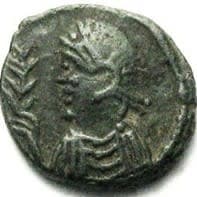

The era of the great Geiseric, who had once struck fear into Rome, came to an end in January 477. The throne of the powerful yet internally divided Vandal Kingdom in North Africa passed to his eldest surviving son, Huneric. By the time he inherited the crown, Huneric was already a mature man of around fifty, whose life from an early age had been intertwined with the ruthless politics of his time. As early as 435, while still a young man, he had been sent to Rome as a noble hostage to guarantee the observance of a peace treaty, although he soon returned to his father. Huneric’s path to the throne had been cleared by the death of his eldest brother, Gento (Genzon), who had already passed away by that time.

From the very first days of his reign, however, the new king faced a serious dynastic problem. Geiseric had left behind a rigid system of succession known as seniority, according to which power in the kingdom was to pass exclusively to the oldest living male member of the royal dynasty. Huneric, driven by paternal ambition, categorically refused to accept the prospect of surrendering the throne to his nephews or younger brother. He was determined at any cost to preserve the crown for his eldest son. This obsession became the central theme of his domestic policy and ultimately led to disastrous consequences.
Realizing that he would need a powerful political base in order to overturn Geiseric’s fundamental law of succession, Huneric embarked on a complicated political strategy. At first, he concentrated on strengthening the state internally, relying on the official Arian Church. He launched persecutions against the Manichaeans, yet at the same time took an unexpected step: he attempted to reach a political understanding with the numerous Catholic, or orthodox, Church of North Africa. The king hoped that the loyalty of the Catholic majority would help him overcome resistance from the Vandal aristocracy and legitimize a new system of succession.
This fragile diplomatic balance soon collapsed. The Catholics had no desire to become pawns in the dynastic struggles of a barbarian king, while religious fanaticism was rapidly intensifying among the Arian Vandals themselves, particularly among the clergy. Political suspicions further aggravated the situation: Huneric and his entourage increasingly regarded the orthodox Christians as traitors and secret agents of Byzantium.
The point of no return was reached in 480–481. The Byzantine emperor Zeno, confident of his position, demanded that Huneric allow the vacant episcopal sees in Carthage to be filled. The Vandal monarch responded with a bold and uncompromising counter-ultimatum: he demanded absolutely equal rights for the Arian Church in Constantinople and the other eastern provinces of the Empire. If Byzantium rejected these conditions, Huneric threatened to deport every Catholic bishop in the Vandal Kingdom “to the Moors” — into the wild and barren desert regions.
By 482, relations between the Vandal state and the Eastern Roman Empire had deteriorated to the breaking point. Diplomacy gave way to bloody terror. Huneric unleashed a new wave of persecution unprecedented in its brutality. Those who refused to renounce their faith were burned alive or subjected to elaborate forms of execution. Cutting out the tongues of preachers became one of the favored punishments. It is therefore hardly surprising that such prominent chroniclers as Procopius of Caesarea and Isidore of Seville condemned Huneric as one of the most savage, unjust, and merciless persecutors of Catholic Christians in the history of North Africa.
The culmination of this religious war came with a royal edict that imposed a final deadline: no later than 1 June 484, all Catholics were required to convert to Arianism. The events of these years were permanently recorded by an eyewitness to the persecutions, the historian Victor of Vita, writing in the late 480s. His testimony is chilling:
“If a writer were to attempt to add to this account even some small detail of what was done in Carthage, even without any stylistic embellishment, he would be unable even to name all the forms of torture. All these things remain before our eyes even today, and anyone can see some without hands, others without eyes, and still others without feet; some have had their nostrils torn away and their ears cut off, while in others, after being suspended for too long from stakes, the head that had once been held proudly upright was forced down into the shoulders, as the executioners pulled the ropes with all their strength, raising them high above the houses and swinging the suspended victims back and forth. Sometimes the ropes broke, and some fell from that height with a terrible impact; others shattered all their bones and remained unconscious for a long time, while many soon gave up their lives.”
Yet terror did not save the kingdom; it merely accelerated its decline. A profound division spread through Vandal society itself. Huneric’s paranoia intensified, and now even the highest ranks of the Vandal aristocracy were subjected to repression. Those who dared oppose the abolition of the seniority system, as well as anyone suspected of the slightest sympathy toward Catholicism, could be sent to the executioner.
Determined to clear the path to the throne for his son, Huneric turned his wrath against his own blood relatives. He began systematically destroying the families of his brothers — the deceased Genzon and the still-living Theodoric. Their sons were ruthlessly exiled to barren desert lands, while any aristocrat suspected of maintaining connections with disgraced members of the royal family immediately faced execution.
While Huneric was destroying his own people through religious and dynastic purges, the external power of the Vandal Kingdom was rapidly fading. The Mauri, or Berber tribes, immediately took advantage of this paralysis of authority. During the iron-fisted rule of Geiseric, the Berbers had voluntarily acknowledged Vandal supremacy and had even fought alongside them during the historic sack of Rome in 455. Now, however, the situation had been reversed.
The warlike Mauri began launching large-scale raids against their weakened northern neighbors, seizing entire regions of the Vandal state. The Vandals, softened by a life of comfort, proved entirely incapable of conducting the harsh and exhausting warfare required in the inaccessible mountains of Numidia.

The maritime glory of the Vandals also faded. Under Huneric, the famous naval raids of the Vandal fleet across the Mediterranean ceased for good. The state was slowly decaying from within. The Byzantine historian Malchus, describing negotiations between Huneric’s envoys and Emperor Zeno, left a merciless assessment of this decline:
“With these words the Vandals concealed their weakness. They feared even the shadow of war, for after the death of Geiseric they had completely surrendered themselves to luxury and no longer displayed their former strength and courage in battle. Nor did they possess the preparations that Geiseric had always maintained for every possibility — a man who would set an enterprise in motion before others had even had time to conceive of it.”
Huneric’s reign, marked by bloodshed, suspicion, and fanaticism, lasted eight years. He did not live to see the moment when his kingdom would finally collapse beneath the weight of its own failures. On 23 December 484, a severe illness brought the king’s life to an end.
He left behind a morally shattered, territorially diminished, and deeply divided state, torn apart by hatred and having irreversibly lost the greatness bequeathed to it by his formidable father.


