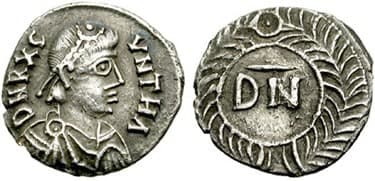
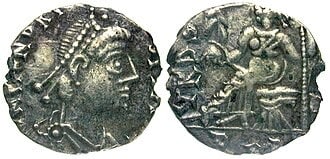
When the dark and bloody era of King Huneric’s tyranny came to an end in December 484, the Vandal Kingdom, exhausted by internal terror, waited anxiously for a new ruler. This time the throne in Carthage was taken by Gunthamund — the son of Gento (Genzon) and the grandson of the great founder of the kingdom, Geiseric. His accession to the throne was a peculiar irony of fate and a direct consequence of the paranoid brutality of his predecessor.

The late Huneric had spent years attempting to destroy the sacred law of succession — the system of seniority established by Geiseric, according to which power was to pass to the oldest male member of the royal family. Huneric had ruthlessly killed or exiled his relatives to barren desert lands, clearing the path to the crown for his own son. Fate, however, decided otherwise: at the time of the tyrant’s death, his son was too young and politically weak to secure power in a kingdom torn apart by internal divisions, while many of Geiseric’s other powerful descendants had already disappeared in the furnace of Huneric’s persecutions. As a result, under the very law of seniority that Huneric had so desperately tried to destroy, the crown rightfully passed to the surviving Gunthamund.
Upon assuming power, the new king found his state standing on the edge of disaster. In order to save the kingdom from complete collapse, Gunthamund was forced to make a sharp change in political direction and abandon the fanatical legacy of his father and uncle. He understood that the kingdom could not withstand a war on two fronts — against external enemies and against its own subjects.
For this reason, around 486, Gunthamund took a step unprecedented for a Vandal monarch: he attempted to win the trust of the persecuted Nicene Christians, or orthodox Catholics. The Arian king officially allowed the orthodox bishops who had been exiled and persecuted under Huneric to leave their places of banishment and return to their original dioceses. This policy of reconciliation continued in 494, when Gunthamund ordered the full restoration of the property rights of the orthodox Church and returned estates that had previously been confiscated from it.
This dramatic transformation in religious policy — from mass executions and torture to relative religious tolerance — was motivated less by a sudden change of heart than by harsh political pragmatism. The Vandal state was suffocating under the constantly increasing pressure of the Berber tribes. Gunthamund desperately needed internal stability and the loyalty of the Romano-African population in order to free military resources for the defense of the kingdom’s southern frontiers.
The situation in the south was becoming catastrophic. The attacks of the Berber-Moorish tribes, known as the Mauri, were not merely increasing in frequency — they were becoming systematic. The tribes that had once served Geiseric as mercenaries had now recognized the weakness of their former masters. Gradually pushing the Vandals back, the Berbers began establishing their own independent political entities across North Africa, permanently separating vast territories from the kingdom.
The famous Byzantine historian Procopius of Caesarea wrote that Gunthamund personally led armies on several campaigns and fought fiercely against the Mauri in an attempt to subdue them. Yet history records no major victories or decisive strategic successes for the Vandals in these exhausting mountain wars. Slowly but steadily, the kingdom was losing control over its African provinces.


The situation on the international stage was equally discouraging. The Vandals attempted to participate in the great geopolitical struggles of the period, but their efforts ended in failure.
During the height of his power, the great Geiseric had ceded the wealthy island of Sicily to Odoacer, the ruler of Italy, in exchange for a substantial annual tribute. This agreement provided the Vandals with a stable source of income and preserved their influence over Italian affairs.
In 490, however, the political map of Europe was shaken once again. The Ostrogoths, led by Theodoric the Great, invaded Italy and inflicted devastating defeats upon the armies of Odoacer.
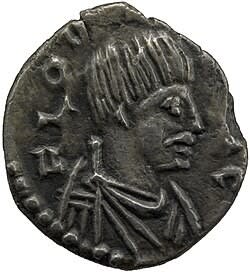
In Carthage, the chaos in Italy was seen as an ideal opportunity to restore some of the kingdom’s former greatness. The Vandals considered the old agreement concerning Sicily to be no longer legally binding and, taking advantage of the bitter war between Odoacer and Theodoric, attempted to recapture the strategically important island by force.
But the era of the invincible Vandal fleet had already passed. Gunthamund’s attempt ended in complete failure. The battle-hardened Ostrogoths not only drove back the Vandal landing forces with relative ease, but by 491 they had also gained complete and undisputed control over the whole of Sicily.
This military defeat also had severe economic consequences. The Vandal Kingdom permanently lost both the island itself and the substantial annual tribute that had previously flowed into the treasury of Carthage.
Gunthamund’s reign became an age of twilight for the Vandal kingdom. It was a period of endless defensive wars, territorial losses, and forced political compromises. After spending eleven and a half difficult years on the throne, struggling to preserve the collapsing inheritance of his great grandfather, Gunthamund was never able to restore the kingdom to its former glory.
He died in 496 after suffering from a serious illness, leaving his successor a weakened state increasingly surrounded by enemies whose power was steadily growing.


