
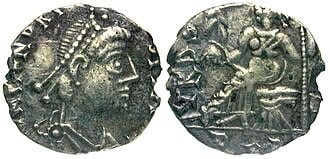
By birth, Gunderic belonged to the highest ranks of the Vandal nobility. He was the younger son of King Godigisel, but, crucially, he had been born to the king’s lawful wife. It was precisely this status as an indisputable legitimate heir that allowed him to ascend the throne ahead of Geiseric, his elder but illegitimate half-brother, who had been born to a concubine. This dynastic arrangement would later play a fateful role in the history of their family.
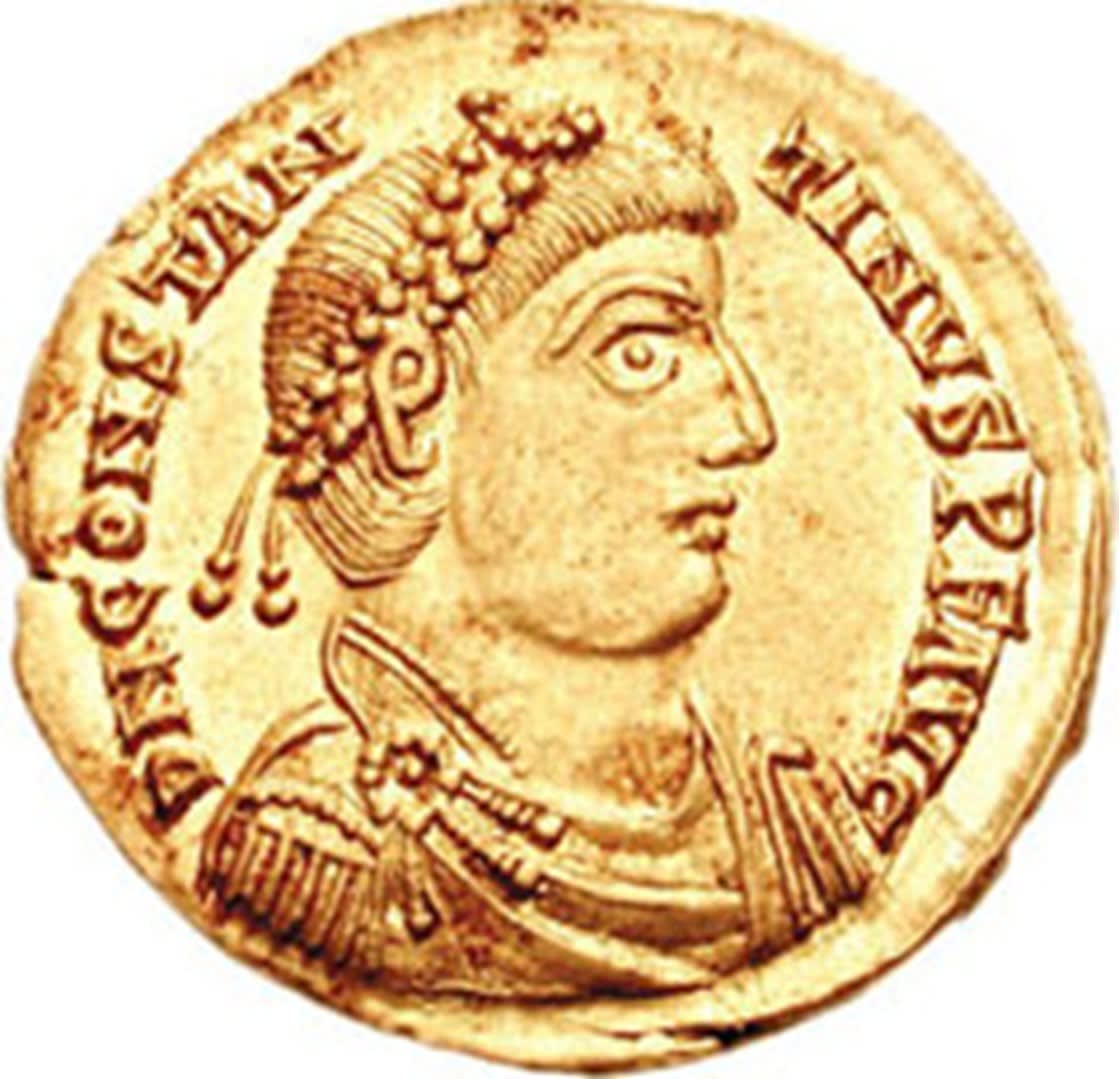
Gunderic’s path to sole power began on the freezing night of December 31, 406, to January 1, 407, when an enormous coalition of barbarian peoples—including Vandals, Alans, and Suebi—crossed the frozen Rhine near Mainz. After defeating the Franks who were defending the Roman frontier, the horde poured into Gaul.
The invaders swept through the provinces with fire and sword, leaving behind the ashes of burned villages and the ruins of once-prosperous cities, devastating the eastern regions of the country with particular brutality.
It was during this period of bloody chaos, traditionally dated to 406, that King Godigisel was killed in one of the fierce battles—either against the Franks or against the regular Roman forces of the British usurper Constantine. Above the battlefield, amid fallen bodies and smoldering standards, his son Gunderic was proclaimed the new king of the Vandals.

Gaul was only the first stage of their long migration. In the autumn of 409, the combined forces of the Vandals, Alans, and Suebi broke through the Pyrenees and descended upon Hispania.
Their invasion was truly apocalyptic in character and was no less destructive than the devastation inflicted upon Gaul. The barbarians ravaged the peninsula from one end to the other, setting cities ablaze and seizing the food supplies of the local population.
Historians of the period, including Olympiodorus and Isidore of Seville, left chilling accounts describing how, in besieged Spanish cities, desperate inhabitants were allegedly driven as far as cannibalism.
By 411, the invaders had succeeded in subjugating most of Hispania. The Roman administration proved powerless. Gerontius, a commander serving the usurper Constantine III, and later Constantine himself, were forced to conclude a humiliating peace settlement with the barbarians.
Only a narrow strip of the province of Tarraconensis adjoining the Pyrenees remained under Roman control. The remaining territories were divided among the invaders.
The Hasding Vandals under Gunderic settled in eastern Gallaecia, while the western part of Gallaecia was occupied by the Suebi. The Siling Vandals received the fertile province of Baetica, while the formidable Alans established themselves in Lusitania and the province of Carthaginensis.
Remarkably, according to some historical interpretations, it may have been during this period, after settling in Hispania, that the Vandals and Alans embraced Christianity in its Arian form.
This division of territory, however, brought no peace. The central government of the Western Roman Empire, unwilling to accept the loss of such wealthy provinces, found a powerful new weapon against the invaders in another barbarian people—the Visigoths.
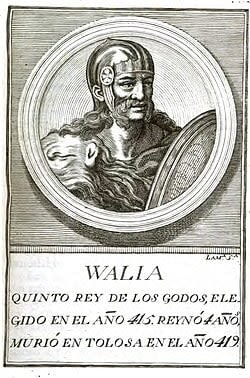
Between 416 and 418, the Visigothic king Wallia launched a major military campaign in Hispania, inflicting crushing blows upon the Silings, Alans, and Suebi.
During these bloody campaigns, the Alan king Addac was killed in battle, while Fredbal, king of the Siling Vandals, was captured in 416 and sent as a trophy to Emperor Honorius at Rome. As the chronicler Hydatius bitterly recorded, the Siling Vandals were almost completely exterminated.
Deprived of their leaders and weakened by enormous losses, the surviving Alans and Silings made the only decision that offered them a chance of survival: they submitted to the authority of Gunderic, king of the Hasding Vandals.
From that moment onward, they no longer elected rulers of their own, and Gunderic brought under his command an enormous army hardened by years of warfare.
The political chessboard shifted once again in 418. The Visigoths, having received the status of Roman foederati and the right to settle in southwestern Gaul, in Aquitania, withdrew from Hispania.
Left alone to confront Gunderic’s strengthened realm, the Western Roman Empire attempted to use the Suebi against him. In that same year, 418, Roman forces compelled the Vandals to lift their siege of Suebi positions near the city of Bracara.
Yet this was only a temporary Roman success.
The decisive confrontation came in 422, when a Roman army under the experienced general Castinus marched against the combined Vandal and Alan forces.
In a major battle near Tarraco, Castinus’ army suffered a devastating defeat. Gunderic did more than merely repel the Roman attack—he went over to the offensive, seizing the province of Tarraconensis and the entire southeastern coast of Hispania.
After capturing important port cities, the barbarians requisitioned Roman ships. Peoples that had previously been almost entirely land-based were transformed into a maritime threat. They began launching daring raids against the Balearic Islands and the coast of Mauretania, creating a bridgehead for future conquests.
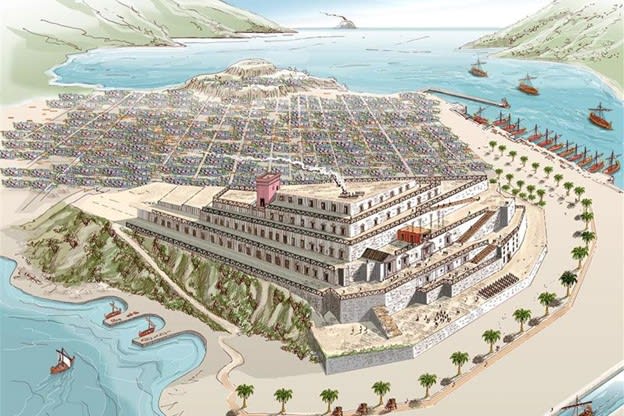
The year 428 marked the high point of Gunderic’s success, when his forces gained control of strategically important cities including Hispalis, modern Seville, and Carthago Nova, modern Cartagena.
Yet that same year also proved to be the king’s last.
Gunderic’s death, which came at the very height of his power, is surrounded by mystery and dark legend, leaving historians with several contradictory versions of events.
The Byzantine historian Procopius of Caesarea provides two different accounts.
According to the first, and most sinister, version, Gunderic fell victim to dynastic ambition and was secretly murdered by his brother Geiseric.
The Vandals themselves, however, categorically rejected this story of fratricide. They told a different version: their king—called Gontharis in this account—was supposedly captured during a battle against Germanic tribes and died a painful death after being impaled. Only after this tragedy did Geiseric become sole ruler and lead his people into Libya.
Isidore of Seville preserves an entirely different and mystical account of the king’s death. According to him, Gunderic dared to destroy the Basilica of Saint Vincent, the revered patron saint of Hispalis.
For this act of sacrilege, he was supposedly struck by immediate divine punishment:
“By the command of God, he was seized by the devil in the marketplace and fell dead.”
Whatever the true circumstances, Gunderic’s death opened the way for his brother Geiseric to obtain unrestricted power.
And Geiseric stopped at nothing to secure his throne against potential dynastic rivals. According to the historian Victor of Vita, after the Vandals had crossed into North Africa, Geiseric coldly ordered Gunderic’s widow to be drowned and all of his sons to be put to death.


