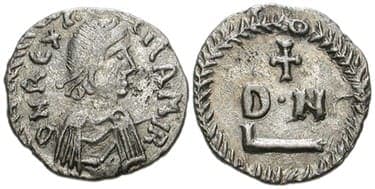
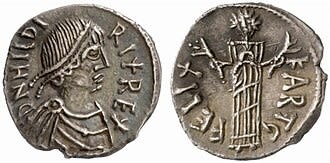
According to the laws of succession established under the great Geiseric, which required power to pass to the eldest male member of the royal dynasty, Gelimer was second in age only to the reigning king Hilderic and was therefore the legitimate heir to the throne. Contemporaries knew Gelimer as a man exceptionally gifted in military affairs, but also as cunning, greedy for the possessions of others, and always ready for intrigue.
Already during Hilderic’s reign, Gelimer had concentrated in his hands power bordering on the absolute. In practice, he effectively replaced the peace-loving king and exercised full command over the army. But his ambitions demanded more.
Taking advantage of the nobility’s dissatisfaction with the unwarlike Hilderic, Gelimer organized a swift coup d’état. The legitimate king, his brother Euagees, and his loyal nephew and commander Hoamer were seized and thrown into the dark dungeons of Carthage.
Having seized the throne, the usurper immediately abandoned the pro-Byzantine policies of his predecessor and returned to a harsh anti-Byzantine and anti-Catholic course.
Gelimer, however, had overestimated the strength of his kingdom. The Vandal state was steadily weakening: it was being ravaged by relentless Berber raids, while the Roman-speaking population of Africa, weary of Arian oppression, increasingly and openly sided with the Catholic Church.
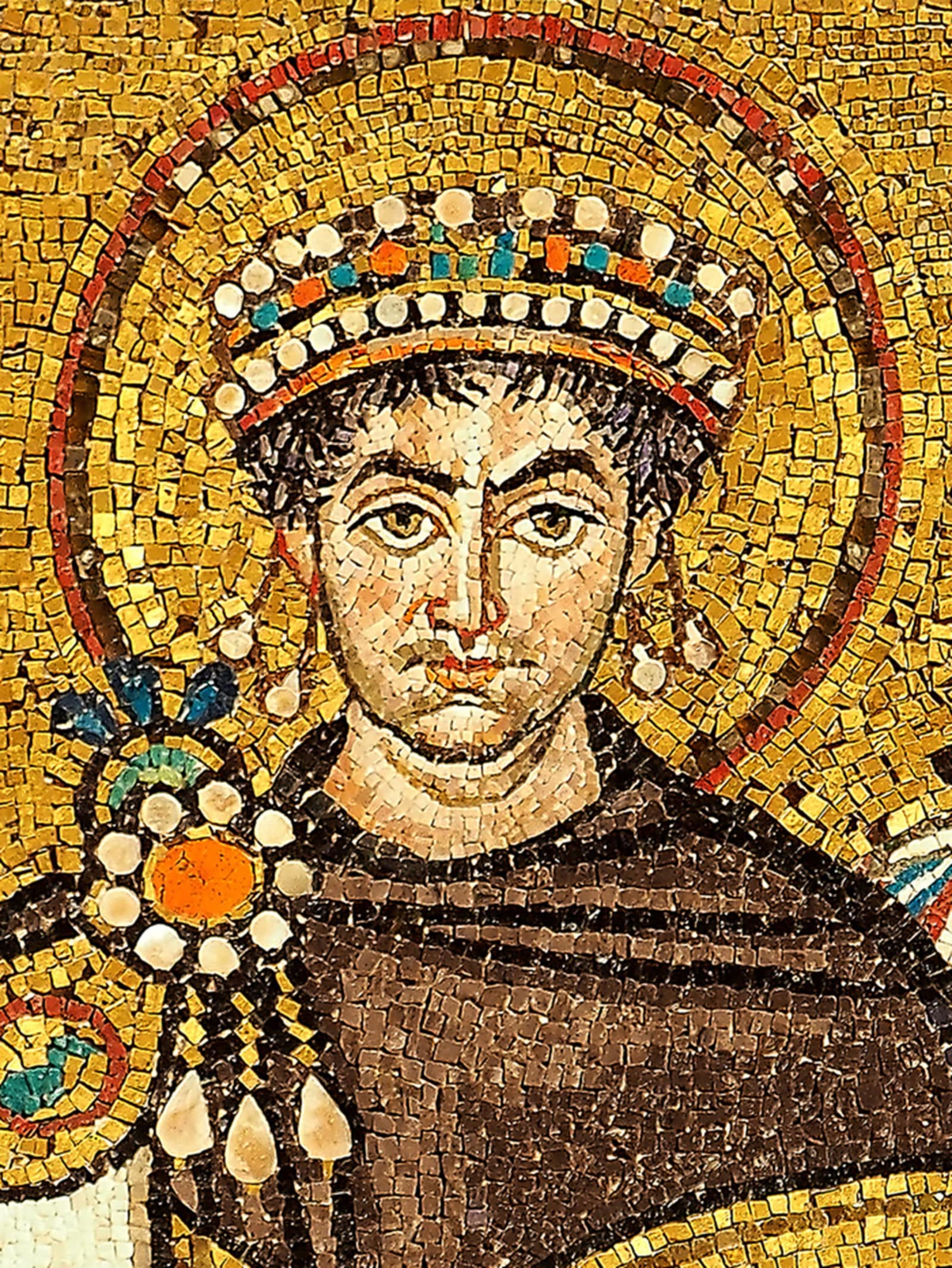
The Byzantine emperor Justinian I was quick to exploit Carthage’s weakness. He had long cherished the dream of restoring the former greatness of the Roman Empire. Having successfully concluded the war against Persia in the east, he now turned his attention westward.
By this time, the Vandal state was already beginning to fall apart. The first major province to break away was wealthy Tripolitania. A local leader named Pudentius launched a rebellion, declared his allegiance to Byzantium, and appealed to Constantinople for assistance. Justinian immediately dispatched a small expeditionary force under the command of the archon Tattimuth. Taking advantage of the absence of Vandal garrisons, the combined forces of Pudentius and the Byzantines easily seized control of the province.
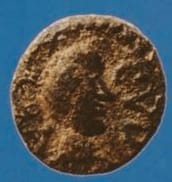
Soon afterward, Sardinia also rose in revolt. Gelimer had rashly appointed his former slave, a Goth named Godas, as governor of the island, entrusting him with its defense and the collection of annual tribute.
But once he had tasted power, Godas proclaimed himself an independent ruler, refused to pay tribute, and immediately sent envoys to Justinian asking for imperial protection. The emperor agreed and dispatched four hundred soldiers to the island under the command of the archon Cyril.
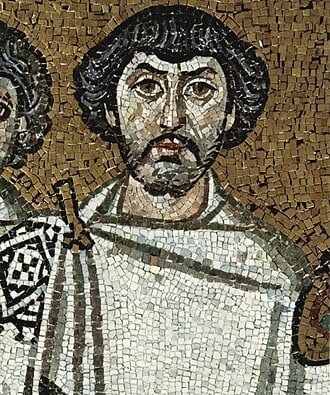
Gelimer now faced a difficult choice. Fearing open war with Constantinople, he decided not to waste his forces on distant Tripolitania, but he could not afford to lose strategically vital Sardinia.
He therefore assembled a fleet of one hundred and twenty of his fastest and strongest ships, placed five thousand elite soldiers aboard them, and sent the expedition under the command of his brother Tzazon to suppress the Sardinian rebellion.
This decision, which deprived Africa of some of its best defenders on the eve of a great storm, proved fatal.
Meanwhile, enormous preparations for invasion were underway in Constantinople. Justinian assembled an armada unlike anything the Mediterranean had seen for many years.
An army of ten thousand infantrymen and five thousand cavalrymen was formed from battle-hardened regular soldiers and barbarian federates, with fierce Huns forming an important part of its fighting strength.
Transporting this army required five hundred heavy ships crewed by thirty thousand sailors and rowers, most of them Egyptians, Ionians, and Cilicians, under the command of Calonymus of Alexandria.
The striking force of the fleet consisted of ninety-two dromons — swift warships equipped with a single bank of oars and special protective coverings against enemy arrows. Two thousand Byzantine soldiers were stationed aboard these vessels, trained to fight both on deck and at the oars.
The emperor appointed his greatest commander, Belisarius, as supreme commander of the expedition and granted him extraordinary powers: every order issued by Belisarius carried the authority of an imperial decree.
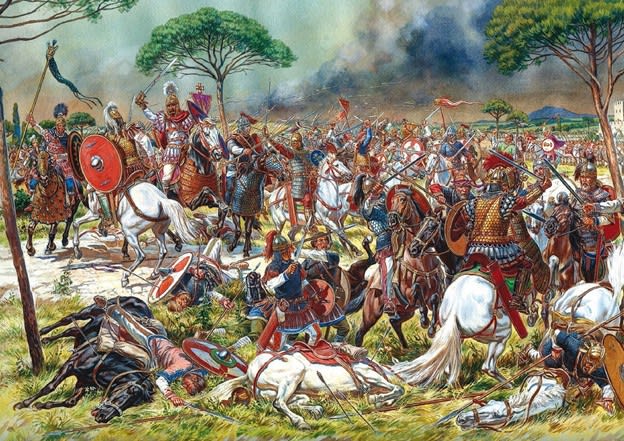
In June 533, the Byzantine armada raised sail and headed toward the shores of Africa.
After three exhausting months at sea, on 31 August 533, the fleet dropped anchor at Cape Caput Vada, or Ras Kapudia, only five days’ march from Carthage.
The landing came as a complete surprise to Gelimer. He had been convinced that the Byzantines would not dare begin their campaign before the arrival of the cooler winter season.
At this critical moment, the usurper was at Hermione, four days’ journey from the coast, engaged in fighting the Berbers, while the capital itself had been left virtually undefended.
After landing, Belisarius began to fight not only with the sword, but also through diplomacy.
After taking the coastal town of Syllectum, he strictly forbade his troops from plundering the local population and severely punished looters. The Byzantine commander presented himself as the liberator of the Roman population from barbarian rule, and this policy produced remarkable results: one city after another surrendered without resistance.
The rapid Byzantine advance was also aided by a historic mistake made by Geiseric himself, who had once ordered city walls throughout the kingdom to be demolished in order to prevent future rebellions.
Passing through Leptis and Hadrumetum, the Byzantines reached a place called Grasse, around 350 stadia, or approximately 65 kilometers, from the capital. There stood a luxurious palace belonging to the Vandal kings, surrounded by shady orchards.
After allowing his army a short rest, Belisarius resumed the march toward Carthage and arranged his forces in impeccable battle order.
The vanguard was commanded by John. The left flank, vulnerable to surprise attack, was protected by Hunnic cavalry. The right flank was secured by the sea and by the Byzantine fleet advancing parallel to the army.
Belisarius himself marched in the rear with his elite guard, expecting Gelimer to attack from behind.
When Gelimer received the terrifying news at Hermione that the imperial army had landed, he acted swiftly and ruthlessly.
His first order, sent to his brother Ammatas in Carthage, was to execute Hilderic and all the imprisoned members of his family immediately.
Ammatas carried out the order without hesitation, killing the deposed king, his brother Euagees, and their supporters. Hoamer, the former commander, had already died in captivity by that time.
Gelimer then devised an elaborate tactical plan. The Byzantines were to be drawn into the narrow terrain near the suburb of Ad Decimum and destroyed by a coordinated three-pronged attack.
On 13 September 533, Belisarius’s army approached Ad Decimum, located seventy stadia, or roughly thirteen kilometers, from Carthage.
Gelimer intended to close the trap. His nephew Gibamund, commanding two thousand soldiers, was to strike from the left. Ammatas was to march out of Carthage and attack the Byzantines from the front, while Gelimer himself would strike from the rear.
The complicated plan collapsed because the three attacks were not properly synchronized.
Ammatas reached Ad Decimum far too early. Leaving the main body of his troops behind, he recklessly charged John’s advance guard with only a handful of men.
After personally killing twelve of the finest Byzantine warriors, Ammatas fell fighting bravely.
His death spread panic among the Vandal troops arriving from Carthage. They broke ranks and fled. John’s cavalry pursued them all the way to the gates of the capital, cutting them down as they ran. The entire seventy stadia between Ad Decimum and Carthage became littered with corpses.
At the same time, on the left flank, Gibamund’s detachment unexpectedly encountered Belisarius’s Huns and was annihilated to the last man.
Gelimer himself, advancing from the rear, initially achieved considerable success. His troops drove the Huns from a high hill and forced them into retreat. Victory appeared to be within reach.
But when the king descended from the hill, he came across the bloodied body of his brother Ammatas.
At that moment Gelimer was overwhelmed by grief. Instead of pressing his advantage and pursuing the enemy, he halted his entire army and, weeping loudly, began arranging his brother’s burial.
This fatal delay gave Belisarius enough time to rally the fleeing troops, reorganize his forces, and launch a devastating counterattack.
The Vandals, having lost their formation, could not withstand the assault. Leaving the battlefield covered with their dead, they fled toward the plain of Bulla on the road to Numidia.
The fate of Carthage was sealed.
Late the following evening, the Byzantines reached the capital. The inhabitants opened the gates and lit thousands of lamps, flooding the city with light, while surviving Vandals hid in terror inside churches.
Displaying extraordinary discipline, Belisarius forbade his soldiers from entering the city at night, fearing both ambushes and looting.
Only on the morning of 15 September 533 did the Byzantine army make its formal entry into Carthage.
Discipline was absolute. Soldiers purchased food from the markets with money, and commercial life in the city continued uninterrupted.
Belisarius immediately ordered the restoration of Carthage’s demolished defensive walls.
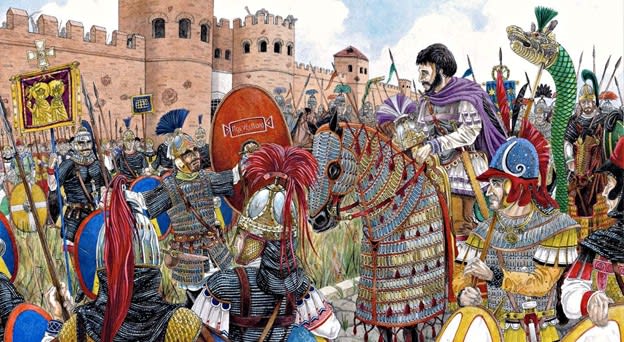
After suffering this catastrophic defeat, Gelimer established his camp on the plain of Bulla, four days’ journey from Carthage.
He attempted to ignite a guerrilla war by calling the Moors to his side, but most tribal leaders preferred to send hostages to Belisarius in exchange for gold and symbols of authority, choosing to wait and see which side would ultimately prevail.
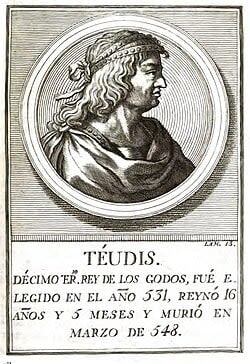
Gelimer’s request for assistance from Theudis, king of the Visigoths in Spain, also produced no results.
Driven by desperation, Gelimer began offering local peasants gold for every Byzantine head they brought him.
Procopius of Caesarea records a grim detail: local peasants, who had little affection for the supposed “liberators,” eagerly killed slaves and servants who wandered away from the Byzantine camp and brought their severed heads to the Vandal king in exchange for payment.
Before long, Gelimer finally received the reinforcements he had desperately awaited.
His brother Tzazon, who had successfully captured the Sardinian port of Caranalis and executed the rebel Godas, received an urgent letter from the king and immediately transferred his battle-hardened army back to Africa.
The brothers reunited on the plain of Bulla and led their combined forces toward Carthage.
They cut the city’s aqueduct and established a blockade around the capital, while deliberately refraining from plundering the surrounding countryside.
The Vandals hoped that the Arian soldiers serving in the Byzantine army — particularly Goths and Heruls — would defect. They also actively bribed the Huns, who had little enthusiasm for fighting on Constantinople’s behalf and agreed to turn against the Romans at the decisive moment.
The final confrontation came at the Battle of Tricamarum.
Leaving their women, children, and treasury inside a fortified camp, Gelimer and Tzazon led the army into the field.
Belisarius accepted battle using cavalry alone, as his infantry was still on the march.
As they had promised the Vandals, the Huns initially positioned themselves away from the fighting, waiting to see which side would prevail.
A ferocious battle began. The Byzantine cavalry charged again and again, and amid the slaughter the courageous Tzazon was killed.
The death of Gelimer’s second brother finally broke the morale of the Vandals. They lost heart and fled toward the protection of their fortified camp.
Seeing which side now possessed the advantage, the Huns abandoned their agreement with the Vandals and joined the pursuit.
The Byzantines lost fewer than fifty men in the fighting, while approximately eight hundred Vandals were killed. Afterward, the victors began stripping the bodies of the fallen.
By evening, the heavy Byzantine infantry had arrived on the battlefield, and Belisarius ordered his entire army to advance on the Vandal camp.
When Gelimer learned that the full strength of the Roman army was approaching, his courage finally collapsed.
Without saying a word to anyone, he mounted his horse and, under cover of darkness, fled toward Numidia with only a handful of relatives and servants.
When news of the king’s disgraceful flight spread through the camp, uncontrollable panic seized the Vandal army.
The soldiers fled into the darkness, abandoning their weapons, their families, and their wealth.
The Byzantines stormed the camp and seized an immense amount of treasure, spending the night killing men and enslaving women and children.
Gelimer himself fled deeper into the African interior in an attempt to escape Belisarius’s mounted patrols.
When the Byzantines reached the coastal city of Hippo Regius, ten days’ journey from the capital, they learned that the fugitive king had taken refuge on the inaccessible slopes of Mount Papua near the Numidian frontier, in the ancient settlement of Medeus, under the protection of friendly Moors.
Understanding that a winter assault on the mountain would be disastrous, Belisarius ordered the stern Herul commander Pharas to establish a camp at its foot and place the mountain under complete blockade.
While Pharas starved Gelimer into submission, the empire began harvesting the rewards of victory.
Cyril’s detachment displayed Tzazon’s severed head to the inhabitants of Sardinia, after which both Sardinia and Corsica returned to imperial control without further bloodshed.
Other Byzantine forces triumphantly occupied Caesarea in Mauretania, the fortress of Septem near Gibraltar, and the Balearic Islands — Ibiza, Majorca, and Minorca — while also providing assistance to Tripolis.
Only the Ostrogoths in Sicily categorically refused to surrender the strategically important port of Lilybaeum to the Byzantines.
The siege of Mount Papua lasted for three difficult months.
After Pharas attempted an assault and suffered losses, he abandoned direct attacks and turned instead to relentless blockade and diplomacy.
Having completely sealed every path and deprived the defenders of food, he offered Gelimer honorable terms of surrender: his life would be spared, his family would be protected, and he would receive the title of patrician together with estates in Asia Minor.
Broken by hunger and hopelessness, Gelimer finally surrendered in late March or early April 534.
The final act of the drama unfolded in Constantinople.
Belisarius, forced to return quickly to the capital because of jealous accusations that he intended to usurp power in Africa, brought with him Gelimer, the captured Vandal nobility, and the legendary treasures of the Vandal kingdom.
Once Emperor Justinian became convinced of his general’s loyalty, he awarded Belisarius a magnificent triumph — an honor rarely seen since the age of the ancient Roman emperors.
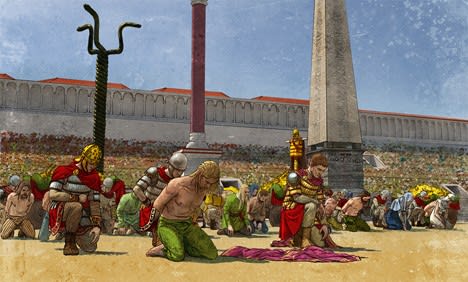
During the glittering procession, the defeated king Gelimer walked on foot through the streets of the Byzantine capital.
Later, keeping his promise, the emperor granted Gelimer and his relatives extensive and fertile estates in Galatia.
Yet the proud Vandal never received the highest title of patrician. Under the strict provisions of Justinian’s law code, a heretic could not hold public office, and Gelimer — having lost his crown, his army, and his homeland — firmly refused to betray the faith of his ancestors and renounce Arian Christianity.
Thus ended not only the age of Gelimer, but the entire history of the Kingdom of the Vandals and Alans.