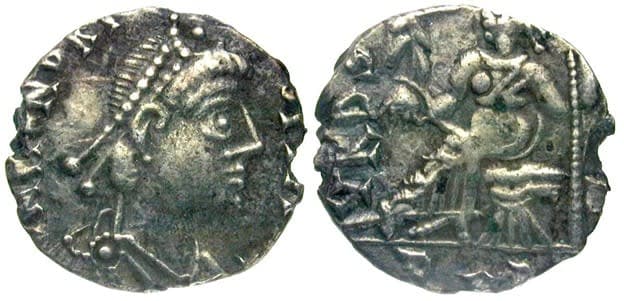

As the second son of King Godigisel, born to a concubine, Geiseric was the half-brother and successor of King Gunderic.
The appearance and character of Geiseric were permanently preserved in the historical record thanks to Jordanes’ work The Origin and Deeds of the Goths. The chronicler described the Vandal king as a man of short stature who walked with a limp as the result of an unfortunate fall from a horse. Yet behind this unassuming appearance lay an extraordinary mind. Geiseric was secretive and sparing with words. He deeply despised idle luxury, yet at the same time possessed an immense hunger for wealth, viewing it as an instrument of power. In anger, he was terrifying and violent.
Jordanes particularly emphasized his exceptional foresight: the king had mastered the art of sowing discord and stirring hatred whenever he needed to set hostile peoples against one another. The Byzantine historian Procopius of Caesarea offered a similar assessment, calling Geiseric “an extraordinary man who understood military affairs extremely well.”

The Roman government in North Africa—the richest granary of the Western Roman Empire—was being torn apart by the rebellion of its own commander Bonifacius and by the constant incursions of fierce Berber tribes. Recognizing the weakness of his enemy, Geiseric struck.
In May 429, he carried out an unprecedented logistical operation: he transported across the Strait of Gibraltar an enormous force of approximately 80,000 Vandals, Alans, and members of their families. Encountering little serious resistance on the coast, this great host covered an enormous distance of roughly two thousand kilometers in less than a year, marching from Tingis, modern Tangier, to the outskirts of Carthage.
Roman defenses collapsed. Towns and cities, both large and small, surrendered one after another. Only the powerful walls of Cirta and Carthage itself were able to withstand the first assaults.
The rebellious Roman commander Bonifacius was forced to retreat with his army and take refuge in the city of Hippo Regius. Geiseric surrounded the city and subjected it to a relentless siege that lasted fourteen exhausting months, continuing until July 431.
Eventually, realizing the hopelessness of his position, Bonifacius abandoned the fortress. Hippo Regius fell and became the first official residence of the Vandal king.
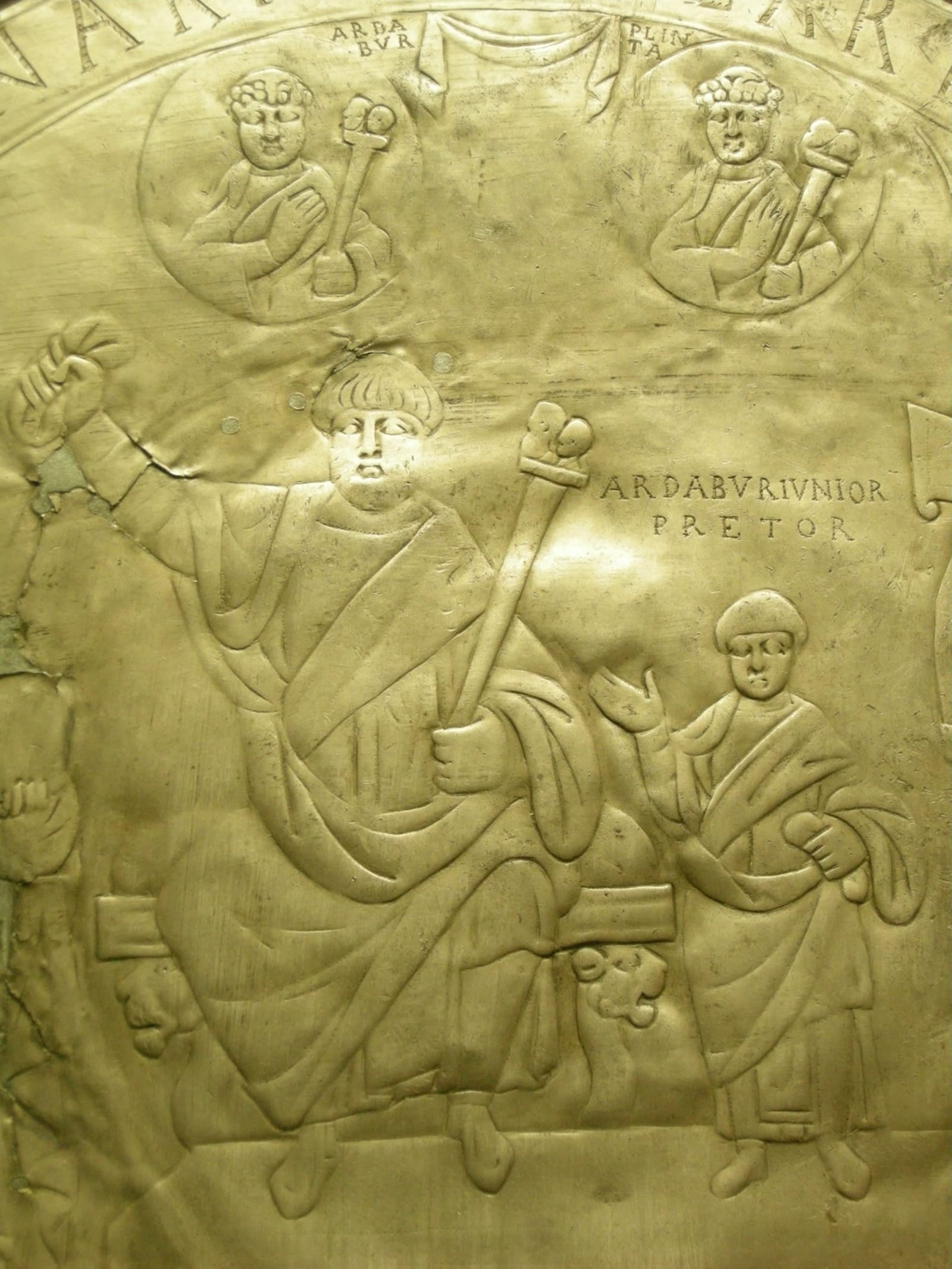
Rome could not accept the loss of its most valuable African territories. Around 432, a fresh Eastern Roman army arrived in Africa under the command of Flavius Aspar, a general of Alan origin.
A brutal war of attrition followed. Both sides devastated the once-prosperous provinces without mercy, while carefully avoiding a decisive battle that might settle the entire conflict in a single day.
By 435, the Vandals and Alans effectively controlled a substantial portion of Roman North Africa. The exhausted Empire was forced to make concessions. In February 435, a peace treaty was concluded at Hippo Regius.
The Vandals and Alans received legal status as Roman foederati. Although the exact text of the treaty has not survived, historians suggest that in exchange for the lands granted to him, Geiseric may have agreed to continue supplying Italy with the grain and olive oil essential to its survival, while also defending the imperial frontier from attacks by Berber tribes from the desert.
The status of an obedient federate, however, could never satisfy such an ambitious ruler.
After waiting for the right moment, on October 19, 439, Geiseric launched a sudden and devastating strike: Carthage was captured.
The richest Roman territories of Africa Proconsularis and Byzacena fell into Vandal hands. Yet the greatest prize was the enormous Carthaginian transport fleet used to carry grain across the Mediterranean. Geiseric immediately transformed it into a military armada.
A people that had once been almost exclusively land-based became a terror of the seas, establishing firm control over the western and central Mediterranean.
By 440–441, Vandal squadrons were raiding the coasts of Sicily and southern Italy with near impunity. The Western emperor Valentinian III, alarmed by the growing threat, called upon the Eastern Roman Empire for naval assistance.
The combined forces succeeded in preventing the immediate conquest of Sicily, but their success was only temporary. As soon as the Eastern Roman fleet returned to its home ports in 442, Geiseric swiftly occupied the whole of Sicily.
The new peace treaty of 442 represented a triumph for the Vandals. They were completely freed from the humiliating status of foederati and became a sovereign and independent state.
The borders of Geiseric’s kingdom were officially expanded to include part of Tripolitania. The Roman Empire retained only remnants of its previous African possessions: the western provinces of Mauretania, the Numidian region surrounding Cirta, eastern Tripolitania, while Sicily temporarily returned to Western Roman control.
Having achieved major success in foreign affairs, Geiseric imposed order within his kingdom with an iron hand.
In the same year, 442, the traditional tribal aristocracy of the Vandals, dissatisfied with the king’s increasingly absolute power, rose in rebellion. The uprising was brutally suppressed.
From that point onward, the ancient nobility permanently lost its political influence, while popular tribal assemblies ceased to be convened altogether. Their place was taken by a service aristocracy personally loyal to the king.
The kingdom was transformed into a military machine. Elite Vandal forces, centered around powerful cavalry units, were stationed as garrisons along the southern frontiers and in key ports. The privileged right to perform military service now belonged exclusively to Vandals and Alans, while Berbers were admitted only into auxiliary units.
Yet Geiseric’s most famous deed—the act that would permanently engrave his name in history—still lay ahead.
In March 455, Emperor Valentinian III was assassinated, and the Vandal king used the event as the perfect pretext to renounce the treaty of 442.
The situation was made even more explosive by the fact that the usurper Petronius Maximus forcibly married the imperial princess Eudocia to his own son. Eudocia had been formally betrothed since 446 to Geiseric’s son Huneric.
The king could not tolerate such an insult.
Personally commanding his fleet, Geiseric entered the mouth of the Tiber in the final days of May 455.
Wild panic erupted in Rome. The mob killed Petronius Maximus before the enemy had even arrived.
The Vandals entered the Eternal City without serious resistance and subjected it to a systematic fourteen-day sack.
When Geiseric departed from devastated Rome, he carried away immense quantities of treasure, thousands of captive citizens, and the most important hostages of all—the emperor’s widow Licinia Eudoxia and her daughters Eudocia and Galla Placidia.
Eudocia was immediately married to Huneric.

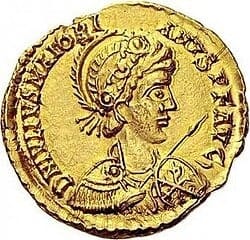
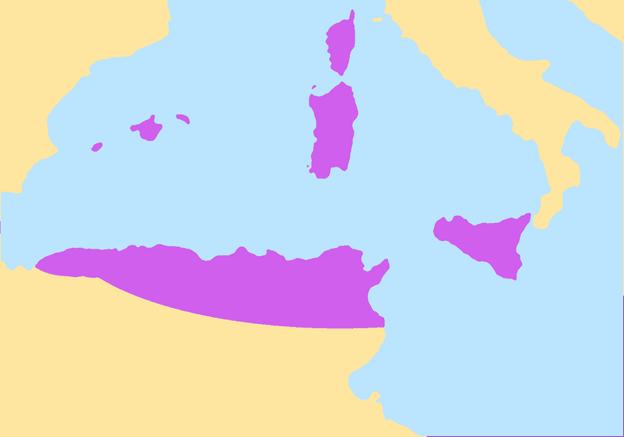
After this triumph, Geiseric transformed the western Mediterranean into an internal “Vandal lake.”
He seized Sardinia, Corsica, Sicily, and the Balearic Islands. The remaining North African provinces that had stayed loyal to Rome were finally subdued.
In western Africa, however, Vandal influence was largely limited to Numidia and the coastal cities extending as far as Ceuta, while deep within the Mauretanian provinces power increasingly passed into the hands of Berber rulers.
Desperate Rome, supported by Constantinople, continued attempting to destroy the Vandal Kingdom.
The Western Roman emperor Avitus tried to wage war against Geiseric but achieved only limited successes near Sicily and Corsica.
A far more dangerous opponent was Emperor Majorian, who assembled an army in Hispania and concentrated an enormous fleet at Cartagena. Yet the elusive Geiseric struck first: his ships entered the harbor of Cartagena and either captured or burned the Roman fleet.
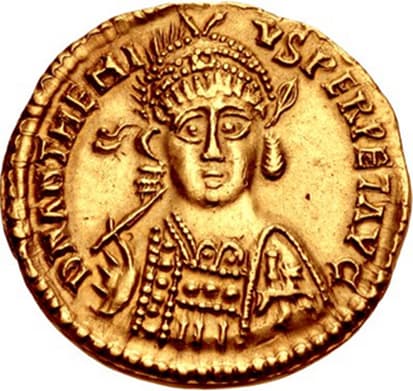
The greatest attempt to destroy Geiseric came in 468 during the reign of Emperor Procopius Anthemius.
The two halves of the Roman Empire united for the campaign. The West provided forces under Marcellinus, who successfully cleared Sardinia and Sicily of Vandal troops.
The East dispatched an army under Heraclius and Marsus, which landed in Tripolitania and advanced steadily toward Carthage.
The greatest threat of all, however, was the enormous Eastern Roman fleet commanded by Basiliscus. After defeating the Vandal advance forces, Basiliscus anchored off Cape Mercurium, modern Cape Bon, only around sixty kilometers from Geiseric’s capital.
It appeared that the days of the barbarian kingdom were numbered.
At this critical moment, Geiseric displayed the cunning for which he had become famous.
Recognizing that he could not prevail in open battle, he requested a five-day truce, supposedly in order to conduct negotiations. The shortsighted Basiliscus agreed.
As soon as the wind shifted in his favor, Geiseric broke the truce and sent fire ships—vessels packed with combustible materials and set ablaze—directly into the densely packed Eastern Roman fleet at anchor.
Chaos followed. Much of the imperial armada burned to destruction, while the surviving ships fled in humiliation toward Sicily.
The disaster was made even worse by the death of Marcellinus, commander of the Western forces. He may have been assassinated on the orders of his Roman rival Ricimer, although some historians have suggested that Geiseric’s gold and political intrigues may also have played a role.
The enormous imperial coalition collapsed. Geiseric regained Sicily and Sardinia and resumed his destructive naval operations, extending them even into the eastern Mediterranean.
During the final years of his life, Geiseric enjoyed the fruits of his achievements and increasingly dictated terms to the declining Empire.
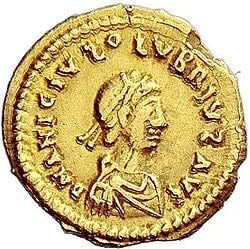
In 472, he succeeded in seeing his preferred candidate, Olybrius, placed upon the throne of the Western Roman Empire. Olybrius was the husband of Placidia and therefore connected by marriage to the heir of the Vandal throne.
Although Olybrius died as early as November of that same year, his accession vividly demonstrated who now held the stronger political position.
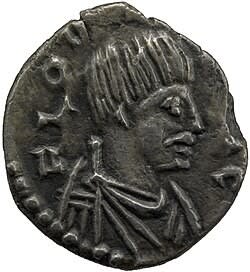
The rulers who followed in Rome were little more than pale shadows and posed no serious threat to Carthage.
In 474, the Eastern Roman Empire finally yielded and signed a peace treaty guaranteeing the security and full independence of the Vandal Kingdom.
In 475, the Romans themselves, fearing the power of Constantinople, concluded a defensive alliance with the Vandals.
When the Western Roman Empire finally collapsed in 476 and Odoacer seized power in Italy, the elderly Geiseric—still possessing all of his political skill—successfully negotiated with him as well.
In exchange for a substantial annual tribute, Geiseric ceded Sicily to Odoacer, retaining only the strategically important port of Lilybaeum. In doing so, he extended his influence even over the new state that had arisen from the ruins of Roman rule in the West.
Together with the Visigothic king Euric and the mercenary commander Odoacer, Geiseric became one of the principal figures in the destruction of the Western Roman Empire.
He ruled his people for an extraordinary forty-nine years, transforming himself from the leader of a migrating people into an undefeated master of the Mediterranean.
Geiseric died at the height of his enduring fame on January 24, 477 CE.


