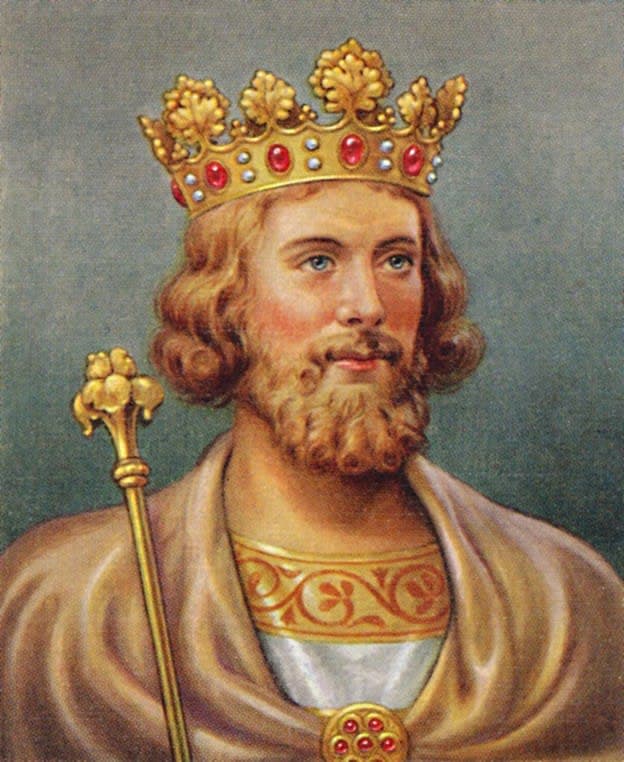

Edward II was born on 25 April 1284 in recently conquered Wales, at Caernarfon Castle. The site was chosen by his formidable father, King Edward I, to symbolize the final subjugation of the region to the English Crown. The infant fourth son of Edward I and his first wife, Eleanor of Castile, of the Plantagenet line became sole heir within months: his elder brothers had died before his birth, and the last of them, Alfonso, died in August 1284.
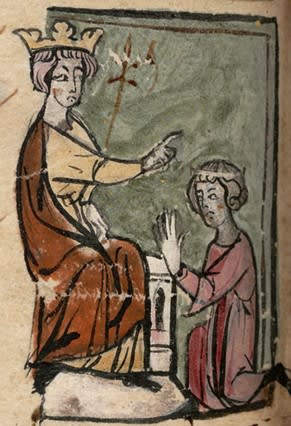
His childhood was typical of royalty: he rarely saw his mother, who spent long periods with the king in Gascony, and was raised within his own household of servants and attendants. Edward had many paternal siblings, but only five sisters reached adulthood; four—Eleanor, Margaret, Elizabeth, and Joan—married powerful European rulers or English barons, strengthening England’s alliances.
From an early age Edward received an education considered solid for the time. Taught by a Dominican friar, he developed tastes for poetry, music, and reading. Unlike many nobles, he was not passionate about hunting or tournaments, preferring simpler pursuits such as rowing, gardening, and mixing with ordinary people. Tall (about 180 cm), athletic, and good-humored, he was also known for a quick temper, a long memory for slights, and unpredictability.
In 1290, after his mother’s death, Edward inherited the County of Ponthieu. That same year he became heir to the English crown and was to marry Margaret, the Maid of Norway, queen of Scotland an alliance that might have united the two kingdoms. Her death ended the plan. To placate Wales, in February 1301 his father created him Prince of Wales, the first English heir ever to hold the title.
By the 1300s Piers Gaveston, the son of a Gascon knight, had become the prince’s close friend and favorite. The nature of their relationship remains debated, but their intimacy irritated both Edward I and the English nobility. In 1307, shortly before his death, Edward I banished Gaveston. Ascending the throne on 20 July 1307, Edward II immediately recalled him, heaped wealth upon him, granted him the earldom of Cornwall, and married him to the king’s niece.

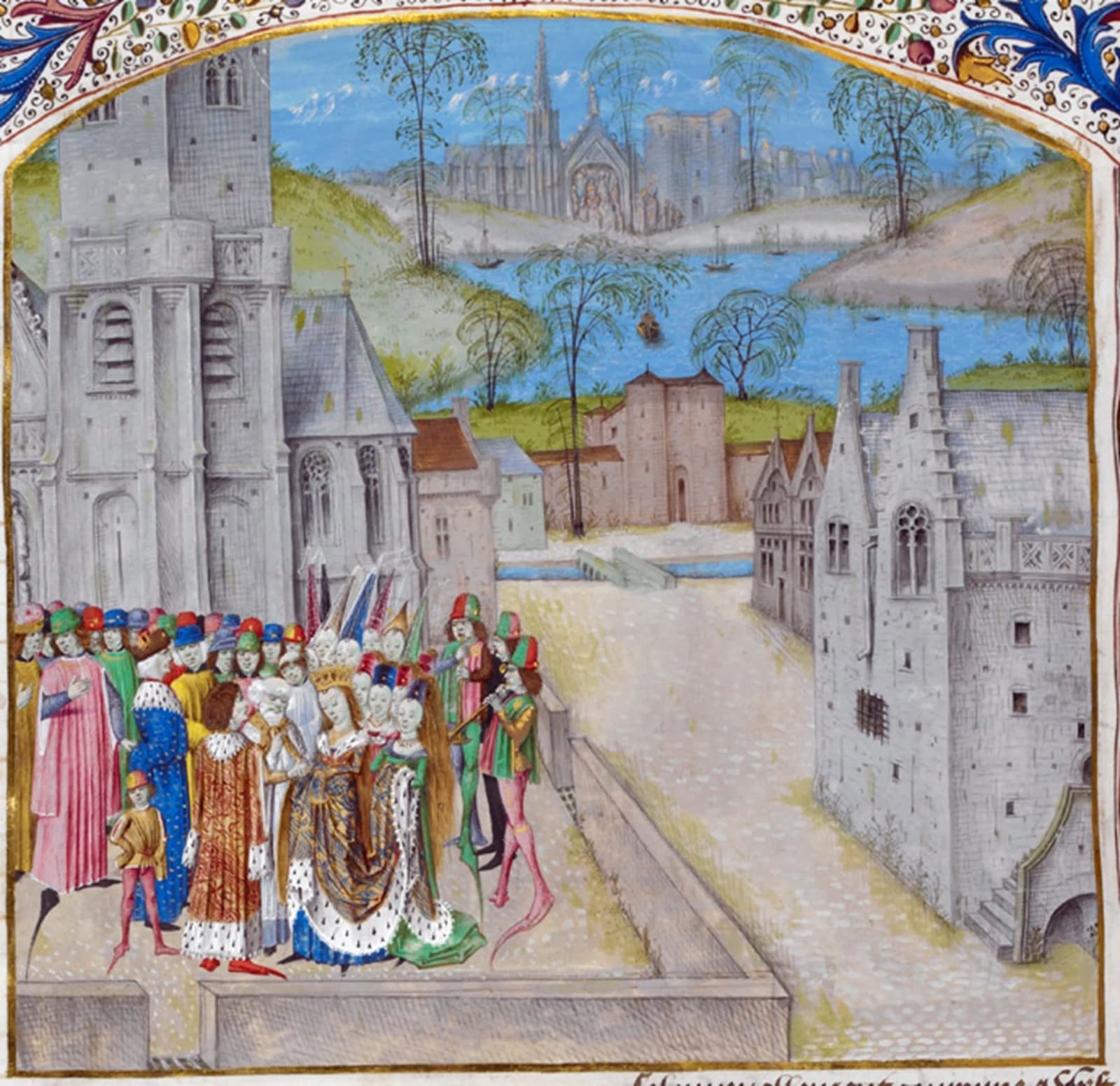
In January 1308 Edward sailed to France to marry Isabella of France, daughter of King Philip the Fair. They wed on 25 January at Boulogne. It was a politically vital match intended to secure peace, but at the coronation on 25 February and the wedding feast Edward ostentatiously preferred Gaveston, angering both French and English elites. Though Edward and Isabella later had children including the future Edward III in 1312 their marriage was clouded by the king’s favorites.

Hostility to Gaveston rose quickly. Barons deemed him arrogant and overmighty, calling him “one of two kings in the realm.” In February 1308 they forced Edward to send him away; Gaveston was appointed lieutenant of Ireland. In 1309, however, after negotiations with the pope, Edward brought him back.
His return deepened the crisis. In 1310 armed barons came to parliament and compelled Edward to accept the Ordinances, a set of measures limiting royal power barring the king from waging war, granting lands, or leaving the kingdom without parliament’s consent. Gaveston was again exiled.
Unwilling to accept constraints, Edward recalled Gaveston yet again in January 1312. Five earls among them the powerful royal cousin Thomas of Lancaster swore to destroy the favorite. Seizing him, they executed Gaveston on 18 June 1312. The killing permanently split the nobility. Edward raged and vowed revenge, but barons including the earls of Pembroke and Surrey, distancing themselves from Lancaster, forced a temporary reconciliation.
With finances briefly improved, Edward turned to Scotland, where Robert Bruce had by 1314 retaken almost all the castles. The king raised a great army, but many barons, Lancaster included, refused service, citing breaches of the Ordinances. On 24 June 1314 at Bannockburn, despite numerical superiority, the English suffered a crushing defeat. Scottish infantry, massed in dense schiltrons, broke the English cavalry. Edward lost his personal seal and fled, barely avoiding capture. The catastrophe cost England control of Scotland and shattered the king’s authority.
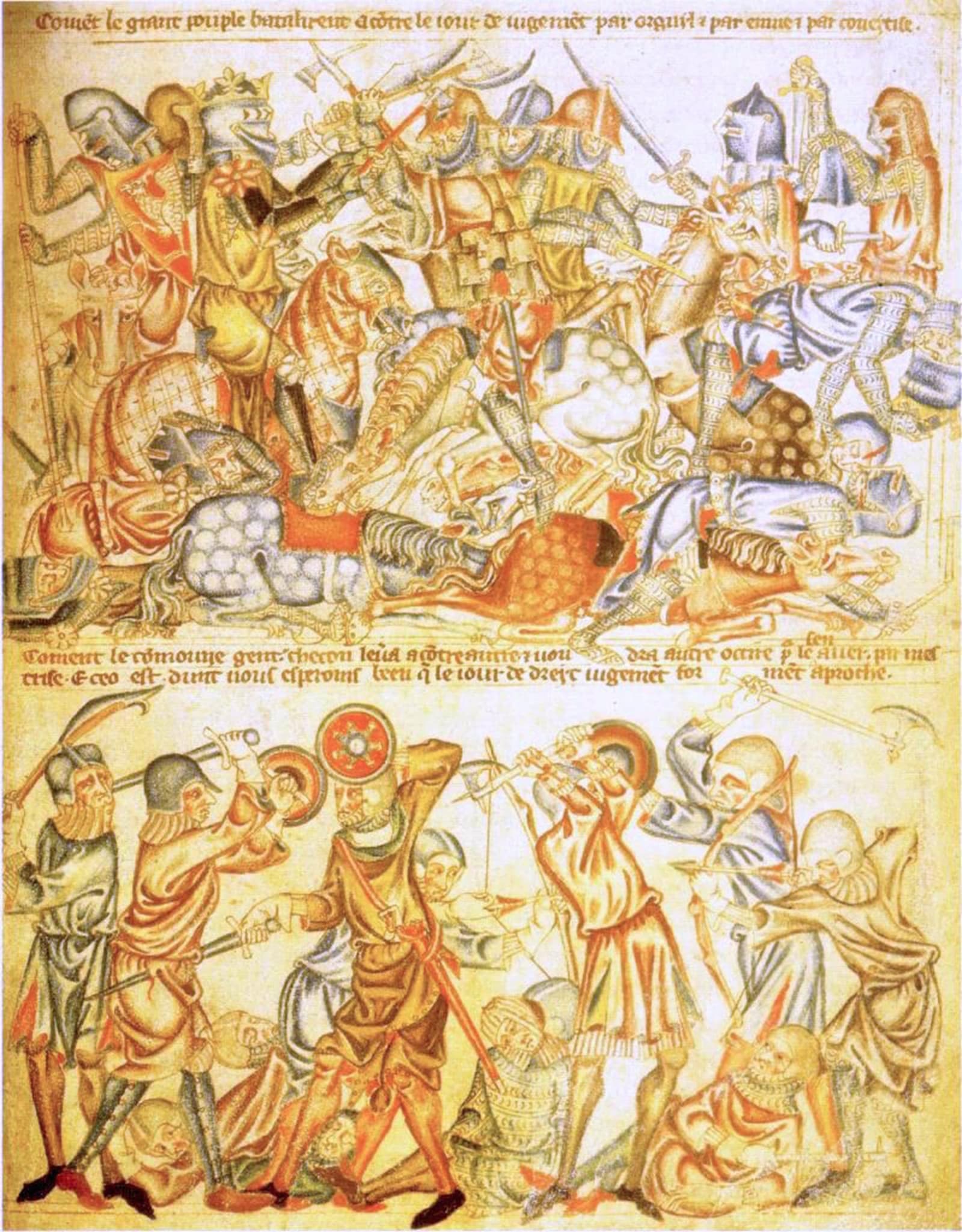
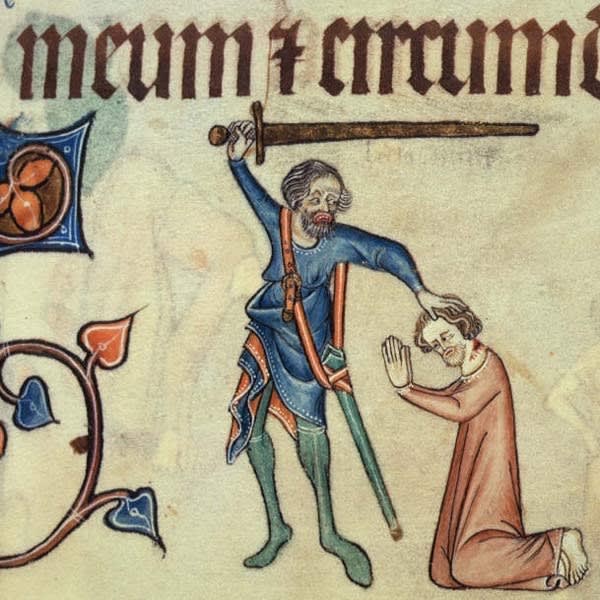
After the defeat, Lancaster became the kingdom’s de facto ruler, but his ineptitude and lack of political sense bred further instability. At the same time Europe suffered the Great Famine after successive crop failures. Edward proved unable to manage the crisis, and his popularity fell. Discontent swelled with the rise of new royal favorites, notably Hugh le Despenser the Younger, who swiftly built a quasi-principality in the Welsh Marches by seizing baronial lands.
Growing Despenser power led to the Despenser War of 1321. The Marcher lords including Roger Mortimer and Thomas of Lancaster united against the favorites, seized Despenser estates, and advanced on London, forcing Edward to banish Hugh and his father.
Spurred on by the Despensers, Edward prepared revenge. Seizing on an incident in which a rebel’s wife refused Queen Isabella entry to her castle, he mustered a large army. In December 1321 he invaded the Welsh March and, meeting little resistance, crushed the revolt, arresting many barons and confiscating their lands. The repression culminated in the execution of Thomas of Lancaster on 22 March 1322 often cited as the first execution of an English magnate for treason.

Edward’s victory let him restore his authority and recall the Despensers. Hugh le Despenser the Younger became chief adviser, concentrating immense power and wealth and enriching himself further by land-grabs and patronage. England, said contemporaries, lived in fear under a regime that “sought to exalt itself above all knights and barons.” The king’s and favorites’ harshness bred mounting public anger and set the stage for an even greater revolt.
In 1324 disputes with the French crown under Edward’s brother-in-law Charles IV (the Fair) flared into the War of Saint-Sardos. The quarrel concerned the Duchy of Aquitaine; Charles demanded Edward’s personal homage and control of some territories. After Gascon vassals killed French officials, the conflict turned open. A French army under Charles of Valois, superior in numbers, swiftly occupied most of Aquitaine; only a narrow coastal strip with Bordeaux and Bayonne remained English.
On advice, Edward sent Queen Isabella to Paris to negotiate with her brother—a fateful mistake. After protracted talks, she secured terms requiring Edward to perform homage. Unwilling to leave England, the king transferred his continental lands to his son Edward of Windsor, who rendered homage in September 1325.
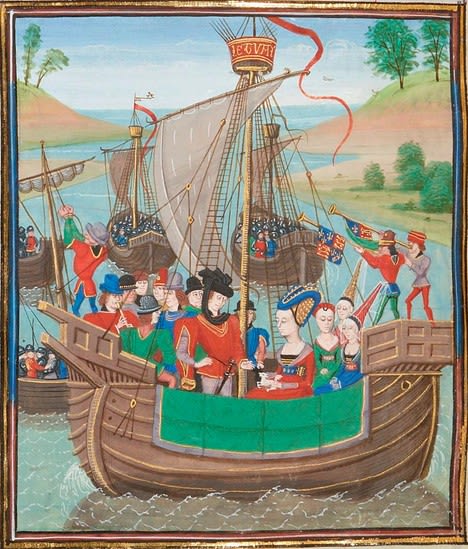
After the homage, Edward II expected his wife and heir to return. Isabella refused, declaring she would not come back while Despenser remained in power. Their marriage had long been near breaking; she now openly blamed Hugh le Despenser for her humiliations. In France she met Roger Mortimer, escaped from the Tower, who became her lover and chief ally. Together they plotted to overthrow Edward and his favorites.
In August 1326 Prince Edward was betrothed to Philippa of Hainault; her father pledged troops to Isabella. Despite the king’s efforts to prepare for invasion, his appeals won little support. On 24 September 1326 Isabella and Mortimer landed in England with a small force. The royal army proved disloyal; barons including the king’s own brother Thomas of Brotherton and Henry of Lancaster went over to the rebels.

Edward fled London with the Despensers as the city rose and tried to escape to Wales, but support evaporated. On 16 November he and Hugh le Despenser the Younger were captured. On 24 November 1326 the younger Despenser was executed; his father had already been put to death. The coup was complete.
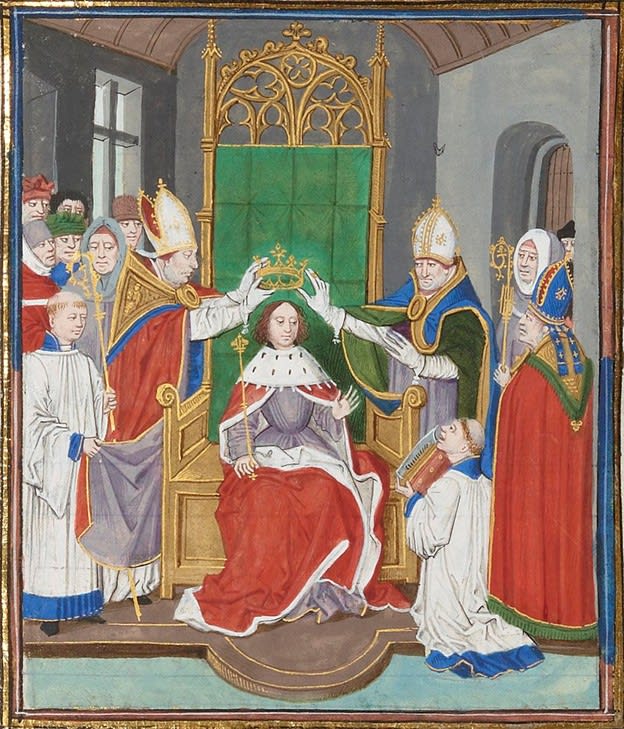
Edward II still held the crown in name, but not power. In January 1327 parliament met to decide his fate. When he refused to abdicate, parliament, claiming popular backing, produced the Articles of Deposition, accusing him of incapacity, incompetence, and dependence on evil counsel. On 20 January 1327 a delegation led by Bishop Adam Orleton went to Kenilworth Castle. Under threat to his son’s prospects, Edward wept and agreed to abdicate. Edward III was crowned on 2 February.
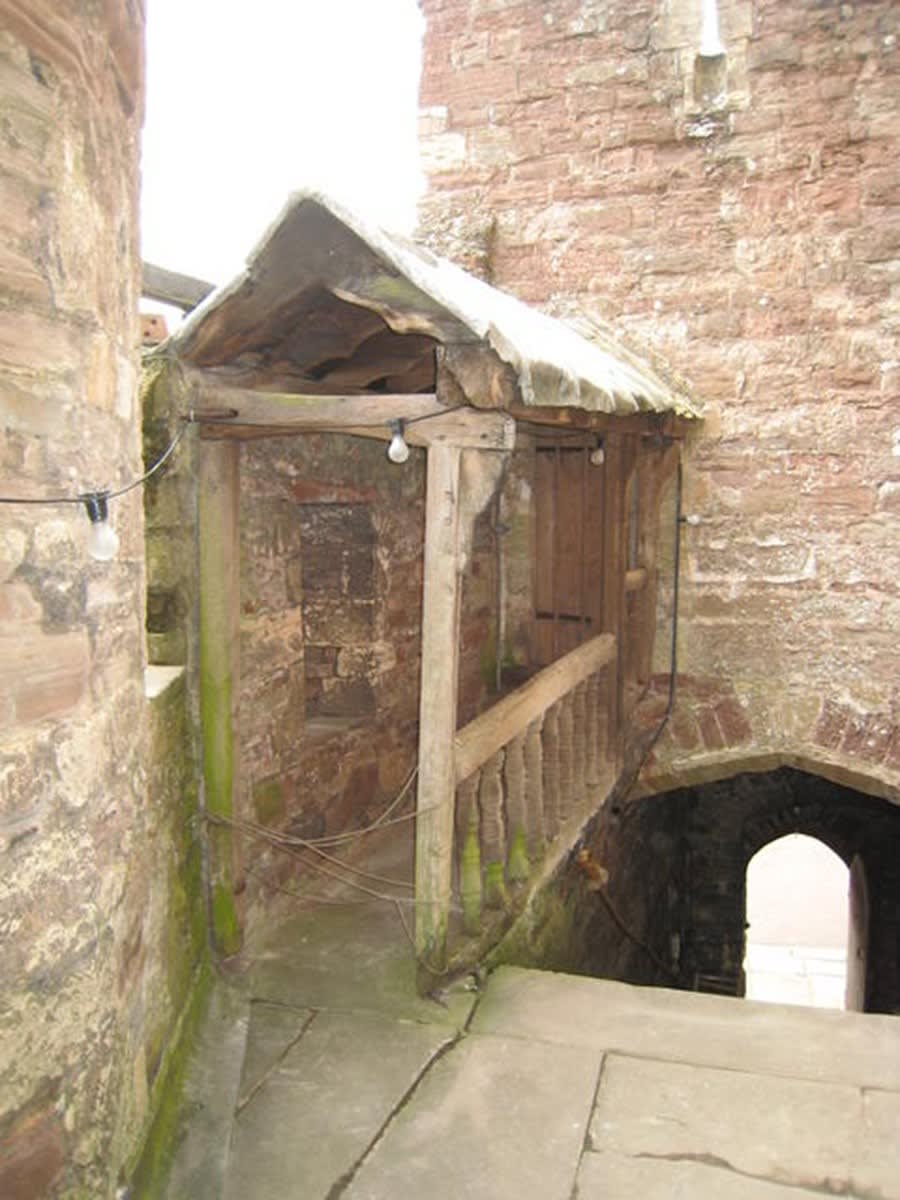
After his deposition Edward was confined at Berkeley Castle. Loyalists repeatedly tried to free him, but plots were uncovered. On 23 September 1327 news reached Edward III that his father was dead.

The manner of Edward II’s death remains one of England’s great historical puzzles. Early sources disagree—some speak of suffocation, others of illness. Some years later, after Mortimer’s execution in 1330, a lurid tale spread of murder with a red-hot iron inserted anally to leave no marks described by the chronicler Geoffrey Baker. Politically useful to justify Mortimer’s fall and blacken the late king, the story is now widely doubted; most historians think Edward was smothered or died after a feigned illness.
A minority theory, the “Fieschi Letter,” claims Edward did not die but escaped to live as a hermit in Europe. Most scholars reject it.
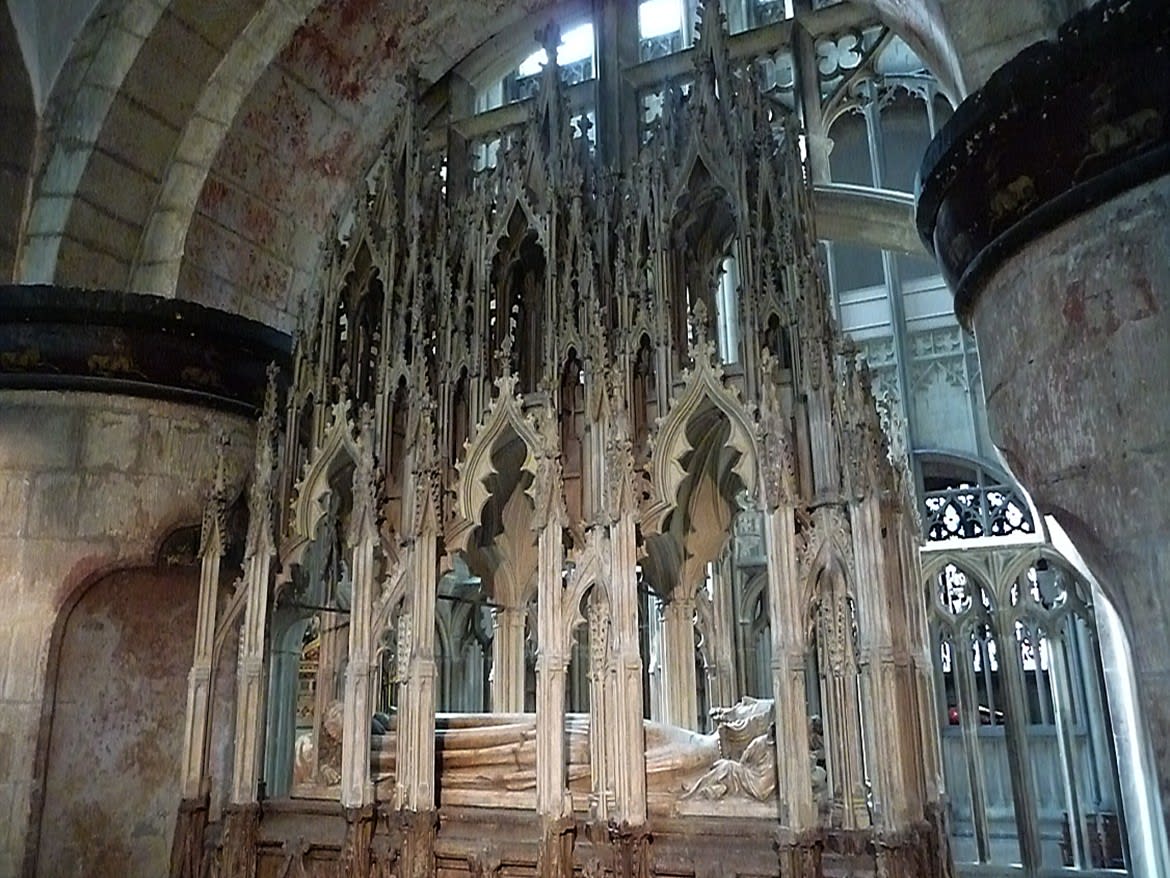
Edward II was buried at Gloucester Abbey on 21 October 1327. His tomb soon became a pilgrimage site perhaps encouraged by monks seeking income and donations funded major rebuilding of the church. Interest in the dead king ran so high that Richard II even sought his canonization.
Historians generally judge Edward II a weak and incompetent ruler who relied on favorites rather than governing himself. Indecisive on great issues yet hot-tempered over trifles, he presided over financial instability, political chaos, defeat in Scotland, and ultimately his deposition and tragic death outcomes rooted in his failure to withstand a powerful nobility.


