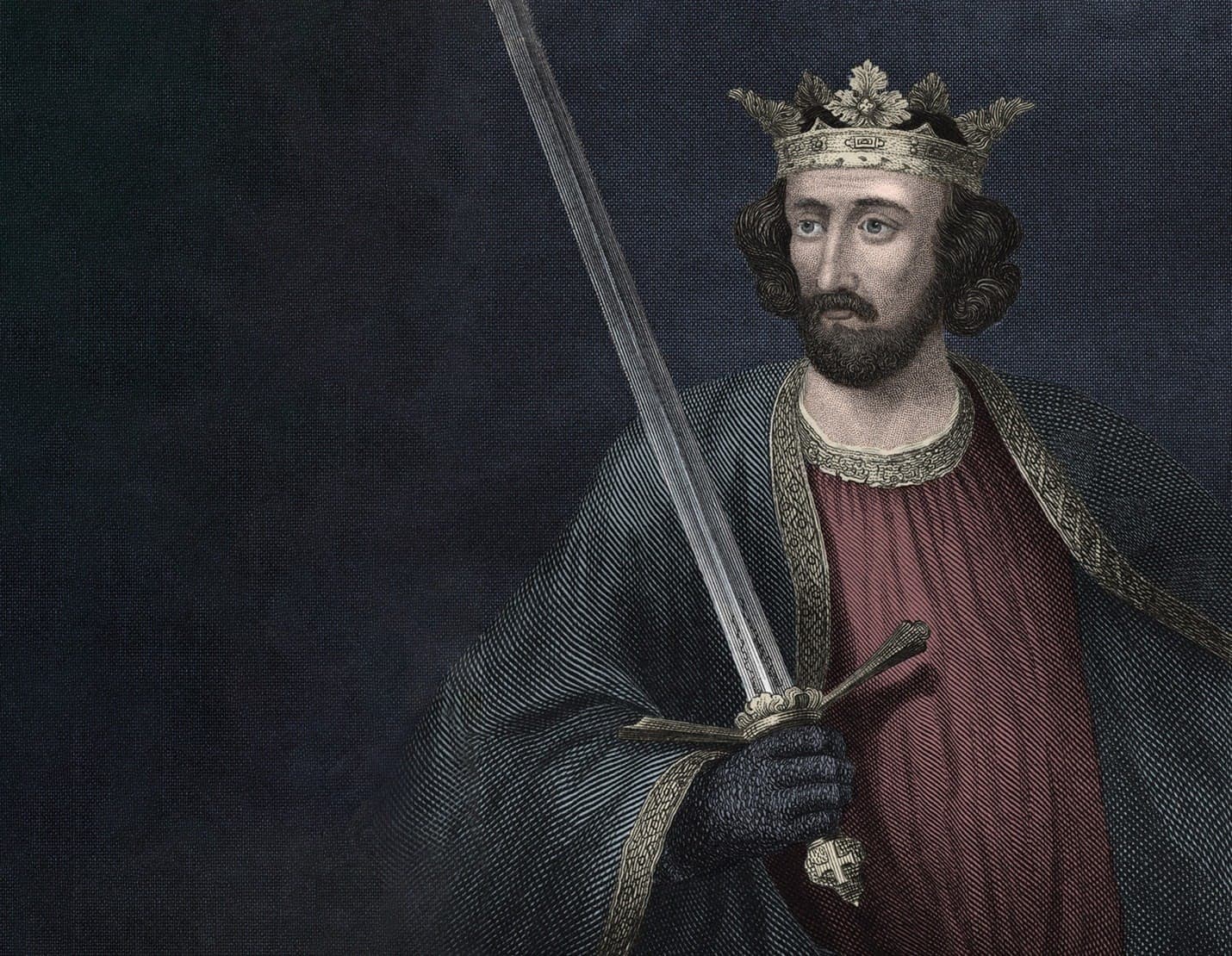

Edward I was born on the night of 17–18 June 1239 at the Palace of Westminster, the eldest son of King Henry III and Eleanor of Provence. From childhood he was robust and strong, though he suffered several serious illnesses.

He was educated by notable figures of the day, and among his childhood friends was his cousin Henry of Almain. In 1254, at age fifteen, Edward married Eleanor of Castile—a political match meant to forestall a Castilian invasion of Gascony. As a wedding gift he received wide estates in Ireland, Wales, and England, as well as Gascony, though real power over these lands remained with his father.
In youth Edward was known for a headstrong, fiery temper. At first under the influence of his mother’s relatives and then his father’s Lusignan half-brothers (“Poitevins”), he soon found himself at odds with much of the English aristocracy—one of the chief challenges of his early career.
In 1258 a group of magnates led by Simon de Montfort imposed the Provisions of Oxford, aimed against the Lusignans and limiting royal authority. Edward initially backed his own faction, then, for pragmatic reasons, shifted to the reformers and even allied with de Montfort—an alliance that proved short-lived. He soon returned to his father’s side as a staunch defender of royal rights.
Civil war (the Second Barons’ War) broke out in 1264. Edward showed talent but inexperience as a commander. At Lewes (14 May 1264) he routed the London contingent of the baronial army, but, carried away in pursuit, left his father’s main force uncovered; the royal army was defeated and Edward fell prisoner to de Montfort.
On 28 May 1265 Edward escaped. Joining the Earl of Gloucester, who had gone over to the king, he won a string of victories. The climax was Evesham in 4 August 1265, where de Montfort’s army was crushed and Simon himself killed. The rebel leader’s death did not immediately end the war; Edward continued campaigning to pacify rebellious regions, earning respect for his resolve and military success.


After the civil war, in 1270 Edward “took the cross” and sailed on the Eighth Crusade to aid King Louis IX. By the time Edward reached Tunis, Louis had died of disease; Edward pressed on to the Holy Land. He landed at Acre in May 1271, then threatened by the Mamluk sultan Baybars. Though his force was small, Edward drew Baybars’s attention with raids; the effort failed, and a ten-year truce was concluded in 1272. After surviving an assassination attempt with a poisoned dagger, Edward decided to leave.

While traveling home he learned in Sicily that his father had died on 16 November 1272. Edward had already become king but did not rush back to England, moving slowly through Europe to settle his French affairs. He was crowned at Westminster on 19 August 1274.
Back in England, Edward immediately moved to restore royal authority. He launched sweeping administrative reforms, replacing officials and investigating abuses. A key aim was to determine which local bodies held their liberties lawfully the Quo warranto inquiries affirmed that all liberties derived from the Crown. He legislated extensively: the Statute of Mortmain (1279) limited land grants to the Church; the Statute of Winchester (1285) strengthened public order, among many others.
His first major military challenge was Wales. In 1277 he declared war on Llywelyn ap Gruffudd, who had refused to do homage. Edward invaded; Llywelyn accepted the Treaty of Aberconwy, ceding much of his lands.
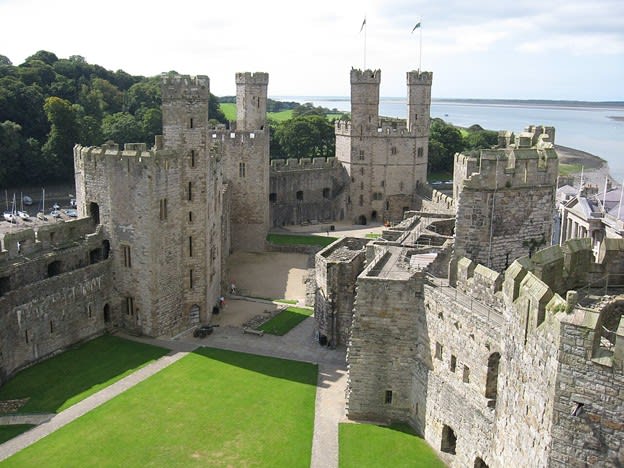
War flared again in 1282. This time Edward aimed at full conquest. Fighting was fierce; Llywelyn was killed, and his brother Dafydd was captured and executed. The Statute of Rhuddlan (1284) annexed Wales to England. Edward began a vast castle-building program under James of St George, raising Caernarfon, Conwy, Harlech, and others. In 1284, at Caernarfon, a son was born to Edward; in 1301 he was created Prince of Wales.

After 1274 Edward never again joined a crusade, though he claimed he meant to. Until 1291 his foreign policy sought to keep the peace in Europe to enable a great expedition east. The fall of Acre in 1291 ended those plans. He then turned against France, chiefly over the status of his Duchy of Gascony, held as a fief of the French crown. In 1294 Philip IV confiscated Gascony after Edward refused to appear to settle a naval quarrel. Edward tried to encircle France with allies in the Low Countries, the Empire, and Burgundy, but the coalitions wobbled. He landed in Flanders in 1297 only to find his partners beaten and soon made peace—an expensive, fruitless venture.
Relations with Scotland had been relatively calm in the 1280s, but in 1286 Alexander III died without a male heir; the crown passed to his granddaughter Margaret, the Maid of Norway. Plans to marry her to Edward’s son collapsed when she died in 1290 en route to Scotland. A succession crisis the Great Cause followed. Fourteen claimants emerged, the chief being John Balliol and Robert Bruce. The Scottish magnates asked Edward to arbitrate; he agreed only if recognized as Scotland’s overlord. In 1292 he chose John Balliol king, then kept summoning him to the English parliament an unheard-of affront. In 1295 the Scots allied with France; Edward invaded. In 1296 he won at Dunbar, deposed Balliol, and carried off the famed Stone of Destiny to England.


Edward’s wars demanded huge funds. He raised money through customs and Italian loans; he also relied on England’s Jews, who practiced moneylending forbidden to Christians fueling public anger. The Statute of 1275 curtailed usury, and in 1290 Edward issued the Edict of Expulsion, ordering all Jews to leave the realm. The move brought him revenue and popularity, but deprived the economy of an important financial resource.
Edward also reshaped parliament. In 1295 he summoned what historians call the Model Parliament, which, besides barons and prelates, included two knights from each shire and two burgesses from each town—broadening consent for taxation vital to his wars.
Heavy fiscal demands triggered a constitutional crisis. In 1297 barons led by Roger Bigod and Humphrey de Bohun refused service in France and demanded confirmation of liberties; facing near-revolt, Edward issued the Confirmatio cartarum.
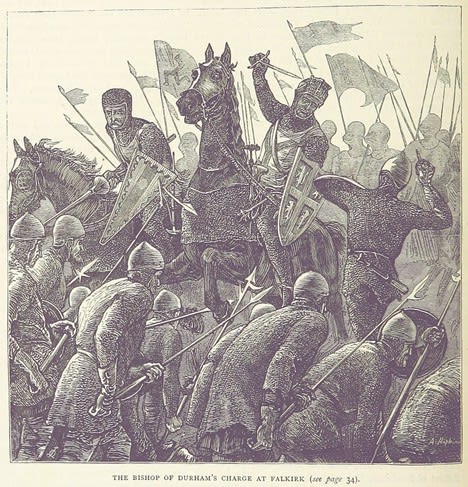
After the English defeat at the Stirling Bridge in 1297 under William Wallace, Edward returned to Scotland and in 1298 beat Wallace at Falkirk, though he failed to crush resistance.

Peace with France in 1303 sundered the Auld Alliance; by 1304 Scotland was largely subdued. But in 1306 Robert Bruce, grandson of an earlier claimant, killed a rival and had himself crowned king, launching a harsher war for independence.
Despite illness, Edward marched north to command in person. On 6 July 1307, en route to the Scottish border, he died of dysentery. His last wish was that his body accompany the army until Scotland was conquered; his son Edward II ignored it. Edward I was buried in Westminster Abbey; Scotland remained unbroken.


