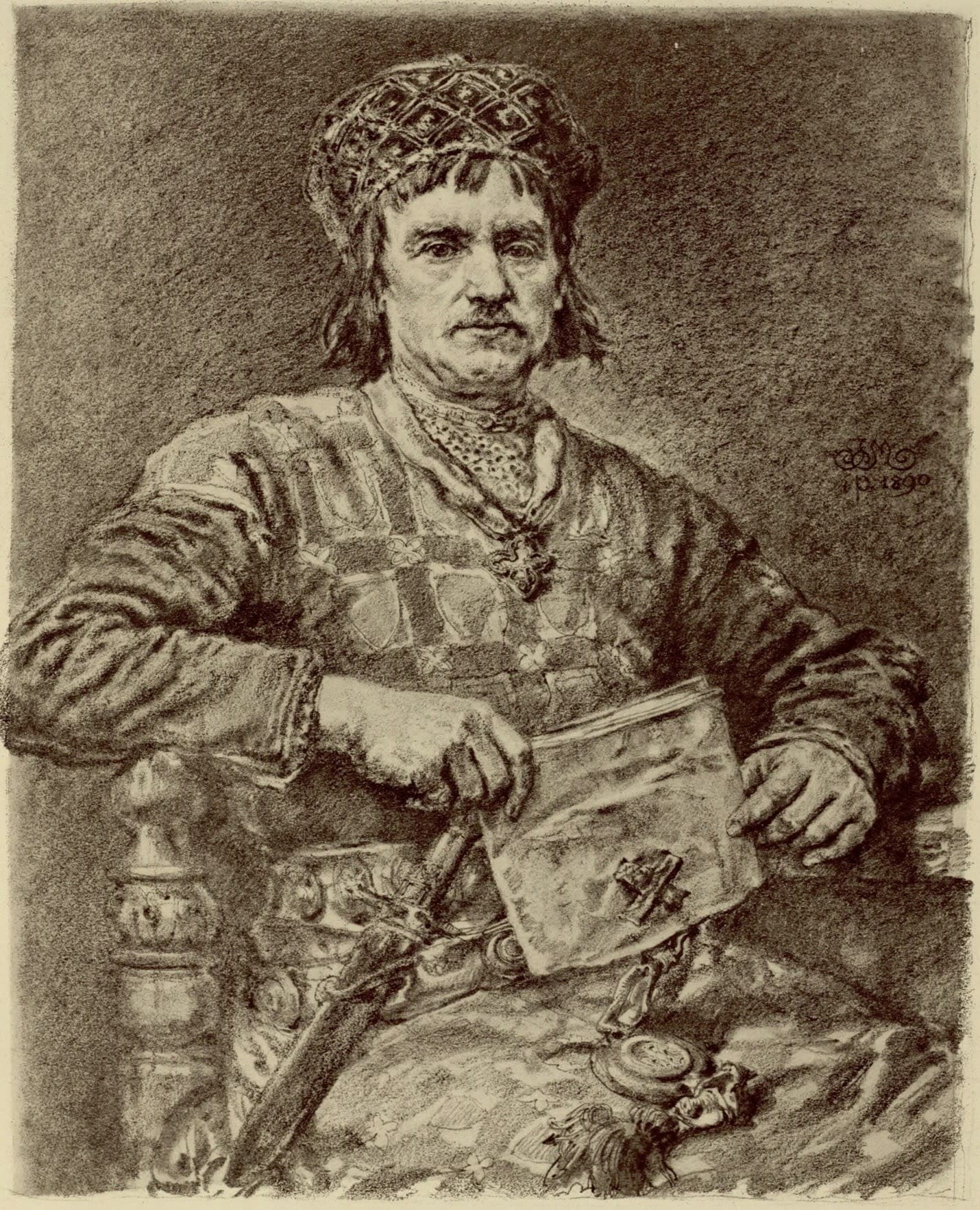
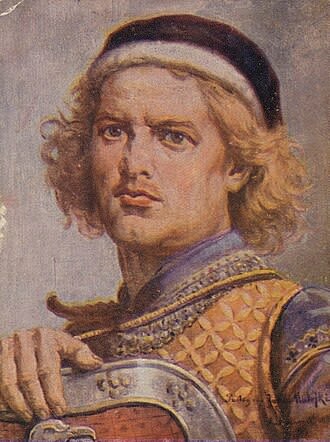
Bolesław was born into the family of High Duke Leszek the White and Grzymisława of Lutsk, but in 1227, when the boy was barely one year old, his father was treacherously murdered during the assembly at Gąsawa. From that moment onward, the young Bolesław became an object of political bargaining. Although the Kraków nobility, led by the voivode and the bishop, wished his mother to serve as regent, this contradicted the agreement of 1217, under which guardianship was supposed to pass to Władysław III Spindleshanks.
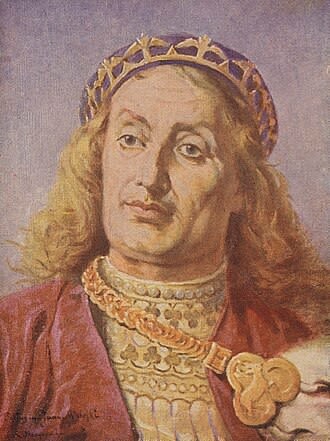
As early as December 1227, Konrad I of Masovia, Bolesław’s uncle, laid claim to the guardianship. After being rejected at Skaryszew in March 1228, he attempted to seize Kraków by force, but failed.
In May 1228, Władysław III Spindleshanks was officially recognized as Bolesław’s guardian. He declared the young prince his heir and granted him and his mother the Duchy of Sandomierz. The political storm, however, was only beginning. Because of a rebellion led by his nephew, Władysław was forced to leave Kraków, transferring his authority there to Henry I the Bearded.
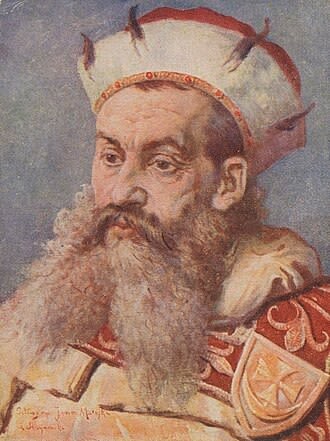
The period from 1228 to 1233 became a time of wandering and humiliation for Bolesław and his mother. Konrad of Masovia never abandoned his efforts to seize power. After the death of Spindleshanks in 1231, Grzymisława, acting in her son’s interests, supported Henry the Bearded.
Enraged, Konrad resorted to extreme measures in 1233: he abducted his brother’s widow and son. They were first imprisoned at Czersk and later transferred to the Benedictine monastery at Sieciechów. There, Grzymisława was subjected to humiliation and was reportedly even slapped publicly by Konrad.
Their liberation came through the loyalty of the Kraków magnates. Voivode Klemens of Ruszcza, acting on the orders of Henry the Bearded, succeeded in rescuing the prisoners.
From 1235 to 1239, Bolesław lived in relative safety at the town of Skała under the protection of Pope Gregory IX, who condemned the violence committed against the princely family.
An important reconciliation took place in 1239. At a meeting in Przedbórz, Konrad of Masovia formally renounced his claims to Sandomierz. There, the thirteen-year-old Bolesław also met his future wife, the fifteen-year-old Hungarian princess Kinga, also known as Kunigunda.
This period of relative peace came to an abrupt end in 1241, when the Mongol invasion swept across Poland. Bolesław, together with his mother and young wife, was forced to flee first to Hungary and later to Moravia, while the Mongols burned Sandomierz and Kraków.
The catastrophe at Legnica, where High Duke Henry II the Pious was killed, once again left Poland without a strong central leader.
After the Mongols withdrew, Konrad of Masovia once again attempted to seize Kraków. His harsh policies and his connections with the Teutonic Knights, however, alienated much of the nobility.
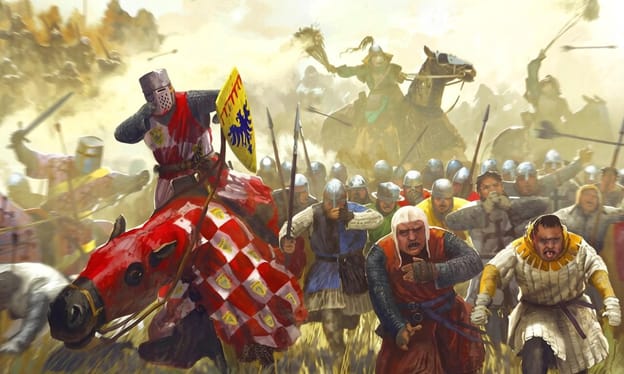
In 1243, the Kraków magnates invited the seventeen-year-old Bolesław to take the throne. The decisive confrontation took place on May 25, 1243, at the Battle of Suchodoły. Forces from Lesser Poland and Hungary under the command of Klemens of Ruszcza decisively defeated Konrad’s army.
This victory firmly established Bolesław V on the Kraków throne.
Bolesław received the epithet “the Chaste” because he and his wife Kinga took a vow of chastity within their marriage, dedicating themselves to the service of God.

Bolesław’s reign was characterized by active foreign policy. His principal ally was Hungary. He supported King Béla IV in his conflicts with Austria and Bohemia and participated in military campaigns connected with the battles of Jarosław in 1245 and Kressenbrunn in 1260.
Even when civil war broke out within Hungary between the king and his son Stephen, Bolesław acted as a mediator, attempting to preserve stability in the region.
The duke was also deeply committed to the Christianization of pagan peoples. He organized campaigns against the Yotvingians in 1248–1249, and after renewed Yotvingian raids, he launched a successful punitive expedition in 1264 in which the Yotvingian leader Komata was killed.
Despite the establishment of a special bishopric at Łuków and papal support for missionary work, the effort to convert the pagan population ultimately failed to produce lasting results.
A second devastating trial came with another Mongol invasion under the commander Burundai in 1259. This time, the Mongol forces were accompanied by troops belonging to Daniel of Halych, once one of Bolesław’s allies.
The duke was again forced to flee, this time to Sieradz, while relations with the Galician princes deteriorated permanently and gave way to years of frontier warfare.
Despite the wars, Bolesław V the Chaste entered history as an important reformer. Understanding that the Mongol devastation had caused enormous demographic and economic losses, he focused on rebuilding and strengthening Poland’s towns.
On June 5, 1257, he granted Kraków municipal rights under Magdeburg Law, providing a major stimulus to trade, urban development, and local self-government. Similar privileges were granted to Nowy Korczyn, Skaryszew, and Jędrzejów.
The duke was also a generous patron of the Church. During his reign, Saint Stanislaus was canonized in 1253, while the Franciscans established a permanent presence in Kraków.
Bolesław also demonstrated political foresight in the question of succession. Having no children of his own, he adopted Leszek the Black in 1265 and designated him as his heir. Bolesław was forced to defend this decision militarily against Władysław of Opole, whom he defeated at Bogucin in 1273.
Bolesław V the Chaste died on December 7, 1279. He was buried in the Franciscan Basilica in Kraków.
He left behind a country recovering from repeated devastation and a flourishing capital which, thanks in large part to his reforms, would remain the political and cultural heart of Poland for centuries.


