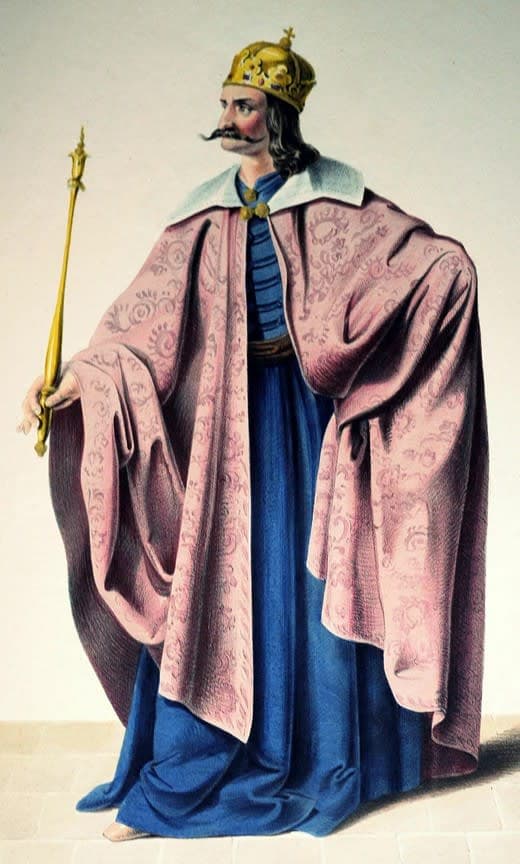

Béla III was born just one year after his elder brother Stephen. However, in the harsh realities of medieval politics, that single year made all the difference. Since he was not the firstborn son of King Géza II, the young prince had no direct claim to the Hungarian throne. It seemed that his destiny had already been determined — to remain forever in the background. In 1161, his father granted him the title of Duke of Croatia and Dalmatia as a consolation.

Yet only two years later, in 1163, Béla's life took its first dramatic turn.
Hungary concluded a harsh peace treaty with the powerful Byzantine emperor Manuel I Komnenos. Béla himself became the guarantor of this fragile peace: his brother, the sixteen-year-old reigning King Stephen III, was forced to send him to Constantinople as an honored hostage.
However, Béla's personal sacrifice for the peace of his homeland soon resulted in another catastrophe.
In 1164, the cunning basileus Manuel used the prince's presence at his court as a pretext for aggression. He launched a war over Béla's so-called "paternal inheritance."
As a result of this campaign, the Byzantine Empire ruthlessly seized Croatia, Dalmatia, and the disputed region of Syrmia from the Kingdom of Hungary, incorporating them into its own territories.

Although he found himself far from home, confined within the golden cage of the Byzantine court, Béla did not allow his spirit to be broken.
On the contrary, he flourished.
The young Magyar grew into a true giant. His height exceeded two meters, and his powerful physique inspired awe even among experienced warriors.
Yet his physical strength was matched by a sharp intellect. He mastered the Greek language, received an outstanding education in Constantinople, and underwent Orthodox Christian baptism, adopting the new name Alexios.
Emperor Manuel, who had no sons at the time, developed a genuine affection for this remarkable young man.
The basileus began to see him not merely as a hostage, but as an ideal successor.
In 1165, this intention was officially announced: Béla received the prestigious title of Despot (δεσπότης), the highest rank after that of emperor, while Manuel's daughter Maria was solemnly declared his fiancée and the future empress.
But fortune had another unexpected turn in store for the prince.
In 1169, the emperor's wife finally gave birth to his long-awaited legitimate son.
Béla's position changed overnight. He was immediately stripped of the title of Despot and his status as heir to the imperial throne, while his engagement to Maria Komnene was officially dissolved.
Nevertheless, Manuel retained his profound respect for his former protégé.
Béla received the more modest, though still highly prestigious, title of Caesar.
In 1170, the emperor arranged his marriage to Agnes de Châtillon, who would become known in Hungary as Queen Anna. She was the maternal half-sister of Empress Maria of Antioch.
Thus, the former hostage and the Byzantine ruler became related through marriage.

On May 4, 1172, King Stephen III died unexpectedly in Hungary.
The death of the young monarch, whose wife was heavily pregnant, provoked a storm of suspicion.
Stephen's son and heir, born after his father's death, survived for only a short time.
Whispers of a double murder spread across Europe: the poisoning of the king and the deliberate killing of his infant son.
The principal suspect in this sinister affair was, of course, Manuel Komnenos.
After the birth of his own son, the emperor had stopped considering Béla as the heir to Byzantium. Instead, he now viewed him as the ideal, completely loyal candidate for the Hungarian throne.
It is entirely possible that the birth of an imperial heir had indirectly contributed to the tragedy that unfolded within the Hungarian royal palace.
Having received generous financial support and a powerful army from Emperor Manuel, Béla returned triumphantly to his homeland.
Yet his path to the throne was not entirely smooth.
He encountered resistance from his own mother, the dowager Queen Euphrosyne, his younger brother Géza, and the influential Archbishop Lucas of Esztergom.
However, this opposition proved short-lived.
Having overcome every obstacle, Béla III was solemnly proclaimed King of Hungary on January 13, 1173.
Initially, the foundation of Béla III's power rested upon Byzantine support.
In exchange for the crown, he swore a solemn oath to Manuel never to wage war or plot against the empire throughout the lifetimes of the basileus himself and his son, Crown Prince Alexios.
Béla faithfully honored his promise.
Only in 1180, after Manuel Komnenos had died, did the Hungarian monarch draw his sword against Constantinople.
Even then, he did so for what he considered a single just purpose: to recover his rightful "paternal inheritance" — Croatia, Dalmatia, and Syrmia.
Manuel had not admired the military abilities of his former protégé without reason.
The new Byzantine emperor, Alexios II, proved incapable of resisting the battle-hardened army of the Hungarian giant.

When the young Alexios II was brutally strangled in 1183 on the orders of his cousin and usurper, Andronikos, Béla considered himself finally released from every oath.
He delivered a devastating blow against Byzantium, forcibly seizing the strategically important cities of Belgrade and Braničevo, along with the prosperous Morava River valley.
The situation changed only after the overthrow of Andronikos and the accession of Isaac II Angelos.
Displaying diplomatic wisdom, Béla III reconciled with the new emperor and gave him his daughter Margaret (Margit) in marriage.
The Morava valley was generously returned to the empire in 1185 as part of the bride's dowry.
From that moment onward, relations with Byzantium remained entirely peaceful.
Béla even provided military assistance to the Byzantines in their struggle against the Serbian župan Stefan Nemanja in 1191.
He also successfully acted as an arbitrator in disputes between Byzantines and Catholics during the Crusades.

On other fronts of foreign policy, Béla III acted with no less determination.
In the border disputes between the Bohemians and Austrians, he consistently supported Bohemia.
This alliance was further strengthened after his death, when, in 1199, his youngest daughter Constance became Queen of Bohemia by marrying Přemysl I Otakar.
The Hungarian king also succeeded in winning the goodwill of the powerful German emperor Frederick I Barbarossa by actively supporting the crusading movement.
Inspired by the shared religious enthusiasm, Béla even took a personal vow to become a crusader, although he never managed to fulfill this promise before his death.

A separate chapter of his reign was devoted to intervention in the affairs of Rus'.
In 1188, rebellious Galician nobles expelled their legitimate prince, Vladimir Yaroslavich.
In desperation, the prince appealed to Béla for assistance.
Hungarian forces captured Halych with lightning speed, but the king decided to pursue his own ambitions.
Instead of restoring the legitimate ruler, he installed his own son Andrew as prince.
However, Hungarian rule in Galicia proved both short-lived and scandalous.
The occupying troops committed unimaginable abuses.
The chronicles indignantly report that the Magyars seized the wives and daughters of local men, taking them "into their own beds," while Orthodox churches were desecrated and converted into stables.
Such sacrilege provoked a powerful uprising among the Galicians as early as 1189.
In 1190, Vladimir Yaroslavich, having escaped from Hungarian captivity, triumphantly reclaimed his principality.

Having consolidated his position on the throne, Béla III imposed strict order within the kingdom, showing no mercy even to his closest relatives.
Upon returning to Hungary, he unhesitatingly imprisoned his disobedient younger brother Géza and sent his own mother, Euphrosyne, into harsh exile in the Holy Land, where she spent the remainder of her life and died in 1193.
In contrast, Béla demonstrated political flexibility toward the religious leaders who had initially supported the opposition led by his mother and brother.
Through both words and actions, he managed to convince the distrustful prelates that his Byzantine upbringing and Orthodox baptism posed absolutely no threat to the Hungarian Catholic Church.
The fate of his brother Géza was filled with adventures.
He twice managed to escape captivity and flee the country, but on both occasions neighboring monarchs — first Leopold V of Austria and then Soběslav II of Bohemia — handed the fugitive back to Béla.
Only in 1189, during a personal meeting with Frederick Barbarossa, who was traveling to participate in the Crusade, did the Hungarian king finally grant his brother the freedom he had long desired, at the emperor's personal request.
Béla provided Géza with two thousand elite warriors and sent him to fight in the Holy Land.
However, this alliance proved short-lived.
As early as November 1189, deeply angered by Barbarossa's negotiations with the Serbs and Bulgarians, Béla ordered his crusading troops to return home immediately.
The Hungarian contingent obeyed, but returned without its commander.
Géza chose to remain permanently in Byzantium, a land that had become all too familiar to him.
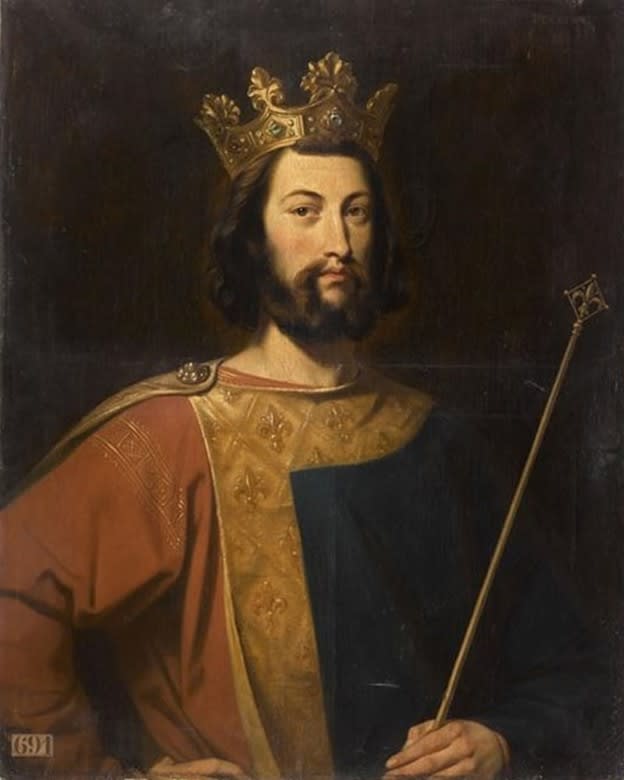
Concerned about the continuity of royal power, Béla prudently arranged the coronation of his eldest son Emeric, born in 1174, as early as 1182.
His aim was to secure his son's unquestionable right to inherit the throne once and for all.
In 1184, the monarch became a widower.
However, just two years later, in 1186, he concluded another brilliant dynastic alliance.
His new bride was Margaret, daughter of the French king Louis VII, who had already buried her first husband — the famous Henry Plantagenet, known as "the Young King."
The years of Béla III's reign are rightly regarded as the period of the greatest prosperity and power of the medieval Kingdom of Hungary.
The country became one of the wealthiest and strongest states in Europe.
While neighboring kingdoms were suffering from feudal fragmentation, Hungary astonished contemporaries with its strict centralization.
Real political authority was concentrated firmly in the hands of the monarch.
Until the end of the twelfth century, Hungarian kings generously granted lands to bans and ispáns in exchange for their service, while carefully ensuring that these estates did not become hereditary possessions.
The enormous royal domain remained the largest and most powerful landholding in the country.
Béla III's personal wealth made him one of the richest rulers of his time.
The royal treasury was continuously replenished through strict monopolies on the extraction of gold and silver, the minting of coins, and the salt trade.
These revenues were supplemented by substantial customs duties, numerous taxes on commerce and river transportation, and regularly collected local levies.
Yet Béla III was more than a successful warrior and a careful administrator of his kingdom's wealth.
The experience of government he had acquired in the magnificent halls of Constantinople, combined with his outstanding education, made him a genuine champion of learning and intellectual development.
He opened the doors of his kingdom to the most advanced knowledge Europe had to offer.
During his reign, young Magyars increasingly traveled to study at the universities of France, Italy, and England.
Literacy began spreading throughout the country.
In 1181, the king issued a landmark decree: from that moment onward, every royal order had to be formally recorded in writing.
This decision provided the impetus for the establishment of a professional royal chancery.
It was there, under the king's patronage, that the anonymous notary known as Anonymus worked, producing Gesta Hungarorum (The Deeds of the Hungarians) — described as the first Latin collection of state chronicles in the country's history.
The crowning achievement of this cultural and architectural flourishing came in 1190, when an enormous construction project began in Esztergom.
There, the first magnificent Gothic cathedral in all of Eastern Europe was being erected, symbolizing the extraordinary prosperity and cultural ambitions of Béla III's Hungary.



