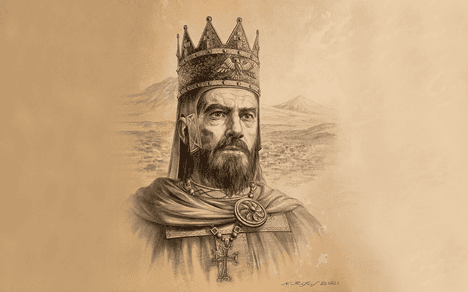
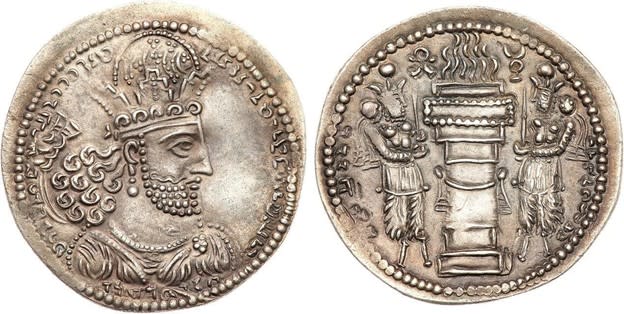
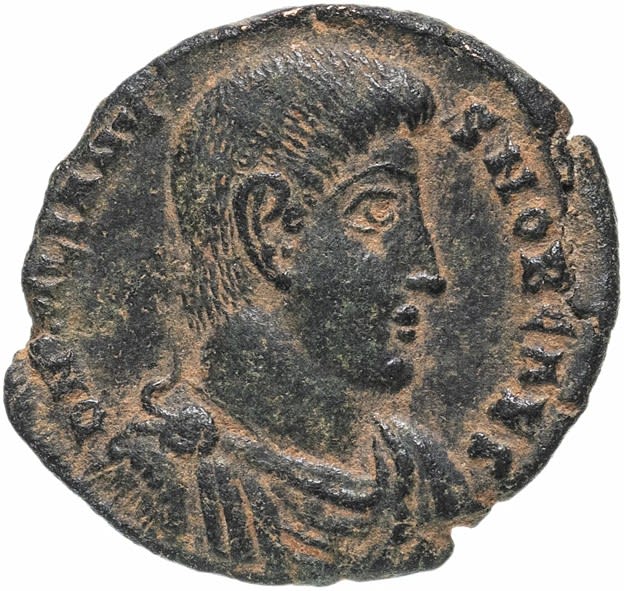
Arsaces II belonged to the Arsacid dynasty (Arshakuni), the Armenian branch of the Parthian royal house. His name, derived from ancient Iranian roots, meant "hero" (or, according to another interpretation, "bear"), a meaning that placed upon him the expectation of living up to the glory of the dynasty's founders. Arsaces was the second son of King Tiran, whose reign ended in catastrophe: during another Persian invasion, Shah Shapur II captured Tiran and had him blinded. According to the historian Faustus of Byzantium, it was this tragedy that brought Arsaces to power. Different estimates place his accession either in 338–339, with the support of Emperor Constantius II, or in 350, when the situation in the region reached a critical point.
The early years of Arsaces II's reign were marked by a period of calm that was rare for the time. Taking advantage of a temporary lull in the Roman-Persian wars, the king focused on strengthening centralized authority. He understood that the greatest threat to the throne came from the disunity and independence of the nakharars — the Armenian hereditary nobility.
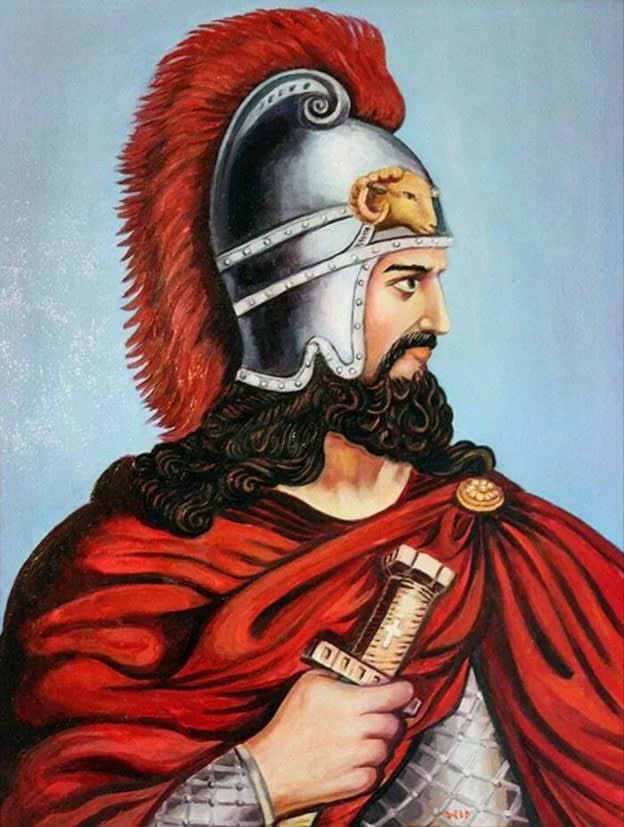
Initially, Arsaces attempted to govern through diplomacy and royal favors. He restored the influential Mamikonian family to the royal court. Vasak Mamikonian, who became a loyal supporter of the king, was appointed sparapet (commander-in-chief), while his brother Vardan became head of the family. However, this unity proved fragile. Soon, the nakharar houses split into pro-Roman and pro-Persian factions. Even the Mamikonian family experienced internal division: while Vasak fought for the king, his brother Vahan defected to the Persian side, for which he was later killed by his own son.
Arsaces' conflicts were not limited to the nobility — he also clashed with the religious authorities, particularly Catholicos Nerses I. Disagreements over Arianism, which the king supported following the example of certain Roman emperors, and Arsaces' desire to restrict Church landownership led to Nerses' exile for almost nine years.
The king's most ambitious and tragic project was the construction of the city of Arshakavan in the province of Kogovit. Arsaces' vision was brilliant in its simplicity and boldness: he wanted to establish a city directly subordinate to the Crown, which would serve as a center of trade and a source of royal revenue. To populate the city quickly, Arsaces proclaimed a universal "right of asylum" for everyone, including slaves fleeing their masters, debtors, and even criminals.
This provoked the fury of the nakharars and the clergy, who were losing their dependent peasants and laborers. Catholicos Nerses condemned the city, while the nakharars, taking advantage of the king's absence, attacked Arshakavan with Persian support. Its civilian population — between 30,000 and 40,000 people — was almost entirely massacred by the traitor Meruzhan Artsruni. Arsaces responded with brutal reprisals, nearly exterminating the Kamsarakan family, but the unity of the country had been irreparably undermined.
In foreign policy, Arsaces II attempted to maneuver between the great powers. In 358, he strengthened his ties with Rome by marrying Olympia, a Greek noblewoman and daughter of the consul Ablabius. However, his relations with his nephews, Gnel and Tirit, ended with their executions. Historians continue to debate whether the motive was jealousy over the beautiful Parandzem (Gnel's widow, whom Arsaces later married) or fears that his nephews might become leaders of a rebellion.
The true test began in 359, when a large-scale war broke out between Shapur II and Rome. Arsaces supported the military campaign of the Roman emperor Julian the Apostate. However, following Julian's death in 363, the new emperor Jovian signed a humiliating peace treaty for Rome. The Romans abandoned their alliance with Armenia, effectively leaving Arsaces alone to face the full might of the Persian Empire.
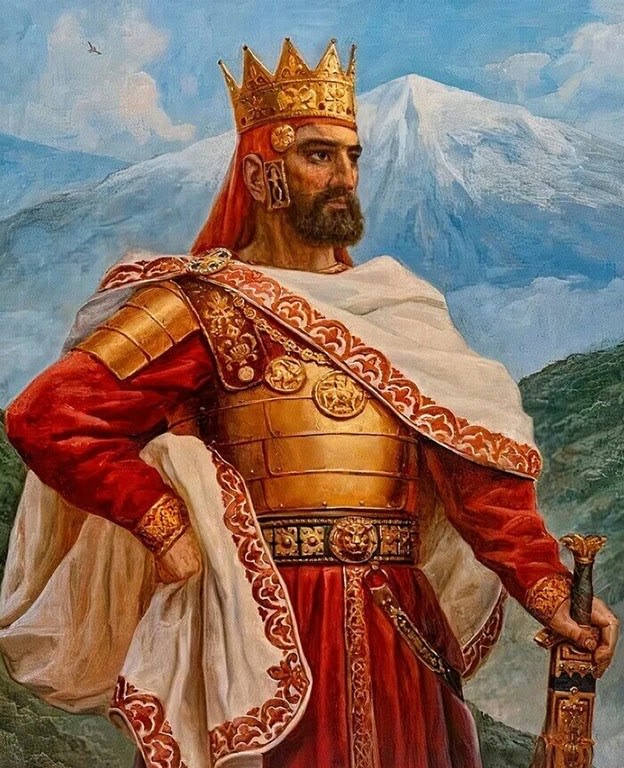
From 364 to 368, Armenia fought an exhausting war. Sparapet Vasak Mamikonian displayed extraordinary heroism, repelling Persian attacks and recovering the remains of Armenia's royal ancestors from plunderers. However, the balance of power was unequal, and internal betrayals continued to multiply.
In 367, hoping to save his country from complete devastation, Arsaces II accepted Shapur II's invitation to travel to Ctesiphon for peace negotiations under guarantees of personal safety. However, the invitation was a trap. Upon arrival, the king was arrested, while his loyal commander Vasak Mamikonian was flayed alive.
Arsaces was imprisoned in the "Fortress of Oblivion" (Anhush Berd, or Anush) in distant Khuzestan. The fortress received this name because the identity of its prisoners was meant to be erased from human memory forever. According to Faustus of Byzantium, in 369 or 370, the king was visited by his former eunuch, Drastamat. Seeing his master's state of despair, Drastamat handed him a knife, with which Arsaces II took his own life. Overcome with grief, Drastamat immediately stabbed himself with the same knife.
Although Armenia was temporarily occupied and devastated after Arsaces' death, his struggle was not in vain. His son Pap managed to escape to Rome and later returned to restore the Armenian throne. Arsaces II remained in history as a symbol of the tragic resilience of a ruler who attempted to build a strong state in the shadow of great empires but ultimately fell victim to geopolitical struggles and internal divisions.


