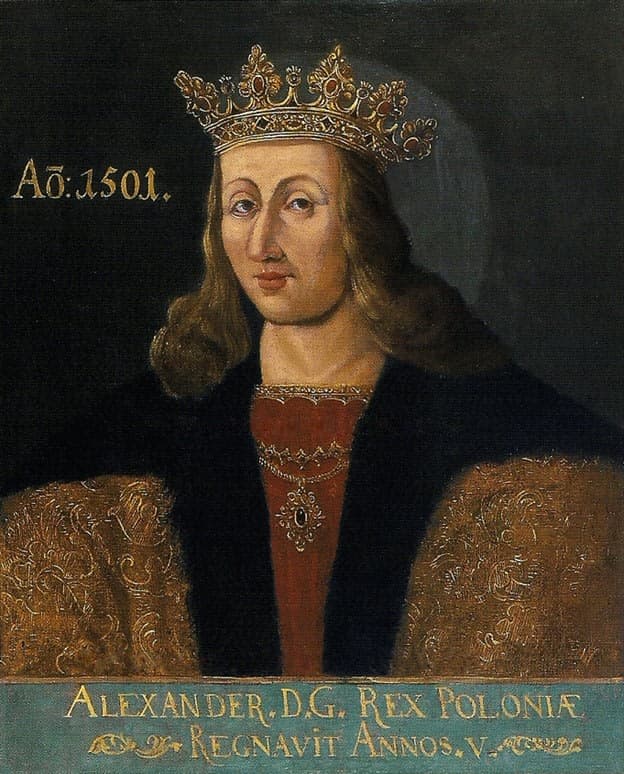
The fourth son of the great Casimir IV and Elizabeth of Habsburg, Alexander was born on August 5, 1461, in Kraków. His education was entrusted to some of the finest minds of the era—Jan Długosz and Filippo Buonaccorsi, known as Callimachus—who instilled in him a love of scholarship, fine arts, and luxury.
Despite his physical strength and imposing appearance, contemporaries often considered him less politically gifted than his brothers, noting his extravagance and tendency to rely heavily on advisers such as Michael Glinski. Nevertheless, he remained in Lithuanian history as the last ruler who could speak the Lithuanian language.
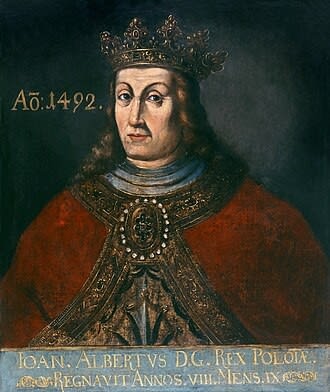
Alexander's path to power began in 1492 when, following his father's death, he was elected Grand Duke of Lithuania. From the very beginning, his reign was overshadowed by the war with the Russian state (1487–1494). Russian troops launched an offensive, capturing Vyazma and the eastern part of the Smolensk region. Finding himself diplomatically isolated and receiving no assistance from neighboring states, Alexander was forced to seek peace.
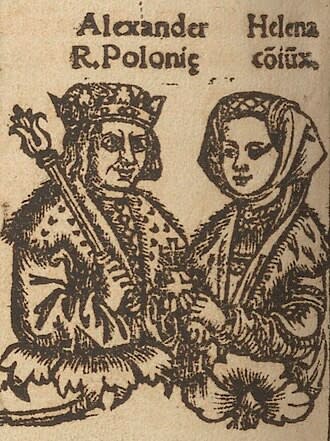
In February 1494, a harsh peace treaty was concluded. Lithuania officially recognized the loss of the Upper Oka principalities and part of the Smolensk region. To strengthen relations between the two states, Alexander married Helena Ivanovna, the daughter of Ivan III.
However, this dynastic marriage did not guarantee stability. On the contrary, it generated new conflicts. Struggling with financial difficulties, Alexander failed to provide his wife with estates appropriate to her status, while the Catholic clergy pressured the Orthodox princess to convert to the Latin faith. Despite these tensions, Alexander remained sincerely devoted to his wife throughout his life.
The late fifteenth century was a period of active efforts to establish new alliances. Alexander firmly suppressed attempts by the Polish Jagiellons to establish a separate Principality of Kyiv for his younger brother Sigismund, thereby protecting the sovereignty of the Grand Duchy of Lithuania.
In 1499, the Union of Kraków and Vilnius was signed, aiming to strengthen the joint defensive capabilities of Poland and Lithuania against the growing threats posed by Moscow, Crimea, and the Ottoman Empire.
Relations with neighboring powers remained extremely tense. Alexander waged trade wars against the Hanseatic League and closed trade routes to Prussia in response to sanctions imposed by the Teutonic Order. Later, however, through the mediation of his brother John Albert, he pursued economic rapprochement with the Germans.
In 1498, he even attempted to claim the Swedish throne, but this venture ultimately proved unsuccessful.
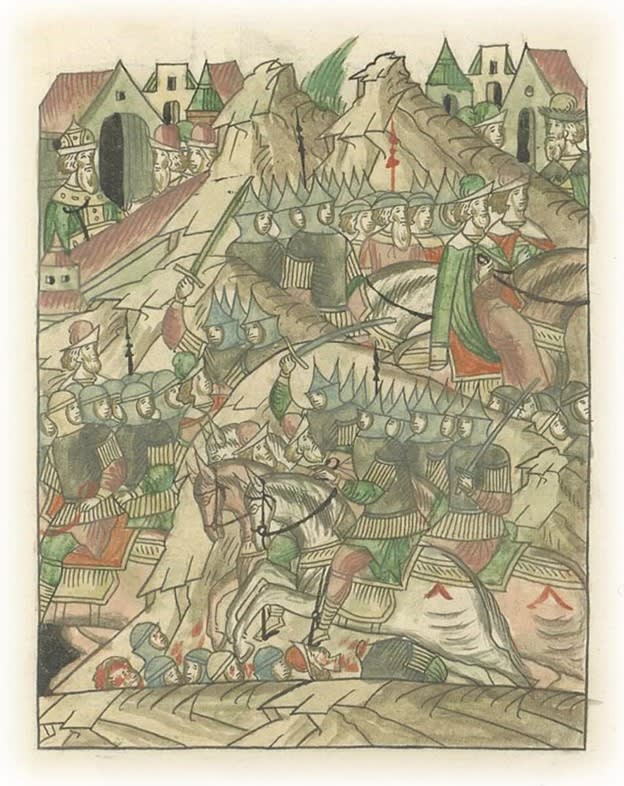
In 1500, another large-scale war broke out with Moscow. The Lithuanian army suffered a crushing defeat at the Battle of Vedrosha, bringing the state to the brink of catastrophe.
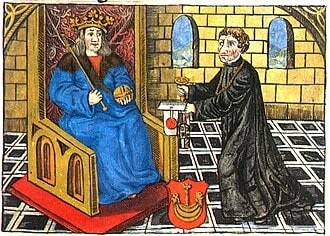
At this critical moment, following the death of his brother John Albert in 1501, Alexander was elected King of Poland. To secure the support of the Polish nobility, he signed the Union of Mielnik and the Privilege of Mielnik, which significantly restricted royal authority in favor of the Senate.
Military operations continued until March 1503, when the six-year Truce of the Annunciation was concluded. Under its terms, Lithuania lost vast territories, including Bryansk, Dorogobuzh, Putivl, and Mtsensk—amounting to approximately one-third of its eastern territories.
The state treasury was exhausted, and the king was forced to mortgage royal lands to powerful magnates.
Alexander's domestic policies laid the foundations for what would later become known as "noble democracy."
As early as 1492, he had issued a general privilege in the Grand Duchy of Lithuania, under which the Grand Duke effectively could not make important decisions without the consent of the Council of Lords.
In Poland, the development of representative government reached its peak at the Sejm of Radom in 1505. It was there that the famous constitution Nihil novi ("Nothing New") was adopted.
"Since general laws concern not an individual person but the entire nation, from now on and henceforth nothing new may be enacted by us or our successors without the common consent of the senators and the deputies of the lands."
This act definitively transferred legislative authority into the hands of the Sejm, transforming Poland into a representative monarchy of the estates, a political system that was distinctive in Europe at the time.
During the same period, Grand Chancellor Jan Łaski prepared the first comprehensive collection of laws, known as Łaski's Statute, which codified Polish law.
In social and religious affairs, Alexander pursued controversial policies.
In 1495, seeking religious uniformity and, as some historians believe, attempting to eliminate enormous state debts owed to creditors, he ordered the expulsion of Jews from the Grand Duchy of Lithuania.
However, in 1503, recognizing the economic importance of their capital and expertise, he permitted them to return, restored their rights, and returned their confiscated property.
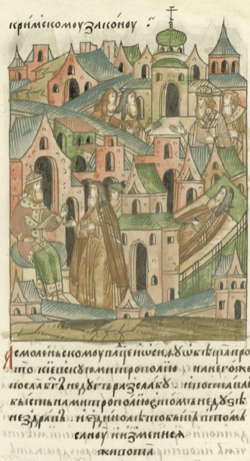
In religious matters, the king attempted to implement the principles of the Union of Florence, hoping to unite the Catholic and Orthodox Churches under the authority of Rome.
With the support of Metropolitan Joseph Bolharynovych, steps were taken toward rapprochement between the two confessions. However, the attempt failed because of the Vatican's uncompromising position, which demanded complete submission, as well as resistance from the Orthodox population.
At the same time, Alexander remained a generous patron of religious institutions, founding Bernardine monasteries in Grodno and Polotsk.
In 1505, Alexander suffered a stroke that left him paralyzed. Despite his illness, he continued to participate in affairs of state.
In the summer of 1506, already on his deathbed in Vilnius, he drew up a will in favor of his brother Sigismund.
During the final days of his life, news arrived of Michael Glinski's great victory over the Crimean Tatars at the Battle of Kletsk.
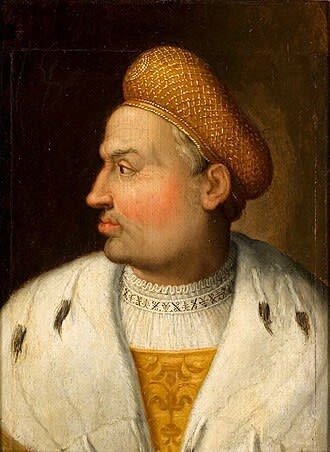
Portrait of King Sigismund I of Poland. Attributed to Hans von Kulmbach. Between 1511 and 1518. National Museum, Poznań.
Alexander Jagiellon died on August 19, 1506, at the age of 45. He became the only Polish king to be buried in Vilnius, in the Cathedral of Saints Stanislaus and Ladislaus.
Historians have offered conflicting assessments of his personality and achievements. Nikolay Karamzin criticized him for his inability to be "either a friend or an enemy of Moscow," while Edvardas Gudavičius noted that, despite his lack of exceptional talents, Alexander was a ruler who keenly understood the need for change and dialogue between the estates.
His reign marked an important turning point in Polish-Lithuanian history, paving the way for the "Golden Age" of Sigismund the Old.


