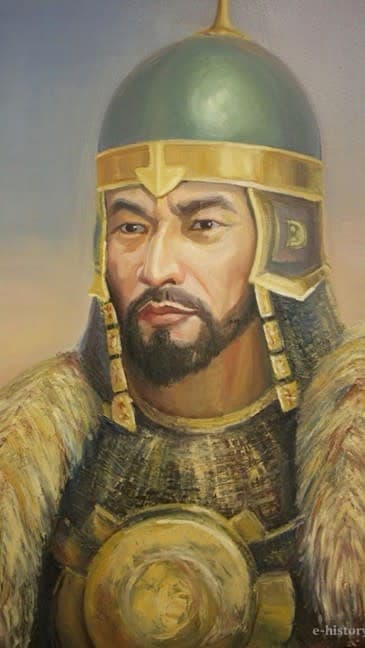
Khaqnazar Khan was the son of the great Qasym Khan and became one of the key figures in the history of the Kazakh Khanate. After a period of decline that followed his father’s death in 1521, the Kazakh Khanate had become fragmented and weakened. But with Khaqnazar’s accession to the throne in 1538, a new era of revival began. His rule, which lasted for more than forty years, marked the restoration of the khanate’s former power and the reunification of the scattered Kazakh tribes.
Khaqnazar Khan was an experienced warrior and strategist. From the very beginning of his reign, he pursued an active foreign policy aimed at expanding and protecting Kazakh lands. In 1548–1549 he fought the Turkmen but suffered defeat. However, by 1554 he had achieved several victories over the Oirats.
His struggle against the Moghul khans was particularly significant. In 1556, sources mention a defeat of the Moghuls by the “Kazakh and Kyrgyz khan,” who was most likely Khaqnazar. This victory strengthened his authority among neighboring peoples, including the Kyrgyz.


In the west, he actively confronted the Nogai murzas, who frequently complained to Russian Tsar Ivan IV about the growing power of the Kazakhs. In 1563, Khaqnazar won a victory over Kuchum Khan, the ruler of Siberia, which made him a serious rival to that powerful leader. Russian envoys visiting the region noted that Kuchum feared Khaqnazar might seize Siberia and stop paying tribute to Moscow.
Under Khaqnazar, the territory of the Kazakh Khanate expanded significantly. He not only reunited the divided Kazakh tribes but also brought under his authority the Bashkirs, Karakalpaks, and Kyrgyz. The influence of the Kazakh Khanate reached the Ural and Volga rivers. He managed to reclaim key cities along the Syr Darya, including Turkestan, Sygnak, Sauran, Sairam, and Taraz.
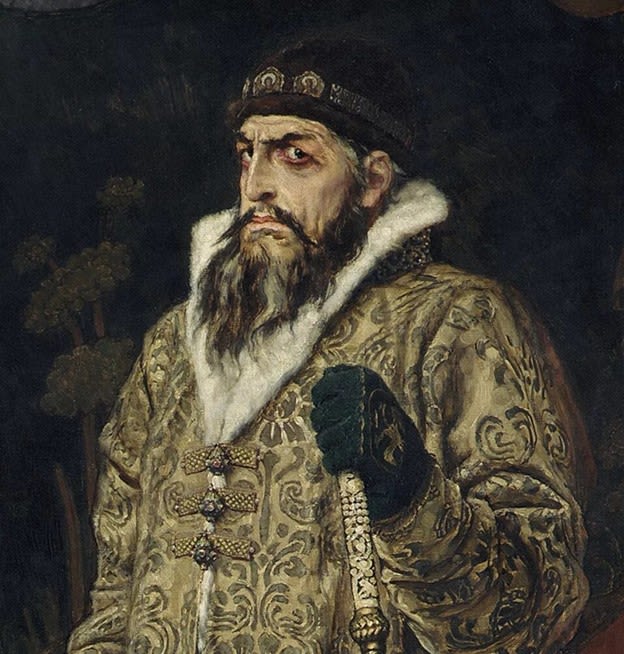
Khaqnazar Khan actively developed diplomatic relations with neighboring states. In 1573, at the request of the Stroganov merchants, Tsar Ivan the Terrible sent the first official Russian embassy to Khaqnazar, proposing a military alliance against Kuchum Khan. Although the embassy was captured en route and failed to reach its destination, Ivan the Terrible nevertheless granted the Stroganovs the right to duty-free trade with the Kazakhs, marking the beginning of new political and commercial ties.

Relations with the Shaybanids were complex, alternating between military conflict and cooperation. Khaqnazar supported Abdullah II in his struggle against the rebel Baba Sultan. This support played a decisive role in the rebels’ defeat, although later Baba Sultan attempted to assassinate Khaqnazar after learning of his conspiracy.

The exact circumstances of Khaqnazar’s death are not recorded, but references to him disappear after May 1580. It is likely that he was killed as a result of a plot against him. After his death, his cousin Shygai Khan became ruler. Khaqnazar Khan was buried in the Karabura Mausoleum.
The reign of Khaqnazar marked a turning point in the history of the Kazakh Khanate. He not only restored its unity and power but also expanded its borders, transforming it into one of the most influential states in the region.


