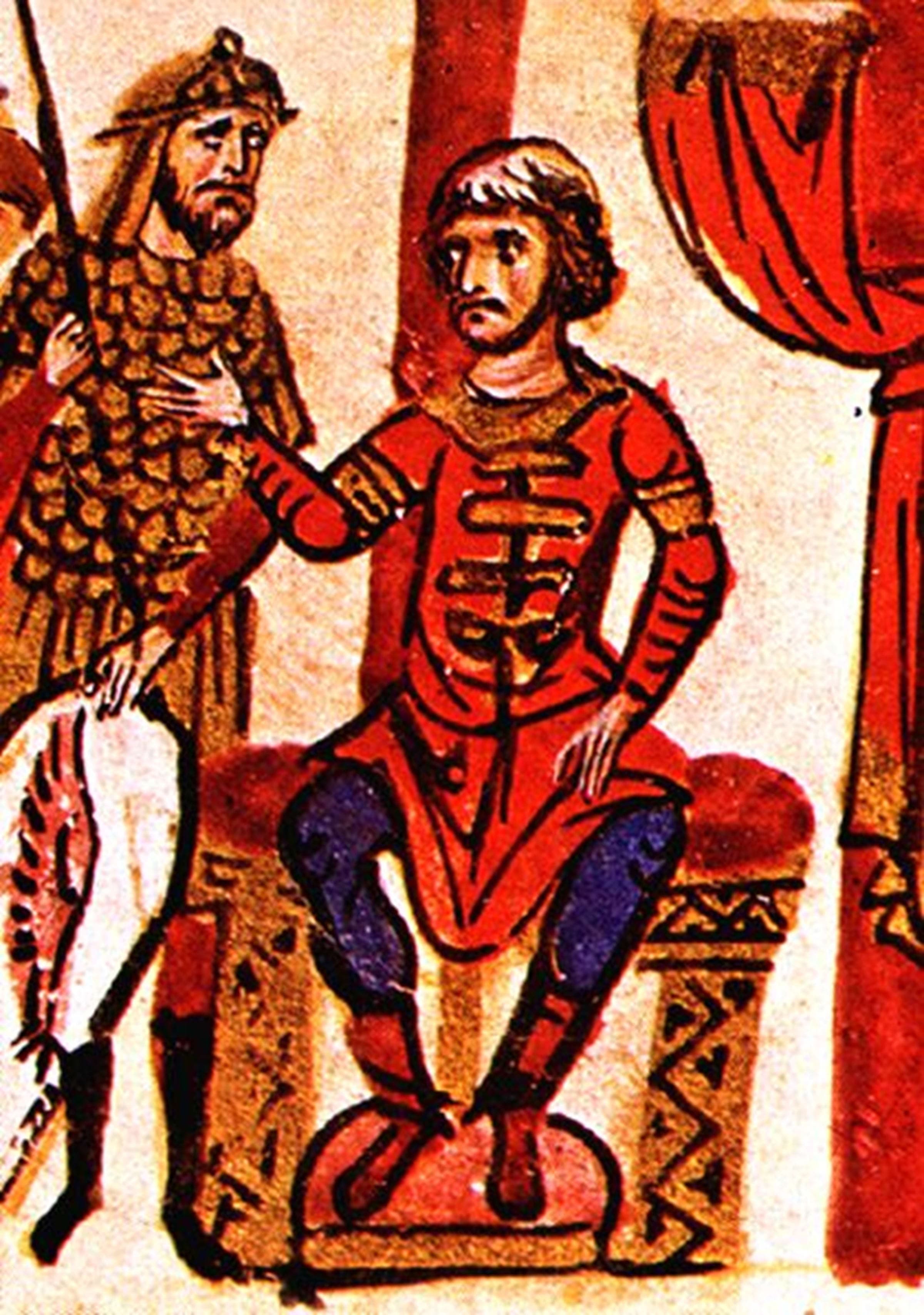

The reign of Khan Omurtag, who entered history with the grand title of "the Builder," began in an atmosphere of profound uncertainty and political turmoil. Following the sudden and still mysterious death of his father, Khan Krum, in 814, the Bulgarian Khanate found itself at a crossroads. The enormous army and sophisticated siege engines prepared for the conquest of Constantinople stood idle, awaiting an order that never came. During this period, according to historical accounts, power passed into the hands of three military commanders — Dukum, Ditseng, and Tsok. Whether they ruled successively or formed a kind of triumvirate remains a subject of debate, but this period of instability was short-lived. As Professor Vasil Gyuzelev notes, it was Omurtag who managed to stabilize the ruling elite and assume responsibility for the fate of the state at one of the most critical moments in its history.

The legacy Omurtag inherited from his father was a difficult one: the unfinished war with Byzantium demanded decisive action. In the same year, 814, the khan continued devastating Byzantine territories, but fortune turned against the Bulgars. In the decisive Battle of Mesembria, the forces of Emperor Leo V inflicted a significant defeat on the Bulgarian army. This military setback forced Omurtag to change his strategy. Recognizing the need for a period of peace to carry out domestic reforms, he agreed to sign a peace treaty in the winter of 815–816. This agreement, intended to last thirty years, became the foundation of regional stability.

Relations with Constantinople took an unexpected turn in 820, when, following the assassination of Leo V, Michael II the Amorian ascended the Byzantine throne. The Byzantine world was shaken by the rebellion of Thomas the Slav, who besieged the imperial capital by land and sea in 821. At this critical moment, Omurtag demonstrated his political foresight and loyalty as an ally: he came to the aid of Michael II and defeated the rebels, demonstrating that Bulgaria was not merely a neighboring state but also a guarantor of stability in the Balkans.

While peace prevailed in the south, a storm was gathering along the northwestern frontiers. In 818, the Slavic tribes — the Eastern Abodrites, Braničevci, and Timočani, who inhabited the middle reaches of the Danube — decided to break away from the Bulgarian state. They sought protection from the powerful Frankish emperor Louis I the Pious. Omurtag, who preferred diplomacy to brute force whenever possible, conducted unsuccessful negotiations with the Franks until 826.

Realizing that diplomacy had reached its limits, the khan turned to military action. The campaigns of 827 and 829 in the middle Danube region ended in triumph for the Bulgarian forces. Omurtag not only regained the lost territories but also radically transformed their system of governance. He removed rebellious Slavic princes and replaced them with his trusted officials, such as Prince Ratimir in Pannonian Croatia, and established five military-administrative districts (civitates). The Franks had little choice but to recognize the new status quo and sign a peace treaty in 830.
Omurtag's domestic policy focused on the centralization of power. The bitter experience of the Danubian Slavic uprising convinced him of the need to abolish their autonomy. He implemented a large-scale administrative reform, dividing the country into districts known as comitates, governed by officials called comites, whom he personally appointed. At the same time, the army underwent significant reforms: it now consisted of a permanent professional military force and a militia that was mobilized only under exceptional circumstances.
However, the khan's true passion was construction. After Emperor Nikephoros reduced the capital, Pliska, to ruins in 811, Omurtag rebuilt it from the ashes, making it even more magnificent than before. A new palace, a pagan temple, and powerful fortifications rose within the city.
"The great Khan Omurtag, while residing in his old palace, built a magnificent house on the Danube... However well a man may live, he dies, and another is born. And let the one born after us, upon seeing this, remember its creator."
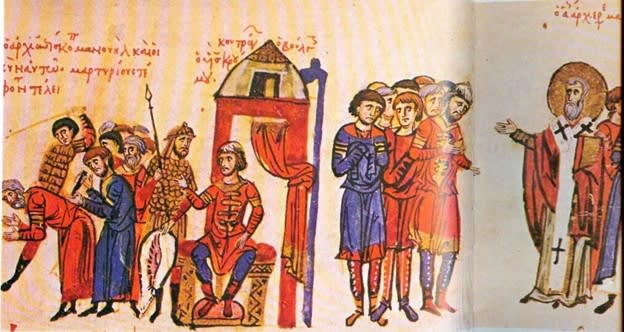
Despite his wisdom in state administration, Omurtag remained a strict conservative in matters of religion. Christianity was perceived by the ruling elite as an "ideological weapon" of Byzantium, undermining the foundations of Bulgarian society. Severe persecutions followed, claiming the lives of more than 370 prominent Christians, including Bishop Leontius of Nicaea and the military commander John.
The tragedy of religious persecution also affected the khan's own family. His eldest son and heir, Enravota, openly sympathized with Christians and was consequently deprived of his right to the throne. His fate was sealed: after his father's death, he was executed, becoming the first Bulgarian martyr.
Omurtag left behind a powerful, centralized state with clearly defined borders and magnificent architecture. However, the question of the Bulgarian people's spiritual future remained unresolved, foreshadowing the great transformations that would take place during the reign of Boris I.


