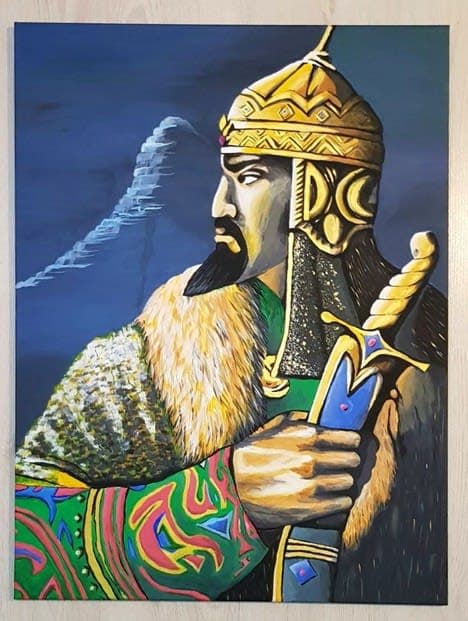

Kenessary Kassymov was one of the most significant figures in the history of the Kazakh Khanate. The son of Sultan Kasym-töre and his wife Aikumis, Kenessary came from the noble line of Abylai Khan. From early childhood he learned the basics of governance and the art of war, standing out among his peers and siblings such as Bopai, an active participant in the uprising, and the brave batyr Nauryzbai.
In 1822, Emperor Alexander I of the Russian Empire issued the “Statute on the Siberian Kirghiz,” which abolished khanly authority in the Kazakh zhuz (tribal confederations). This reform, developed by M. M. Speransky, provoked sharp discontent among the Kazakh aristocracy, which sought to preserve the traditional way of life. The Kasymov family offered the most stubborn resistance. Kenessary’s father, Kasym, together with his relatives, withdrew into the territory of the Kokand Khanate, from where they conducted raids on Russian fortifications and on auls (villages) that had accepted Russian administration.

Continuing the cause of his father and his brother Sarzhan, Kenessary first tried to resolve conflicts with the Russian Empire by diplomatic means. He corresponded with the Russian authorities, including Tsar Nicholas I. However, realizing that peaceful means were exhausted, he began to prepare carefully for military action. His chief aim was not only to halt Russia’s advance deep into the steppe and to destroy its forts, but also to restore an independent Kazakh Khanate like that of his grandfather, Abylai Khan.
The longest and largest national-liberation uprising of the 19th century under Kenessary’s leadership encompassed the territories of all three Kazakh zhuz. In May 1838, his forces besieged and took the Akmolinsk fortification (on the site of present-day Astana), and then waged active guerrilla warfare.
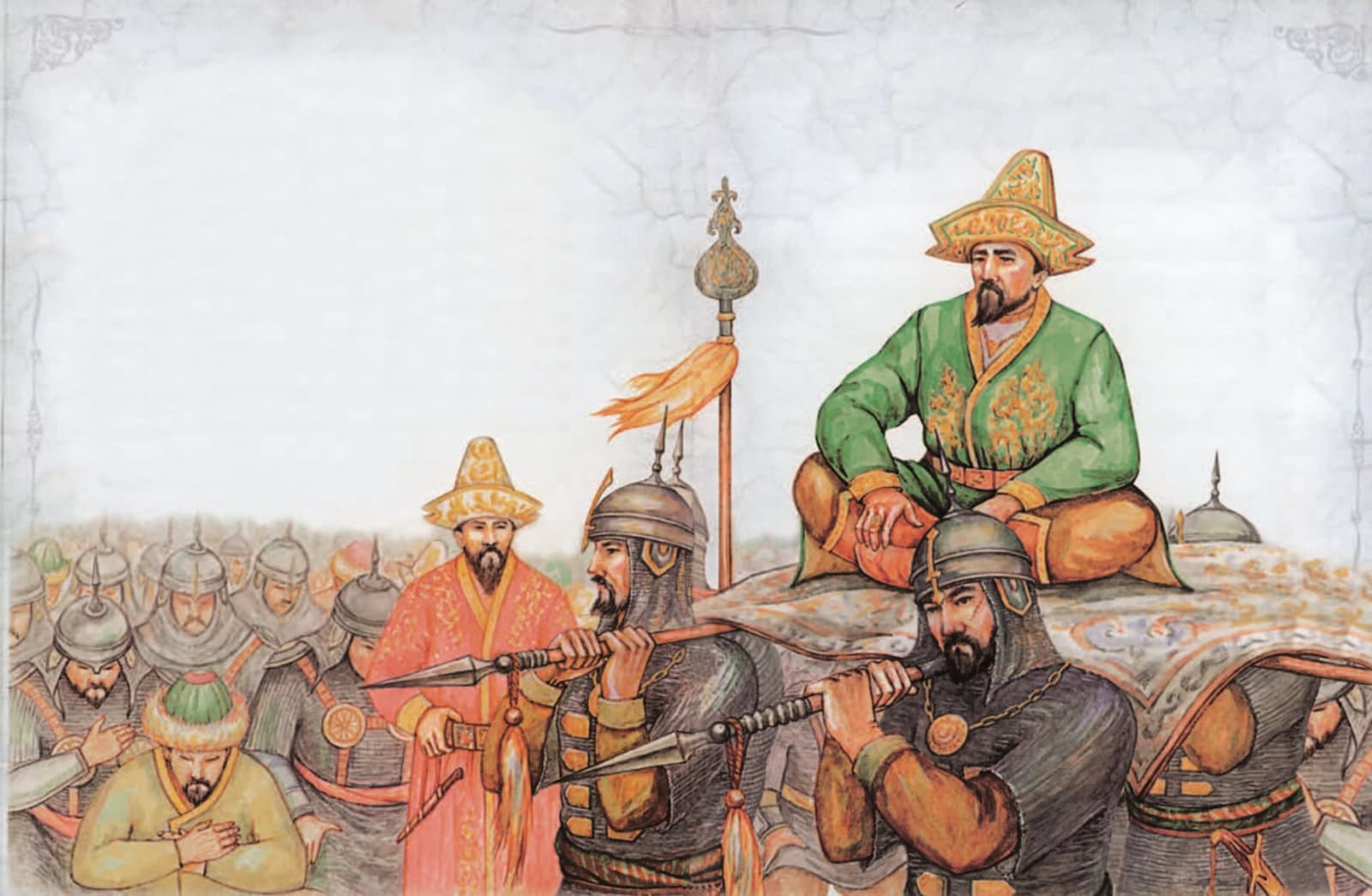
In September 1841, at a kurultai held near the Torgai River, representatives of the three zhuz elected Kenessary as khan, thereby proclaiming the revival of a unified Kazakh state. He restored the biys’ courts (customary courts), introduced a tax system based on sharia norms, and actively consolidated his power. In 1842–1843 the Bukharan emir Nasrullah also recognized Kenessary as khan of the Kazakhs.

In foreign policy Kenessary maneuvered among the Central Asian khanates. He sought support from Bukhara and Khiva, and also fought on two fronts against the Russian Empire in the north and the Kokand Khanate in the south. In 1845–1846 his troops captured a number of Kokand fortresses, including Sozak and Merke.

Despite these successes, the uprising faced serious difficulties. Kenessary pursued a harsh policy toward auls loyal to the Russians, which caused discontent among the local population. Many Kazakh sultans who had supported the uprising at earlier stages later betrayed him. In 1846, sultans of the Senior Zhuz swore allegiance to Russia and agreed to conduct joint operations against Kenessary.
Driven by Russian forces from the territories of the Junior and Middle Zhuz, Kenessary was forced to move into Kyrgyz lands. He tried to subjugate the Kyrgyz tribes and negotiated with their manaps (chieftains) about joint struggle against the Russians, but was refused. Demanding that the Kyrgyz “perform the rites of submission” and threatening them, Kenessary provoked a conflict.
In April 1847, Kenessary invaded Kyrgyz lands with a 15,000-strong army, carrying out brutal repressions. The Kyrgyz manaps, in turn, began preparing to fight Kenessary. In the decisive battle, which took place in the locality of Maitübe–Tekeliktiin Seniri, part of Kenessary’s forces deserted, and the remainder was routed.
Kenessary was captured by the army of Ormon Khan and, after several months, executed. The khan’s head was cut off and sent to the Russian authorities as proof of his death.

The death of Kenessary Kassymov marked the final liquidation of Kazakh statehood. In 1847, Kazakh sultans and Kyrgyz manaps concluded a peace treaty that put an end to the conflict.
For a long time, the fate of Kenessary’s remains remained unknown. However, according to recent data, after historical-ethnographic and genetic examinations, it was established that the skull kept in one of Omsk’s museums more than 90% likely belonged to Khan Kenessary.
Kenessary Kassymov went down in history as the last Kazakh khan, who devoted his life to the struggle for the independence and unity of his people. He left a deep imprint in popular memory, becoming a symbol of the Kazakh nation’s liberation movement.


