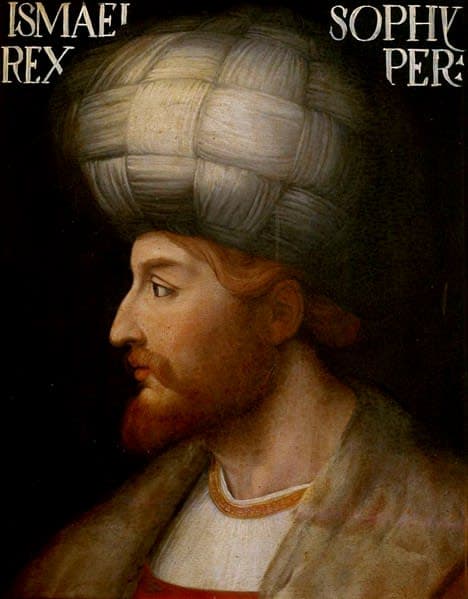
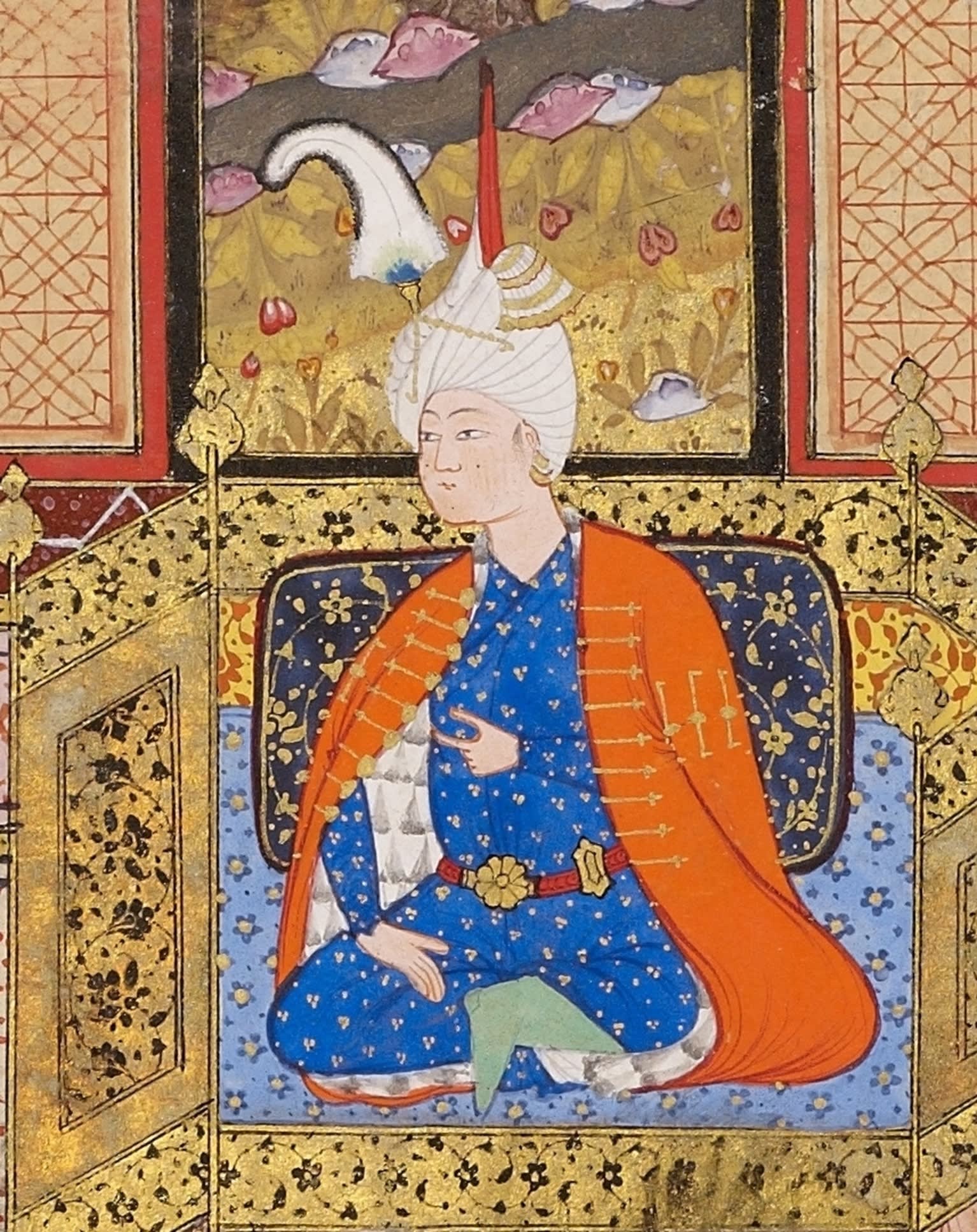
Ismail Mirza was born on July 17, 1487, in Ardabil, into the family of Sheikh Haydar, head of the Safaviyya Sufi order. According to legend, his fate was foretold in infancy: his fists were clenched and covered in blood, a sign taken to portend future martial glory.
At the age of one, on July 1, 1488, Ismail experienced tragedy when his father was killed in battle against the forces of the Shirvanshah. Soon after, Ismail, his mother, and his brothers were imprisoned in the fortress of Istakhr by order of the Aq Qoyunlu sultan Yaqub Mirza, who feared the growing influence of the Safavids. They were held for nearly four and a half years, until in 1493 another Aq Qoyunlu ruler, Rustam Mirza, set them free.
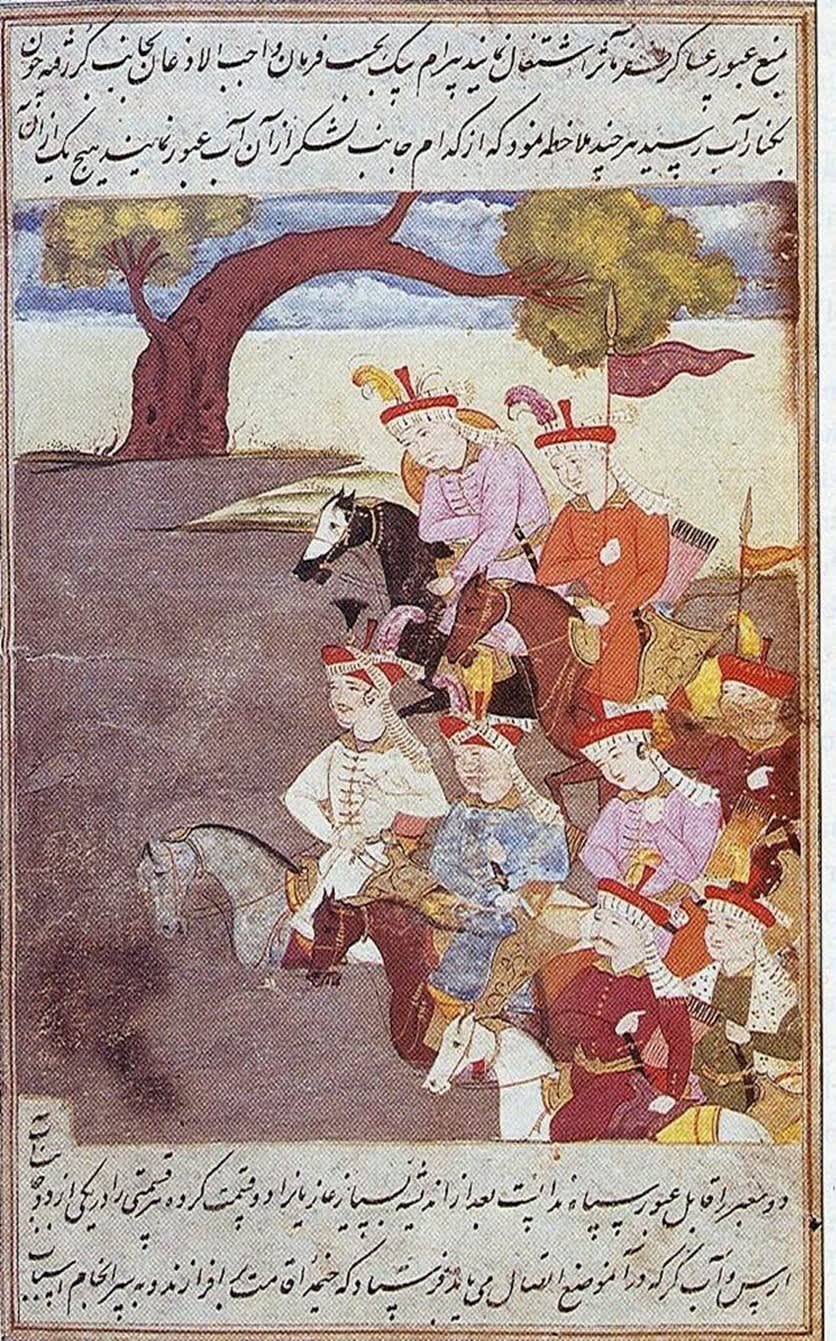
Ismail’s elder brother, Sultan Ali, was proclaimed the new leader of the Safavids. He joined Rustam Mirza in the struggle against his rival Baysunghur and played a key role in his defeat. Yet the Safavids’ rising power again aroused Rustam’s suspicions, and he decided to kill Sultan Ali. Sensing his death was near, Sultan Ali named Ismail his successor and blessed him to avenge their forebears. Soon thereafter, in 1494, Sultan Ali fell in battle against a detachment of Rustam Mirza.
Left on his own, Ismail found himself in mortal danger. His mother hid him in the mausoleum of Sheikh Safi al-Din in Ardabil. To elude pursuit, Ismail spent several years concealed in the homes of followers and eventually found refuge at the court of Karkiya Mirza Ali, the ruler of Lahijan. There, far from his enemies, he was educated and studied the Qur’an as well as the Persian and Arabic languages.
When Rustam Mirza learned where Ismail was hiding, he repeatedly demanded his surrender, but Karkiya Mirza refused. Finally, in July 1497, Rustam Mirza was slain by his cousin, and Ismail’s life became calmer.
In August 1499, at the age of twelve, Ismail made a fateful decision. Despite the counsel of his patron Karkiya Mirza who considered him too young Ismail left Lahijan. He set out to avenge his ancestors and put an end to the civil war in Iran.
His route led through Tarom and Khalkhal to Ardabil, where he visited his father’s mausoleum. At first he had only a few hundred followers, but the rumor of the “son of Sheikh Haydar” spread quickly. Nomad warriors from various tribes known as the Qizilbash gathered to him, and soon his supporters numbered 1,500.
Ismail spent the winter of 1499–1500 in Archivan, and in spring he resolved to begin a military campaign. His target was not only Georgia but also Azerbaijan. He sent envoys to Anatolia and Syria to summon his adherents, and by the summer of 1500 some 7,000 Qizilbash joined him at Erzincan. Among them were men of the Azerbaijani tribes of Shamlu, Ustajlu, Rumlu, Tekeli, Zulkadar, and others.
Once reunited with the army, Ismail chose to begin with Shirvan to avenge his father’s death. In mid-1500 his forces marched on Shirvan. After crossing the Kura River, they confronted the army of the Shirvanshah Farrukh Yasar, who had gathered 27,000 men.
At the Battle of Jabbani, despite his youth, Ismail personally led the center of his army. His men fought crying, “Allah! Allah! And ‘Ali is God’s vicegerent!” The fighting was fierce, and most of the Shirvanshah’s troops fell on the field. Farrukh Yasar tried to flee but was captured and beheaded. Ismail ordered his corpse burned and pyramids built from the heads of his enemies.


After this victory Ismail pushed on. He besieged Baku, which refused to submit. The siege lasted three days, until sappers undermined a fortress tower and the Qizilbash burst into the city. Much of the garrison perished, and the bulk of the booty was distributed among the warriors.
After taking Baku, Ismail formally mounted the throne of Shirvan, but his principal goal was Azerbaijan. Learning that the Aq Qoyunlu ruler Alvand Mirza had gathered 30,000 men and was in Nakhchivan, Ismail decided to march against him.
Before the battle he sent Alvand a letter proposing peace, but Alvand refused, replying: “I will never do that and will fight. Do all that you can…”
In mid-1501 the Battle of Sharur took place. Ismail’s army numbered only 7,000 against Alvand’s 30,000, but the decisiveness and daring of the Qizilbash who wore no armor and were ready to risk their lives prevailed. Ismail personally led the attack, and his troops utterly routed Alvand’s army. Qarachaqay Beg and many other Aq Qoyunlu generals were killed, while Alvand himself barely escaped. This victory was decisive: it effectively broke Aq Qoyunlu power in Azerbaijan and opened Ismail’s path to rule.

Following his decisive victory over Alvand Mirza at Sharur, Ismail Mirza proceeded to Tabriz to claim the Azerbaijani throne. In July 1501, at the age of fourteen, he was crowned as the shah of Azerbaijan. Later he assumed the title Padishah-i Iran, regarding himself as the legitimate heir of his grandfather Uzun Hasan. His rise was the result of successfully fusing Shi‘ism with the political structure of the Bayandurid dynasty.
Ismail’s chief political decision was to declare Twelver Shi‘ism the state religion. This was a risky step, since the majority of Iran’s population was Sunni. The shah ordered the Friday khutba to be read in the name of the Twelve Imams and had Shi‘i symbols struck on coinage.

Ismail’s rule rested on his loyal Qizilbash followers. These nomad warriors of Turkic tribes were his main support, as most Persian Sunnis greeted the new regime with discontent. To govern the state, Ismail appointed his closest companions to key posts.
In the early years of his reign, Ismail I focused on uniting the scattered territories formerly held by the Aq Qoyunlu. Although he initially planned to confine himself to Azerbaijan and eastern Anatolia, circumstances forced him to move east.
In the spring of 1503, Ismail campaigned against Sultan Murad, ruler of Persian Iraq and Fars. Murad assembled 70,000 men and 300 guns and resolved to fight, despite Ismail’s offer of peace. The battle occurred on June 21, 1503, near Almagulaga. Ismail’s army, only 12,000 strong, won a convincing victory through courage and resolve. Sultan Murad fled, and his generals were executed. The victory allowed Ismail to seize key provinces of Iran.
The campaign was marked by brutality. One of Murad’s envoys, who answered Ismail insolently, was trampled to death. After the battle, Ismail also ordered the captive generals executed, and the captured territories—including Isfahan, Yazd, and Shiraz—were annexed to his realm.
At the same time, he fought other rebels and tribes. Ismail dealt mercilessly with any defiance. In 1504, for example, he captured and executed Husayn Kiya, a leader who had treacherously killed one of his generals; his body was burned in Isfahan’s square in the presence of Ottoman envoys. An even harsher fate befell Muhammad Gara, who, at the shah’s order, was smeared with honey and left to die a lingering death from bee stings.
In the following years Ismail I continued to consolidate his power and expand the borders. In 1505 he suppressed a revolt in Gilan, and in 1506–1507 he fought Kurdish brigands. These campaigns were harsh, but they brought new lands to heel.
In 1507 Ismail I moved against Alawad-Dowla Zulkadar, who had aided his enemies and given sanctuary to Sultan Murad. Offended by the shah’s words, Alawad-Dowla fled into a fortress but was surrounded. Ismail used guile to force him to leave his refuge and flee.


In 1508 Ismail I invaded Iraq, then under the control of Bariq-bek Purnak. The usurper fled, and the shah entered Baghdad in triumph. There he visited the mausoleums of Shi‘i imams, made generous donations, and ordered the shrines restored—further bolstering his authority as a defender of Shi‘ism.
Ismail also suppressed resistance among Kurdish tribes striving to retain their independence. He executed sixteen Kurdish chieftains who had come with offers of peace and replaced them with his own governors.
At the start of 1510, Ismail I again marched on Shirvan to subdue it once and for all. He led his army across the Kura and occupied the principal cities, including Baku and Derbent. Local rulers surrendered voluntarily, bringing him the keys to their fortresses.
After Ismail had subdued Iran, his chief rival in the east became the Uzbek khan Muhammad Shaybani. In the winter of 1509–1510 Shaybani Khan invaded Kerman Province while Ismail was in Derbent. He sent the shah an insulting letter demanding that he submit and return to his “true calling of a dervish,” and, in mockery, dispatched a woman’s veil and a beggar’s bowl.
“Behold, I have girded myself for mortal combat and set the foot of resolve in the stirrup of victory… Let him who falls in battle, fall.”
In 1510 Ismail, at the head of 17,000 Qizilbash, advanced into Khorasan. Learning of the shah’s approach, Shaybani Khan withdrew into the city of Merv. Ismail besieged it and then, using a ruse, feigned retreat. Deceived, Shaybani Khan led his 30,000-strong army out of the fortress to pursue the foe. On December 2, 1510, the Battle of Merv took place. The Qizilbash army completely crushed the Uzbeks, 10,000 of whom were killed. Shaybani Khan himself, fleeing, fell into an ambush and was slain.

In revenge, Ismail ordered Shaybani Khan’s skull fashioned into a gilded drinking cup and sent his head, stuffed with straw, to the Ottoman sultan. The slain khan’s hands were sent to his other enemies to demonstrate the new ruler’s strength and ruthlessness.
After this victory, Ismail entered Herat in triumph; it became the empire’s second capital and the residence of his heir, Tahmasp I. All territory up to the Amu Darya fell under Safavid control.

In 1512 Ismail I sent part of his army to aid his ally Babur in fighting the Uzbeks in Transoxiana. The troops were led by the Iranian vakil Najmi Sani. This appointment, however, angered the Qizilbash, who considered it a disgrace to serve under a Persian.
Despite early successes, including the capture of the fortress of Qarshi, Najmi Sani suffered a crushing defeat at the Battle of Ghazdewan on November 12, 1512. Many Qizilbash emirs hostile to Najmi Sani abandoned the field. Najmi Sani was captured and beheaded.
This victory allowed the Uzbeks to reoccupy part of Khorasan. In 1513, in response to the incursion, Ismail I raised a new army and marched into Khorasan. The Uzbek rulers, hearing of his approach, fled, and the shah reclaimed those lands.
At the same time, an uprising broke out in Tabriz led by the shah’s nephew, Sulayman Mirza, who was quickly captured and executed. These events showed that despite victories over external foes, serious internal problems remained.
After coming to power, Ismail I focused on building a new state. Azerbaijani (Azeri Turkic) became the language of court, army, and poetry, while Persian was used in administration and literature. Leading roles in the state were given to the Qizilbash nomad aristocracy, the chief force that had brought Ismail to power.


The Qizilbash held key posts such as amir al-umara (commander-in-chief) and vakil (the shah’s deputy), who represented the monarch in both temporal and spiritual affairs. Shah Ismail used a dynamic religious ideology of Shi‘ism to strengthen the state. Declaring Twelver Shi‘ism the official faith fostered a stronger sense of national identity and helped establish a powerful, centralized government.
The Safavids’ administrative system showed much continuity from the Aq Qoyunlu. Shah Ismail appointed many former Aq Qoyunlu officials to new posts, and the bureaucratic structure remained similar to that of his predecessors. At the same time, he practiced a nomadic style of rule, spending much time traveling the realm a hallmark of Turco-Mongol rulers.
One of the chief problems was tension between the Qizilbash (“men of the sword”) and the Persians (“men of the pen”). The Qizilbash, who had poor command of Persian, deemed Persians fit only for administrative work and looked down on them. Appointing Qizilbash officers as military governors to posts traditionally held by Persians provoked resentment.
The shah’s power was theoretically absolute. He was regarded as head of the Sufi order and bore the title murshid-i kamil (perfect spiritual guide). His followers the murids considered him sacred and sacrificed themselves for him. These ideas fostered a cult of personality that reinforced his authority.
With Ismail I’s accession and the proclamation of Shi‘ism as the state faith, his court became a magnet for Shi‘is from across the Islamic world. In India’s Deccan plateau, there were Muslim sultanates, many of them Shi‘i. The rulers of states such as Golconda and Ahmadnagar admired Shah Ismail and declared Shi‘ism their official confession, following his example.
Relations with the Deccan sultanates were friendly. In 1510 a Safavid mission arrived in Goa, and in 1519 an embassy headed by Ibrahim Beg Turkmen strengthened fraternal ties with the sultanate of Bijapur. Recognition by so powerful a state as the Safavid realm was a momentous event for the Deccan courts.


The Mamluk Sultanate, ruling Egypt and Syria, at first reacted anxiously to the rise of a new Shi‘i power in the east. Sultan Qansuh al-Ghawri feared Ismail I might threaten his state and even wrote to the Ottoman sultan Bayezid II urging joint resistance to the Safavids.
In 1507, when Ismail’s forces invaded the lands of Alawad-Dowla Zulkadar, the Mamluks grew even more uneasy. But when Alawad-Dowla’s envoy presented the sultan with the heads of allegedly Safavid emirs and reported a victory, Qansuh al-Ghawri relaxed. Later, when the reports proved false, Ismail I sent a message to Cairo apologizing for expanding his forces in northern Syria, and relations temporarily stabilized.
In 1511, after defeating Shaybani Khan, Ismail I sent an envoy to Cairo with rich gifts. As a special offering he presented the sultan with Shaybani Khan’s skull, which he had used as a goblet. The Mamluk ruler, horrified by such a gift, ordered it buried. In his letter, Ismail I not only announced his victory but hinted that he was Muhammad’s rightful heir and therefore entitled to Mecca, Egypt, and Syria.

Shah Ismail was not only a gifted commander and ruler but also a talented poet. He wrote verse in his native Azerbaijani and in Persian under the pen-name “Khatai.” Although most of his surviving works are in Azerbaijani, some poems in Farsi have also come down to us.
In one poem he wrote: “God came to speech in the person of Khatai, who became the mentor of the Turks (of Azerbaijan).” This line underscores his messianic ambitions and his desire to be a spiritual leader to his Qizilbash followers.
Khatai’s best-known works include the poem Dehnama (“Ten Letters”), a Divan (collection of verse), and numerous ghazals and qasidas. In his poetry he employed traditional lyrical and religious themes with distinctive originality. Historians believe his choice of Azerbaijani for his creativity was a deliberate step to be understood by his Turkic Qizilbash followers.
Shah Ismail patronized men of letters, gathered a poetic coterie at his court, and founded in Tabriz a kitab-khana a library and manuscript atelier. His verse, full of Shi‘i fervor, was spread by wandering ashiqs and dervishes and even entered the sacred books of some sects. The shah’s personality inspired many writers and poets to create literary works and dastans.
Contemporaries described Ismail as charismatic, courageous, and physically strong. Even in youth he slew bears single-handed, and on the battlefield, he fought in the front ranks. The Venetian agent Morosini noted that since the time of Xerxes and Darius, Persia had not had such a beloved and warlike ruler. He called Ismail “a marvel surpassing all other marvels.”
The chief traits of his character were bravery and ruthlessness. He did not fear to fight with a small army against a vastly larger foe as vividly shown at Sharur and Merv. His generosity, especially in distributing spoils, was not only altruism but also a calculated tactic to attract new supporters.
Shortly before his death, Ismail went hunting. Immediately after the hunt he fell gravely ill and hurried back to Ardabil. When his condition failed to improve there, it was decided to move him to the capital, Tabriz. On the way, at the place of Mangutay near Sarab, he declined so sharply that his men made camp. Medical efforts failed, and Shah Ismail died on May 23, 1524, at the age of thirty-seven. He was buried in Ardabil, in the Safavid burial complex Dar al-Irshad.


