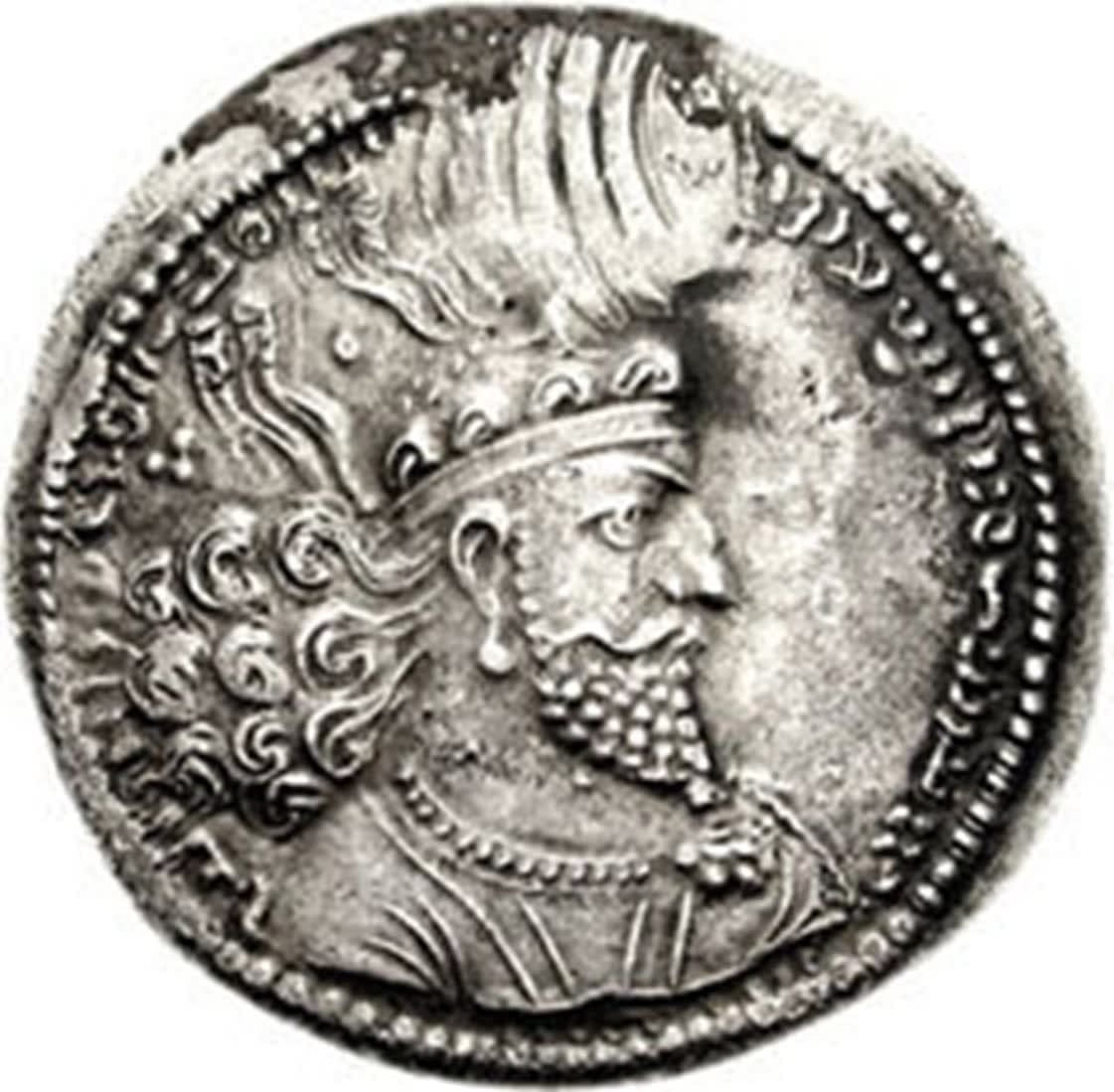

Hormizd I, or Ormazd, whose name in translation from Middle Persian means “Lord of Wisdom,” was the third Sasanian shah of Iran. His name is inseparably linked with a legend which, according to the Arab historian al-Tabari, surrounds his birth. They say that his grandfather, King Mihrak, was killed by the first Sasanian ruler Ardashir I. Astrologers predicted to Ardashir that one of Mihrak’s descendants would come to power, and he ordered the extermination of his entire family. But one of Mihrak’s daughters, a clever and beautiful woman, fled and hid among shepherds. One day, while hunting, Ardashir’s son Shapur met her and, struck by her beauty, took her as his wife. Thus, Hormizd was born. When Ardashir learned of this, he was not angered; on the contrary, he rejoiced, realizing that the prophecy would be fulfilled through his own grandson, and therefore he had nothing to worry about.

From his youth Hormizd took an active part in the affairs of the empire. Under his father Shapur I he was first the governor of Khorasan, and then, after the conquest of Armenia in 252, received the honorary title of “great king of the Armenians,” governing this strategically important province. He took an active part in his father’s military campaigns against Rome, possibly fighting in Cilicia and Cappadocia. His name is even mentioned in the Historia Augusta as Odomastes, who placed a certain Cyriades on the Syrian throne.
Despite the legends about his birth, the question of Hormizd’s seniority remains disputed. In one of Shapur I’s inscriptions his name, as king of the Armenians, stands before the names of the other sons. However, in another list he is mentioned after his brothers. This probably indicates that Hormizd was not the eldest but the third son. It was for this reason that, in order to secure his succession, Shapur I before his death officially designated him as his heir.
Another legend, transmitted by al-Tabari, tells how Shapur doubted his son’s loyalty when, being governor of Khorasan, he became too powerful. Learning of the slander, Hormizd, wishing to dispel the suspicions, cut off his own hand and sent it to his father, since by law a cripple could not become king. Shapur, shocked, replied that even if his son maimed his entire body, he would still remain the heir. This story is most likely only a fine fabrication, since a maimed man could not inherit the throne, and Hormizd nevertheless became shah.

The reign of Hormizd I, which, according to various data, lasted only one year and ten days, was not marked by major wars with the Romans. Like his grandfather Ardashir I and his father Shapur I, he focused on strengthening central authority and increasing the international prestige of the Sasanian Empire, which he called “Īrānshahr.” He was the first of the Sasanians to mint on coins the title “king of kings of Iran and non-Iran,” which symbolized his ambitions.

According to some sources, he fought with the Hephthalites, but probably the matter concerned other nomadic tribes, possibly the Chionites (Huns), since the Hephthalites did not play a significant role in the 3rd century.
Hormizd was distinguished by great religious toleration, like his father. On the reverses of his coins, in addition to the traditional Ohrmazd, the deities Mihr and Anahita were also depicted. He showed favor toward the prophet Mani, the founder of Manichaeism, renewing the charter of protection issued to him by Shapur I and allowing him to preach in Babylonia.
At the same time Hormizd also patronized the high priest of Zoroastrianism, Kartir, who was the chief opponent of Mani. In the inscription on the “Ka‘ba of Zoroaster,” Kartir reports that Hormizd handed him the insignia of his rank and gave him supreme authority in matters pleasing to the gods, conferring upon him the name “Kartir, mobad of Ahura Mazda.”
Hormizd I, although he reigned for a short time, left a mark in the history of Sasanian Iran. According to local folklore, he was buried in Ram-Hormizd. His personality, combining legendary origin, military successes, and a policy of religious toleration, remains one of the enigmas of this era.


