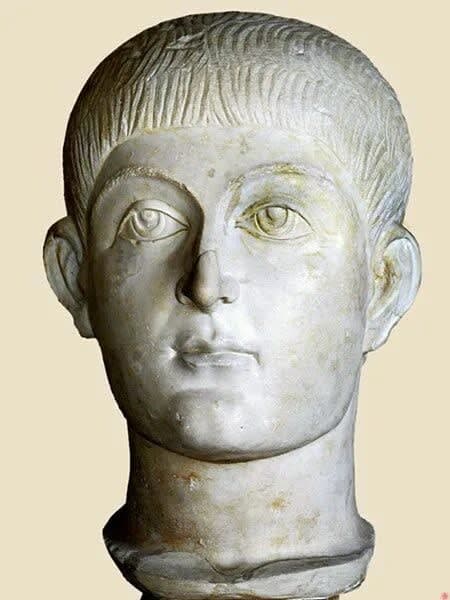
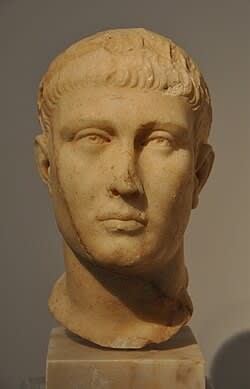
The reign of Flavius Honorius is a tragic chronicle of the decline of the once seemingly unshakable Roman Empire — a period when the grandeur of Rome confronted the relentless pressure of time and barbarian peoples.
The emperor’s life began on 9 September 384 in magnificent Constantinople. He was born into the family of Emperor Theodosius I and Aelia Flaccilla, surrounded by imperial splendor and dynastic expectations.
Honorius belonged to a large family, though it was marked by early losses. In addition to his brother Arcadius and his sister Galla Placidia, he had another sister, Pulcheria, who died as a child in 385. In the autumn of the following year, 386, his mother also died.
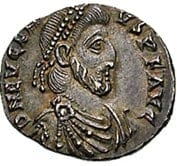
Honorius’s political destiny was determined from infancy.
At only two years of age, in 386, he was appointed consul. Three years later, in 389, the young prince accompanied his father in a triumphal procession through Rome celebrating the victory over the usurper Maximus.
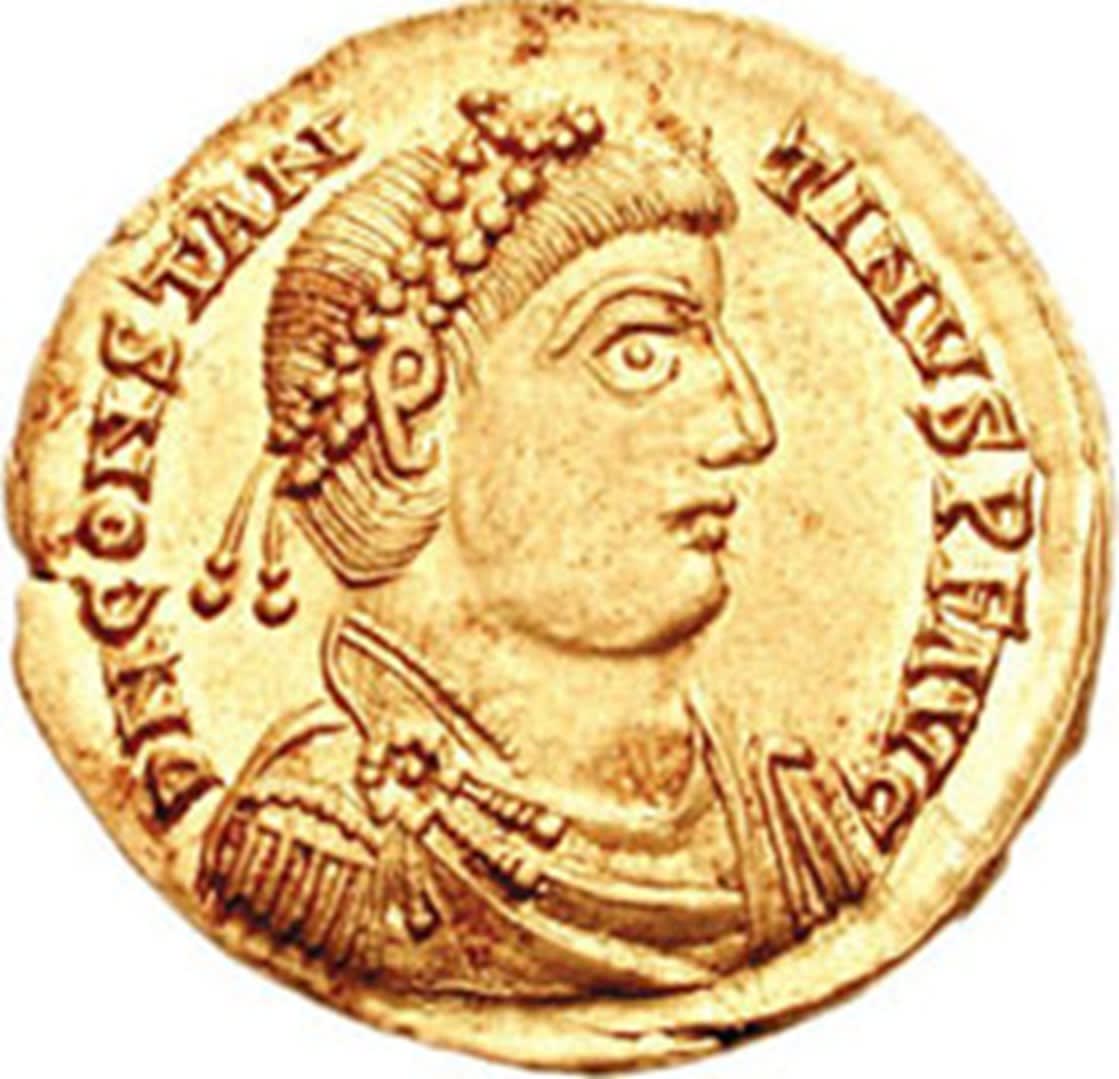
A decisive turning point came on 23 January 393, when, following the death of Valentinian II and the audacious usurpation of the throne by Eugenius, Honorius was officially proclaimed Augustus.
After Theodosius I finally crushed the rebels, Honorius once again took part in a triumph in Rome, still unaware that responsibility for half of the known world would soon fall upon his shoulders.
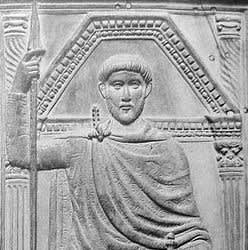
In 395, after the death of his father, the eleven-year-old Honorius became the full ruler of the Western Roman Empire.
While his brother Arcadius established himself in Constantinople, Honorius first settled in Mediolanum and later moved his court to the virtually impregnable city of Ravenna.
Because of the emperor’s young age, real power was concentrated in the hands of the outstanding general Stilicho, a man of Vandal origin whose loyalty to the empire was reinforced by family ties: in 398, Honorius married Stilicho’s daughter Maria.
Under Stilicho’s wise, though harsh, regency, the empire fought desperately for survival.
By 399, the general had restored Roman control over the African provinces by suppressing the revolt of Count Gildo.
At the same time, the great confrontation with the Visigoths began. In 396, Stilicho repelled their advance in the Balkans, and in 403 he halted the invasion of the legendary Alaric into the very heart of Italy.
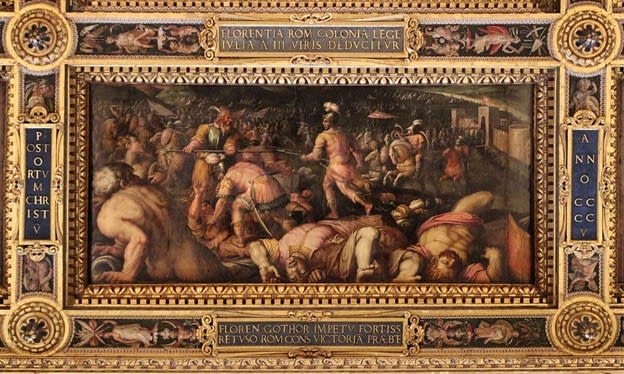
The culmination of this period came at the Battle of Faesulae in 406, where the barbarian forces led by Radagaisus were almost completely destroyed.
Their leader himself met his end near the gates of Florence on 23 August 406.
However, the price of this security was unbearably high.
To defend Italy, Stilicho was forced to weaken the frontiers of Britain and Gaul by withdrawing some of their best legions.
This decision triggered a chain reaction of disasters.
Huge numbers of Vandals, Suebi, and Alans, overcoming the resistance of allied Franks, poured into the defenseless provinces of Gaul.
A rebellion broke out in Britain, where the legions proclaimed ordinary soldiers — Marcus and Gratian — as emperors. Both were soon killed by their own supporters.
In 407, a new usurper, Constantine III, entered the political arena, seizing northern Gaul and Spain.
Honorius’s personal life also changed during this period. After the death of Empress Maria in 407, he married her sister Thermantia the following year.
The year 408 became a fatal one for the empire.
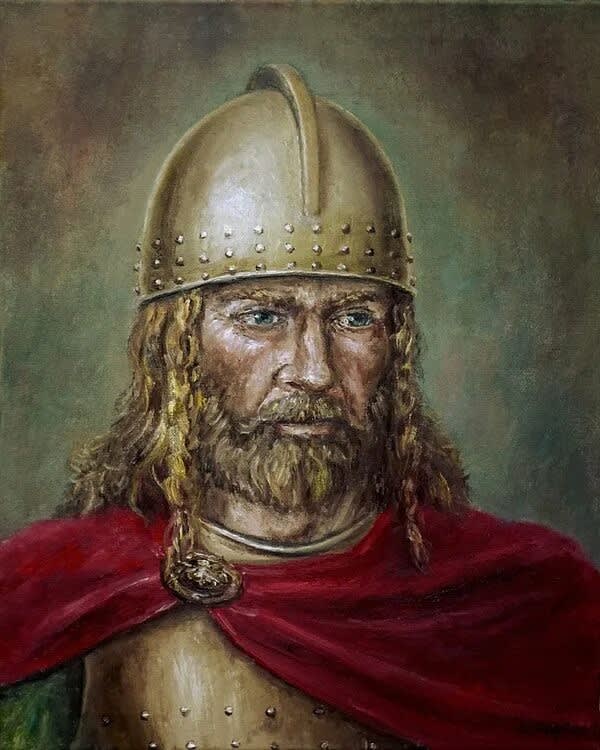
Alaric once again threatened Italy, demanding the enormous tribute of 4,000 pounds of gold, which the Senate accepted under pressure from Stilicho.
In May of the same year, while staying at Bononia, Honorius learned of the death of his brother Arcadius.
Court intrigue reached its climax when the magister officiorum Olympius succeeded in convincing the emperor that Stilicho was plotting treason.
On 22 August 408, the great general was executed in Ravenna, triggering a wave of bloody purges.
Honorius divorced Thermantia and ordered the execution of Stilicho’s son, Eucherius.
Deprived of its protector, the empire was left defenseless, while thousands of deceived barbarian foederati defected to Alaric.
In October 408, the Goths laid siege to Rome.
To save the city from destruction, its inhabitants paid a ransom of 5,000 pounds of gold and 30,000 pounds of silver.
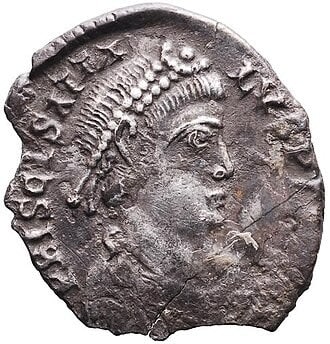
Political chaos in Ravenna, where ministers and policies toward negotiations with the Goths constantly changed, eventually drove Alaric to proclaim the puppet emperor Priscus Attalus.
Despite the arrival of six legions from the Eastern Empire, Honorius’s position remained critical.
He responded by blocking grain supplies, which caused a terrible famine in Rome.
Eventually, disappointed with Attalus, Alaric deposed him in 410, but further attempts to reach an agreement with Honorius once again failed because of the emperor’s refusal to compromise.
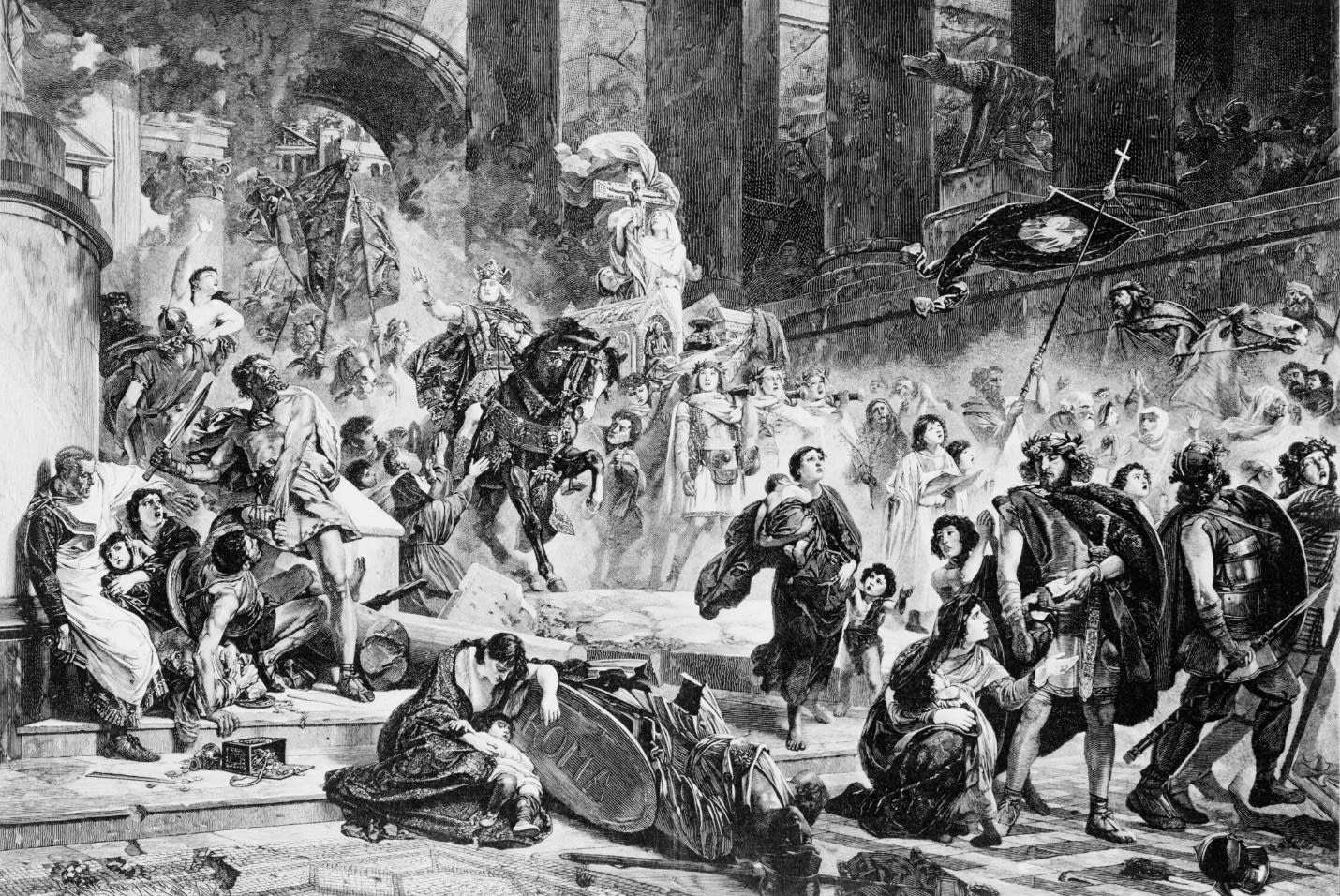
On 24 August 410, an event occurred that shocked the ancient world: Rome fell.
For the first time in eight centuries, the “Eternal City” was captured and subjected to three days of plundering.
Although Alaric ordered that churches were not to be harmed, valuables from private houses were carried away.
That same year, a rescript was issued stating that Britain — or, according to alternative interpretations, Bruttium in Italy — should defend itself independently.
The empire was visibly beginning to disintegrate.
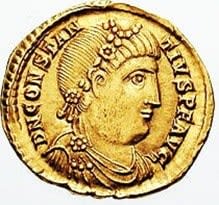
Amid the chaos of decline, Honorius found a new source of support in the general Constantius III.
By 411, he had managed to suppress the rebellions of Constantine III and Gerontius in Gaul and Spain.
Despite this success, Britain was permanently lost.
Soon another rebellion broke out under Jovinus, supported by Alans and Burgundians.
This time, Honorius received assistance from the Gothic leader Athaulf, who, in exchange for grain supplies, defeated the usurpers.
However, because of disruptions in food deliveries, Athaulf himself soon began plundering southern Gaul and, in 414, married the emperor’s sister Galla Placidia, once again proclaiming Priscus Attalus emperor.
Only through the decisive actions of Constantius, who forced Athaulf into Spain and captured Attalus, was order partially restored.
In 417, Honorius, Constantius, and Galla Placidia entered Rome in triumph.
The defeated Attalus, who had once dreamed of mutilating Honorius, was exiled to the island of Lipara.
That same year, the emperor forcibly married his sister to Constantius.
In 418, the first officially recognized barbarian kingdom of the Visigothic foederati was established in Aquitaine.
Following Constantius’s advice, Honorius weakened central authority in Gaul by allowing local communities to resolve certain affairs at annual assemblies in Arelate.
In 421, Honorius proclaimed Constantius his co-emperor, but Constantius died later that same year without receiving recognition from Constantinople.
The final years of Honorius’s reign were overshadowed by new rebellions in Spain and by a family conflict with Galla Placidia, who eventually fled to Constantinople.
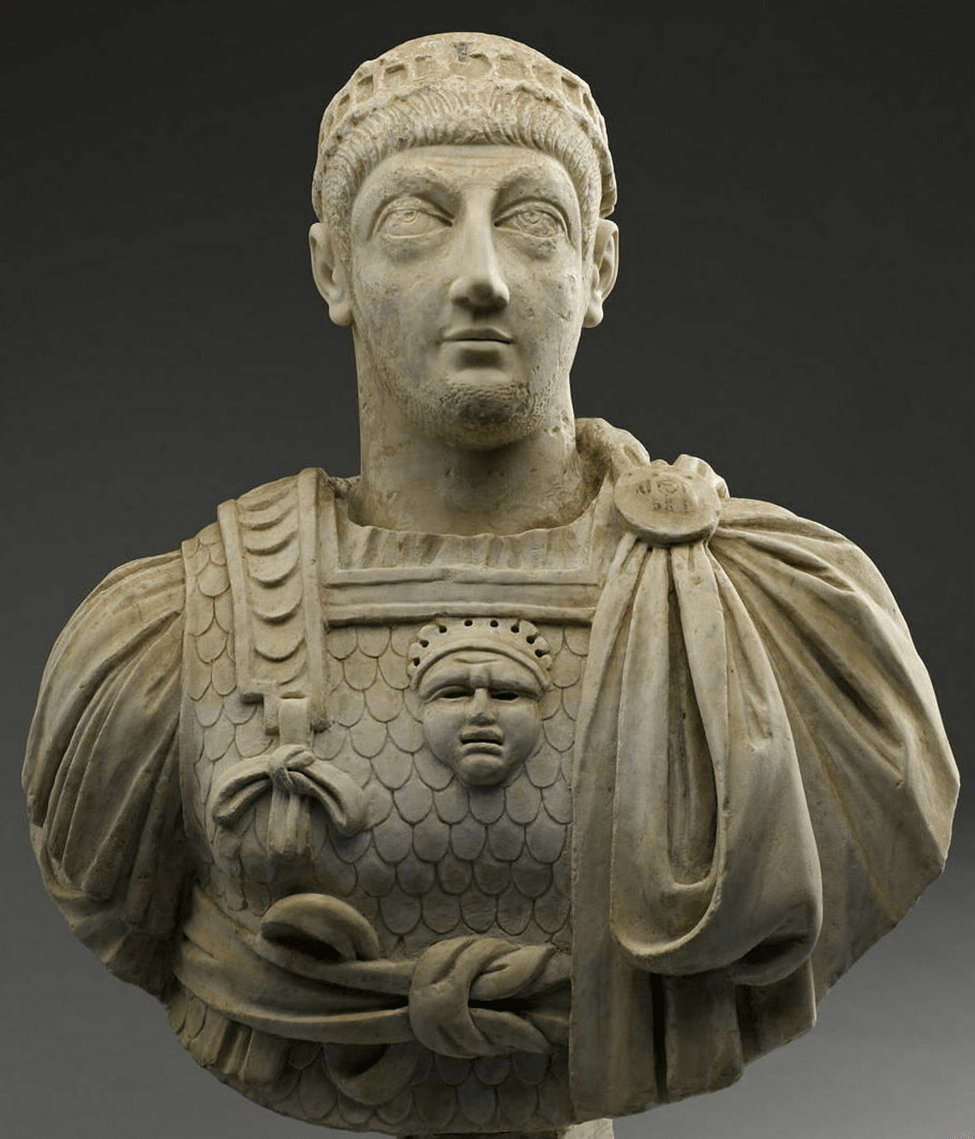
In religious affairs, Honorius was a firm supporter of Nicene Christianity.
He actively opposed Donatism at the Council of Carthage in 411 and prohibited the propagation of Pelagianism in 417.
One of the most famous achievements traditionally associated with his reign is the final abolition of gladiatorial combats around 404.
Honorius died in Ravenna on 15 August 423 from edema, leaving no direct heirs.
Although during his reign the empire lost Britain and witnessed the sack of its ancient capital, his rule became an important stage in the transition from the ancient world to the medieval order, in which the Roman heritage increasingly intertwined with the traditions of the barbarian peoples.
After a brief usurpation by the imperial secretary Joannes, Honorius was succeeded by his young nephew Valentinian III.


