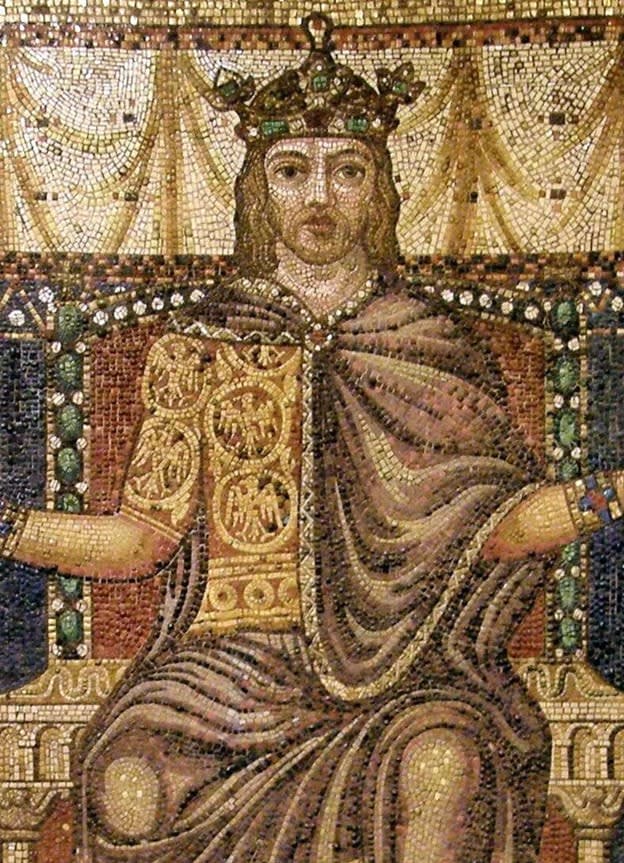

The story of Otto I, who went down in history as Otto the Great, begins in 912. He was named after his grandfather, Otto the Illustrious, who lived long enough to see the birth of his grandson. At the age of twenty-four, Otto ascended the throne of the German kingdom. Otto’s personality was remarkable for its duality: on the one hand, he inherited from his father, Henry the Fowler, a passion for hunting and a sociable nature; on the other hand, he possessed an almost mystical sense of his own destiny. He regarded himself as “born in the purple,” a monarch ruling by divine right, and took his role with the utmost seriousness, exhausting himself with fasting before every ceremonial appearance before his people.
Remarkably, Otto developed an interest in literacy only later in life, after the death of his first wife, Edith of England. Once he began studying, however, he made rapid progress, mastering not only reading but also Slavic and Romance languages.
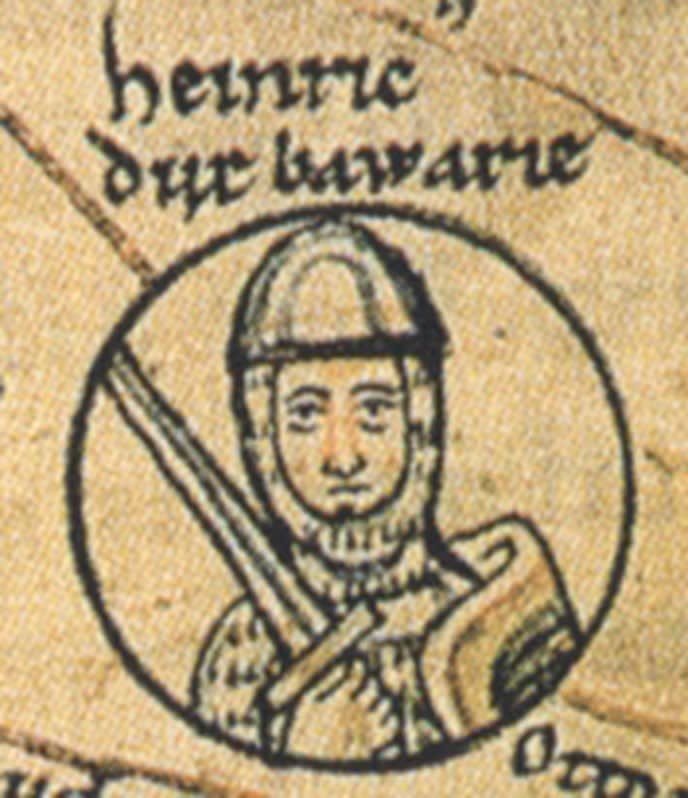
The first decade of Otto’s reign was overshadowed by rebellions rooted in tribal rivalry between the Franconian and Saxon nobility. The invasions of the Slavs and Hungarians at the beginning of his reign were successfully repelled, but internal enemies proved more dangerous. A major uprising was triggered by a conflict between Eberhard, Duke of Franconia, and his Saxon vassals. When Otto punished Eberhard with a fine and subjected his retainers to a humiliating punishment — forcing them to carry dogs in their arms all the way to the royal residence in Magdeburg — the offended duke rebelled.
The rebellion was joined by Thankmar, the king’s elder half-brother, who had been born from a marriage not recognized by the Church. Thankmar captured another of Otto’s brothers, Henry, and treated him like a slave. Thankmar’s fate was brief and tragic: in 937, he was killed directly at the altar of the church in Eresburg.
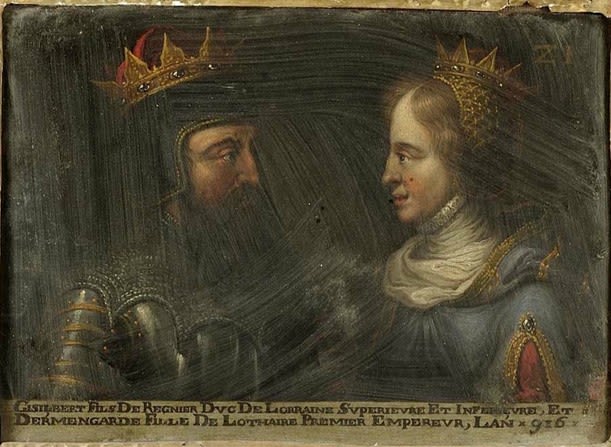
His death, however, did not end the conflict. Eberhard of Franconia succeeded in winning the freed Henry over to his side, convincing him that he had a stronger claim to the throne because he had been born after their father had already become king. The conspirators were also joined by Gilbert, Duke of Lorraine, and even the king of West Francia.
The critical year of 939 demanded extraordinary effort from Otto. He was forced to wage war simultaneously along the Rhine and in Lorraine while also repelling Danish and Slavic raids. The conflict came to a sudden conclusion on 2 October 939, at the Battle of Andernach. In a single day Otto lost two of his principal enemies: Eberhard was killed in battle, while Gilbert drowned in the Rhine while attempting to escape.
Otto’s brother Henry later organized an assassination attempt against the king and was captured in 941. Nevertheless, Otto displayed remarkable generosity and pardoned him. This decision ultimately proved wise, as Henry later became one of the monarch’s most loyal supporters.

After defeating the rebels, Otto made the momentous decision not to restore the Duchy of Franconia, instead placing those territories under his direct personal control. In 944, he entrusted Lorraine to the Frankish nobleman Conrad, to whom he later married his daughter Liutgarde.
Meanwhile, along the eastern frontiers, the margraves Gero and Hermann Billung waged fierce campaigns against the Slavs, known as the Wends. Their methods were harsh: on one occasion, Margrave Gero had thirty Slavic chieftains massacred during a banquet.
Otto understood that the borders could not be secured by the sword alone, so he placed considerable emphasis on Christianization. In 946 and 949, the bishoprics of Havelberg and Brandenburg were established. In the north, missionary activities intensified after the death of Queen Edith in 946 and expanded into Danish territories. By 948, bishops from Schleswig and Aarhus were already attending the Council of Ingelheim.
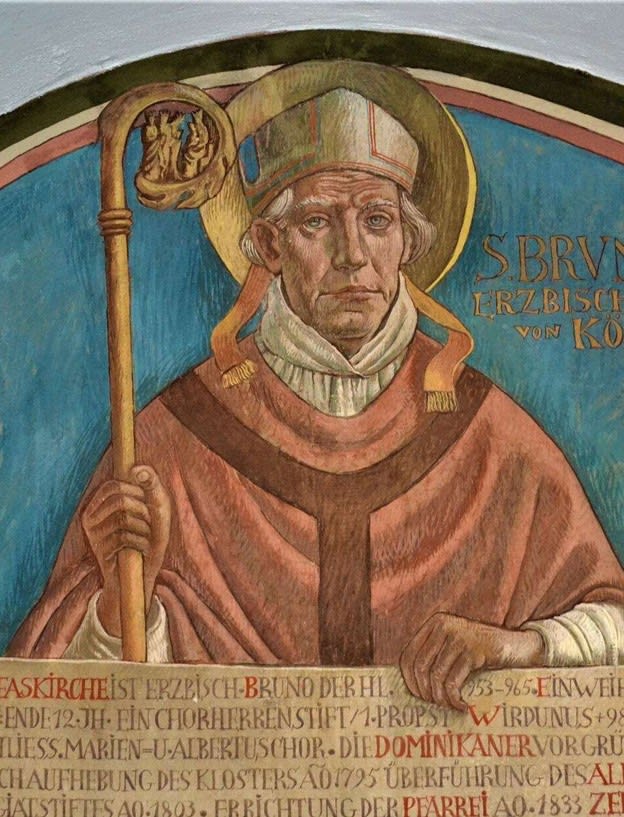
One of Otto’s most important supporters was his younger brother Bruno, a man of exceptional intellect and an ascetic temperament. After becoming chancellor and later Archbishop of Cologne in 953, Bruno effectively managed the royal chancery and oversaw the cultural revival known as the Ottonian Renaissance. Thanks to him and to the influence of Otto’s second wife, Adelaide, the royal court acquired a splendor and dignity not seen since the age of the Carolingians.
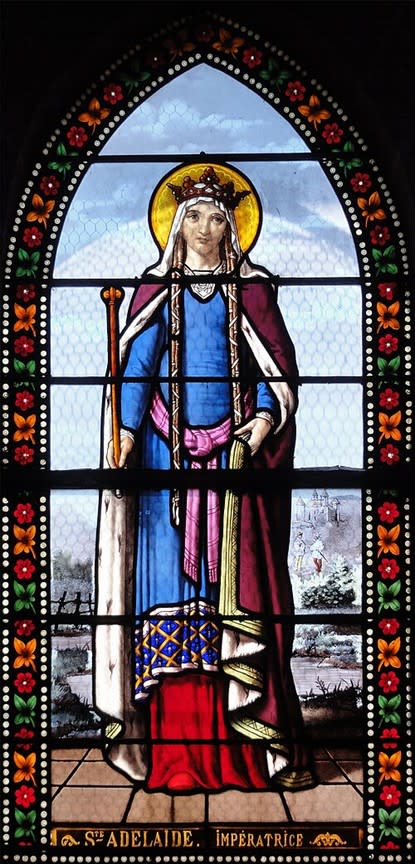
In 951, the capture of Adelaide, the widow of the king of Italy, by Margrave Berengar gave Otto a pretext for his first Italian campaign. Otto liberated Adelaide, married her in Pavia, and proclaimed himself King of Italy. His attempt to be crowned emperor, however, failed at that time because of opposition from Rome.

This led to another family crisis. Otto’s son from his first marriage, Liudolf of Swabia, fearing for his inheritance, rebelled in 953 together with his brother-in-law Conrad of Lorraine. The civil war nearly destroyed the kingdom when the rebels called upon the Hungarians for assistance in 954.
Enormous Hungarian forces invaded Bavaria, forcing many German princes to reconsider their positions and rally around the king.
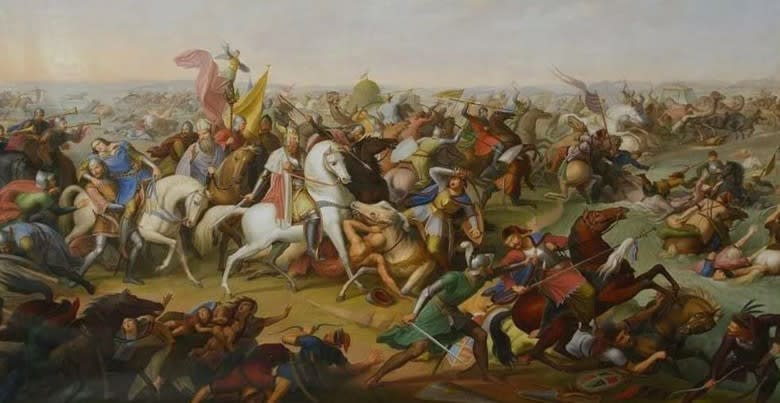
In August 955, the decisive Battle of the Lech River took place. Otto assembled a united army composed of Saxons, Bavarians, Swabians, and Franks. Fighting beneath the banner of the Holy Lance, associated with the Archangel Michael, the heavily armed cavalry delivered a devastating blow against the Hungarians.
The Hungarians were completely defeated and never again attempted raids on such a massive scale. In October of the same year, Otto defeated the Slavs at the Battle of the Regnitz. Following these triumphs, chroniclers reported that Otto’s warriors acclaimed him as emperor directly on the battlefield.
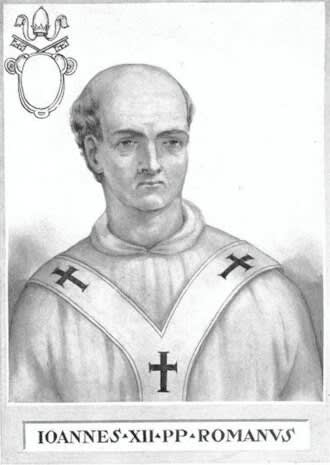
In 961, Otto launched his second campaign in Italy at the invitation of Pope John XII. On 2 February 962, in St. Peter’s Basilica, Otto was crowned emperor.
Thus was born the Holy Roman Empire.
However, Otto’s alliance with the pope did not last long. After discovering that John XII was conspiring against him, Otto entered Rome as a victor in 963, deposed the pope, and established the emperor’s right to exert influence over the election of future pontiffs.
The final years of Otto’s reign were devoted to diplomacy and to strengthening the new political structure of his realm. In 966, he embarked on his third campaign in Italy, seeking to drive back the Saracens and improve relations with the Byzantine Empire.
These efforts ultimately resulted in the marriage of his son, the future Otto II, to the Byzantine princess Theophanu in 972.
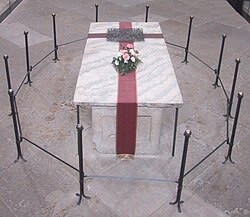
Otto I the Great died on 7 May 973 in Quedlinburg, surrounded by his family and princes, at the age of sixty. His body was buried in Magdeburg Cathedral.
He left behind not merely a German kingdom, but a great European power, bound together by an alliance between throne and Church — a political order that, in various forms, would endure for almost a thousand years.


