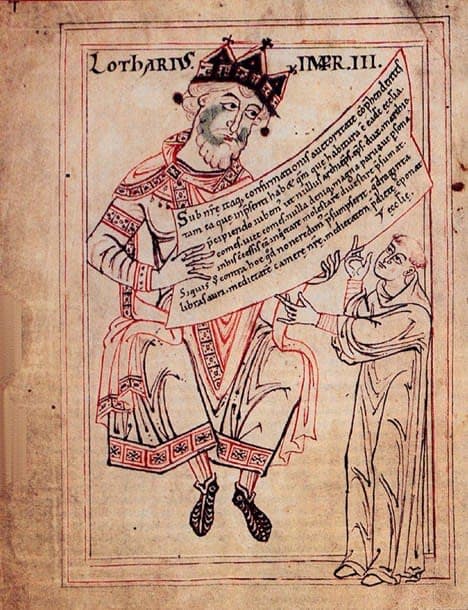

The chronicles remain silent about the early years of Lothair, who grew up without a father. His name appears in historical records for the first time only in 1088.
The decisive turning point in his life came in 1107, when he married Richenza of Northeim, daughter of Count Henry of Northeim and Gertrude of Brunswick.
Richenza was the heiress of the powerful Brunonid dynasty. This marriage, reinforced by the purchase of additional lands and skillful management of inherited estates, brought Lothair enormous wealth and extensive possessions formerly held by the Billungs and Northeims.
It transformed him into one of the most influential magnates in Saxony.
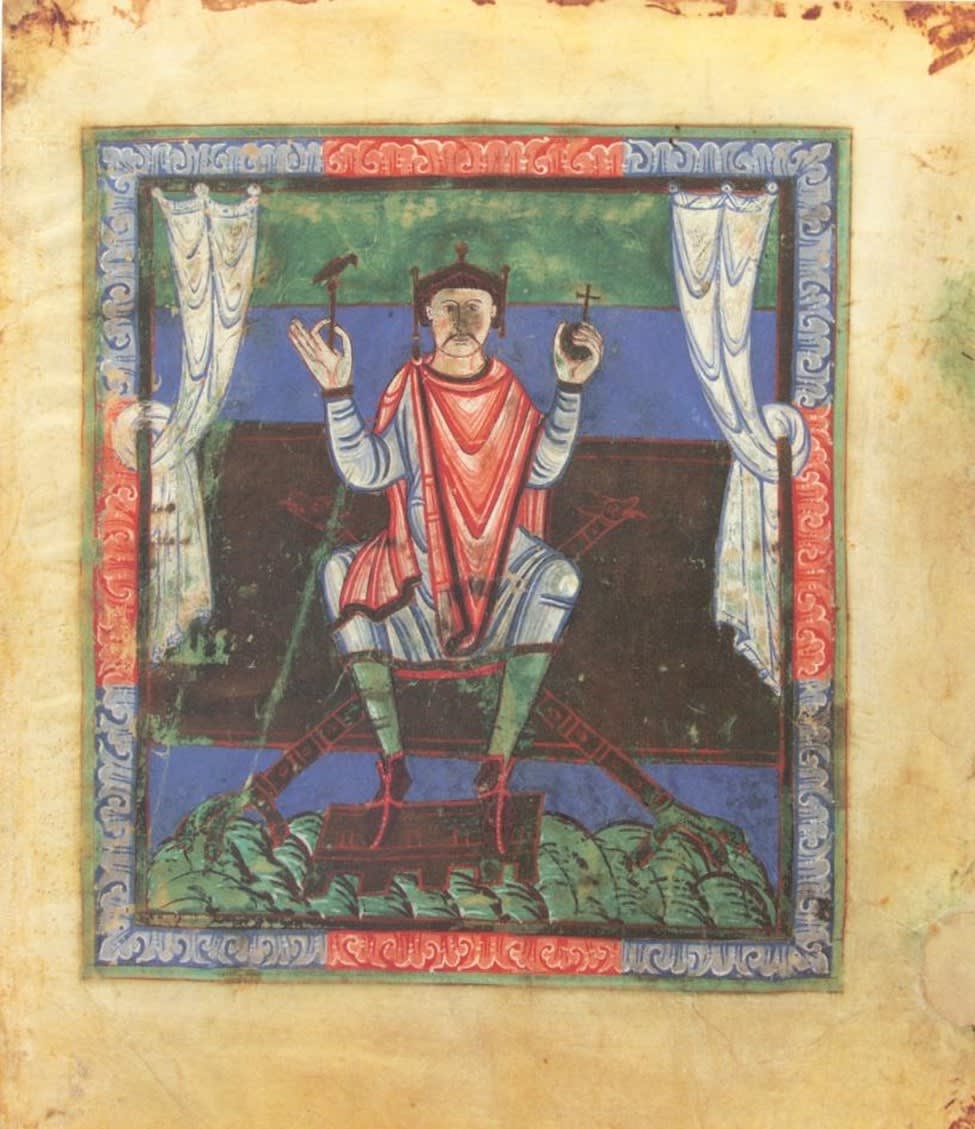
Lothair’s political instincts became apparent very early.
During the bitter dynastic conflict that erupted within the ruling family in 1104, he made a shrewd political choice by supporting the rebellion of the young Henry V against his father, Henry IV.
The campaign succeeded.
On 31 December 1105, the old emperor abdicated, and only days later his son assumed the crown.
As a reward for his loyalty, when the childless Duke Magnus Billung died in 1106, the new monarch granted Lothair the title and vast possessions of the Duke of Saxony.

Yet the power Lothair had acquired only intensified his ambitions.
He had no intention of remaining an obedient servant.
He deeply resented the increasingly authoritarian tendencies of Henry V, particularly the emperor’s attempts to impose arbitrary new taxes upon the highest nobility.
Lothair quickly became a focal point for the growing opposition.
By 1111, he behaved almost as an independent ruler, granting the newly created County of Holstein to Count Adolf of Schauenburg on his own authority.
Naturally, the crown could not tolerate such defiance.
In 1112, Henry V attempted to break Lothair’s power by stripping him of his title and transferring the Duchy of Saxony to Otto of Ballenstedt.
Lothair responded with tactical flexibility.
He temporarily submitted to the emperor, waited until Otto himself fell out of favor, and successfully recovered his position.
But his submission was merely a façade.
In 1115, Lothair launched an open rebellion.
Leading the Saxon forces, he decisively defeated the emperor’s army at the Battle of Welfesholz.
From that point onward, Henry V effectively lost control over Saxony and its tax revenues.
Lothair demonstrated his independence again in 1123.
When Henry V granted the March of Meissen to Count Wiprecht of Groitzsch, Lothair openly challenged the emperor and used force to secure the appointment of his own ally, Conrad of Wettin.
He likewise granted the Lusatian March to Albert the Bear.
The Salian era was rapidly approaching its end.
In 1125, Emperor Henry V died without an heir.
Archchancellor Adalbert of Mainz summoned the princes to Mainz to elect a new king.
The favorite was Duke Frederick II of Hohenstaufen, but his own pride undermined him.
His excessive self-confidence, described by contemporaries as ambicione caecatus — “blinded by ambition” — together with his principled refusal to recognize the princes’ right freely to elect the monarch, libera electio, alienated the electors.
On 24 August, Frederick’s candidacy was rejected.
Adalbert of Mainz proposed Lothair instead.
He was far from an ideal candidate.
The Saxon duke was already over fifty years old — an advanced age by twelfth-century standards — and had no sons, raising serious doubts about the creation of a lasting dynasty.
Yet that was precisely what appealed to princes exhausted by what they regarded as the authoritarianism of the Salian dynasty and described as a period of oppressio — oppression.
Defeating the other candidates, Leopold III of Austria and Charles the Good, Lothair was elected King of Germany.
His election marked a major constitutional turning point, confirming the decline of strict hereditary succession.
Not deeply experienced in the complexities of the long struggle between Empire and Papacy, Lothair made several symbolic concessions that Rome would later interpret as recognition of the crown’s dependence upon the Holy See.
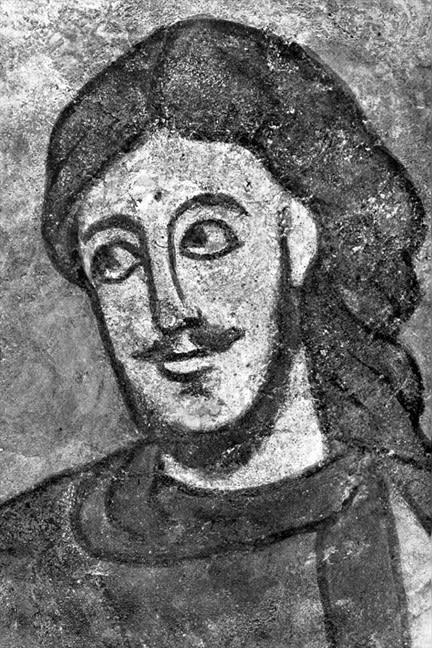
Lothair’s reign began with involvement in the internal struggles of Bohemia.
In 1125, Duke Vladislaus I of Bohemia died.
The succession was contested between his brother Soběslav I and the Moravian claimant Otto the Black, who was supported by the deceased ruler’s widow, Richeza of Berg.
After receiving substantial financial support from Otto, Lothair took his side.
In February 1126, a German army invaded Bohemia.
It suffered a crushing defeat against Soběslav’s forces at the Battle of Chlumec.
Some of the most prominent German nobles, including Albert the Bear and Louis I of Thuringia, were captured.
Then something remarkable happened.
Despite being the undisputed victor, Soběslav personally came to Lothair’s camp and humbly requested recognition of Bohemia as an imperial fief.
Lothair graciously agreed.
The prisoners were released, peace was restored, and Soběslav, while formally recognizing the overlordship of the defeated German king, received unquestionable legitimacy and enormous political prestige.

A far more dangerous conflict was developing inside Germany.
The confrontation between the Supplinburg dynasty, supported primarily by Saxony and Bavaria, and the Hohenstaufen, heirs to the Salians, escalated into civil war.
At the heart of the conflict lay enormous landed possessions.
Lothair argued that the disputed territories belonged to the crown and, following the extinction of the Salian dynasty, should revert to the state.
The Hohenstaufen, led by Frederick II, insisted that the estates were their legitimate private inheritance.
The confusion of old archival records, in which private family possessions had for centuries not been clearly distinguished from royal property, made a legal settlement virtually impossible.
By 1125, the dispute had already become an armed conflict.
After securing the princes’ approval at Regensburg, Lothair attempted to seize the disputed crown lands by force.
When Frederick resisted, the king declared him an outlaw under the imperial ban and stripped his brother Conrad of the Duchy of Franconia.

The war proceeded with varying fortunes.
In 1127, Lothair’s army unsuccessfully besieged Nuremberg.
Encouraged by this success, the Swabians and Franconians proclaimed Conrad anti-king, under the name Conrad III.
In 1128, Conrad travelled to Italy seeking recognition, where Archbishop Anselm V of Milan even crowned him King of Italy.
Lothair wasted no time.
Taking advantage of his rival’s absence, in 1129 he launched a powerful offensive and captured the principal Hohenstaufen strongholds of Nuremberg and Speyer.
Conrad, having failed to secure meaningful support in Italy, returned in 1130 with nothing to show for his expedition.
Lothair had gained the strategic advantage.
At the same time, to protect Burgundy from enemy influence, the king appointed his close ally Conrad I of Zähringen as ruler of the Burgundian principality, with the title rector Principatus Burgundiae.
As a Saxon by birth, Lothair devoted exceptional attention to the northeastern frontiers of the empire.
His eastern policy ultimately produced some of the most significant long-term consequences of his reign.
He continued the policies he had begun as duke, when in 1111 he granted Holstein and Stormarn to Adolf of Schauenburg.
One particularly important step was the restoration of the Landgraviate of Thuringia.
The region had suffered devastation going back to its Frankish conquest under King Chlothar I.
After centuries of depopulation and gradual resettlement by Bavarians, Franconians, and Christianized Slavs, the territory required firm political organization.
Lothair’s first choice, Count Herman of Winzenburg, appointed in 1129, proved unsuccessful and was removed only a year later for violating the peace, although the chronicles differ on the exact dates.
By contrast, the appointment of Louis in 1131 became a major success.
It founded the powerful Ludowingian dynasty, which would rule the region for more than a century.
In 1134, the outstanding commander Albert the Bear became Margrave of Brandenburg.
In 1136, Conrad the Great of Wettin united the Marches of Meissen and Lusatia under his control.
Lothair also secured from Rome expanded authority for the archbishops of Bremen and Magdeburg.
His diplomacy extended far beyond the empire.
In 1135, King Eric II of Denmark was recognized as an imperial prince.
Lothair’s skillful mediation in conflicts involving Poland, Bohemia, and Hungary also resulted in the Polish ruler Bolesław III Wrymouth paying an old tribute for Pomerania.
Pomerania, together with the island of Rügen, was formally recognized as a fief of the Holy Roman Empire.

While imperial power was being consolidated in the east, Rome was consumed by crisis.
In 1130, the Catholic Church split into schism.
A minority of cardinals elected Innocent II, while a majority, amid street disturbances, elevated Anacletus II.
Anacletus seized control of Rome with the support of King Roger II of Sicily.
Innocent fled to France, where his cause was passionately promoted by the celebrated thinker Bernard of Clairvaux.
Bernard succeeded in winning over both King Louis VI of France and King Henry I of England.
Both rival popes sent envoys to Lothair, each promising him the imperial crown.
The German king, still deeply involved in his conflict with the Hohenstaufen, initially hesitated.
But Bernard of Clairvaux’s eloquence eventually persuaded him to support Innocent II.

The king, the pope, and Bernard met in Liège in March 1131.
There, Lothair performed the ancient ritual known as the strator service, humbly acting as the pope’s stirrup-holder and promising to defeat Anacletus and his Sicilian allies.
When Lothair asked that the crown regain the right of investiture, meaning the appointment of bishops, Innocent politely refused.
However, he confirmed all the rights granted to the emperor under the Concordat of Worms.
On 29 March 1131, Innocent solemnly crowned Lothair King of the Romans.
The subsequent Italian campaign was difficult.
Lothair commanded only a relatively small army because most of his forces had to remain in Germany to contain the Hohenstaufen.
The siege of rebellious Milan failed, but the king continued relentlessly toward Rome.
Because the principal shrine, St. Peter’s Basilica, remained in the hands of Anacletus’s supporters, the long-awaited imperial coronation took place instead in the Lateran Basilica on 4 June 1133.
Lothair pursued a careful diplomatic strategy.
He proudly ignored a papal bull implying that secular authority derived from spiritual authority.
At the same time, he diplomatically recognized Rome’s legal claims to the vast inheritance of Matilda of Tuscany in northern Italy while retaining those lands himself as papal fiefs.

By 1135, Lothair had finally broken Hohenstaufen resistance in the northern part of the empire.
A major role was played by his son-in-law Henry the Proud, who inherited the Duchy of Bavaria after the death of his father, Henry the Black.
At a magnificent imperial assembly in Bamberg, the Hohenstaufen brothers were graciously pardoned.
Their lands and titles were restored, while Conrad permanently renounced his claim as anti-king.
A ten-year general peace, the constitutio pacis, was proclaimed throughout the empire.
The reconciled brothers even agreed to participate in the monarch’s next military campaign.
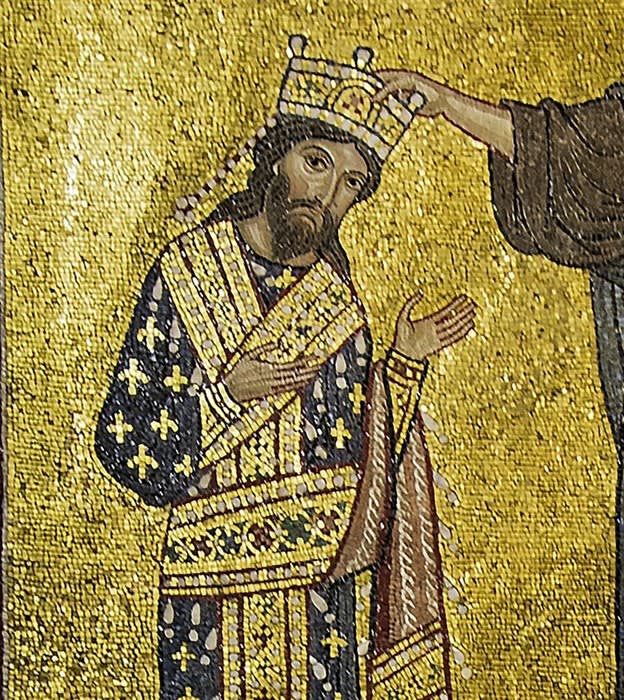
Having become the undisputed ruler of Germany, Lothair assembled a great army in 1136 and began his second Italian campaign.
He was responding to appeals from Pope Innocent II and the Byzantine emperor John II Komnenos, both of whom wished to destroy the power of Roger II of Sicily.
The army advanced in two formidable columns.
One was commanded by the grey-haired emperor himself, the other by his son-in-law Henry the Proud.
On the banks of the Tronto River, Count William of Loritello swore fealty to Lothair and surrendered the city of Termoli.
The two German armies reunited at Bari in 1137 and then advanced further south.
Roger of Sicily began to lose confidence and offered peace.
He was prepared to accept Apulia as an imperial fief for one of his sons while handing another son over as a hostage.
Under pressure from the vengeful pope, however, Lothair rejected these favorable terms.
It proved a fatal mistake.
The German knights, exhausted by the scorching southern heat, mutinied.
Lothair’s dream of conquering Sicily collapsed.
He managed to take only Capua and Apulia from Roger.
The enraged pope demanded that Apulia be placed under direct Church authority.
Eventually, the two sides compromised by jointly granting the duchy to Rainulf of Alife.
From August to October 1137, the emperor rested at Salerno, where he minted his own copper coins, known as follari.
The journey home became the emperor’s last.
Sensing that death was approaching, Lothair transferred to his son-in-law Henry the Proud the Margraviate of Tuscany, the Duchy of Saxony, and, most importantly, the imperial regalia.
Historians still debate whether this represented a direct nomination of Henry as successor or merely an emergency measure intended to preserve the sacred objects.
On 3 December 1137, Lothair II died at Breitenwang.
To transport the monarch’s remains back to Germany, his attendants resorted to the grim but practical procedure known as mos Teutonicus.
The body was boiled so that the flesh could be separated from the bones.
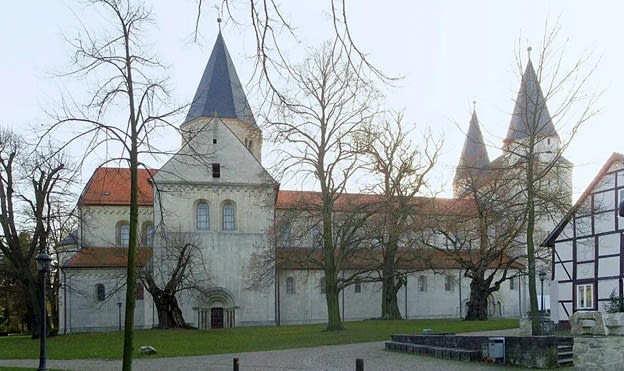
The remains of the emperor were buried in the Collegiate Church of Saints Peter and Paul at Königslutter, the great imperial church whose foundation stone Lothair himself had laid in 1135.
One month later, the death of Antipope Anacletus II brought the papal schism to an end.
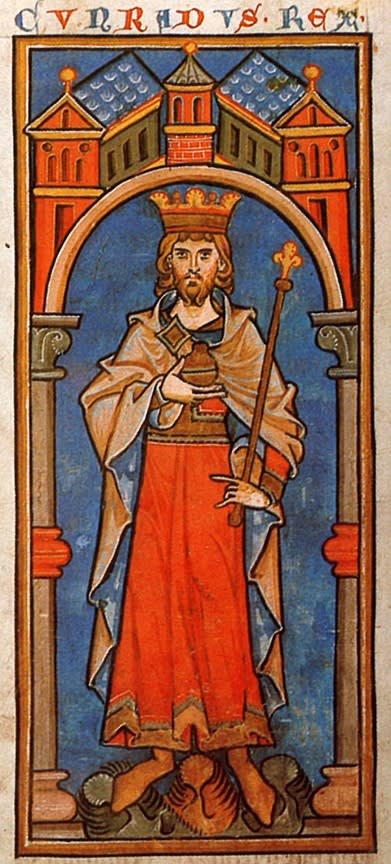
The reign of Lothair II was not merely a brief interlude between the Salian and Hohenstaufen eras.
It was a period of powerful and sovereign imperial government.
When the emperor’s tomb was opened in 1620, among the objects discovered inside were a sword and a symbolic imperial orb.
Lothair had created an ambitious political project intended to transfer the crown to the Welf dynasty.
His marriage to Richenza produced only one surviving daughter, Gertrude, born on 18 April 1115.
In May 1127, Lothair arranged her marriage to Henry the Proud of Bavaria.
Their son would become the famous Henry the Lion.
Yet Lothair’s dynastic ambitions were destined to fail.
Only several months after his death, on 7 March 1138 at Koblenz, the Hohenstaufen carried out what chroniclers effectively described as a political coup.
Conrad III was elected king.
When the loyal Henry the Proud refused to kneel before the old enemy of his father-in-law, the new king ruthlessly stripped him of his possessions.
The Supplinburg dynasty, which had flashed across the European political sky like a comet, passed permanently into history.


