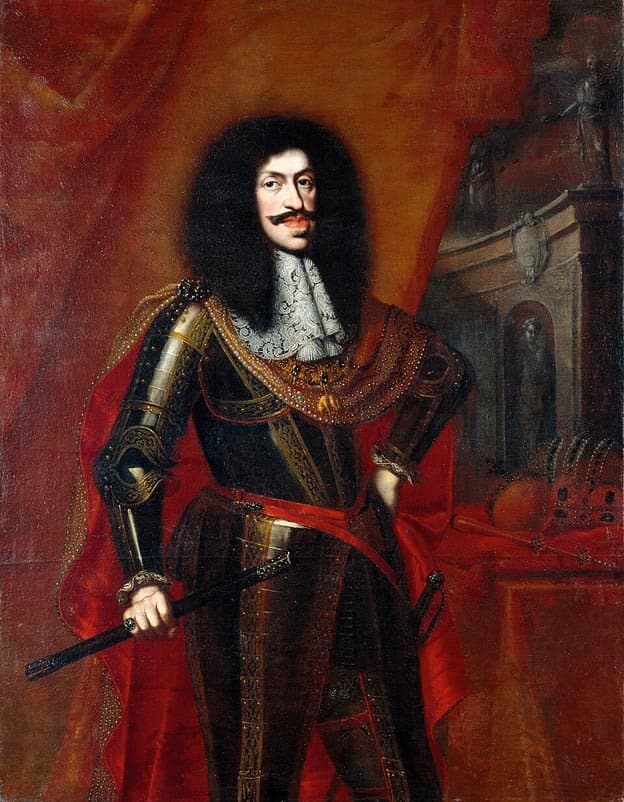

The life of Leopold I, one of the most significant rulers in the history of the Holy Roman Empire, began on June 9, 1640, in Vienna. As the younger son of Emperor Ferdinand III, from an early age he was prepared not for the throne but for a distinguished career in the higher ranks of the clergy. This predetermined the nature of his upbringing: the boy received a traditional yet exceptionally thorough education. The young Habsburg eagerly absorbed knowledge in the liberal arts, history, literature, astronomy, and the natural sciences. His Jesuit tutors instilled in him a passion not only for rigorous academic disciplines but also for mystical fields—astrology and alchemy.

For a future monarch, Leopold possessed an unprecedented depth of knowledge in theology, metaphysics, and law. In addition, like his father, he had a special and profound love of music. Even in his early years, he distinguished himself by his extraordinary dedication to learning and remarkable linguistic abilities. In addition to his native German, he spoke Latin, Spanish, and Italian fluently. Leopold treated the German language with undisguised disdain—although some historians consider accounts of this aversion exaggerated—and preferred to read and conduct official correspondence in Italian, which became the dominant language at his court. This fascination culminated in his founding of the Italian Literary Academy in Vienna in 1656.
However, fate had other plans. In 1654, his elder brother, King of the Romans Ferdinand IV, died unexpectedly. The plan for Leopold’s ecclesiastical career was immediately abandoned, and he became the direct heir to the throne. Nevertheless, his religious upbringing left a permanent mark on his personality. He matured without the aggressive military ambition that characterized many monarchs of his time, which contributed to the deeply conservative and defensive nature of his rule.

Throughout his life, Leopold embodied the ideal of pietas Austriaca—the traditional Catholic piety of the Austrian branch of the Habsburg dynasty. His profound religiosity, bordering on fatalism, led him to categorically reject compromises on confessional matters, which did not always benefit affairs of state.
The emperor’s appearance was highly distinctive. Short and slender—and in his youth physically frail—he inherited the characteristic features of his dynasty, particularly the famous and pronounced “Habsburg jaw.” In public, Leopold appeared cold, reserved, and phlegmatic, and he clearly experienced difficulties in social interaction, although among trusted companions he could behave much more openly. “His gait was majestic, slow, and measured; his expression thoughtful, his manner of speaking awkward, his behavior clumsy, and his character cold and phlegmatic.” Despite this, he eventually became physically stronger and developed a fondness for hunting and horseback riding, although military life itself never appealed to him. He found an outlet in creativity, composing several oratorios and dance suites.
Leopold’s path to supreme power was rapid. In 1655, he was elected King of Hungary; in 1656, he was crowned King of Bohemia; and in 1657, he became King of Croatia. In July 1658, more than a year after his father’s death, he was elected Holy Roman Emperor in Frankfurt. This occurred despite fierce opposition from the French Cardinal Mazarin, who attempted to secure the imperial crown for the Bavarian Elector Ferdinand Maria or for another prince outside the Habsburg dynasty. To appease France, which wielded enormous influence in the German lands through the League of the Rhine, the young emperor promised not to provide assistance to Spain, which was then at war with the French.

Thus began Leopold I’s monumental reign, lasting almost forty-seven years and marked by bitter rivalry with the French king Louis XIV. Although the brilliance of the “Sun King” has often overshadowed the Habsburg emperor in historical memory, Leopold became a monarch whose statecraft was inseparably connected with the organization and conduct of major wars.

Leopold’s first major military experience came during the Second Northern War of 1655–1660. The Swedish king Charles X Gustav, supported by Prince George II Rákóczi of Transylvania, sought to seize the Polish crown. In 1656, Leopold’s predecessor had concluded an alliance with King John II Casimir Vasa of Poland. In 1657, Leopold expanded the agreement and sent Austrian troops to assist the Polish Crown, with Warsaw covering the costs of their maintenance. Imperial forces defeated the Transylvanian army and pursued the enemy as far as Danish territory, ultimately contributing to the victorious Peace of Oliva in 1660.
Soon afterward, conflict erupted in the east. The Ottoman Empire continually interfered in the affairs of unstable Transylvania, eventually leading to a direct confrontation with the Holy Roman Empire. Full-scale hostilities began in 1663. Leopold demonstrated considerable diplomatic skill: he personally appealed to the Perpetual Imperial Diet in Regensburg and persuaded the German princes to send troops. Assistance even arrived from France. In August 1664, the outstanding imperial commander Raimondo Montecuccoli decisively defeated the Ottomans at the Battle of Saint Gotthard. However, the subsequent Peace of Vasvár—a twenty-year truce—proved paradoxically favorable to the Turks, nullifying many of the achievements of the brilliant victory.

On the western frontiers, Louis XIV’s expansion became increasingly aggressive. In 1670, France seized the strategically important Duchy of Lorraine, and in 1672 it launched the Franco-Dutch War. By mid-June, the Netherlands stood on the verge of destruction. Recognizing the danger, Leopold concluded an alliance with Brandenburg-Prussia and the Dutch Republic on June 25, 1672. However, the emperor could not act with his full strength because he was distracted by an uprising in Hungary. Moreover, French territorial gains in the Rhineland alarmed him far more than the fate of the distant Dutch. As a result, Montecuccoli was ordered to follow a strictly defensive strategy, while the chaotic supply system made prolonged campaigns virtually impossible. In June 1673, Brandenburg withdrew from the alliance by signing the Treaty of Vossem.

Leopold did not give up. By August 1673, a powerful anti-French Quadruple Alliance had been formed, bringing together the Netherlands, Spain, the emperor, and Charles IV, Duke of Lorraine. In May 1674, the Imperial Diet formally declared an Imperial War (Reichskrieg) against France. The war ended with the Peace of Nijmegen in 1678, generally regarded as a success for French diplomacy, although the allies did manage to somewhat restrain Louis XIV’s territorial ambitions.
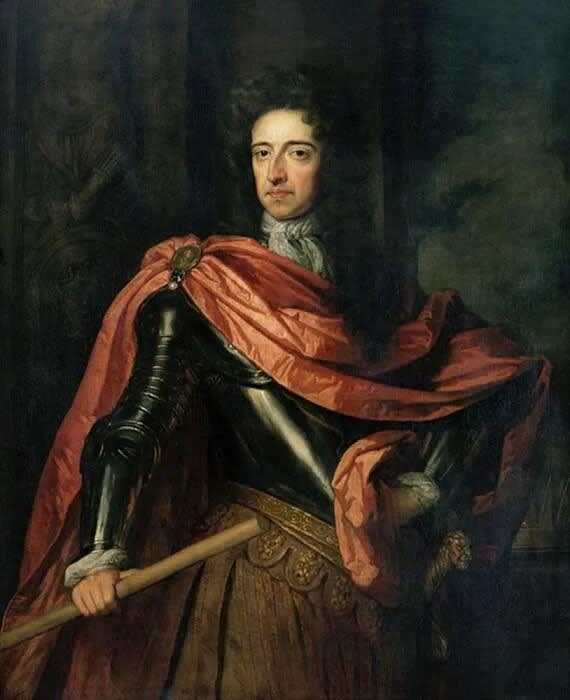
Peace did not last long. Louis XIV soon resumed his expansion through the policy of the “Reunions.” Preoccupied with the difficult struggle against the Turks, Leopold hesitated. In 1682, he formally joined an anti-French coalition, but in 1684 he was forced to accept the Truce of Regensburg. The situation changed dramatically only by 1688, when William III of Orange ascended the English throne as a result of the Glorious Revolution and French forces once again invaded German territory. In May 1689, the “Grand Alliance” was formed, uniting the emperor, the kings of England, Spain, and Denmark, and the Elector of Brandenburg. Western Europe plunged into a fierce war. The campaigns proceeded with mixed success, and in September 1697 England, Spain, and the Netherlands signed the Peace of Ryswick with France. Leopold, outraged that his allies had neglected his interests, initially refused to sign, but joined the treaty the following month, thereby recovering several territories for the Holy Roman Empire.
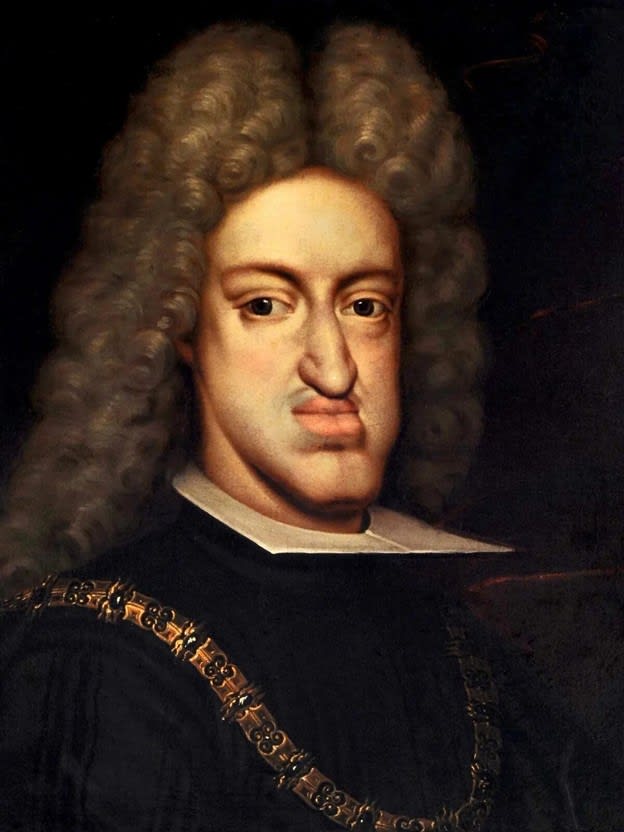
This respite lasted only four years before Europe was plunged into the War of the Spanish Succession. The Spanish king Charles II of Habsburg, sickly and childless, became the center of intense diplomatic bargaining. The great powers attempted to divide his vast empire in advance, but Leopold categorically rejected partition plans. When Charles II died in November 1700, leaving the crown to Louis XIV’s grandson Philip V, hopes for peace collapsed. Under the leadership of William III, the Grand Alliance was revived. In 1703, Leopold prudently transferred his claims to the Spanish throne to his second son, Archduke Charles. Although the first phase of the war brought the imperial forces nothing but disappointment, the allies’ great victory at Blenheim changed the course of history. Leopold did not live to see the conclusion of this drama—he died on May 5, 1705.

In governing the state, Leopold was an absolutist who personally determined the political course and stubbornly defended his rights. In 1669, he dismissed his leading minister, Johann Weikhard von Auersperg, while his successor, Prince Wenzel Eusebius von Lobkowicz, lost his position in 1674. Both politicians had secretly sympathized with France.
The emperor’s domestic policy was severe, particularly in religious matters. As a fanatical supporter of the Counter-Reformation, he pursued a policy of expelling Jews. The most notorious episode was the removal of Vienna’s Jewish community from the Im Werd district, beyond the Danube Canal. The local population supported the measure, and the district was renamed Leopoldstadt in honor of the monarch. However, in 1677, Frederick William, Elector of Brandenburg, issued a special decree placing fifty families of the expelled Jews under his protection.
Hungary remained the empire’s most painful wound. Repression of Protestants provoked the so-called “Magnates’ Conspiracy,” which was suppressed in 1671. Years of extremely harsh rule followed until another uprising in 1681 forced Vienna to make concessions. Yet the unrest could not be extinguished. In 1675, Austrian forces occupied Trebišov Castle, but in 1682 it was captured and reduced to ruins by Hungarian rebels led by Imre Thököly, who openly cooperated with the Ottomans. In the same year, they ruthlessly plundered the town of Bielsko. Leopold finally relinquished his rights to these lands only in 1692, transferring them to Terézia Keglevich.

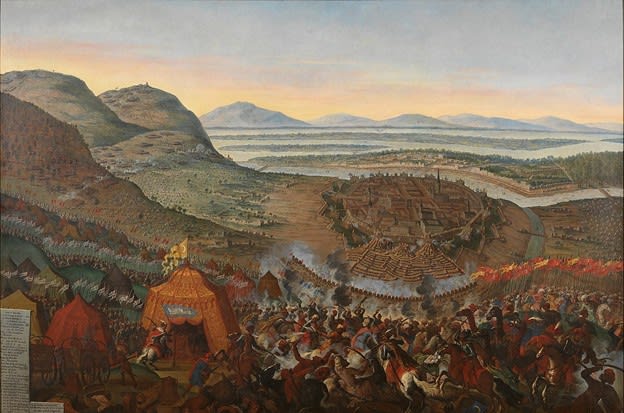
Thököly’s rebellion became the prelude to both Leopold’s greatest catastrophe and his greatest triumph. Ottoman Sultan Mehmed IV, supporting the Hungarians, sent an enormous army against Austria in early 1683. The enemy advanced unhindered to Vienna and laid siege to the capital from July to September. The emperor was forced to flee to Passau. But the threat to what was regarded as the Christian heart of Europe united the monarchs: the electors of Saxony and Bavaria, the imperial army under the emperor’s brother-in-law Charles V, Duke of Lorraine, and, most importantly, the fearless Polish king John III Sobieski rushed to Vienna’s aid.
On September 12, 1683, the epoch-making Battle of Vienna took place. The Ottoman army was utterly crushed, and centuries of Turkish expansion into Central Europe were brought to an end. Building on this success, the imperial armies, led by the rising military star Prince Eugene of Savoy, continued their offensive. Victories followed at Mohács and Zenta. In January 1699, Sultan Mustafa II signed the historic Treaty of Karlowitz, under which the Habsburgs acquired almost all of Hungary as well as Serbian territories in Vojvodina.

During these wars, approximately 37,000 Serbian families led by Patriarch Arsenije III Crnojević migrated northward into Habsburg lands. In 1690 and 1691, Leopold I granted them the famous Privileges, which established the autonomy of the Serbian population—a status that endured for more than two centuries, until 1912. Even before the end of the war, at the Diet of Pressburg (Bratislava) in 1687, Leopold permanently changed Hungary’s political status: the hereditary, non-elective right of the Habsburgs to the Hungarian throne was confirmed, and his eldest son, Joseph I, was crowned.
Leopold’s reign coincided with a difficult period of structural transformation in Europe. The Peace of Westphalia of 1648 had dealt a blow to the Habsburgs: the idea of a united Catholic Europe had collapsed, while political influence shifted toward France and Sweden. Yet the Thirty Years’ War also brought hidden advantages—the Protestant aristocracy in the hereditary Habsburg lands had been broken, and ties between Vienna and Bohemia were strengthened. Leopold was among the first to recognize these changes. The emperor’s authority over the princes was weakening, but Habsburg authority over the dynasty’s own territories was becoming absolute. He initiated a process of reform aimed at constructing a centralized state modeled on France.
In 1663, the Imperial Diet was transformed into the Perpetual Diet at Regensburg, becoming a useful instrument in Vienna’s hands. At the same time, Leopold was forced to reach political compromises with increasingly powerful German princes. In 1692, the Duke of Hanover received the status of the ninth elector, while in 1700, needing allies on the eve of war with France, Leopold granted the Elector of Brandenburg the title “King in Prussia.” These steps further weakened direct imperial influence and forced Leopold to rely increasingly on the power of his hereditary possessions.
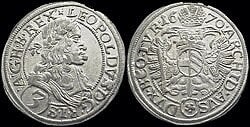
Hard-working, extraordinarily well educated, and firmly convinced of his divine right to rule, Leopold I left behind a radically transformed Europe. In his final years, he revealed himself as a skillful politician. One curious detail of his biography concerns numismatics: in 1670, a silver coin was minted on which the emperor’s famous jaw was exaggerated to such a degree that Leopold acquired the insulting popular nickname “Hogmouth.” Although modern collectors regard the portrait as a caricature far removed from his actual appearance, Leopold I entered the annals of history not as a figure of satire, but as a ruler who halted the Ottoman threat and transformed Austria into a great European power.


